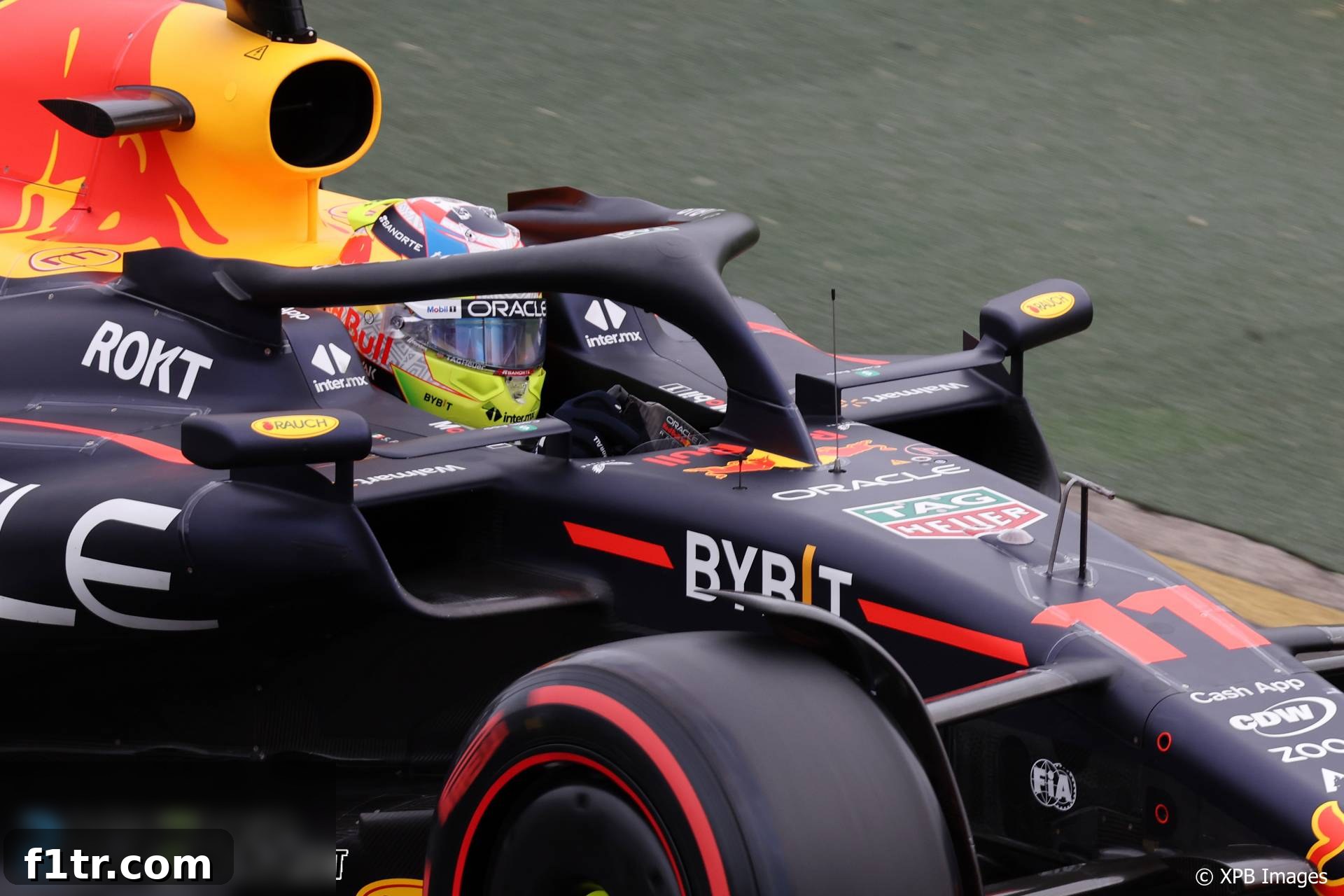
Perez and Bottas Forced to Start Australian Grand Prix from Pit Lane After Parc Ferme Breaches
The highly anticipated 2023 Australian Grand Prix is set for a dramatic start, with two prominent drivers, Sergio Perez of Red Bull Racing and Valtteri Bottas from Alfa Romeo, facing a significant challenge from the outset. Both competitors will not begin Sunday’s race from their qualified grid positions but instead from the pit lane. This considerable disadvantage stems from crucial modifications made to their respective cars after Saturday’s qualifying session, which constituted breaches of Formula 1’s stringent parc ferme regulations.
Understanding the Parc Ferme Rule in Formula 1
To fully grasp the severe implications of Perez and Bottas’s pit lane starts, it’s essential to understand the ‘parc ferme’ rule. French for ‘closed park,’ parc ferme conditions are imposed on all cars from the moment they leave the pit lane for their first qualifying lap until the start of the race. This period is designed to prevent teams from making extensive changes to their vehicles between qualifying and the Grand Prix, thereby ensuring that the performance demonstrated on Saturday is genuinely representative of their race-day package. This integrity is vital for fair competition and preventing an unfair advantage from last-minute engineering overhauls.
Under parc ferme, teams are permitted only minor adjustments, such as basic tire pressure alterations, brake bias adjustments, or engine mapping tweaks approved by the FIA. However, any significant changes to the car’s setup – particularly involving fundamental components like suspension, energy stores, or control electronics – are strictly prohibited. Should a team deem such modifications absolutely necessary, perhaps due to accident damage, unforeseen performance issues, or a strategic gamble, the penalty is clear and unyielding: the car must start the race from the pit lane. This penalty is crucial; it ensures that any potential performance gain from the illicit modifications is offset by the considerable disadvantage of beginning the race behind all other cars and losing additional time exiting the pit lane to join the track.
Sergio Perez’s Red Bull Predicament: Engine Settings and Critical Component Overages
A Tumultuous Qualifying Session for “Checo”
For Sergio Perez, the build-up to the Australian Grand Prix took an unwelcome turn during the Q1 session. Fresh off a dominant performance in Jeddah, where he secured pole position and ultimately the race victory, expectations for the Mexican driver were undoubtedly high. However, throughout Saturday’s practice sessions, Perez reported persistent and troubling handling problems with his Red Bull RB19. These issues tragically culminated in an early exit from qualifying when he skidded into a gravel trap, effectively ending his Q1 prematurely without setting a competitive time. This unexpected incident placed him provisionally on the back row of the grid, a stark and frustrating contrast to his recent championship-contending form.
Red Bull Team Principal Christian Horner quickly offered insights into the incident. He commented, “We suspect an engine setting issue contributed to a lock-up that he had on his first lap in qualifying.” This explanation pointed towards an electronic or software-related glitch rather than a fundamental mechanical failure, though the outcome was equally detrimental. The sudden lock-up caused Perez to lose control, sending him off track into the gravel and likely causing further minor damage to the car.
Exceeding Component Limits: Energy Store and Control Electronics
In the aftermath of the qualifying incident and the identified issues, Red Bull Racing made the strategic decision to fit a new energy store and control electronics to Perez’s car for Sunday’s race. While component replacements are a standard part of F1 maintenance, these particular changes carry significant regulatory weight. Critically, these are the third examples of each component Perez has used this year. Formula 1 regulations strictly limit drivers to two energy stores and two control electronics units per season without incurring penalties. By exceeding this allowance so early in the championship, Perez has not only triggered an immediate pit lane start but has also placed himself in a precarious position for the remainder of the season. Should he require a fourth unit of either component later in the year, he will automatically face additional grid penalties, typically a 5-place drop for the first subsequent component and a 10-place drop for the second.
This calculated decision by Red Bull underscores the severity of the problems encountered with the previous components and their determination to ensure Perez has a fully functioning and reliable car for the race, even at the cost of the immediate pit lane penalty. The team clearly prioritized reliability and optimal performance over grid position, hoping for a stronger recovery drive with fresh, compliant parts.
Further Parc Ferme Infringement: Suspension Changes
Adding to the complexity, Red Bull also made changes to Perez’s suspension set-up. Altering suspension geometry or components, especially in a bid to rectify handling issues or improve performance, constitutes a clear and direct breach of parc ferme rules. These modifications, even if intended to improve the car’s balance and pace after the issues experienced in practice, are explicitly forbidden once qualifying begins. The combination of exceeding component limits and making unauthorized suspension changes under parc ferme conditions unequivocally mandates Perez’s start from the pit lane, setting the stage for an extraordinary recovery drive if he hopes to salvage any points from the 2023 Australian Grand Prix.
Valtteri Bottas’s Alfa Romeo Conundrum: Unfulfilled Upgrade Potential and Lack of Pace
Unexpected Struggles Despite New Upgrades
Valtteri Bottas, driving for the Alfa Romeo F1 Team, finds himself in an equally challenging situation, though the reasons behind his pit lane start are primarily rooted in car performance and strategic adjustments. Alfa Romeo arrived in Melbourne with new parts for their C43 chassis, optimistically anticipating a boost in pace and a stronger competitive showing. However, the qualifying session proved to be a perplexing and deeply disappointing affair for the seasoned Finnish driver. Bottas expressed his surprise and frustration at finishing last among all drivers who managed to set a qualifying time, a result significantly below the team’s expectations given the introduction of their purported upgrades.
“We seemed to lack pace,” Bottas commented, his disappointment palpable. “The upgrades we brought to Melbourne seem to be working as we expected, so there’s no denying we expected more from qualifying. This is, of course, not where we wanted to be, and there are definitely a lot of questions about this qualifying session.” This candid statement reveals a puzzling scenario for Alfa Romeo: while the new components are reportedly functioning according to design, the anticipated on-track performance gain simply did not materialize. This suggests either the upgrades were less potent than initially hoped, or perhaps deeper, unresolved underlying issues within the C43’s setup continued to mask their potential impact.
Suspension Adjustments Lead to Pit Lane Start
In a direct attempt to address this perplexing lack of pace and potentially unlock the hidden performance of their new parts, Alfa Romeo made the decision to alter Bottas’s suspension set-up. As with Perez, any such modification to the car’s suspension under parc ferme conditions automatically triggers a pit lane start for Bottas. While the specific nature or detailed intent of these changes remains undisclosed, it strongly implies a significant adjustment to the car’s handling, balance, or aerodynamic platform in a desperate bid to find elusive performance. The team’s willingness to incur a pit lane penalty signifies their belief that these alterations were critically important for improving the car’s race performance, even at the considerable cost of starting from the very back of the field. Bottas now faces the daunting task of navigating the competitive F1 field from a severely compromised starting position.
Strategic Outlook and the Grueling Road to Recovery
Starting from the pit lane presents an immense and multifaceted challenge at any Formula 1 circuit, but particularly so at the Albert Park Circuit in Melbourne. This semi-permanent street circuit is renowned for being relatively difficult for overtaking, characterized by narrow sections, high-speed corners, and limited obvious passing zones. Both Perez and Bottas will be forced to commence the race behind all 18 cars that take the start from the grid, immediately placing them at a significant disadvantage in terms of track position and early race strategy.
Their strategies will almost certainly revolve around meticulous tire management and hoping to exploit potential safety car periods. An early safety car, or even a virtual safety car, could prove to be a golden opportunity, allowing them to close the substantial gap to the main pack and potentially make an ‘cheap’ pit stop without losing much time. However, without such fortuitous circumstances, they face the daunting task of carving their way through the field, relying heavily on superior pace, astute strategic tire choices, and opportunistic overtakes. For Perez, the primary objective will be to climb into the points-scoring positions, a crucial endeavor for Red Bull’s Constructors’ Championship aspirations and his own burgeoning Drivers’ Championship fight. For Bottas and Alfa Romeo, any points finish from such a compromised starting position would represent a significant achievement, offering valuable data and a much-needed morale boost for the team.
The psychological aspect of recovering from a pit lane start cannot be underestimated. Both drivers are experienced campaigners, known for their resilience and ability to perform under pressure. Perez has demonstrated remarkable recovery drives in the past, often showing strong race pace when given a clear track. Bottas, too, is consistently a solid performer who can extract the maximum from his machinery. However, the unique challenges of the Albert Park track combined with the intense competitiveness of the 2023 season will test their skills and determination to their absolute limits. Their respective races will undoubtedly be compelling narratives to follow, as they attempt to defy the odds and make their way up the order.
The situations faced by both Sergio Perez and Valtteri Bottas underscore the unforgiving nature of Formula 1 regulations and the razor-thin margins that separate success from setback. For both Red Bull and Alfa Romeo, these crucial decisions were made in pursuit of optimal race performance, accepting the immediate penalty in hopes of a stronger long-term outcome. As the lights go out for the Australian Grand Prix, the unfolding drama will reveal whether these strategic gambles ultimately pay off for the drivers and their teams.
Related Articles:
- Australian GP to forbid fans from entering track at end of this year’s race
- I only missed one chance to score points this year – Albon
- Formula 1’s stewards should listen to drivers less, not more
- Mercedes unsure whether gains seen in Melbourne were ‘track-specific’
- Why Ferrari saw a ‘real step forward in pure performance’ in point-less Australian GP
Browse all 2023 Australian Grand Prix articles