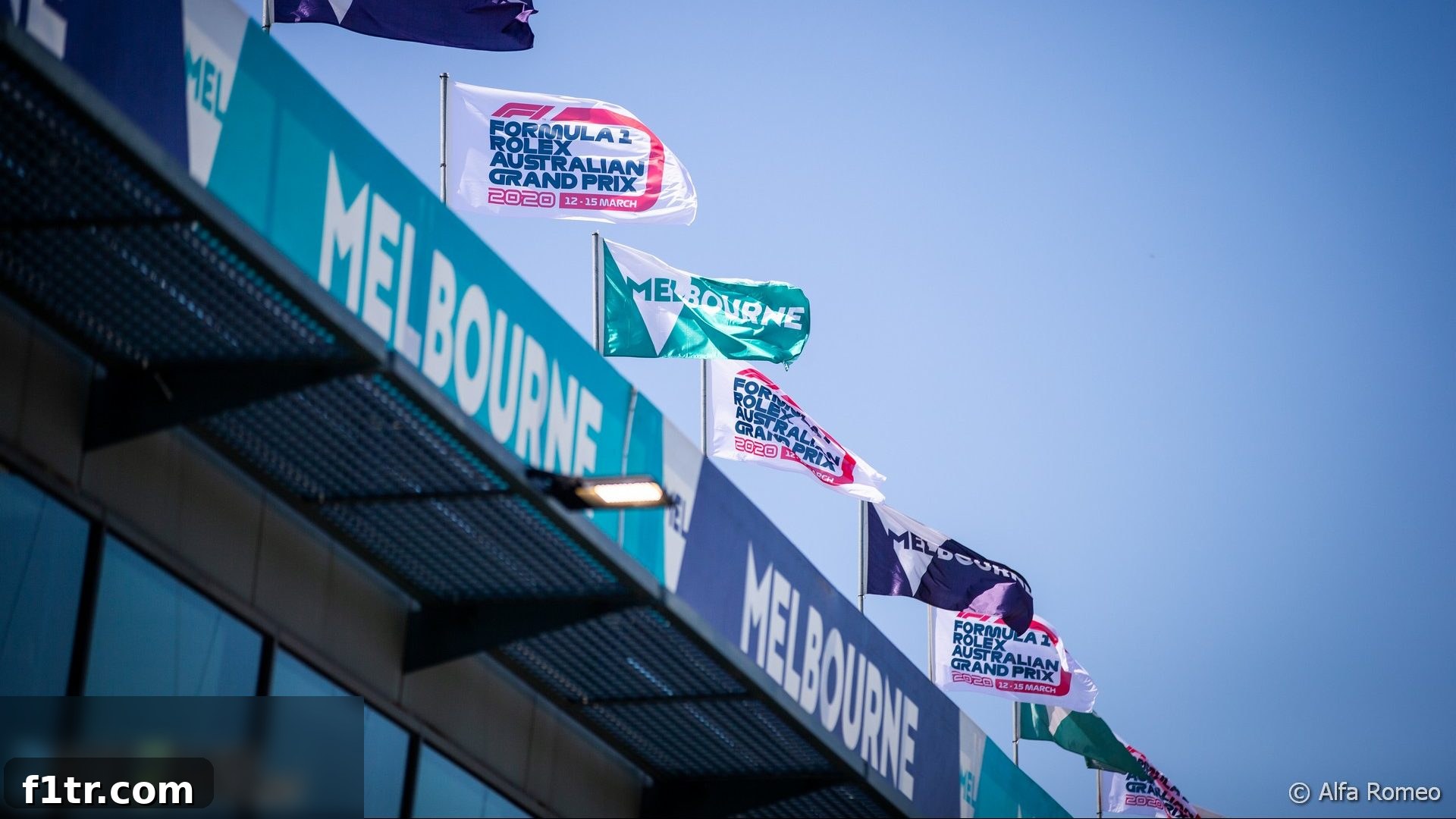
Ten months have passed since the opening round of the 2020 Formula 1 World Championship, the Australian Grand Prix, was abruptly cancelled. That fateful decision in March 2020 marked a pivotal moment, signaling the unprecedented global challenge posed by a then-emerging virus. At that time, the world was grappling with a nascent pandemic, registering approximately 0.63 new cases of Covid-19 per million people globally. Little did anyone know the scale and longevity of the crisis that lay ahead.
Fast forward to today, the 2021 Australian Grand Prix has once again been impacted, this time postponed by a significant eight months. Formula 1’s acknowledgement of “the ongoing situation regarding Covid-19 has meant it is not feasible to begin the season in Melbourne” underscores the continued, and in many ways, intensified battle against the virus. The global spread of Covid-19 has not only failed to decelerate but has accelerated dramatically; yesterday alone, the rate of new cases worldwide surged to 94.63 per million – a stark contrast to the figures that prompted the initial cancellations.
The challenge Formula 1 faced in 2020, when much of the first half of its season was called off, was a novel virus spreading rapidly, claiming lives in significant numbers, and for which no vaccine was available. The world watched, learned, and adapted as best it could, and F1 was no exception. The subsequent truncated 2020 season, largely confined to Europe, was a testament to the sport’s resilience and adaptability under immense pressure. However, it also highlighted the profound financial and logistical implications of operating in a pandemic.
Today, the landscape is considerably more complicated. While Covid-19 continues its relentless spread, often at a much faster rate due to the emergence of more virulent strains, the medical and scientific response has also evolved dramatically. Significant advancements in therapies have improved patient outcomes, though the virus remains a serious threat to life and long-term health. Crucially, a number of highly effective vaccines are now available and being manufactured on an industrial scale. The global race is now on to distribute and administer these vaccines as quickly as possible, a monumental logistical undertaking that holds the key to reversing the rising infection rates and eventually, the return to a semblance of normalcy – not just for Formula 1, but for the entire world.
Against this rapidly evolving and complex background, a preliminary 2021 F1 calendar was initially published in November, reflecting the sport’s ambition to deliver a full championship season. Today, this calendar saw its first major revision. Despite the pervasive challenges of the pandemic, the championship’s overarching objective remains an ambitious one: to hold a record-breaking 23 races. This determination is rooted in a fundamental principle that governs not just motorsport, but global sports entertainment as a whole. As Lewis Hamilton famously stated when explaining F1’s ultimately doomed effort to hold last year’s Australian Grand Prix as the pandemic began: “Cash is king”. This sentiment encapsulates the economic imperative driving Formula 1’s pursuit of a global, expanded calendar.
In 2020, Formula 1 successfully staged a 17-round championship, a remarkable feat given the circumstances. However, this was largely achieved by abandoning its most lucrative ‘fly-away’ races in Asian and American venues, instead consolidating the season almost entirely within Europe. This strategic shift, while necessary for completion, undeniably hit its bottom line hard. The absence of high-paying hosting fees from major international markets, coupled with reduced sponsorship and broadcasting revenues, led to significant financial losses. For 2021, F1 is determined to revert to as normal a championship as possible, which inherently means prioritizing the return of its top-dollar events at commercially vital venues like Azerbaijan, Singapore, and those in the Americas. These races are not just about sporting competition; they are crucial components of Formula 1’s global brand strategy and financial health, bringing in substantial revenue from hosting fees, local sponsorships, and broader market engagement.
Formula 1 can rightfully point to its superb operational record last year, where it managed to hold its championship while implementing rigorous testing and ‘biosphere’ protocols, successfully minimizing the spread of infection within its own travelling paddock. This operational efficiency was widely praised and set a benchmark for other global sports. However, even with such robust internal measures, where F1 can physically go remains entirely subject to the rules and regulations of sovereign governments. These governments have handled the pandemic in vastly different ways, leading to a complex patchwork of travel restrictions, quarantine requirements, and public health guidelines that Formula 1 must navigate.
Consider the stark contrasts in national situations. The majority of Formula 1 teams are based in Britain, which currently grapples with one of the highest rates of Covid-19 transmission in the world, registering around 881 new cases per million people yesterday. While the UK is pressing ahead with an ambitious vaccination program, it has also entered a third national lockdown, and its death rate has climbed with alarming speed. Contrast this with countries like Australia, where the same rate is less than one per million, or Singapore, which records barely five per million. These dramatic differences in public health landscapes directly influence governmental decisions on who to admit across their borders and whether to grant exemptions for international sporting events. The overall risk of importing the virus drives these critical decisions, and it is hoped that the rapid uptake of vaccines over the coming months will significantly alter this risk profile, paving the way for more open borders.
However, some races are inherently more susceptible to cancellation or postponement than others, primarily due to their unique logistical and public health challenges. Losing even a single race, particularly in a sequence of events, could severely harm the economic case for holding nearby rounds due to the interconnected nature of freight and travel costs. For obvious reasons, races on temporary street circuits located in bustling city centers present far greater challenges for containing potential infections than events held at permanent tracks situated in more isolated, out-of-town locations. Street circuits involve significant public infrastructure, greater interaction with local populations during setup and teardown, and are much harder to isolate within a strict ‘bubble’ environment. Formula E, which races exclusively on city tracks, has already been forced to postpone its season-opener. Similarly, IndyCar has delayed its opening round on the streets of St Petersburg, which was originally scheduled to take place in March.
This raises critical questions for Formula 1’s revised calendar. Can F1 realistically stick by its iconic Monaco Grand Prix date in May, or the challenging Baku street race just a month after? The Azerbaijan event is then due to be followed just one week later by a long-haul trek to the Circuit Gilles Villeneuve just outside Montreal. All three of these high-profile races were regrettably cancelled last year, highlighting their inherent vulnerability in a pandemic. The alterations to the calendar announced today effectively mean F1 will predominantly race within Europe until the end of September. After this point, a brutally tough run of near-constant races far beyond Europe’s borders is scheduled, comprising several challenging ‘fly-away’ triple-headers.
Last year, F1 grudgingly accepted holding a string of triple-header events at European venues as a necessary measure to salvage its season and meet its minimal race count. This year, the ambition is to replicate this intense schedule with more distant and geographically dispersed venues, creating unprecedented logistical pressure. The current plan includes demanding triple-headers such as Sochi, Singapore, and Suzuka, followed by Austin, Mexico City, and Interlagos. All but one of these highly anticipated races were called off in 2020. Should even one of these crucial components of a triple-header not go ahead in 2021, it could fundamentally undermine F1’s business case for attending the accompanying rounds. For instance, the intricate logistical planning of moving freight and personnel from Sochi to Suzuka via Singapore is designed to optimize costs and minimize travel time. However, the carefully calculated economics of such a sequence are entirely spoiled if Singapore’s street race, a major commercial anchor, cannot proceed as planned. And this complex scenario unfolds even before factoring in the monumental task of attempting to allow fans to attend these events in any significant number, which brings its own layer of public health and operational complexities.
Formula 1 bosses find themselves in an unenviable position, balancing immense financial pressures with the fluid and unpredictable realities of a global health crisis. Worldwide, hopes are universally pinned on the expectation that at some point, hopefully in the not-too-distant future, life will return to a state of normalcy. Yet, whether that return will arrive soon enough for the entirety of F1’s ambitious 2021 schedule to be completed as planned remains to be seen. The coming months will be critical, requiring rapid and sustained improvements in global vaccination efforts and a significant reduction in infection rates. Only with such progress can today’s overhaul of the calendar truly be the last, allowing Formula 1 to finally embark on the global championship it so desperately yearns to deliver.
Join the RaceFans Supporters Drive!
If you’ve enjoyed RaceFans’ motor sport coverage during 2020, please take a moment to find out more about our Supporter Drive.
We’re aiming to welcome 3,000 new Supporters to help fund RaceFans so we can continue to produce quality, original, independent motorsport coverage. Here’s what we’re asking for and why – and how you can sign up:
- Join the RaceFans Supporters Drive!
2021 F1 season
- Masi ‘basically gifted the championship’ to Verstappen says 2021 FIA steward Sullivan
- Las Vegas race backers looking to extend F1 deal beyond 2025
- Why Mercedes put ‘a reminder of joy and pain’ on display in their factory lobby
- Verdict on error in GT race suggests Mercedes would have lost 2021 Abu Dhabi GP appeal
- Title ‘stolen’ from Mercedes made us ‘underdogs people cheer for’ – Wolff
Browse all 2021 F1 season articles