The Great F1 Points Debate: Should Formula 1 Reward Beyond the Top 10?
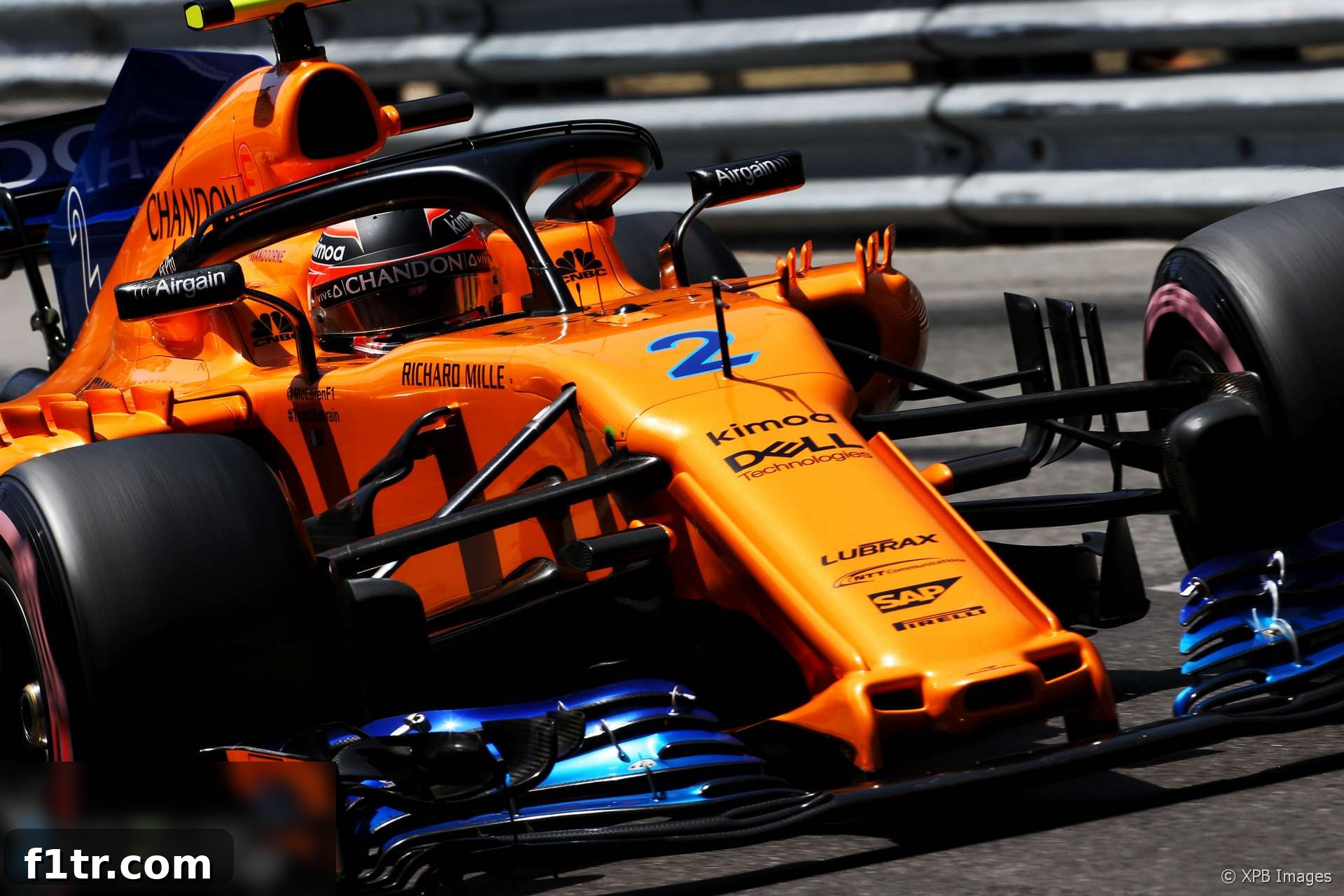
Formula 1, the pinnacle of motorsport, has long been defined by its pursuit of excellence and the fierce competition among its elite drivers and constructors. Central to this competitive spirit is the coveted points system, which determines champions and rankings. Recently, a significant debate has emerged regarding the potential expansion of this system beyond the traditional top 10 finishers, a proposal that has drawn considerable attention and mixed reactions from within the sport, notably from McLaren drivers Fernando Alonso and Stoffel Vandoorne.
The F1 Strategy Group, a key decision-making body in Formula 1, recently initiated discussions on revising the current points structure. The proposed changes explore the possibility of awarding points to the top 15 or even the top 20 finishers in each Grand Prix. This radical shift aims to potentially inject more excitement into the midfield battles and offer greater recognition to teams and drivers who often perform admirably but fall just short of the current points-paying positions. However, the prospect of such a change has sparked a lively discussion about the very essence of what it means to score points in Formula 1.
The Drivers’ Stand: Alonso and Vandoorne’s Opposition
Among the most vocal critics of extending the points system are McLaren’s experienced campaigner, Fernando Alonso, and his then-teammate, Stoffel Vandoorne. Their arguments largely revolve around preserving the exclusivity and prestige associated with scoring championship points.
Stoffel Vandoorne, who had secured three top-10 finishes in the year of this discussion, articulated a clear stance: “I feel like it should be an achievement to score points. It shouldn’t be just points rewarded for everyone.” Vandoorne’s sentiment underscores a fundamental belief among many in the F1 paddock – that points should be a testament to exceptional performance, a reward for breaking into an elite tier, not merely a reflection of finishing a race. Diluting this achievement, in his view, would diminish the significance of the sport’s competitive structure.
Fernando Alonso, a two-time world champion and a veteran of over 300 Grand Prix starts, echoed and expanded upon Vandoorne’s perspective. Alonso, who began his Formula 1 career in 2001 when points were awarded only to the top six finishers, has witnessed firsthand the evolution of the points system. It was later extended to cover the top eight in 2003 and then the current top 10 in 2010. Drawing on his extensive experience, Alonso stressed the historical difficulty of securing points in F1. “I think Formula 1 has been always quite difficult to get points,” he remarked. “Some elite guys take points and it was kind of a reward, a big moment when you score even two points or something.”
Preserving ‘Miracle Moments’ and F1’s Exclusivity
Alonso’s argument delves deeper into the emotional and historical fabric of Formula 1. He vividly recalled the poignant example of Jules Bianchi scoring ninth position at the 2014 Monaco Grand Prix, driving for the Marussia F1 team, which was one of the smaller, less-resourced outfits on the grid. This particular achievement was widely hailed as a “miracle” – a momentous occasion for a team that rarely saw its drivers in points-paying positions. Alonso emphasized, “If everyone scores points now maybe we lose that unique feeling in F1 that other categories they don’t have.”
This “unique feeling” is central to Alonso’s opposition. It speaks to the narrative power of a sport where every point is hard-fought and represents a significant triumph, especially for teams operating on tighter budgets. Broadening the points system, critics argue, could inadvertently dilute the impact of such heroic drives, turning rare achievements into more commonplace occurrences. Formula 1, in Alonso’s view, ought to maintain its identity as an exclusive arena where points are a truly special accomplishment.
“Whatever they decide will be OK but definitely Formula 1 seems more likely to be more exclusive the points places,” Alonso concluded, suggesting that while he would adapt to any new rules, the spirit of F1 is better served by keeping the points system more restrictive.
Alonso also injected a touch of humor into the debate by noting the financial implications of points for drivers – specifically, the cost of their superlicences, which is partly linked to the number of championship points accumulated. “If it affects the cost of the licenses it’s not good news!” he joked, highlighting a practical, if minor, consequence for the drivers themselves.
Arguments for Expanding the F1 Points System
While prominent drivers have expressed reservations, the F1 Strategy Group’s consideration of extending points is not without its proponents and logical arguments. The primary motivation behind such a proposal is often cited as a desire to invigorate competition throughout the entire field and provide greater recognition for the efforts of all teams, especially those in the midfield and at the back of the grid.
Boosting Motivation and Competition Beyond the Top Teams
One of the strongest arguments for extending points is the potential to significantly boost motivation for teams and drivers who routinely finish outside the current top 10. In the current system, a driver finishing 11th or 12th, despite a strong performance, receives no championship points. Expanding the system could mean that battles for positions like 14th or 18th become genuinely meaningful, as points are now on the line. This could lead to more aggressive strategies, closer racing, and a heightened spectacle throughout the entire Grand Prix, not just at the very front.
For smaller teams with more limited budgets, the prospect of consistently scoring even one or two points per race could be transformative. These points, while small in number, contribute to their standing in the Constructors’ Championship, which in turn influences prize money distribution. This financial incentive could be crucial for their survival and development, potentially leading to a more competitive and sustainable grid in the long run. It could also provide a more accurate reflection of their performance over a season, rewarding consistency even if it’s not always at the absolute sharp end.
Fairer Representation and Fan Engagement
Another point raised by advocates for change is that the current top-10 system might not adequately represent the effort and performance of all 20 cars on the grid. Every team invests immense resources, talent, and dedication into competing in Formula 1. To have 50% of the field consistently leave races without any tangible reward, despite pushing their limits, might be seen as demotivating and somewhat unfair. Awarding points further down the grid could be perceived as a fairer acknowledgement of every competitor’s contribution to the spectacle of Formula 1.
Furthermore, an expanded points system could potentially increase fan engagement. If points are awarded up to P15 or P20, spectators might find themselves paying closer attention to battles unfolding lower down the order. The championship narratives would not be solely focused on the top few teams but could encompass intriguing fights for minor points positions, adding another layer of excitement and unpredictability to each race weekend and the overall championship standings. Imagine a scenario where a thrilling battle for 12th place has significant implications for a team’s championship position – that’s something the current system rarely provides.
The Historical Evolution of the Formula 1 Points System
To fully appreciate the current debate, it’s essential to understand the historical context of how Formula 1 has awarded points since its inception. The sport’s points system has undergone several significant revisions, reflecting changes in the sport’s structure, the number of competitors, and the desire to optimize championship drama.
From Top 5 to Top 20: A Journey Through Time
When the Formula 1 World Championship began in 1950, points were awarded to the top five finishers, with an additional point for the fastest lap. The structure was 8-6-4-3-2, plus 1 for the fastest lap, and only the best four results from the season counted towards the championship. This system, with its emphasis on a select few and rewarding speed, laid the groundwork for future iterations.
Over the decades, as car reliability improved and grids became more consistent, the system evolved. The fastest lap point was eventually dropped. By 1960, the system shifted slightly, and by 1961, it settled into 9-6-4-3-2-1 for the top six finishers, a structure that remained largely stable for many years, highlighting the exclusivity of point-scoring positions.
A major overhaul occurred in 1991 when points were awarded on a 10-6-4-3-2-1 basis. This was a response to increased competitiveness and the growing number of teams capable of challenging for points. This era saw intense rivalries and championships decided by fine margins, with every point being incredibly valuable.
In 2003, acknowledging the increasing grid size and the competitiveness of more teams, the points system was expanded to the top eight finishers, with a new distribution of 10-8-6-5-4-3-2-1. This change aimed to better reward consistent performers and provide more opportunities for teams just outside the traditional top six.
The most significant modern change came in 2010. With a full grid of 20+ cars and the sport’s global expansion, the system was expanded to the current top 10 finishers. To maintain the prestige of winning, the victor was awarded a substantial 25 points, with subsequent positions receiving 18, 15, 12, 10, 8, 6, 4, 2, and 1 point respectively. This modern system was designed to heavily reward race wins and podium finishes, while still providing points opportunities for midfield teams, ensuring that more drivers and constructors had a tangible stake in each race’s outcome.
Each of these historical changes was implemented with specific goals in mind, whether it was to enhance championship drama, reflect grid composition, or provide fairer rewards. The current debate about extending points to the top 15 or 20 is merely the latest chapter in this ongoing evolution, a reflection of Formula 1’s continuous effort to adapt and optimize its sporting regulations for the best possible competition and spectacle.
Conclusion: Finding the Right Balance for Formula 1’s Future
The debate over expanding Formula 1’s points system is a complex one, touching upon the sport’s core values, its competitive integrity, and its future direction. On one side, drivers like Fernando Alonso and Stoffel Vandoorne champion the traditional view that points in Formula 1 must remain an exclusive achievement, a hard-won reward that signifies true excellence and creates indelible “miracle moments.” They argue that broadening the system risks diluting the prestige of points and potentially diminishing the sport’s unique allure.
On the other side, proponents of change highlight the potential for increased competition throughout the field, enhanced motivation for smaller teams, and a more equitable recognition of effort from all competitors. An expanded system could lead to more exciting battles further down the grid and provide vital financial incentives that could foster a healthier, more competitive Formula 1 ecosystem.
Ultimately, the decision by the F1 Strategy Group will require careful consideration of these conflicting perspectives. Formula 1 has always strived to strike a delicate balance between tradition and innovation, preserving its heritage while continually evolving to maintain its status as a captivating global spectacle. Whether the points system remains an exclusive club for the top 10 or opens its doors to a wider array of finishers, any change will undoubtedly shape the narrative and competitive landscape of Grand Prix racing for years to come. The challenge lies in finding a system that maximizes excitement and fairness without sacrificing the intrinsic value and esteemed achievement that Formula 1 points have always represented.
Related F1 Articles
- F1 feared “death knell” for Drive to Survive after Ferrari and Mercedes snub
- McLaren staff told us we were “totally crazy” to take Honda engines in 2018 – Tost
- ‘It doesn’t matter if we start last’: How Red Bull’s junior team aided Honda’s leap forward
- Honda’s jet division helped F1 engineers solve power unit problem
- McLaren Racing losses rise after Honda split
Browse all 2018 F1 season articles