In a season already proving to be a thrilling spectacle of raw talent and shifting dynamics, Andrea Kimi Antonelli has firmly cemented his place in Formula 1 history. Following his sensational breakthrough victory in Shanghai, where he achieved the coveted hat-trick of pole position, fastest lap, and victory, Antonelli replicated this dominant performance for the second consecutive round at the legendary Suzuka Circuit. This unparalleled display of skill and consistency has not only captivated fans worldwide but also heralded a new era in the sport, showcasing a young talent destined for greatness.
The young Italian prodigy’s triumph in Japan was more than just another win; it was a record-breaking achievement that reshaped the narrative of teenage success in Formula 1. By securing his second Grand Prix victory, Antonelli etched his name into the annals as the first teenager ever to win multiple Formula 1 grands prix. This remarkable feat sets him apart from even the sport’s current titans. Max Verstappen, for instance, remains the only other driver to clinch a victory in his teenage years, but he didn’t achieve his second win until after he turned 20, highlighting the sheer precocity and rapid ascension of Antonelli. Now, as the 82nd distinct driver to claim multiple F1 race victories, Antonelli joins an elite pantheon of motor racing legends, solidifying his status as a formidable force to be reckoned with for years to come. His ability to deliver such commanding performances, back-to-back, underscores a maturity and race craft rarely seen in such a young competitor.
Antonelli’s stellar performance at Suzuka had immediate and profound implications for the championship standings, propelling him to the very top for the first time in his burgeoning career. This significant shift at the apex of the drivers’ championship follows a similar trajectory seen just two races prior, when George Russell also found himself leading the world championship for the first time. The emergence of new points leaders is typically an uncommon occurrence in Formula 1; indeed, there have been more seasons of F1 racing than there have been drivers who’ve had the distinction of leading the world championship. This rarity makes the current season’s trend particularly noteworthy: it is the second time in consecutive seasons that two fresh faces have ascended to the top of the standings, signaling a dynamic and highly competitive era in Formula 1.
Intriguingly, in both instances where new leaders emerged at the championship’s helm, they were closely-matched teammates, intensifying the internal team battles. Last season, in 2025, McLaren’s dynamic duo, Lando Norris and Oscar Piastri, each led the standings for the first time, showcasing the team’s resurgent competitiveness and the individual brilliance of its drivers. Antonelli’s ascent to the championship lead is particularly poignant for Italian motorsport enthusiasts, as he is the first Italian driver to hold this coveted position since Giancarlo Fisichella achieved this distinction after winning the season-opening round of 2005. Furthermore, the sport has not witnessed two consecutive Grands Prix won by an Italian driver since the storied 1953 season. That year, the legendary Giuseppe Farina triumphed at the German Grand Prix, followed by Alberto Ascari’s victory at the Swiss round. Ascari himself was the last Italian driver to win consecutive races earlier that very year, with commanding performances at the Dutch and Belgian Grands Prix, underscoring the significant historical weight and national pride associated with Antonelli’s recent consecutive successes. His triumphs are not just personal milestones but a beacon of hope for Italian racing heritage.
While Antonelli commanded the headlines with his dominant display, the Japanese Grand Prix also offered a much-needed narrative of redemption and resurgence for Oscar Piastri. After enduring a particularly challenging start to the season, which saw him fail to start the first two Grands Prix due to unforeseen circumstances and technical woes, Piastri finally found significant reason to smile in Japan. Demonstrating impressive pace and strategic acumen, he skillfully led his first laps of the year, showcasing the raw talent and potential that earned him a coveted seat in Formula 1. There was even a strong possibility that Piastri could have secured a remarkable, morale-boosting victory, had it not been for the untimely deployment of the Safety Car, which effectively neutralized his hard-earned advantage and reshuffled the strategic landscape of the race. This strong showing marks a pivotal turnaround for Piastri and provides crucial momentum as the season progresses, proving his resilience and underlying speed.
Beyond individual achievements and team battles, the Suzuka race also marked a significant milestone for the sport as a whole: for the first time this year, every single driver on the roster started the race. This collective presence on the grid allowed Formula 1 to finally witness its first full 22-car grand prix since the 2016 Abu Dhabi Grand Prix. The intervening years have seen a dynamic and often turbulent evolution of the grid, reflecting the ever-changing landscape of Formula 1. Historic teams like Manor have departed, while new contenders and ambitious projects, such as Cadillac’s much-anticipated arrival, have emerged, signaling a healthy expansion of interest and investment in the sport. Furthermore, four prominent teams have undergone significant identity transformations to align with new ownership or brand strategies: Renault transitioned to Alpine, Force India evolved into Aston Martin, Toro Rosso rebranded as Racing Bulls, and Sauber embraced a future as Audi. These strategic changes underscore the sport’s constant flux, driven by commercial interests, brand ambitions, and relentless engineering innovation, all contributing to a vibrant and competitive ecosystem.
The 2026 Japanese Grand Prix also offered crucial insights into the emerging hierarchy of teams, with the ‘big three’ – widely presumed to be Mercedes, Ferrari, and McLaren, given their historical prowess and current competitive edge – dominating the top six positions. This consolidation at the front highlights the intense development race among the leading constructors and sets the stage for a compelling championship battle. Beyond this elite group, Pierre Gasly delivered a commendable performance, securing a valuable seventh-place finish for Alpine. For Gasly, this result is particularly significant, as it marks the first time in his career that he has scored points in all of the first three rounds of a Formula 1 season. This consistent scoring run finally provides a clear validation for his decision to depart from Red Bull’s junior division and join Alpine three years ago, a move that now appears to be paying considerable dividends for the French outfit and the French driver alike, showcasing a newfound level of stability and performance that had previously eluded him in his earlier career.
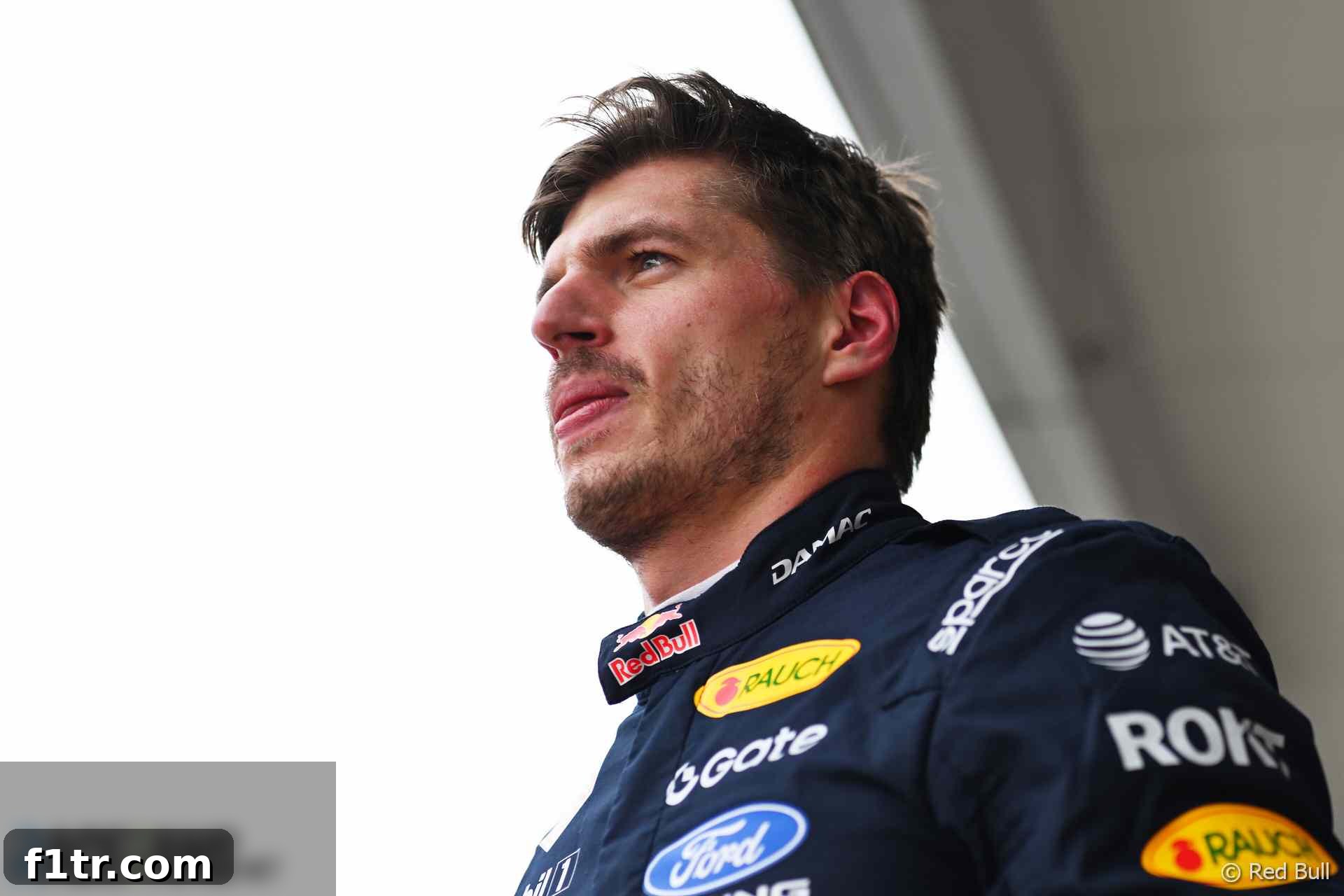
However, not all drivers are enjoying such a positive and consistent start to the campaign. Max Verstappen, a driver synonymous with dominance and seemingly insurmountable victories in recent seasons, found himself in an unfamiliar and frustrating position at Suzuka, spending the second half of the race locked in a futile bid to pass the Alpine ahead of him. His struggles continued, as he is yet to finish inside the top five this season, having amassed a modest total of just 12 points so far. This represents an uncharacteristically poor start for the reigning champion and marks his worst beginning to a season since he made his grand prix debut with Toro Rosso in 2015, where he managed to secure only six points over the first three rounds. The following year, still with Toro Rosso before his sudden promotion to Red Bull, Verstappen recorded 13 points over the opening three rounds – and notably, without the added advantage of points-scoring sprint races that are now a feature of the F1 calendar. Verstappen’s current predicament underscores the intensified competition and unpredictability defining the early stages of the 2026 season, raising significant questions about Red Bull’s immediate performance capabilities and their championship aspirations.
Despite Verstappen’s personal struggles, Red Bull Racing did manage to maintain a significant team achievement: they remain one of an impressive seven teams to have scored points in all three rounds at the start of the year. This exclusive group includes formidable competitors such as Mercedes, Ferrari, McLaren, Alpine, Racing Bulls, and Haas, showcasing an unprecedented level of competitiveness and reliability across a broad spectrum of the grid. Historically, such widespread points distribution at the very beginning of a season has never previously occurred in Formula 1, though seven teams did manage to score points over the first two rounds back in the 2012 season. This statistic alone highlights the depth of talent and engineering prowess now present throughout the grid, making every race a fiercely contested battle where even midfield teams have a consistent opportunity to make their mark on the championship.
The 2012 season also serves as another interesting historical parallel, as it was the last time a single F1 season featured a five-week gap between races. That year, the extended summer break strategically spanned five weeks between the Hungarian and Belgian Grands Prix, a planned respite for teams and drivers alike. However, in stark contrast to that planned hiatus, the current five-week interval in the 2026 calendar is an unforeseen consequence, necessitated by the unfortunate cancellations of the Bahrain and Saudi Arabian Grands Prix. This unplanned break introduces a unique set of challenges for teams and drivers, disrupting momentum, forcing a recalibration of development schedules, and impacting strategic planning for the remainder of the season. It adds another layer of unpredictability to an already captivating season, emphasizing that in the dynamic world of Formula 1, the unexpected is often the only constant, keeping fans and teams alike on the edge of their seats.
Over to you
The 2026 Japanese Grand Prix was brimming with fascinating stories, record-breaking moments, and unexpected twists that have profoundly impacted the championship narrative. Have you noticed any other compelling statistics or interesting facts that stood out from this thrilling race weekend? We invite you to share your insights, analyses, and observations in the comments section below, and join the lively discussion as we collectively dissect the unfolding drama of what promises to be an unforgettable Formula 1 season.
2026 Japanese Grand Prix Related Articles
- Alpine denies “sabotaging” Colapinto and criticises social media “hate” posts
- Verstappen starts season with lowest score over three rounds since his debut in F1
- Poor starts a ‘very high priority’ for Mercedes as drivers lose 21 places in four races
- “Two balls of steel!” How Leclerc won his battery battle with Hamilton and Russell
- Was Bearman right to question Colapinto’s role in his huge Suzuka crash?
Browse all 2026 Japanese Grand Prix articles