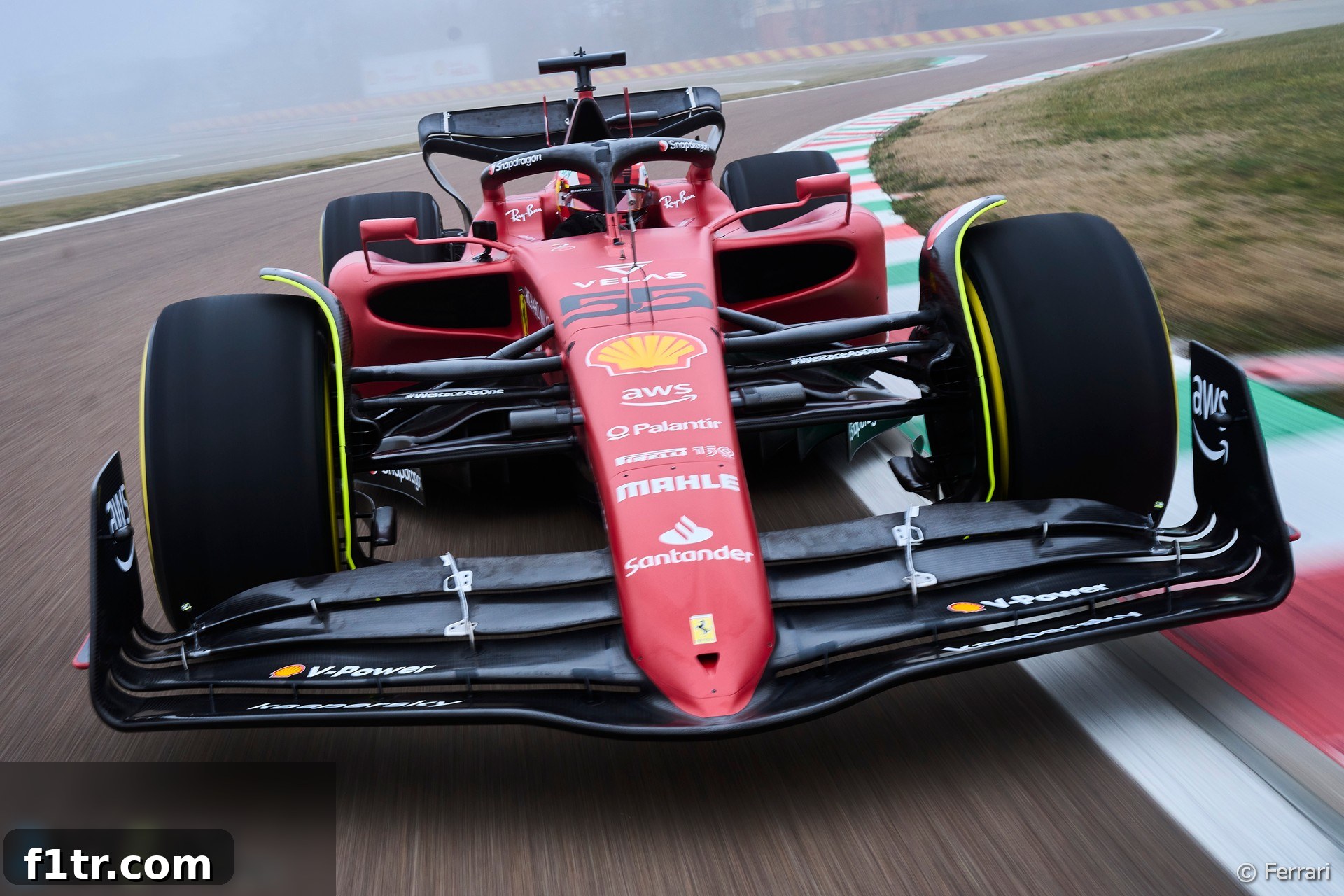
In a season marking a radical shift in Formula 1 regulations, Scuderia Ferrari unveiled its 2022 challenger, the F1-75, a name chosen to commemorate the 75th anniversary of the very first car to bear the iconic Ferrari badge. This meticulously engineered machine carries not only the weight of history but also the fervent hopes of millions of Tifosi worldwide, aiming to break the team’s 14-year drought for a world championship trophy.
The 2022 Formula 1 season ushered in a new era defined by a complete overhaul of technical regulations, primarily focusing on ground effect aerodynamics and the introduction of 18-inch wheels. Every team on the grid, including Ferrari, had to design their new cars from the ground up, embracing a philosophy far removed from previous generations. Ferrari’s journey into this new chapter began with a strategic decision to halt significant development on its 2021 campaign relatively early, redirecting resources and engineering talent towards the F1-75. This forward-thinking approach allowed them to dive deep into the complexities of the new rules, seeking innovative solutions to gain a competitive edge.
The team ended the 2021 season on an upward trajectory, showing promising signs of recovery and improved performance. This momentum, coupled with the early focus on the F1-75, instilled a cautious optimism within the Maranello camp. The car, revealed to the world on a Thursday and subsequently lapping Ferrari’s legendary Fiorano test track the very next day, immediately captivated observers with a suite of distinctive innovations and bold aerodynamic shapes. It visibly stood apart from the initial launches by competitors such as Haas, Aston Martin, McLaren, AlphaTauri, and Williams, while Red Bull had presented only a show car at that stage, hinting at Ferrari’s unique interpretation of the new rulebook.
Ferrari’s Aerodynamic Philosophy: An Innovative Approach
Enrico Cardile, Ferrari’s head of chassis, openly articulated the team’s commitment to an “innovative approach” when tackling the new regulations. He unequivocally emphasized that “Aerodynamics was definitely our number one priority.” This declaration set the tone for the F1-75’s design philosophy, where every curve, every duct, and every surface was meticulously sculpted to harness the new aerodynamic principles, particularly the crucial ground effect, which promised to redefine how downforce is generated in Formula 1.
Under the new rules, teams would rely heavily on underfloor aerodynamics to create downforce, moving away from the complex top-surface aero elements that dominated previous years. This shift meant that managing airflow around the sidepods, nose, and front wing became paramount for effectively feeding air into the critical venturi tunnels beneath the car. Ferrari’s design choices reflect a deep understanding of this new paradigm, aiming to maximize laminar flow and minimize drag while optimizing cooling.
The Distinctive Sidepod Design: A Bold Statement
Without doubt, the F1-75’s curvaceous and expansive sidepods emerged as its most eye-catching and distinctive feature. While official press materials and videos initially lacked an overhead perspective, it was immediately apparent that these sidepods were considerably wider and extended further back along the car’s length, drawing comparisons to the AMR-22 from Aston Martin. However, the similarities ended there, as Ferrari’s approach diverged significantly.
Unlike the AMR-22, which featured aggressive undercuts designed to channel air over the diffuser, the Ferrari F1-75 opted for a different strategy. Its sidepods presented an almost completely flat surface where prominent sponsor logos for Shell and Ceva logistics were prominently displayed (1). This design choice suggested that Ferrari prioritized preventing the disruptive “outwash” from the front of the car from curling back inwards towards the critical underfloor area. Instead of using deep undercuts to direct air over the diffuser, Ferrari appeared to be focusing on maintaining cleaner, more organized airflow alongside the car, potentially optimizing the flow into the rear diffuser by other means.
Complementing this unique sidepod philosophy, the F1-75 featured a ‘shrink-wrapped’ and remarkably tidy engine cover. This tight packaging strongly indicated that Ferrari had engineered their cooling systems to primarily extract heat through the sidepods, rather than relying on larger cooling exits situated behind or on top of the power unit. This approach typically allows for a more aerodynamically efficient rear end, reducing drag and allowing for more optimized airflow to the rear wing and diffuser.
Innovative Louvres and Sculpted Surfaces
Further distinguishing the F1-75’s sidepods was the reintroduction of cooling louvres, a feature making a comeback with the 2022 regulations. Similar to the AMR-22, the F1-75 sported a set of these louvres across the top of its sidepods (2). Comprising 12 distinct slots on each side, they began relatively parallel to the ground but exhibited a pronounced twist, reaching a near-45-degree angle as they approached the rear of the vehicle. These louvres play a crucial role in venting hot air from the car’s internal components, allowing Ferrari to design significantly smaller and more streamlined rear cooling exits, thereby helping to reduce overall drag – a critical factor for top speed.
Another truly differentiating aspect of Ferrari’s sidepod design was its heavily sculpted top surface (3). This distinctive concave section was unique among all the 2022 F1 contenders revealed at the time of the F1-75’s launch. The channeled air resulting from this sculpting appeared to be deliberately guided over the top surface of the beam wing, which is a small aerodynamic element positioned just above the diffuser. This concept aligns with approaches seen in other teams like AlphaTauri and McLaren, where rear cooling exits are also directed over the beam wing. The underlying idea is that the energized, hot air vented from the F1-75’s cooling louvres can be strategically flowed over the beam wing, interacting with the cleaner ambient air to produce additional downforce at the rear of the car.
Furthermore, this sophisticated sculpting might offer a secondary, yet significant, aerodynamic benefit. By shaping the sidepods to channel faster-moving air over the cooling louvres, Ferrari could potentially be leveraging Bernoulli’s principle. This principle states that an increase in the speed of a fluid occurs simultaneously with a decrease in pressure. Thus, creating a lower pressure zone above the louvres could effectively ‘suck’ air through them, enhancing their cooling efficiency within the sidepod. By generating a greater pressure differential across the radiators, Ferrari could theoretically increase its cooling capacity without the need for larger inlets or an expanded internal cooling area, contributing to overall aerodynamic efficiency and packaging benefits.
The Nose and Front Wing: A Sharp New Identity
Ferrari’s interpretation of the regulations governing the nose assembly also stood out from most of its competitors. Opting for a long and distinctively pointed design, the F1-75’s nose connected all the way to the main plane of the front wing. This contrasted sharply with the designs seen on cars from Aston Martin, McLaren, Haas, and Williams, where the nose typically attached to the second element of the front wing. Ferrari’s configuration, however, bore a resemblance to the renderings initially released by AlphaTauri, suggesting a shared understanding of its potential aerodynamic benefits. A longer nose that connects directly to the main plane can potentially manage airflow more effectively underneath the car, influencing how air is directed towards the floor and sidepods.
Adding to its unique character, the tip of the F1-75’s nose was notably sharper than those on other cars presented. Furthermore, the F1-75 became the first car to be launched featuring a small NACA duct strategically placed near the very tip of the nose (6). The precise function of this NACA duct remained a subject of speculation at the time of its reveal. While it could serve various purposes such as driver cooling, internal electronics cooling, or even subtly manipulating airflow for the front wing, a plausible theory suggested it might redirect air to the underside of the nose to help maintain attached airflow, reducing drag and improving overall aerodynamic stability.
A closer inspection of the nose revealed a sophisticated modular design, evident through two distinct split lines. The first was located above the Shell logo (5), and a second could be seen running down the nose between the Pirelli and Mahle logos (4). These lines indicated that Ferrari had ingeniously separated the structural crash element (forming the upper half of the nose) from the purely aerodynamic lower section. This modular approach offered a significant strategic advantage in a development-heavy season like 2022. It allowed Ferrari to rapidly evolve and change the aerodynamic parts of the front wing and nose designs without the cumbersome and time-consuming process of re-homologating the entire crash structure. This flexibility promised to be a useful trick, enabling the team to quickly advance their initial designs as the season progressed and new performance insights emerged.
The Front Wing: Less Aggressive, More Refined
In contrast to some of its rivals, the F1-75’s front wing did not present as aggressively shaped a profile. When viewed from the front, it conspicuously lacked the dynamic curve on the final element that many other 2022 cars had launched with (7). Instead, Ferrari opted for a design that attached higher up the nose and featured a relatively shallow profile across its elements. This less aggressive design might suggest a focus on generating a specific type of wake or managing turbulent air in a way that synergizes more effectively with the wider sidepods and the crucial underfloor. By not creating a highly energetic outwash with the front wing, Ferrari might be prioritizing clean airflow to the sensitive sidepod and floor entry regions, believing this to be more beneficial for overall downforce generation from the ground effect.
Chassis and Rear End Innovations: Fine-Tuning Performance
Beyond the headline-grabbing aerodynamic elements, the Ferrari F1-75 incorporated several other notable features that underscored its innovative design. These included specific approaches to the brake ducts, suspension layout, rear wing mounts, and the intriguing ‘devil horns’ situated on the sides of the airbox.
The brake ducts on the Ferrari F1-75 presented a middle-ground solution, sitting somewhere between the generously sized units seen on the Aston Martin AMR-22 and the remarkably tiny slits employed by McLaren. This choice reflects a balance between cooling requirements for the new larger brakes and minimizing aerodynamic drag around the wheel area.
The suspension concept adopted by Ferrari was in line with many of the other launched cars, featuring a push-rod configuration for the front suspension and a pull-rod setup for the rears. While this configuration has been a common trend in Formula 1 for its packaging and kinematic advantages, an interesting observation was how far forward the rear wishbones were attached to the chassis. This attachment point was significantly further forward than the center of the new 18-inch wheels (8). This seemingly unconventional positioning is likely a deliberate design choice aimed at creating more valuable space for the crucial diffuser tunnels underneath the car. By pushing the suspension components forward, Ferrari could potentially open up more volume for the venturi tunnels, thereby enhancing the car’s ground effect performance.
For the rear wing mount, Ferrari opted for a double swan-neck solution, a design that elegantly curves upwards to support the rear wing. Interestingly, these rear wing mounts attached at the mid-plane (9) of the rear wing, rather than on the top side as seen in designs from AlphaTauri, Aston Martin, and even the leaked Alfa Romeo. This mid-plane attachment could offer specific aerodynamic benefits by influencing the interaction between the airflow off the engine cover and the underside of the main plane of the rear wing, potentially optimizing downforce and reducing drag.
Another intriguing feature was the presence of small ‘devil horns’ on the sides of the air intake, a design element reminiscent of the McLaren MP4-20 from a previous era. These small vertical fins are likely intended to help clean up the airflow as it progresses towards the central portion of the rear wing. By managing and conditioning this turbulent air, they aim to enable the rear wing to operate more efficiently, ultimately producing more downforce and improving rear-end stability, particularly in high-speed corners.
The Unseen Advantage: Underfloor Aerodynamics
In the new era of ground effect aerodynamics, the underfloor of the Formula 1 car became arguably the single most critical performance differentiator. As such, Ferrari, like many of its rivals, exercised extreme caution in revealing any information about their underfloor aerodynamics. During the official launch event and in subsequent renders, the inlet to the underfloor was meticulously masked out, and the team carefully avoided showing this crucial area in detail. This secrecy underscores the strategic importance attributed to this part of the car, as teams sought to guard their intellectual property fiercely.
While the display car did appear to feature four vertical vanes in the underfloor inlet – a design element also observed on some other launch cars – it was highly doubted that this floor was in its final, race-spec configuration. In a season where underfloor aerodynamics would be the defining characteristic of vehicle performance, teams were doing their utmost to keep their cards close to their chest, holding back their ultimate designs until the last possible moment, often revealing them only during pre-season testing or even the first race weekend. The F1-75’s hidden floor design was a clear testament to this new battleground in Formula 1 innovation.
2022 F1 Season Insights
- Mercedes told me “you’re wrong” about 2022 car’s problems – Hamilton
- FIA confirms all 10 F1 teams complied with 2022 cost cap
- Steiner “not ashamed” of panning “slow” Schumacher in Drive to Survive
- Albon believes year out of F1 improved him as a driver
- Hamilton sees diversity gains in F1 years on from his ‘traumatising’ experience of racism
Browse all 2022 F1 season articles