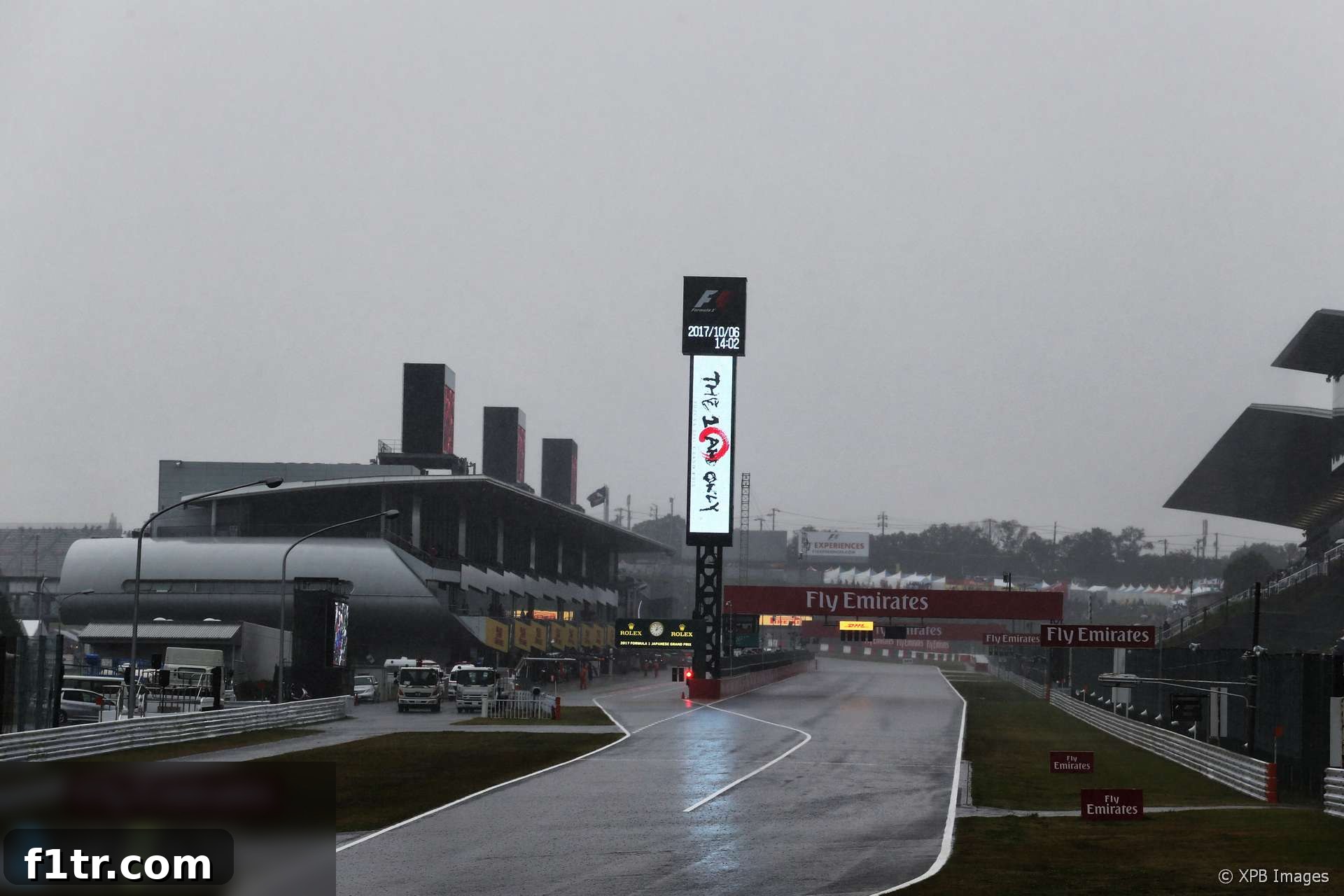
Super Typhoon Hagibis, a storm of immense power categorized as “violent,” is currently charting a course directly towards Japan from the south, casting a significant shadow over this weekend’s eagerly anticipated Japanese Grand Prix. All stakeholders involved in the execution of the prestigious Formula 1 event at Suzuka Circuit are maintaining a vigilant watch, with the unfolding situation being “closely monitored” hour by hour.
Advert | Become a Supporter & go ad-free
The colossal storm is projected to make landfall in Japan and directly impact the Suzuka region from Friday evening. Forecasters predict it will unleash a torrent of severe wind and rain that is expected to persist throughout Saturday, a day critical for the Formula 1 weekend’s schedule. The Japan Meteorological Office has issued grim projections, indicating that by the time Super Typhoon Hagibis passes over Suzuka, its sheer scale could exceed 200 kilometres in width, with devastating winds potentially reaching speeds of up to 230 kilometres per hour (143 mph). This extreme weather scenario presents an unprecedented challenge for race organizers, teams, and fans alike.
The Imminent Threat to the Japanese Grand Prix Schedule
The potential arrival of Super Typhoon Hagibis poses a direct and significant threat to the sporting schedule of the Japanese Grand Prix. Saturday’s program, which traditionally features the all-important final practice session and the thrilling qualifying battle that determines the grid for Sunday’s race, is now under severe scrutiny. The sheer intensity of the forecasted conditions means that standard operations might be impossible, necessitating robust contingency plans to safeguard all participants and ensure the integrity of the event, wherever possible.
In response to this looming threat, the Fédération Internationale de l’Automobile (FIA), Formula 1 Management (FOM), Suzuka Circuit officials, and the Japanese Automobile Federation (JAF) have collectively issued a statement. They confirm that “every effort is being made to minimise disruption to the Formula 1 timetable,” underscoring the commitment to delivering the Grand Prix. However, they unequivocally added that “the safety of the fans, competitors and everyone at the Suzuka Circuit remains the top priority.” This declaration highlights the delicate balance between upholding the sporting spectacle and ensuring absolute safety in the face of nature’s fury.
Understanding Super Typhoon Hagibis: A Force of Nature
Super Typhoon Hagibis is not merely a strong storm; it is classified as a “violent” typhoon, representing the highest category of tropical cyclones in the Western Pacific basin. These storms are characterized by sustained wind speeds exceeding 200 km/h, often accompanied by torrential rainfall, storm surges, and the potential for widespread flooding and landslides. The term “Super Typhoon” is reserved for typhoons with sustained wind speeds of at least 240 km/h (150 mph), equivalent to a Category 5 hurricane in the Atlantic. While Hagibis’s winds are projected to slightly reduce by the time it reaches Suzuka, its impact remains formidable, with its immense size suggesting a wide path of destruction and disruption. Japan, accustomed to seasonal typhoons, prepares meticulously for such events, but the intensity and timing of Hagibis present a particularly acute challenge for an international event like Formula 1.
Suzuka’s History with Extreme Weather: Lessons Learned
The Suzuka Circuit, revered for its iconic layout and challenging corners, is unfortunately no stranger to the wrath of severe weather. Its location, nestled on Japan’s Pacific coast, makes it vulnerable to the annual typhoon season. This history provides a sobering backdrop to the current situation, reminding all involved of the profound implications that extreme weather can have on motorsport.
Five years prior, in 2014, the Japanese Grand Prix was contested under exceptionally wet and perilous conditions as Typhoon Phanfone swept through the region. That race, marred by reduced visibility and treacherous grip, tragically saw Jules Bianchi suffer a severe accident from which he later succumbed to his injuries. The memory of this devastating incident undoubtedly looms large over the minds of organizers, teams, and drivers, reinforcing the absolute imperative of prioritizing safety above all else. Since then, Formula 1 has implemented enhanced safety protocols, including virtual safety car procedures and stricter guidelines for race suspension in adverse conditions, aiming to prevent a recurrence of such a tragedy.
The cancellation or postponement of sessions due to weather is also part of Suzuka’s challenging history. During the 2004 race weekend, qualifying was notably postponed to Sunday morning, a direct consequence of the powerful Super Typhoon Ma-On. Similarly, in 2010, heavy rainfall once again forced the rescheduling of qualifying to Sunday, demonstrating the circuit’s susceptibility to intense meteorological events. Beyond Formula 1, the circuit has seen other high-profile events affected; just two years ago, in 2017, Pierre Gasly’s pursuit of the Super Formula title at Suzuka was thwarted when two races were cancelled outright due to yet another formidable typhoon. These precedents highlight the complexities and difficult decisions race organizers face when confronted with such natural phenomena.
Logistical Challenges and Sporting Implications
The potential for a disrupted weekend extends far beyond the immediate safety concerns. Logistically, a super typhoon presents a nightmare scenario for Formula 1. Teams rely on precise schedules for car preparation, engineering meetings, and strategic planning. A Saturday washout would mean a severely truncated or even cancelled qualifying session, forcing alternative arrangements. The FIA’s sporting regulations allow for various options, including holding qualifying on Sunday morning before the race, or, in extreme cases, using Friday practice times or even championship standings to determine the grid. Each option carries its own set of challenges and potential controversies, impacting fairness and the competitive integrity of the event.
From a sporting perspective, a rain-affected Grand Prix weekend dramatically shifts the dynamic. While Friday’s practice sessions are still expected to proceed in relatively dry conditions, allowing teams to gather crucial data, the forecast for Saturday is grim. A complete washout is a strong possibility, leaving teams with limited dry running ahead of Sunday. Furthermore, the forecast for Sunday itself does not look encouraging, with a high probability of further rain, potentially extending into Monday. This scenario would test drivers’ wet-weather skills to their absolute limit and place immense pressure on strategists to make the right calls on tire compounds and pit stop timing. Car setups, typically optimized for dry conditions, would need rapid adjustments, adding another layer of complexity for engineers.
The impact on fans attending the event cannot be overstated either. Many travel from across Japan and indeed the world, making travel and accommodation arrangements months in advance. Typhoon-related disruptions could lead to flight cancellations, train delays, and challenges reaching the circuit. Organizers will need to provide clear, timely communication to ensure fan safety and manage expectations regarding the event schedule. The prospect of a cold, wet, and potentially shortened or cancelled race day is deeply disappointing for spectators who have invested significant time and money to witness Formula 1’s spectacle.
Advert | Become a RaceFans supporter andgo ad-free
Looking Ahead: Vigilance and Adaptation
As Super Typhoon Hagibis continues its relentless approach, the entire Formula 1 paddock and the wider racing community remain on high alert. The collaboration between the FIA, F1 Management, Suzuka Circuit, and the JAF is crucial in navigating these treacherous waters. Their collective experience, combined with a steadfast commitment to safety, will guide the decisions made in the coming hours and days. While the desire to run a full and spectacular Japanese Grand Prix is strong, the lessons of the past underscore that human safety must always take precedence over sporting ambition.
Fans and enthusiasts are strongly advised to stay informed through official channels and reliable news sources. For the most up-to-date information on track conditions and session updates throughout the weekend, keep a close eye on RaceFans Live and the RaceFans Twitter account. The unpredictable nature of typhoons demands constant vigilance and the readiness to adapt to rapidly changing circumstances.
2019 Japanese Grand Prix: Further Insights
- F1 is “sometimes not the nicest sport” says Ricciardo after latest disqualification
- Bottas admits “lucky” Suzuka start was aided by Vettel’s early move
- Leclerc: It would have been wrong not to penalise us in Japan
- Updated championship points and Japanese Grand Prix result following Renault’s disqualification
- Top ten pictures from the 2019 Japanese Grand Prix
Browse all 2019 Japanese Grand Prix articles