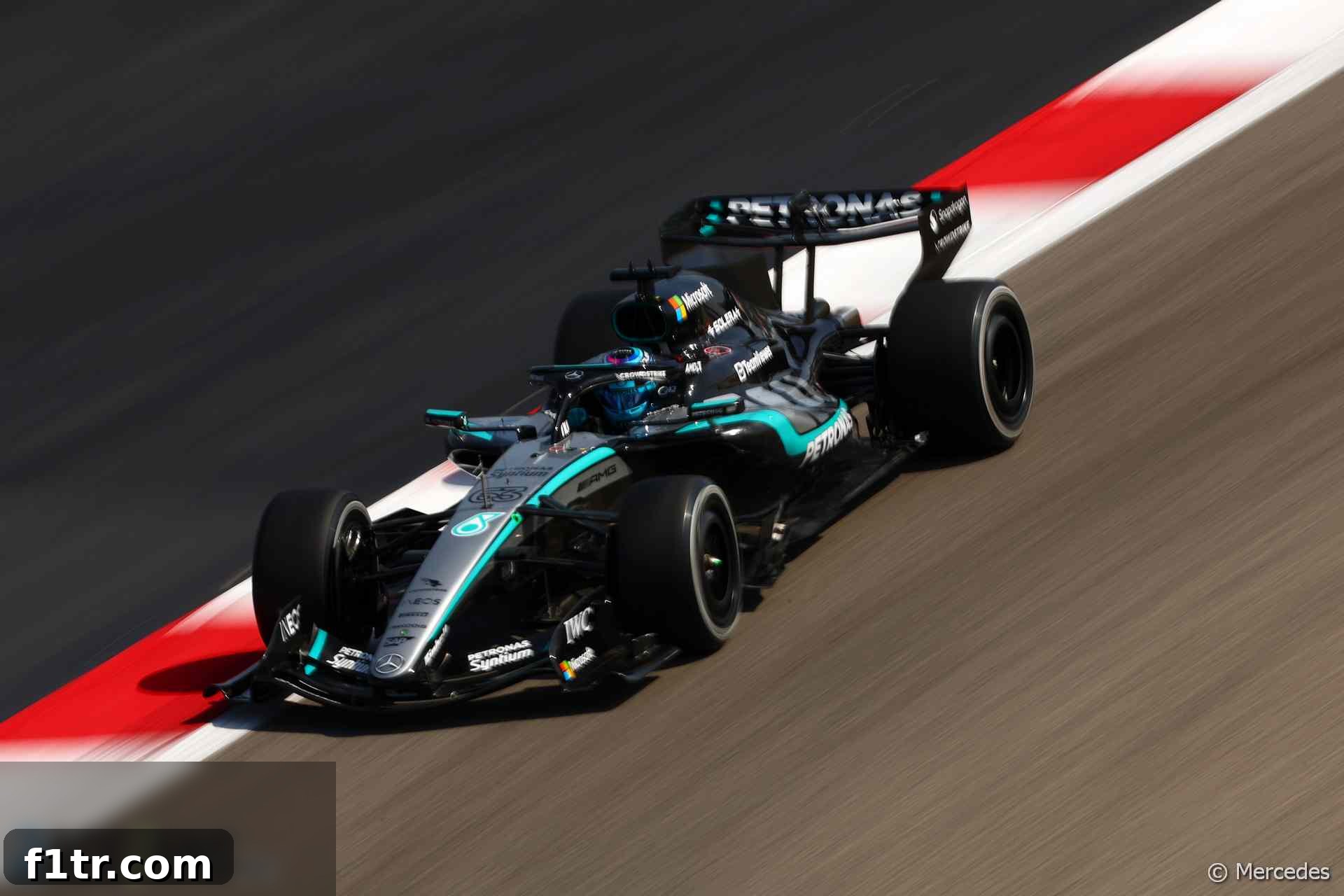
Thursday’s F1 Round-Up: Navigating the Future of Motorsport
Welcome to RaceFans’ comprehensive Thursday round-up, your essential guide to the latest developments, insights, and debates shaping the world of Formula 1. Today, we dive deep into the strategic complexities of active aerodynamics, hear poignant reflections from rising stars, and explore critical discussions surrounding the sport’s commercial landscape. From the trackside technicalities to the boardrooms, we bring you the stories that matter, offering a clear and engaging perspective on the dynamic realm of Formula 1, ensuring you stay informed on every turn and twist of the racing world.
Active Aerodynamics and F1’s Regulatory Path: A Fan’s Perspective
Today’s ‘Comment of the Day’ sparks a crucial debate surrounding Formula 1’s approach to technological innovation and race strategy. Reader @Stefmeister offers a sharp critique of the sport’s conservative implementation of active aerodynamics and the new override mode, questioning whether these advancements truly serve to enhance the racing spectacle or merely act as regulatory compromises. His insightful commentary raises pertinent questions about driver autonomy and the true spirit of innovation within the pinnacle of motorsport.
It’s surprising/disappointing that they have kept DRS style zones for this given how the purpose of the active aero isn’t to aid overtaking or even necessarily to improve performance but rather to reduce drag in order to help with energy management.
It would have been far more interesting if they instead had places where it couldn’t be used (Though some flat out corners where they feel it would be unsafe for instance) but then otherwise just left it up to the drivers to figure out when/where to use it.
I feel the same about the override mode as well. As I always felt with DRS just use it like a push-to-pass and give everyone the same amount of seconds or uses for the race and just leave it up to the drivers to figure out when/where they want to use it both to attack as well as defend. At least add’s some element of strategy and driver input rather than just specifying when/where it can be used with no limits to how much.
So much of this stuff now just feels like a compromise needed as a result of the engines rather than something introduced because they genuinely feel that it’s a worthwhile innovation that will make F1 better. The active aero exists because of the removal of the MGU-H and all the knock-on effects that had to energy harvesting and the increased need to manage the energy and then the override mode exists because the introduction of active aero meant they couldn’t retain DRS.
@Stefmeister
Stefmeister’s perspective highlights a growing concern among enthusiasts: that Formula 1, in its relentless quest for technological advancement, sometimes defaults to overly restrictive rules that inadvertently stifle driver ingenuity and strategic depth. The core of the argument revolves around the perceived underutilization of active aerodynamics. While initially touted as a sophisticated tool primarily for energy management – a critical aspect in the hybrid era – its deployment within established DRS-style zones seems to limit its strategic potential. This approach effectively reduces it to a passive system rather than an active, driver-controlled element, diminishing the true innovative potential it holds.
This restrictive application contrasts sharply with the more dynamic vision of drivers having the autonomy to deploy active aero outside of pre-defined zones. Such freedom would demand significantly greater skill and strategic foresight, forcing real-time decisions on when and where to optimize drag reduction for either attack or defense, thereby enriching the tactical layers of racing. Furthermore, the discussion extends to the ‘override mode,’ which Stefmeister suggests should function more akin to a ‘push-to-pass’ system. This concept advocates for a finite resource – such as a limited number of seconds or uses per race – empowering drivers to make critical, high-stakes decisions on deployment. Such an implementation would undeniably inject a dynamic layer of strategy into Grand Prix racing, moving beyond the current, often predictable, activation points and fostering more spontaneous, exciting moments.
The underlying sentiment of Stefmeister’s critique is clear: these technological introductions feel less like genuine innovations designed inherently to improve racing and more like necessary adaptations stemming from broader engine regulation changes. Specifically, the removal of the MGU-H (Motor Generator Unit – Heat) necessitated new approaches to energy harvesting and management, subsequently leading to active aero. This, in turn, prompted the development of an override mode as a substitute for DRS. This critical viewpoint invites further dialogue on how F1 can strike a better balance between technological advancement, regulatory oversight, and the inherent excitement of driver-led strategic battles, ensuring that innovation truly elevates the sport rather than merely serving as a workaround for previous regulatory shifts.
F1 Headlines Across the Web: Key Insights and Developments
Beyond the technical debates on track and in the regulatory forums, the world of Formula 1 continues to buzz with significant news and intriguing narratives from various corners of the globe. Our daily round-up meticulously gathers pivotal stories from leading publications, offering a comprehensive snapshot of the sport’s diverse landscape. This includes everything from incisive financial analyses and poignant driver reflections to crucial ethical discussions that shape F1’s public image. Here’s a closer look at the key headlines making waves and shaping the discourse within the vibrant motorsport community:
Formula 1’s Pivotal Year (Financial Times)
The Financial Times, a beacon of business journalism, delves into what promises to be a transformative year for Formula 1, capturing Mercedes Team Principal Toto Wolff’s intriguing perspective on the upcoming regulatory shifts. While F1 teams and engineers brace themselves for “seismic changes” behind the scenes, particularly regarding the complex technical regulations that profoundly impact car design, aerodynamic philosophy, and overall team strategy, Wolff, in a candid assessment, suggests that these profound technical shifts might barely register with the casual viewer. His statement, “‘These are all factors that for us mean a seismic change of regulations,’ he says. ‘For anybody watching who is not into the very (minor) details, it won’t make a difference,'” underlines a crucial, perennial challenge for the sport: balancing groundbreaking engineering advancements with the preservation of an engaging, accessible viewing experience for its rapidly expanding global fanbase. This thought-provoking article prompts a deeper reflection on how F1 communicates its continuous evolution to its diverse audience, striving to ensure that the cutting-edge technical prowess translates into palpable excitement and comprehensible drama on track for all fans, regardless of their depth of knowledge about the sport’s intricate details.
Bearman on Max vs Lewis, Mental Struggles, and Ferrari Return? (High Performance Podcast)
Rising British talent Oliver Bearman, widely tipped for a future in Formula 1, opens up in a remarkably revealing interview on The High Performance Podcast. He offers an unvarnished and honest look into the immense mental fortitude required to navigate the high-pressure, cutthroat world of elite motorsport. Bearman candidly recounts a particularly challenging period in his young career, marked by a frustrating first half of a season where tangible progression seemed elusive and self-doubt crept in. His raw honesty – “‘I just left the circuit with question marks everywhere. It’s not going to plan, this is not how I intended to finish my first half of the season. I’m not seeing any progression here and it’s just challenging. I had to have a really tough conversation with myself and a tough conversation with my mental coach. At that point I was last in the championship as well, of all the drivers that have scored points, so there was people below me, but they’d scored zero points. And we sat down and we were like, this isn’t going to work. You’ll be packing your bags if you continue driving like this and making these mistakes. (…) Because F1 is cutthroat and I had four or five races where it just wasn’t working. I had this stupid Silverstone thing. I had this weekend in Budapest and you don’t see progression. So the people deciding my future don’t see improvement. And what do you do when you don’t see improvement? You get rid'” – underscores the immense psychological and professional pressure young drivers face. The conversation serves as a potent reminder of the often-unseen psychological battles fought away from the glamour of the track, emphasizing the critical role of mental resilience, self-awareness, and professional support in overcoming inevitable setbacks within Formula 1’s unforgiving environment. His struggles highlight the fine margins and constant scrutiny that define the arduous journey towards achieving and sustaining an F1 career.
Russell ‘Elite’ and a ‘Leader’ – Now He May Have Car to Challenge for Title (BBC)
The BBC Sport analysis shines a spotlight on George Russell, positioning him as an “elite” talent and a formidable “leader” within the competitive Formula 1 paddock. The article not only celebrates Russell’s established capabilities but also speculates with considerable optimism on his potential to contend for a world title, particularly given the anticipated improvements and competitive edge of his car in the upcoming seasons. However, the BBC piece also offers a crucial, cautionary note regarding the often-overheated expectations placed on emerging talents, specifically drawing a parallel to the highly touted Andrea Kimi Antonelli. The quote, “‘I’m absolutely certain it will be a good year for (Antonelli), but I don’t think we should expect him to be like George all the time,'” serves as a vital reminder that while prodigies emerge and shine brightly, each driver’s developmental journey is unique and unfolds at its own pace. It thoughtfully tempers the sometimes-unrealistic speculation surrounding young drivers, advocating for patience, a realistic assessment of their development curve, and allowing them the space to grow without the immediate burden of matching established champions. This piece thoughtfully balances the excitement around established stars with the careful nurturing of future champions, recognizing the diverse and challenging paths to success in F1.
Campaigners Say Big Tobacco Targets Kids via F1, Call for Sponsorship Ban (Reuters)
Reuters reports on a contentious and ongoing debate that continues to cast a shadow over Formula 1: the persistent presence of tobacco company sponsorships within the sport and the ensuing vehement backlash from public health campaigners globally. Organizations, including the influential Campaign for Tobacco-Free Kids and the American Lung Association, have voiced strong concerns, asserting that these sponsorships are a calculated and cynical effort to “reach the same young people Formula One has worked hard to attract.” Their letters, viewed by Reuters, explicitly call for the Formula One Group to avoid complicity in these marketing tactics and further urge F1 partners with significant youth followings, such as Disney and Lego, to actively advocate for a comprehensive ban on nicotine pouch sponsorships by 2026. This article reignites the critical ethical discussion around F1’s commercial partnerships, particularly concerning products that pose significant public health risks. It highlights the sport’s growing responsibility to its expanding, diverse, and often young fanbase, challenging F1 to align its commercial strategies with its stated values of promoting health, youth engagement, and a positive global image. The call for a ban underscores the broader societal expectation for major sports to uphold ethical standards in their commercial dealings.
Van Amersfoort Racing Appoints Otmar Szafnauer as Chief Executive Officer and Managing Partner (Van Amersfoort Racing)
In a significant and strategic development for the junior motorsport ladder, Van Amersfoort Racing (VAR), a prominent and highly respected team in feeder series like Formula 2 and Formula 3, has announced the appointment of Otmar Szafnauer as its new Chief Executive Officer and Managing Partner. Szafnauer, a name synonymous with Formula 1 leadership, brings an unparalleled depth of “more than three decades of experience in international motorsport, including successfully leading a number of Formula 1 Teams.” This strategic move by VAR signals an ambitious new phase of development and expansion for the Dutch outfit. Szafnauer’s extensive operational and strategic expertise, gained at the very pinnacle of motorsport, is expected to significantly bolster VAR’s capabilities, potentially reshaping its trajectory and further solidifying its crucial role in nurturing the next generation of F1 talents. His appointment could very well mark a new era of accelerated growth, enhanced performance, and increased prominence for the already highly regarded racing outfit, impacting the future landscape of junior formula racing.
RaceFans always endeavours to credit original sources and provide accurate, timely information. Want to share a relevant motorsport link or breaking news with us? We encourage our readers to send it in via the contact form. Your contributions are invaluable to our vibrant and informed motorsport community.
Advert | Become a RaceFans supporter andgo ad-free – enjoy an uninterrupted reading experience across our site and help us continue our independent motorsport journalism and in-depth analysis.
- For a comprehensive list of official F1 accounts, key motorsport personalities, and relevant news sources to follow, explore the RaceFans F1 social media directory. Stay connected with the pulse of Formula 1 and never miss an update!
Australian Grand Prix Coverage: Evolving Our RaceFans Experience
As the Formula 1 season gears up for its highly anticipated first Grand Prix in Australia, RaceFans is announcing some important, albeit challenging, adjustments to our coverage strategy for the upcoming season. While we remain steadfastly committed to delivering high-quality motorsport journalism and insightful analysis that our readers expect, for reasons related to both optimizing time management and ensuring cost efficiency, we will be implementing a few structural changes. Specifically, certain beloved features that were integral to last year’s comprehensive coverage, such as our live session reports which provided real-time updates, and our detailed post-event driver ratings which offered in-depth individual performance assessments, will no longer be published. We fully understand that these alterations may come as a disappointment to some of our most dedicated and long-standing readers, and we sincerely apologize for any inconvenience or frustration this necessary evolution may cause. Our strategic goal with these adjustments is to focus our valuable resources on providing even deeper analytical content, breaking news, exclusive features, and thought-provoking opinion pieces that continue to inform, engage, and inspire our passionate F1 community, ultimately adapting to ensure the long-term sustainability and unwavering quality of RaceFans as your premier source for motorsport news.
Birthday Cheers: Celebrating Members of the RaceFans Community!
Join us in extending warm wishes and heartfelt congratulations to members of our RaceFans family who are celebrating their birthdays today! A very Happy Birthday goes out to IDR, Jarred Walmsley, TommyB, Jake, and James! We hope you all have a fantastic day filled with celebration, joy, and perhaps a touch of motorsport excitement. May your day be as thrilling as a last-lap overtake!
On This Day in Motorsport History: Milestones and Legends
Each day brings a new opportunity to look back at the rich and vibrant tapestry of motorsport history, recalling pivotal moments and celebrating the legends who shaped the sport into what it is today. Today is certainly no exception, marking several significant anniversaries that underscore the enduring legacy and relentless innovation inherent in racing.
- Born on this day in 1975, Brazilian racing driver Luciano Burti celebrates his 51st birthday. Burti competed in Formula 1 for Jaguar and Prost Grand Prix during the 2000 and 2001 seasons, leaving his mark on the sport with his raw talent, undeniable speed, and courageous determination despite facing significant challenges throughout his F1 tenure. His career serves as a testament to the sheer grit required to compete at the highest level of motorsport.
- Exactly 45 years ago today, McLaren Racing achieved a truly groundbreaking milestone with the first test run of its revolutionary MP4, later globally celebrated as the MP4/1. This iconic car made history by featuring the world’s first all-carbon fibre monocoque chassis in Formula 1, a pioneering innovation that drastically enhanced driver safety by improving crash resistance and significantly increased chassis rigidity for superior handling and performance. Its inaugural test at Silverstone marked a seismic shift in Formula 1 car design and engineering philosophy, setting new, unprecedented standards for composite material usage that continue to influence motorsport engineering and car construction to this very day. The MP4/1’s introduction was a bold testament to McLaren’s visionary and innovative spirit, forever changing how F1 cars were conceived, designed, and constructed, laying the foundation for modern safety cells.
- Also 40 years ago today, the dynamic and highly skilled duo of Derek Warwick and Eddie Cheever steered their formidable Jaguar to a triumphant victory at the prestigious Silverstone 1000km endurance race. This significant triumph in sports car racing highlighted Jaguar’s formidable presence and engineering prowess in the endurance racing scene during that golden era. It showcased not only the exceptional driver skill required for such demanding races but also the superb engineering excellence and reliability of the Jaguar machine on one of motorsport’s most iconic and challenging circuits, solidifying their legacy in the annals of sports car history.
Advert | Become a RaceFans supporter andgo ad-free and actively support independent motorsport journalism. Your valuable contribution directly helps us deliver quality, ad-free content without interruptions, ensuring the future of our in-depth F1 analysis.
As we conclude today’s comprehensive RaceFans round-up, it’s abundantly clear that Formula 1 remains a dynamic and ever-evolving sport, continuously shaped by intricate technical debates, inspiring personal triumphs, critical ethical considerations, and a rich, unparalleled history. We invite you to continue engaging actively with these compelling stories and profound discussions, playing an integral role in shaping the vibrant future of our motorsport community. Your passion and insights are what make RaceFans thrive. Thank you for joining us today, and we eagerly look forward to bringing you more in-depth coverage, expert analysis, and all the breaking news from the thrilling world of Formula 1.