The legendary Autodromo Nazionale Monza, often revered as the ‘Temple of Speed’, presents a unique aerodynamic challenge on the Formula 1 calendar. Its long, high-speed straights demand an entirely different approach to car setup compared to most circuits, prioritizing minimal drag and maximum top speed above all else. For this weekend’s Italian Grand Prix, seven Formula 1 teams have arrived armed with specially designed aerodynamic updates, meticulously engineered to slice through the air with greater efficiency.
While the fundamental strategy for Monza involves trimming downforce levels to the absolute minimum across the grid, a significant number of teams have gone a step further. They’ve introduced refined, circuit-specific components intended to optimize their cars for the fastest track in F1. Not all teams have pursued this route, however, with AlphaTauri, Alfa Romeo, and Haas opting to rely on existing low-downforce packages rather than introducing new hardware.
Interestingly, some of these “new” parts aren’t entirely unseen. Teams like Ferrari and Williams had previously brought similar low-drag configurations to Spa-Francorchamps, another high-speed venue, but ultimately chose not to run them. This suggests a cautious approach to deployment, perhaps waiting for the most opportune moment or a circuit where their benefits would be unequivocally clear, such as Monza.
Formula 1 Teams’ Aerodynamic Updates for the Italian Grand Prix: Maximizing Speed at Monza
The FIA technical declarations confirm a host of modifications designed to gain precious milliseconds on Monza’s lightning-fast straights. Here’s a detailed look at the car updates officially submitted by the teams for this high-stakes race weekend:
Mercedes
Front Wing
Reason for Change: Circuit specific – balance range.
Difference: “Reduced camber flap.”
Description: Mercedes has introduced a front wing flap featuring reduced camber. This modification is crucial for achieving the desired aerodynamic balance on a circuit like Monza. By reducing the curvature, or camber, of the front wing flap, the team aims to decrease the amount of downforce generated at the front of the car. This directly corresponds to the lower downforce generated by their Monza-specific rear wing, ensuring the car remains balanced and predictable even at extreme speeds. The objective is a lower overall drag profile without compromising handling stability, particularly under braking and through the chicanes.
Rear Wing
Reason for Change: Performance – drag reduction.
Difference: “Reduced camber beam wing.”
Description: In line with their front wing strategy, Mercedes has also brought a beam wing with reduced camber. The beam wing, located at the very rear of the car below the main rear wing, plays a vital role in generating additional downforce and influencing the airflow around the diffuser. For Monza, a reduced camber design means less angle of attack, resulting in a significant reduction in both aerodynamic load and drag. This change is specifically tailored to suit Monza’s unique characteristics, where straight-line speed is paramount, allowing the car to punch through the air with greater ease and maximize top speeds down the long straights.
Red Bull
Rear Wing
Reason for Change: Circuit specific – drag range.
Difference: “Rear wing flap chord length.”
Description: Red Bull has made a precise adjustment to its existing low downforce rear wing setup. The team has applied a ‘trim’ to the rear wing flap, specifically targeting its chord length. The chord length refers to the measurement from the leading edge to the trailing edge of an aerodynamic surface. By shortening this length, Red Bull effectively reduces the surface area of the flap that interacts with the airflow, thereby further decreasing aerodynamic load and, crucially, drag. This fine-tuning is implemented with Monza’s demanding straight-line speed requirements in mind, aiming to extract every possible kilometer per hour from the car on the circuit’s notorious long sections. The change aims for optimal efficiency on a track where minimizing air resistance is more critical than maximizing cornering grip.
Ferrari
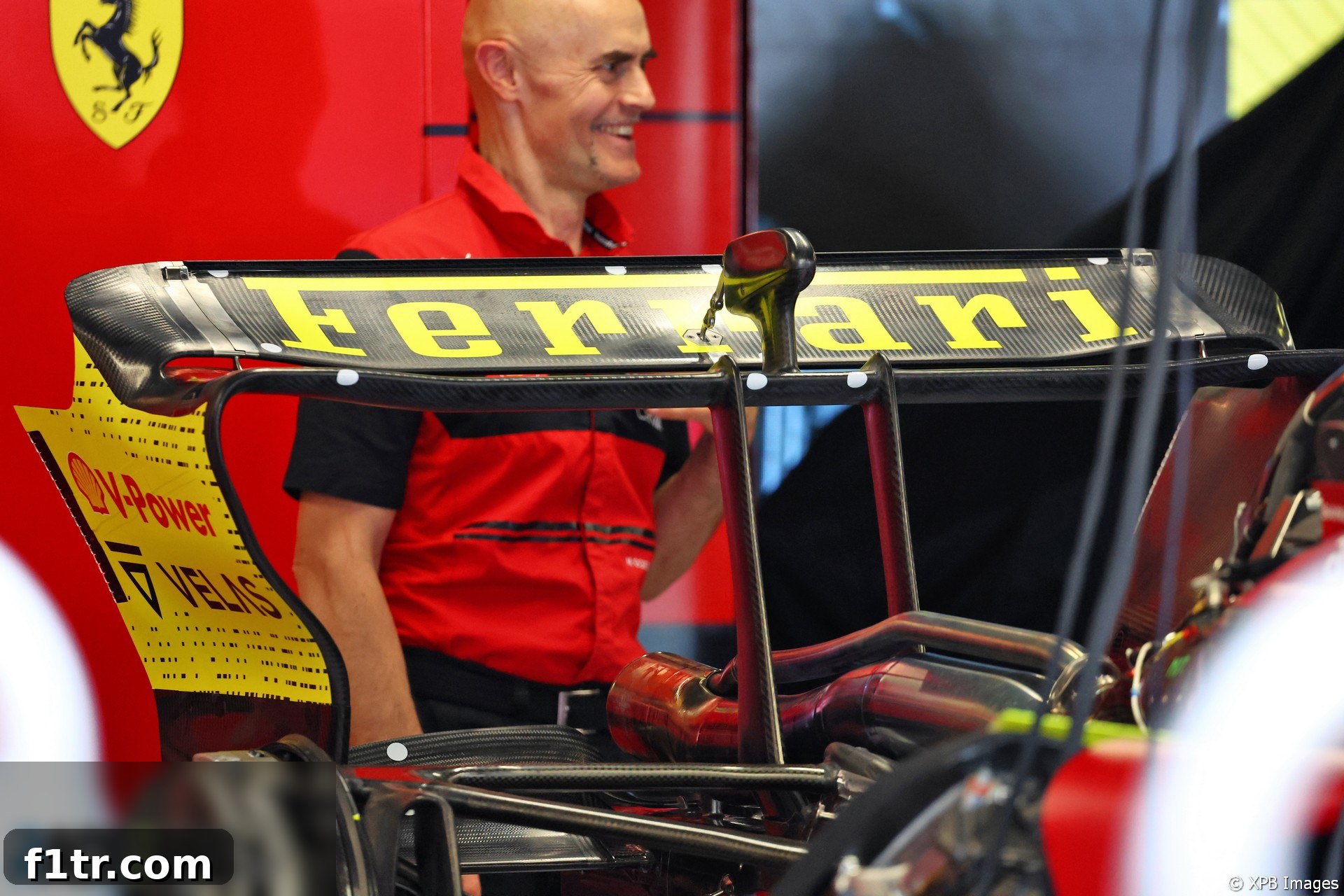
Beam Wing
Reason for Change: Circuit specific – drag range.
Difference: “Lower Downforce Beam Wing design.”
Description: Ferrari has introduced a specialized single-element beam wing for the Italian Grand Prix. This design choice is a direct response to the specific aerodynamic and efficiency requirements of the Monza circuit layout. A single-element beam wing significantly reduces the drag generated at the rear of the car compared to multi-element designs, which are typically used for higher downforce tracks. This component was actually seen during the Belgian Grand Prix weekend at Spa-Francorchamps, another high-speed circuit, but was not ultimately fitted to the car for competition. Its deployment at Monza underscores the Scuderia’s commitment to optimizing their car for maximum straight-line performance on home soil, attempting to balance the need for minimal drag with sufficient stability for the few high-speed corners and chicanes.
McLaren
Front Wing
Reason for Change: Circuit specific – balance range.
Difference: “Revised, shorter chord front wing flap.”
Description: McLaren has brought a redesigned front wing flap specifically for Monza. This revised flap features a shorter chord length, which directly translates to a reduction in the front wing’s load. The primary goal of this change is to enable the car to achieve optimal balance when running in a low-drag configuration. By reducing front downforce in conjunction with a lower downforce rear wing, McLaren aims to maintain car stability and handling predictability, especially crucial for quick changes of direction through Monza’s chicanes, while still achieving the required minimal drag for the straights. This careful balance ensures the car remains manageable at high speeds without generating excessive drag.
Rear Wing
Reason for Change: Circuit specific – drag range.
Difference: “Shorter chord rear wing flap.”
Description: Complementing their front wing update, McLaren has also introduced a smaller rear wing flap for the Italian Grand Prix. Similar to the front wing, this rear wing flap boasts a shorter chord, which is an intentional choice to allow the team to run a significantly lower drag setup. The reduction in chord length directly reduces the aerodynamic resistance created by the rear wing, enabling the car to achieve higher top speeds. This option provides McLaren with the flexibility to fine-tune their drag levels based on track conditions and performance objectives, ensuring they are perfectly equipped to tackle Monza’s unique demands where outright speed often dictates success.
Alpine
Beam Wing
Reason for Change: Performance – drag reduction.
Difference: “Removal of Beam Wing Gurney.”
Description: Alpine’s update for Monza is focused on their beam wing. They have opted for the removal of the Gurney flap from their beam wing. A Gurney flap is a small, perpendicular lip added to the trailing edge of a wing element, designed to increase local pressure difference and thus boost downforce, albeit with a slight increase in drag. For a low downforce circuit like Monza, the trade-off shifts dramatically towards drag reduction. By removing this Gurney flap, Alpine significantly reduces the overall drag generated by the beam wing, which in turn enhances the car’s straight-line speed. This targeted modification is a clear indication of Alpine’s strategy to prioritize efficiency and top speed on Monza’s long stretches, sacrificing a minor amount of downforce for crucial aerodynamic gains.
Aston Martin
Front Wing
Reason for Change: Circuit specific – balance range.
Difference: “For this event we have a new front wing flap which reduces the chord of the final element with associated re-profiling. These components were brought to a previous event but not used on track.”
Description: Aston Martin has introduced a new front wing flap designed to reduce the chord of its final element, accompanied by corresponding re-profiling. This intricate modification is aimed at reducing the front wing load. The ultimate goal is to achieve lower aerodynamic balances when paired with a smaller rear wing. This ensures that the car remains aerodynamically balanced and predictable, particularly important when running extreme low-downforce setups. While these components had been brought to a previous event, their deployment at Monza signifies the team’s confidence in their suitability for the unique demands of the circuit. The focus remains on maintaining front-end stability while minimizing overall drag.
Rear Wing
Reason for Change: Circuit specific – drag range.
Difference: “The new rear wing has a shorter chord flap compared to the previous low-drag version. These components were brought to a previous event but not used on track.”
Description: Aston Martin’s new rear wing features a flap with a shorter chord compared to their previously available low-drag version. These geometric changes are specifically engineered to reduce the rear wing load and, consequently, reduce drag. By shedding drag, the team can optimize the car’s setup for the unique characteristics of the Monza circuit, allowing for higher top speeds on the long straights. Similar to their front wing, these rear wing components were available at an earlier event but were not utilized. Their debut at Monza highlights a strategic decision to fully embrace the low-drag philosophy required for success at the ‘Temple of Speed’, aiming for peak aerodynamic efficiency.
Williams
Beam Wing
Reason for Change: Circuit specific – drag range.
Difference: “Optional smaller single element beam wing. This wing was previously available and declared for Spa but was not fitted to our car at that event.”
Description: Williams has opted for a smaller, single-element beam wing for the Italian Grand Prix. This component, which was previously declared and available for use at Spa-Francorchamps but ultimately not fitted to the car, is now being deployed at Monza. The rationale behind this change is clear: to lower both downforce and drag. Monza’s circuit characteristics demand the lowest possible drag to maximize straight-line speed, and a single-element beam wing is highly effective in achieving this. By implementing this modification, Williams aims to optimize their car for the high-speed nature of the track, ensuring they can compete effectively in terms of top speed, which is a crucial factor for both qualifying and race performance at the iconic Italian circuit.
The strategic deployment of these finely tuned aerodynamic upgrades underscores the relentless pursuit of performance in Formula 1. Monza’s status as a pure speed challenge forces teams to make specific design choices, often sacrificing cornering downforce for outright straight-line velocity. The success of these upgrades will be keenly observed as drivers push their cars to the absolute limit around the ‘Temple of Speed’.
2022 Italian Grand Prix – Related Articles & Insights
- Helmet rows, hot mics and more forgotten motorsport stories from 2022
- McLaren ‘surprised two teams found more performance than everyone else’ in 2022
- Alpine confident for Singapore and Suzuka races after “massive” floor upgrade
- Red Bull’s RB18 suits Verstappen more than Perez now – but that’s not by design
- “We’ll have four racing laps’: How F1’s Safety Car confusion unfolded at Monza
Browse all 2022 Italian Grand Prix articles