Formula 1’s Evolving 2020 Calendar: European Expansion and New Venues Explored Amidst Pandemic
The global motorsport landscape has undergone an unprecedented transformation in 2020, and Formula 1, the pinnacle of motor racing, is no exception. As the sport navigates the complexities of a global pandemic, exciting new possibilities are emerging for its revised calendar. Chief among these is the prospect of an expanded European season, potentially featuring more than the initially announced eight races, and bringing iconic circuits like Mugello, Hockenheim, Imola, and Jerez into serious consideration as hosts for Grand Prix events.
Advert | Become a Supporter & go ad-free
Ross Brawn on F1’s Flexible Approach and New Opportunities
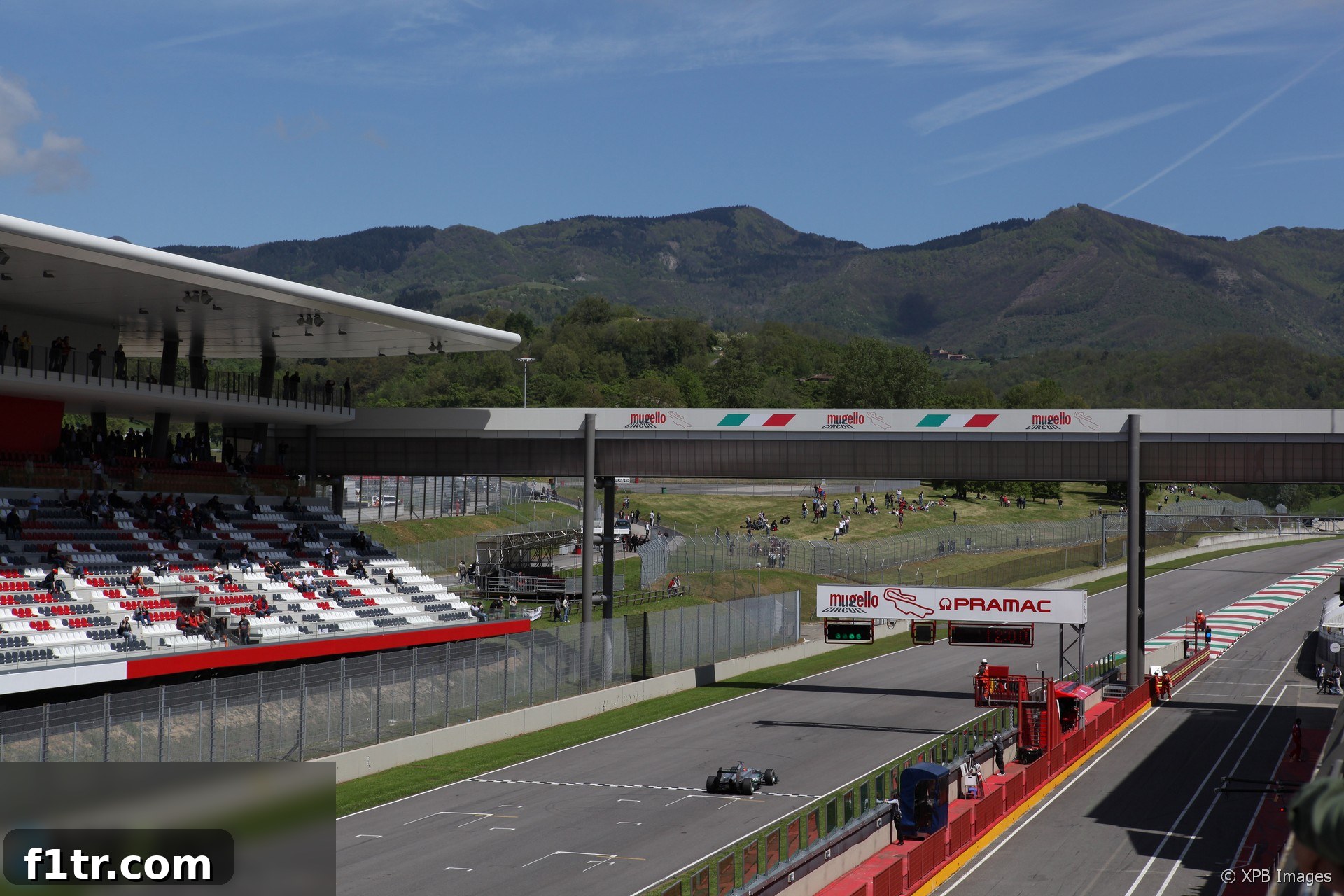
In an exclusive interview, Formula 1’s Motorsport Director, Ross Brawn, shed light on the series’ adaptive strategy. Brawn confirmed that the Mugello circuit, a picturesque and challenging track in Tuscany, Italy, is indeed among the possible venues being actively considered. This development comes as Formula 1 has reportedly approached the Ferrari-owned circuit regarding its potential to host a race this year, a move that could carry immense historical significance for the Scuderia.
The necessity to conduct races behind closed doors, without spectators, has inadvertently opened doors for circuits that might not typically feature on the traditional F1 calendar. Brawn elaborated on this shifting paradigm, explaining, “The model, if you like, for these European races, because they’re without fans, has to be different than a model we’ve used in the past. So that means there’s more scope to go to different venues.” This fundamental change in operational logistics means that the formidable task of managing large crowds, ticketing, and extensive spectator infrastructure is temporarily removed, allowing F1 to focus purely on the sporting event.
Mugello: A Potential Host for Ferrari’s 1000th Grand Prix
The prospect of a Formula 1 Grand Prix at Mugello is particularly tantalizing, especially for fans of the sport’s most storied team, Ferrari. Should the Tuscan circuit secure a slot on the revised calendar, it could very well be the venue for Ferrari’s monumental 1,000th appearance in a world championship race. This incredible milestone would follow the Italian Grand Prix, typically held at Monza, later in September. To celebrate such an achievement at a circuit owned by Ferrari itself, nestled in the heart of Italy, would create a unique and unforgettable chapter in motorsport history, even without the roar of the Tifosi in the grandstands.
Mugello, known for its flowing layout, high-speed corners, and challenging elevation changes, is a favourite among riders and drivers for its demanding nature and superb facilities. Historically a MotoGP venue, it has never hosted a Formula 1 World Championship race before, making its potential inclusion a truly fresh and exciting prospect. Its pristine condition and permanent infrastructure make it an ideal candidate for a rapid deployment under the current circumstances.
The Singapore Grand Prix’s Influence on Mugello’s Chances
A race at Mugello could materialize as a direct alternative should the Singapore Grand Prix be unable to proceed on its scheduled date of September 20th. Promoters of the iconic Marina Bay Street Circuit have previously indicated a firm stance against holding their event behind closed doors or postponing it indefinitely. Given the complex logistical challenges and significant governmental support required for a street race, coupled with the desire for a vibrant fan experience that is central to the Singapore GP’s identity, this position is understandable. If Singapore formally withdraws, it would create a crucial window in the calendar, making Mugello a prime candidate to fill the void and secure its place in F1 history.
Exploring Europe’s Rich Motorsport Heritage: Hockenheim, Imola, Jerez
Beyond Mugello, Brawn also highlighted other distinguished European circuits that are under consideration, including Hockenheim, Imola, and Jerez. These venues, each with their own rich Formula 1 history, offer readily available, high-quality permanent infrastructure that can be quickly adapted for Grand Prix racing without the lead time required for street circuits or new builds.
Hockenheimring: A Return to German Grand Prix Roots?
The Hockenheimring in Germany is a celebrated venue that has hosted numerous memorable German Grand Prix races. Known for its mix of fast straights and technical stadium section, Hockenheim has always delivered exciting racing. Its recent absence from the F1 calendar has been lamented by many fans, making a potential return, even in a modified format, a welcome development. The circuit’s established logistical capabilities and proximity to many F1 team bases in Central Europe further bolster its appeal as a viable candidate for an impromptu race.
Imola: The Spirit of San Marino Grand Prix Revived?
Autodromo Internazionale Enzo e Dino Ferrari, better known as Imola, holds a revered place in Formula 1 folklore. Formerly the host of the San Marino Grand Prix, Imola is synonymous with classic racing and dramatic moments. Its challenging layout, featuring a blend of high-speed sections and intricate chicanes, demands immense precision from drivers. A return to Imola would not only tap into a deep well of nostalgia for long-time fans but also offer a modern F1 car a chance to tackle a truly historic circuit, potentially providing a fresh spectacle for television audiences worldwide.
Jerez: Spain’s Southern Gem Back in the Fray?
Circuito de Jerez-Ángel Nieto, located in southern Spain, has also been mentioned as a possibility. While less frequently featured on the modern F1 calendar, Jerez has a significant past, having hosted the Spanish Grand Prix and the European Grand Prix, and remains a popular test venue. Its warm climate, well-maintained facilities, and reputation for technical challenges could make it an appealing option for F1 should additional European slots be required.
Brawn underscored the practical advantages of these permanent circuits: “All of those races could be done relatively short-notice because when you don’t have fans there you don’t have ticket sales, you don’t have all the complication that’s involved. And when you’re dealing with a permanent circuit then of course it’s relatively quick to turn it on. When you’ve got to build a circuit that’s a completely different situation. So I think there’s a nice group of quite exciting European circuits that could be utilised if we have one drop out.” This operational flexibility is critical in a season defined by uncertainty and rapid decision-making.
Beyond the Initial Eight: A Dynamic European Schedule
Formula 1 had previously announced its delayed season would commence with eight races in Europe, starting with a double-header in Austria. However, Brawn confirmed that this initial plan is not rigidly fixed. When asked about the possibility of holding more than eight European events, he stated, “It’s not the plan at the moment but it could be. I’m not saying it won’t happen, but that’s not the plan. Plan A is eight races in Europe and we hope that in the next near period we’ll be able to set out what our overseas races will be.”
This statement highlights Formula 1’s commitment to remaining agile and responsive to the evolving global health situation. While the focus remains on solidifying the initial European phase and subsequently announcing the overseas leg, the door is clearly open for further European expansion if circumstances dictate or if planned overseas events prove unfeasible. This adaptive strategy ensures that F1 can maximize the number of races, delivering a credible championship season for teams, drivers, and fans alike.
The “Behind Closed Doors” Model: A Paradigm Shift for F1
The “behind closed doors” model represents a significant departure from traditional Formula 1 events. While the absence of fans undoubtedly detracts from the usual atmosphere, it also simplifies logistics immensely. The operational burden of managing hundreds of thousands of spectators, their travel, accommodation, and safety protocols is removed, allowing race organizers to focus solely on the intricate requirements of the race teams and F1 personnel. This streamlined approach makes it feasible to bring races to venues that might otherwise be overlooked due to their capacity or location, and it significantly reduces the financial risks associated with event promotion in an uncertain climate.
Advert | Become a RaceFans supporter andgo ad-free
Delivering a Credible Championship: F1’s Core Mission
Ultimately, Formula 1’s overarching goal for the 2020 season is to deliver a robust and fair championship, albeit under extraordinary circumstances. The willingness to explore new venues, embrace operational flexibility, and adapt to unforeseen challenges demonstrates the sport’s resilience and determination. The potential inclusion of circuits like Mugello, Hockenheim, Imola, and Jerez not only provides practical solutions for a challenging calendar but also offers a nostalgic journey through motorsport history and an exciting glimpse into what a more dynamic F1 schedule could look like in the future. As the season slowly unfolds, the prospect of an expanded European calendar promises to add thrilling new dimensions to an already unforgettable year in Formula 1.
2020 F1 Season: Related Articles
- Grosjean to make F1 test return tomorrow for first time since Bahrain horror crash
- Pictures: Wrecked chassis from Grosjean’s Bahrain fireball crash to go on display
- Bottas vs Rosberg: Hamilton’s Mercedes team mates compared after 78 races each
- F1 revenues fell by $877 million in Covid-struck 2020 season
- Hamilton and Mercedes finally announce new deal for 2021 season
Browse all 2020 F1 season articles