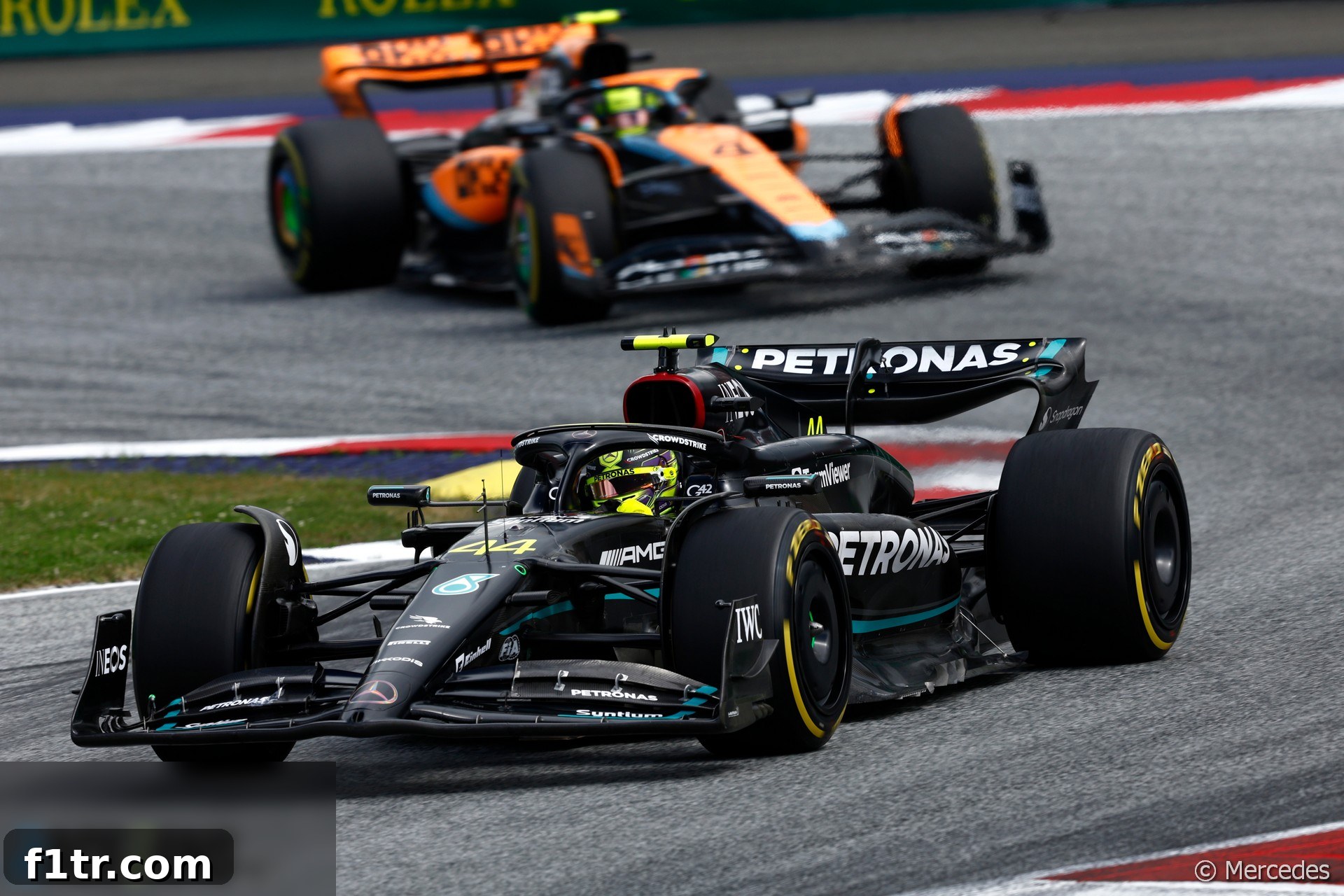
Toto Wolff Explains Rare Lewis Hamilton Radio Interventions Amidst Austrian Grand Prix Track Limits Chaos
In the high-octane environment of Formula 1, direct communication from a team principal to a driver during a race is typically reserved for moments of critical strategy or urgent safety concerns. However, during the tumultuous 2023 Austrian Grand Prix, Mercedes Team Principal Toto Wolff made the unusual decision to speak to his star driver, Lewis Hamilton, not once but twice over the team radio. These interventions, a notable deviation from the standard driver-engineer dialogue, immediately drew attention and sparked widespread discussion within the F1 community.
The backdrop for Wolff’s rare interjections was a race fundamentally shaped by an unprecedented number of track limits infringements, an issue that quickly overshadowed all other race narratives at the Red Bull Ring. Hamilton himself was among the numerous drivers who accumulated penalties for exceeding track limits. This frustrating situation led him to repeatedly question his team about perceived inconsistencies in penalty enforcement against his rivals. It was amidst this rising tide of frustration and distraction that Wolff felt compelled to step in, aiming to steer his driver’s focus back to the immediate task of racing.
The Unprecedented Scale of Track Limits Penalties in Austria
The 2023 Austrian Grand Prix will undoubtedly be etched into Formula 1 history as the “track limits race.” The unique characteristics of the Red Bull Ring, particularly its fast, flowing layout and the strategic placement of asphalt run-off areas instead of traditional gravel traps in key corners, created a perfect storm for drivers to inadvertently, or sometimes intentionally, exceed the white lines defining the track boundaries. What began as a mere handful of warnings escalated dramatically, culminating in an astonishing figure of over 1,200 potential track limit violations requiring detailed scrutiny by race control.
This overwhelming volume of incidents placed an immense and unprecedented burden on the FIA stewards, leading to significant delays in the issuance of warnings and subsequent penalties. Drivers like Lewis Hamilton, who were striving to adhere strictly to the rules, found themselves increasingly exasperated by what appeared to be a lack of immediate action against competitors who seemed to be gaining a tangible advantage by running wide. Hamilton’s frustration was palpable through his radio communications, as he constantly informed his pit wall of other drivers’ breaches, seeking assurances that consistent and fair justice would be applied across the entire grid. The accumulation of his own penalties for track limit violations only served to intensify his demands for transparent and equitable rule enforcement.
Lewis Hamilton’s Mounting Frustration and the Strategic Interventions of Toto Wolff
Lewis Hamilton, a seven-time world champion celebrated for his unwavering focus and competitive drive, found himself in a particularly challenging mental space during the Austrian Grand Prix. Having already received multiple warnings and an eventual penalty for track limit breaches early in the race, his frustration intensified as he observed numerous rivals – including prominent figures like Carlos Sainz, Sergio Perez, and Lando Norris – seemingly committing similar infringements without immediate repercussions. This perceived double standard began to visibly impact his race, as his attention frequently shifted from optimizing his own performance to monitoring the actions of others and relaying them to his team.
It was at this critical juncture that Toto Wolff, sensing a detrimental shift in Hamilton’s focus and mental state, decided that a direct intervention was necessary. Recognizing that Hamilton’s frustration could severely compromise his race performance, Wolff took the unusual step of communicating directly with his driver. His initial message was firm yet reassuring: “Lewis, they’re all going to get penalties in front of you. Keep going.” Later, as Hamilton continued to voice his concerns about both the car’s handling and the perceived inaction regarding rival penalties, Wolff delivered an even more direct and pointed instruction: “Lewis the car is bad, we know. Please drive it.” These highly unusual radio calls were not merely attempts to calm the driver; they represented a strategic, forceful redirection, underscoring the imperative for Hamilton to concentrate solely on extracting the maximum performance from his package, irrespective of external frustrations or the car’s current limitations.
The Unique Role of a Team Principal: Beyond Conventional Strategy
Wolff’s decision to personally address Hamilton on the team radio is not an isolated incident but rather indicative of a broader and evolving aspect of his leadership style, particularly during moments of heightened emotional tension. Earlier in the 2023 season, during the Monaco Grand Prix, Wolff similarly intervened when George Russell expressed profound frustration with himself following a driving error. These instances collectively highlight Wolff’s willingness to transcend the traditional boundaries of a team principal’s role, engaging directly and personally with his drivers to manage their psychological state, maintain morale, and ensure unwavering focus.
Elaborating on his rationale to media outlets, including RaceFans, following the Austrian Grand Prix, Wolff explained his motivation: “I felt that I wanted to just make sure that we were doing the best out of the package that didn’t perform and just tried to give it the best shot that we had.” He further clarified that such direct interventions are “only for the best interests for the drivers and the team.” He added, with a clear intent, “Sometimes there’s a certain moment where you need to calm things down – but I mean well.” This proactive approach by Wolff suggests a deep understanding that in the intensely competitive landscape of modern Formula 1, managing a driver’s mental and emotional well-being is as fundamentally crucial as any engineering advancement or strategic pit call. When a driver’s focus is compromised by external pressures, perceived injustices, or internal disappointment, a direct, authoritative, yet supportive voice from the highest echelon of the team can serve as a potent psychological tool to restore equilibrium and optimal performance.
Selected Hamilton Comments on Track Limits and Wolff’s Responses
| Hamilton | Sainz went off in turn seven, also, mate. |
| Hamilton | Perez completely off at turn nine. |
| Hamilton | Perez completely off at turn 10. Has he got a penalty yet? |
| Hamilton | This guy’s been off every single time. Turn 10, again. |
| Bonnington | It looks like they’re at least 10 laps behind dishing out these penalties. Sainz has one now. |
| Hamilton | Has Perez got a penalty yet? |
| Hamilton | That’s Lando off, nine and 10. |
| Hamilton | Norris off again turn 10 mate. |
| Hamilton | Has anyone else got a penalty? |
| Wolff | Lewis, they’re all going to get penalties in front of you. Keep going. |
| Hamilton | I’ve seen that car [Norris] make turn one once. |
| Hamilton | Is there a reason why the stewards haven’t given those penalties yet? |
| Bonnington | They are still dishing out warnings and penalties. |
| Wolff | Lewis the car is bad, we know. Please drive it. |
The Race Outcome and Its Broader Impact on Mercedes’ 2023 Season
Despite Toto Wolff’s concerted efforts to refocus Lewis Hamilton, the Austrian Grand Prix ultimately proved to be a challenging and somewhat disappointing weekend for the Mercedes-AMG Petronas F1 Team. Hamilton, who had started the race from a promising fifth position on the grid, managed to cross the finish line in seventh place. However, the accumulation of his own track limits penalties subsequently demoted him to an eighth-place classification in the official results. This outcome represented a significant blow to the team’s burgeoning momentum, particularly following a series of encouraging performances that had seen Hamilton secure podium finishes in the two preceding rounds.
The subpar showing at Spielberg underscored the persistent complexities and nuanced challenges Mercedes faced throughout the 2023 season. While the team was diligently making tangible strides in understanding and refining their W14 challenger, the distractions and subsequent penalties at the Red Bull Ring vividly highlighted how external, seemingly uncontrollable factors could still profoundly impact their overall race weekends. This performance setback in Austria served as a stark reminder that sustained consistency, rather than just flashes of raw pace, would be the crucial determinant in their ongoing quest to challenge for higher honors in the championship standings. Wolff’s strategic radio interventions, while aimed at mitigating potential damage and refocusing his driver, could only achieve so much against the overwhelming backdrop of widespread rule infringements and a car that, by Hamilton’s own candid admission and Wolff’s subsequent acknowledgment, was simply not performing at its optimal level on that particular race day.
Broader Implications for Formula 1 and Driver Conduct Moving Forward
The events that unfolded during the 2023 Austrian Grand Prix, particularly the unprecedented and staggering scale of track limits penalties, triggered a far-reaching and critical discussion within the upper echelons of Formula 1 regarding the efficacy of the rules themselves and their practical enforcement. It immediately raised pertinent questions concerning fundamental circuit design principles, the practical feasibility of accurately monitoring such an immense volume of incidents in real-time, and the potential negative impact on the overall spectacle and integrity of racing when drivers are perpetually preoccupied with the threat of impending penalties. In response to this chaos, the FIA swiftly initiated a comprehensive review and subsequently took proactive steps to refine and enhance its approach to track limits, recognizing the urgent need for greater clarity, consistency, and more efficient enforcement mechanisms for all future races.
Furthermore, Toto Wolff’s highly visible radio interventions offered a compelling insight into the evolving and often intricate dynamics between drivers and their respective teams in the modern era of Formula 1. In an environment characterized by relentlessly increasing pressure to perform at an elite level, and with every spoken word potentially broadcast to millions of fans worldwide, the mental fortitude and psychological resilience of a driver are now considered as fundamentally crucial as their innate skill behind the steering wheel. Consequently, team principals sometimes find themselves adopting multifaceted roles, akin to a psychologist or a motivational coach, tirelessly working to unlock peak performance by meticulously managing their drivers’ emotional and mental states. While such direct and personal communication can undoubtedly be an effective tool, it also inherently invites public scrutiny, prompting important questions about the delicate balance between empowering race engineers and drivers on the one hand, and upholding the overarching hierarchical authority of the team principal on the other.
Conclusion: Navigating the Complex Pressures of Elite Motorsport
Toto Wolff’s decision to directly engage with Lewis Hamilton during the Austrian Grand Prix was more than just a fleeting moment; it was a potent encapsulation of the immense pressures and intricate complexities inherent in elite motorsport. It served as a clear and compelling demonstration of a team principal intentionally stepping beyond his conventionally defined role to address a critical and multifaceted situation – that of a frustrated star driver whose focus was demonstrably compromised by a combination of perceived external inconsistencies in rule enforcement and the inherent limitations of his racing car. While the race itself undeniably represented a challenging setback for Mercedes, Wolff’s decisive actions underscored his unwavering commitment to prioritizing the best interests of both the team and the driver, even if it necessitated embracing an unconventional and highly visible approach.
The 2023 Austrian Grand Prix stands as a compelling and invaluable case study, not merely on the technical intricacies of track limits enforcement, but equally on the profound psychological battles waged both within the confined cockpit and on the bustling pit wall. It vividly highlighted the paramount importance of unwavering driver focus, the inherent challenges of effectively managing escalating frustration under intense pressure, and the unique, adaptive leadership qualities absolutely essential to successfully navigate the high-octane, relentlessly competitive world of Formula 1. As the 2023 season progressed, Mercedes continued its determined development fight, meticulously learning crucial lessons from challenging weekends like Spielberg, all while Toto Wolff remained a vigilant, often direct, and always guiding voice, steering his team through the relentless, unforgiving pursuit of ultimate performance.
Support Independent F1 Journalism
We are dedicated to delivering direct and insightful news from the very heart of Formula 1, aiming to bring you closer to the key players, crucial decisions, and thrilling events that define the sport. Our ability to provide original, in-depth journalism, covering everything from on-the-ground reporting and meticulous writing to content creation, hosting, and ongoing development, relies significantly on the generous and invaluable backing of our dedicated readers and supporters.
If you genuinely value independent coverage, appreciate our commitment to unbiased reporting, and consistently enjoy our detailed content, we warmly invite you to consider supporting our efforts. Your contribution plays a vital role in ensuring we can continue to bring you the most impactful and engaging stories from the world of Formula 1. As a special token of our appreciation, all our cherished supporters also enjoy an exclusive ad-free browsing experience across our site.
- Become a Supporter Today
- Learn More About Supporting Our Journalism
More from the 2023 F1 Season
- FIA president cleared of alleged interference in two 2023 races
- First week viewing figures for new Drive to Survive season fall again
- Max who? Drive to Survive season six prefers its favourite faces
- Complete 2023 F1 Season Review
- Top 10 Biggest Charges Through the Field in 2023
Browse all 2023 F1 season articles