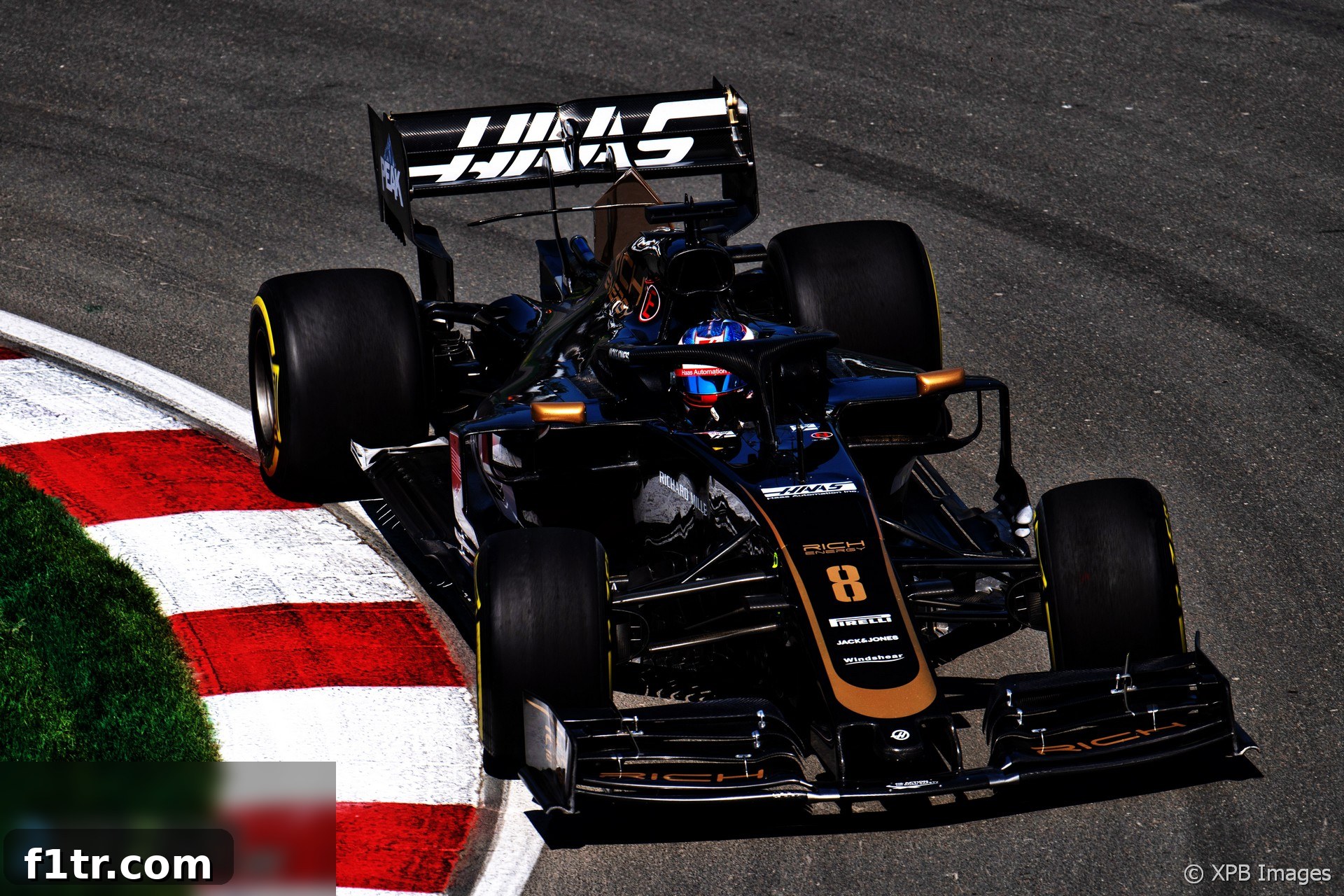
Formula 1’s Elusive American Dream: Why Attracting a New US Team is an Uphill Battle
During a recent investor call discussing Liberty Media’s second-quarter earnings, Formula 1 CEO and chairman Chase Carey expressed the sport’s ambition to welcome another US-based team. While acknowledging Haas F1’s presence as the current American representative, Carey stated, “As we firm up the business model for team ownership, we’d love to have – we have Haas as the US team – [but] we’d love to add to that with a high-profile US team. Down the road, you’d love to have a US driver, [but] that probably takes longer.”
This aspiration, however, raises critical questions. Firstly, the phrasing subtly implies that Haas F1 might not be considered “high-profile” enough, despite their significant contributions to the grid. More importantly, it compels us to scrutinize why any US-based entity would willingly enter the highly competitive and notoriously demanding world of Formula 1, especially when considering the challenging experiences of its current American standard-bearer, Haas F1.
Haas F1’s Thorny Path: A Cautionary Tale for New Entrants
Haas F1, a relatively recent addition to the Formula 1 grid, finds itself embroiled in a contentious arbitration dispute with Liberty Media. The crux of the conflict lies in Liberty’s decision to grant Racing Point (now Aston Martin F1) a share of prize money that, under established team agreements, Haas believes they do not qualify for. When Haas first entered the sport, they did so fully aware that they would forgo eligibility for up to $60 million in “Column 1” money for their initial two years, a standard protocol for new teams. This initial sacrifice was an accepted part of their business model.
However, to Haas’s considerable surprise and consternation, Racing Point was subsequently promised and paid Column 1 monies by Liberty Media. This occurred after Lawrence Stroll’s consortium acquired the assets of the defunct Force India team and re-entered the sport legally as a new entity. Haas perceives this as a clear breach of fairness, feeling unjustly short-changed and sparking the ongoing dispute. This incident alone serves as a stark warning about the complex and often fluid commercial landscape that potential new entrants must navigate.
The ‘Haas Model’: Innovation Meets Resistance
Haas F1’s entry into the sport was itself a masterclass in strategic exploitation of the regulations. They cleverly identified and leveraged a loophole that allowed them to operate effectively as a customer team for Ferrari. This involved procuring numerous ‘non-listed parts’ directly from Maranello and commissioning Dallara to design and largely manufacture the ‘listed parts’ – components for which teams must hold the intellectual property. This innovative approach allowed Haas to significantly reduce their upfront investment and development costs, a model previously unheard of in modern F1.
This structure meant Haas had cabinets full of agreements with Ferrari and Dallara, along with supplier contracts for components like Pirelli tires and standard employee contracts. Their operational equipment, from trucks to their race base in Banbury, was largely leased. This lean, outsourced approach enabled the team to hit the ground running, achieving impressive top-six finishes in its inaugural two races and securing a remarkable fifth place in the constructors’ championship within just three years.
While this account simplifies the immense efforts of team owner Gene Haas, team principal Guenther Steiner, and their dedicated crew, it underscores their shrewdness in interpreting and leveraging F1’s regulations. It explains how Haas, despite operating with the smallest budget ($130m) and headcount (around 250) in 2018, managed to outperform five other teams in the constructors’ standings. This unconventional success, however, did not endear Haas to its rivals. Their “modus operandi” was widely criticized by direct competitors, leading to a swift closure of several regulatory loopholes even before the team had fully established itself on track, following clarification requests submitted to the FIA by other teams.
It took Haas nearly two years to establish their operational infrastructure, even with the advantage of not needing their own European factory and leasing Ferrari’s aerodynamic facilities. This reality suggests that any newcomer, even adopting a similar streamlined model, would require a comparable, if not longer, period to become competitive. Crucially, such a model’s viability post-2020 regulations became highly uncertain, introducing a significant element of risk for any prospective team.
The Post-2020 Regulatory Maze: A Barrier to Entry
The F1 landscape underwent significant changes from 2021 onwards, particularly concerning car component categorization and the introduction of a budget cap. At the time of Chase Carey’s statement, a clear roadmap for the 2021-2025 period was still under development, with regulations only published after October 31st. This lack of clarity made any concrete planning impossible for potential new entrants, highlighting a fundamental flaw in F1’s appeal: an ever-shifting regulatory platform.
From 2021, the myriad components of a Formula 1 car were categorized into four distinct types:
- Team-Specific Components (TSC): These are parts whose intellectual property (IP) is wholly owned by a team, essentially the ‘listed parts’ that define a constructor’s unique identity.
- Standard Supply Components (SSC): Manufactured by a single, FIA-appointed supplier through a tender process, promoting cost control and standardization.
- Stipulated Design Components (SDC): Parts manufactured to specifications meticulously outlined by the FIA, allowing for some design freedom within tight parameters.
- Transferable Components (TRC): Components that can be supplied by one team to another, with prices regulated under the new cost cap framework, allowing for some sharing of technology and resources.
Until precise clarity emerged on which of a race car’s 6,000-plus highly complex components would fall into each category, making an informed decision about entering F1 was virtually impossible. Even with this clarity, a “Haas-type” entry model would heavily depend on finding a “mothership” team willing to share technical secrets and a specialized race car manufacturer with the capacity and expertise for F1 production. Such entities are a rare breed in motorsport.
Considering these hurdles, the earliest any new team, regardless of its origin, could realistically hope to compete respectably would be 2022, and even that timeline would be highly optimistic. Furthermore, two monumental challenges loomed large: the unresolved question of team revenues, specifically the level of income teams could expect from the Commercial Rights Holder (CRH) for their participation and long-term commitment, and the long-standing influence of Ferrari’s historical veto power over crucial regulatory decisions.
The Billion-Dollar Gamble: Commercial Viability and Entrepreneurial Appeal
Let’s entertain the notion of an eternal optimist, perhaps a US-based billionaire, willing to gamble a billion dollars – the estimated minimum spend over five years – on competing in a sport with a commercial survival rate historically below 10 percent. How would such an individual approach this colossal undertaking in the current F1 climate?
Logically, a candidate team might emerge from an existing, successful motorsport operation. Gene Haas’s F1 venture grew tangentially from his highly successful motorsport empire, which includes the championship-winning Stewart-Haas NASCAR operation, the cutting-edge Windshear wind tunnel, and a formidable Baja off-road team. However, this transition was largely facilitated by F1’s previous listed parts regulations, which are now unlikely to continue in their original form. The ability to piggyback on existing infrastructure and supplier relationships was a critical enabler for Haas.
Gene Haas entered F1 primarily to promote his eponymous machine tool products. He was not scrounging for sponsors but strategically leveraging F1’s global platform. His entry coincided with his primary competitor, DMG Mori, backing Porsche’s successful Le Mans team, making F1 an ideal counter-marketing strategy. Moreover, F1’s extensive geographic footprint, with races in major car-building territories like Europe, China, Mexico, and Brazil, perfectly aligns with his product portfolio and global business objectives.
This unique alignment of business objectives and personal passion is rare. A hypothetical petrolhead billionaire, owner of another widget company, may not find the same symbiotic “fit” with F1 for their products. Furthermore, the willingness to take a one-in-ten chance on achieving respectability, particularly given the perceived unfair treatment of Haas, is a significant deterrent. Entrepreneurs like Gene Haas, who are willing to put substantial personal capital where their mouth is, are few and far between. The challenges faced by Haas serve as a potent warning, extending not just to US entrepreneurs but globally. This explains why no abundantly funded team has entered F1 since Toyota in 2002, an outfit that failed to win a single race in eight years of trying despite its immense resources.
The Feeder Series Dilemma: IndyCar and F2 Challenges
Could an existing IndyCar team make the leap to F1, mirroring historical attempts by Penske and Vel’s Parnelli Jones in the 1970s? This prospect appears highly doubtful in the modern era. Decades ago, both Penske and Parnelli Jones had established bases and extensive experience as race car builders. Even then, they lasted only three and two years respectively before returning across the Atlantic to focus on USAC and other American series. The sheer scale and technological demands of F1 today dwarf those of the 70s.
Today’s IndyCar teams operate on a fundamentally different model. They purchase specification chassis (predominantly from Dallara, a common manufacturer with F1’s feeder series) and power units from Chevrolet or Honda, with very limited modifications permitted. Their race bases are more akin to advanced workshops than full-fledged factories with extensive design offices. These operations are structurally similar to Formula 2 teams, albeit with a choice of two engine brands and aerodynamic options tailored for street circuits, road courses, and ovals. The leap from such a “spec” series to the design-intensive world of Formula 1 is monumental.
Indeed, looking back at successful F1 operations that emerged from feeder series, one must delve past modern GP2/F2 to the Formula 3000 era. Stewart Grand Prix (which eventually became Red Bull Racing) arrived in 1997 via F3, while Sauber (now Alfa Romeo) made its F1 debut in 1993 with crucial funding and a “Concept by Mercedes-Benz” association. Jordan Grand Prix (the lineage of today’s Racing Point/Aston Martin) is arguably the last team on the grid today that ascended directly from F1’s traditional ‘feeder series’ by developing its own infrastructure and designs.
Teams like Stewart and Jordan accumulated necessary infrastructure and expertise during a period where chassis and engine choices, from Formula Ford through F3 to F3000, were ‘free’ and development largely unrestricted. This allowed them to be perhaps 50 percent of the way towards an F1 operation before making the monumental leap. Eddie Jordan himself often recounts the financial struggles and bailiffs that plagued his early years in F1, underscoring the immense financial strain even for a well-prepared team.
Jordan’s route vividly illustrates the stark difference between F3000 teams of yesteryear and current F2 or IndyCar operations. The former progressed through the ranks via a combination of engineering prowess and performance, frequently designing their own components and chassis. The latter, however, largely “paints by numbers,” working with specification parts where every nut, bolt, and washer is a pre-determined component. Yet, any team with F1 aspirations is required to build a complete and immensely complex car from scratch, capable of competing with distinction in the world’s most technologically advanced racing series. It is little wonder that the last four “turn-key” F1 operations – USF1, HRT, Manor, and Caterham – either failed to even start a race or collapsed within five years of incorporation. Haas, of course, avoided this fate by strategically leveraging Ferrari/Dallara technology, but that model is now under scrutiny.
Three decades ago, the FIA entry list frequently boasted over 20 teams, many of whom graduated from categories like F3, F2, or F3000 by procuring an engine and gearbox and then building their own chassis. Some, like Tyrrell (whose lineage traces to Mercedes via BAR/Honda/Brawn) and Minardi (now AlphaTauri), survived and evolved, while others eventually folded. The key takeaway, however, is that graduation was a tangible possibility. While the motorsport structures changed dramatically over the intervening 30 years, F1 itself failed to adapt commensurately to these shifts, making entry increasingly difficult.
Then there is the persistent issue of engine supply. With only a handful of suppliers (currently four) and no readily available proprietary engines, prospective entrants are entirely dependent on the willingness and largesse of existing manufacturers. While supply regulations exist, who in this era would commit a billion dollars to a five-year F1 project, only to potentially be “saddled” with a less competitive power unit, effectively guaranteeing a back-of-the-grid existence? The engine question alone represents a formidable barrier, as it directly impacts performance and competitive potential.
F1’s Imperative: Reinventing Itself for a Sustainable Future
Formula 1 is not the only avenue for industrialists seeking to invest significant advertising dollars, and the sooner this reality is embraced by the sport’s commercial masters, the better for its long-term health. Crucially, prospective entrants need assurances that they stand a reasonable chance of competing and winning on merit, rather than facing a perpetual lock-out of podium positions by a select few dominant teams. The spectacle of predictable outcomes diminishes the sport’s appeal and deters new investment.
To genuinely attract new blood and foster a thriving ecosystem, Formula 1 must provide stable regulatory platforms with sufficiently long runways. This stability is vital to make it viable for entrepreneurs and established motorsport operations to commit to F1. Concessions for limited periods could be granted to aid new teams in their foundational years. Would Haas have entered F1 without the strategic partnership with Ferrari? Only Gene Haas himself could definitively answer, but the strong likelihood is negative, as he has repeatedly articulated how that unique model made F1 entry an attractive proposition for his company.
However, F1’s historical inflexibility and tendency for rapid, costly regulatory shifts make it a challenging sell. A mere 14-month (or even shorter) lead time to major regulation changes, carrying massive cost implications, is simply unacceptable in virtually any other industry. Yet, in F1, it has often been the norm. While internally the sport may pride itself on such “gung-ho” and “can-do” attitudes, this perceived arrogance frequently causes potential entrants to walk away in bewilderment and frustration, unable to justify the financial and logistical risks.
Furthermore, there needs to be a fundamental reassessment of what it means to be a “constructor” in F1. True constructors should design and build their own cars, not merely assemble components. F1 needs to find a happy medium that encourages genuine engineering and innovation without spiraling costs. The current commercial covenants expire at the end of 2020 (at the time of this article’s context), meaning any of the existing teams – be it Ferrari, Mercedes, Haas, or others – could theoretically choose to withdraw. Should this happen, F1 could find itself below its regulatory minimum threshold of 16 cars on the grid. In such a scenario, a hoped-for “high-profile US-based team” would certainly not be a quick fix for such a gaping void.
A grid of 24 cars, or even the permitted 26, remains a noble objective. Attracting another US team, or indeed a team from any other nation, is equally desirable. But to achieve these goals, Formula 1 must fundamentally reinvent itself to become genuinely attractive, both commercially and technically. The fixation on a “high-profile US team” also begs the question: why prioritize the USA when the Chinese car market, for instance, is 30 percent larger and offers immense potential? The focus should be on creating an environment that welcomes diverse and competitive entrants globally.
No matter how one analyzes the situation, Haas F1 should not be treated as the sport’s whipping boy. Their journey, despite its controversies, represents a bold and innovative attempt to navigate F1’s complex landscape. Until Formula 1 reinvents itself to make the sport more appealing and sustainable for newcomers, it simply does not deserve them, regardless of their nationality or perceived profile. The American dream for F1 remains elusive as long as the fundamental challenges persist.
RacingLines: Further Insights
- The year of sprints, ‘the show’ – and rising stock: A political review of the 2021 F1 season
- The problems of perception the FIA must address after the Abu Dhabi row
- Why the budget cap could be F1’s next battleground between Mercedes and Red Bull
- Todt defied expectations as president – now he plans to “disappear” from FIA
- Sir Frank Williams: A personal appreciation of a true racer
Browse all RacingLines columns