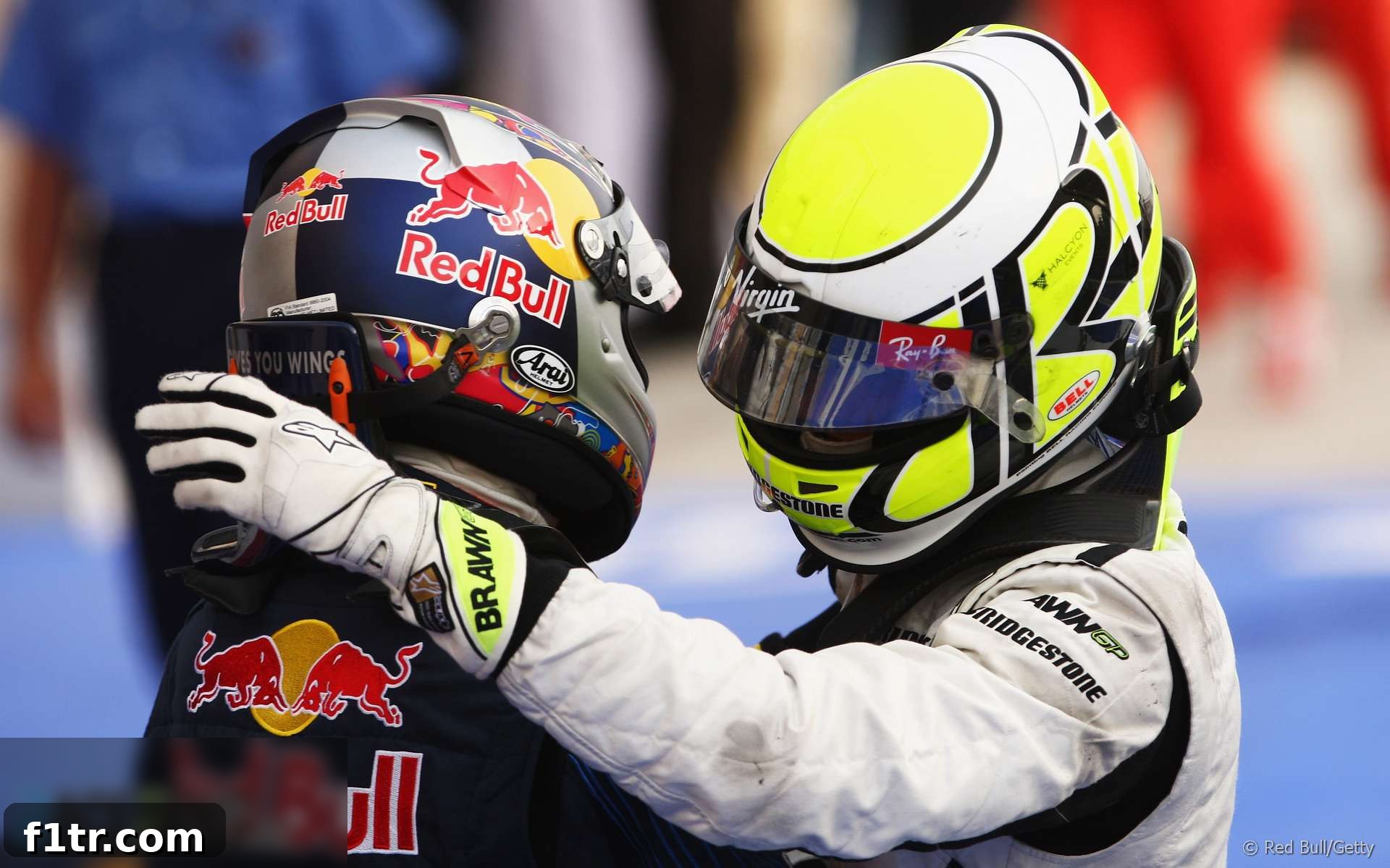
Sebastian Vettel, one of Formula 1’s most decorated drivers, recently offered a candid reflection on his championship defeats, pinpointing the 2009 season as a more profoundly painful experience than missing out on a fifth world title to Lewis Hamilton in 2018. This revelation from a driver known for his fierce competitiveness and unwavering focus provides unique insight into the psychological landscape of elite motorsport, highlighting how context and circumstance can amplify the sting of defeat.
Sebastian Vettel: The Enduring Pain of 2009’s Championship Loss Over Recent Defeats
For Sebastian Vettel, the sting of defeat is a familiar, albeit unwelcome, sensation. Having challenged Lewis Hamilton for the Formula 1 World Championship in both 2017 and 2018, only to see the title slip away before the season’s end, one might assume these recent losses would weigh heaviest. However, the four-time world champion explicitly stated that his first true championship heartbreak, dating back to 2009, remains the most difficult memory. “I have been three times now in a position like that with ’17, ’09 and this year,” Vettel remarked. “Probably ’09 was the worst one, the lowest point.” This sentiment opens a window into the nuanced emotional toll experienced by drivers at the pinnacle of their sport.
The Genesis of Heartbreak: Understanding the 2009 F1 Season
The 2009 Formula 1 season was a truly unique chapter in the sport’s history, and for Sebastian Vettel, it represented a critical juncture in his burgeoning career. Driving for Red Bull Racing, a team still establishing its championship pedigree, Vettel emerged as a formidable challenger to the dominant Brawn GP and its lead driver, Jenson Button. The season had begun with the seismic shock of Brawn GP’s unexpected superiority, largely due to their innovative double diffuser design. Button capitalized on this advantage, winning six of the first seven races, building an seemingly insurmountable lead.
However, as the season progressed, Red Bull and Vettel found their stride. Displaying raw speed and strategic brilliance, Vettel began chipping away at Button’s lead, transforming what seemed like a forgone conclusion into a nail-biting title showdown. His victories in China, Great Britain, Japan, and Abu Dhabi showcased his immense talent and the rising power of Red Bull. The championship battle culminated in the penultimate race of the season, the Brazilian Grand Prix. Vettel entered this crucial event 15 points adrift of Button, with a maximum of 20 points still available across the final two races.
In Brazil, Vettel produced a strong performance, finishing fourth. Yet, Button, despite a more challenging race, managed to secure fifth place, which was enough to clinch the drivers’ championship with one race to spare. For Vettel, then a young driver on the cusp of his first world title, this near-miss was profoundly impactful. The raw disappointment stemmed not just from the loss itself, but from the uncertainty of the future. “You never know what next year brings so you never know whether you get another chance,” he admitted, capturing the vulnerability of a young talent grappling with the unknown. This lack of assurance, coupled with the intensity of his first genuine title challenge, solidified 2009 as his “lowest point.”
The Weight of Experience: Comparing 2009 to 2017 and 2018
Fast forward to 2017 and 2018, and Sebastian Vettel found himself in a remarkably similar position: challenging for the world championship, only to fall short against Lewis Hamilton and Mercedes. In both seasons, the title fight went deep into the year, characterized by intense wheel-to-wheel racing, strategic gambles, and moments of high drama. Yet, for Vettel, these recent defeats, while undoubtedly painful, did not carry the same psychological weight as 2009.
The key differentiator lies in experience and context. By 2017, Vettel was a four-time world champion, a veteran of countless high-stakes battles. He had already tasted the pinnacle of success, having orchestrated a dominant run of four consecutive titles with Red Bull between 2010 and 2013. This prior experience of triumph, of overcoming adversity to achieve his goals, provided a different perspective on losing. While losing to Hamilton was a blow to his ambition of winning a championship with Ferrari, it wasn’t accompanied by the same gnawing uncertainty about his future prospects.
The 2017 and 2018 seasons saw Ferrari mount a credible challenge, but ultimately falter due to a combination of operational errors, strategic missteps, and the sheer relentless performance of Mercedes and Hamilton. These were battles fought by a seasoned champion, fully aware of the pressures and vagaries of Formula 1. The pain was real, but it was the pain of a mission unfulfilled, rather than the profound existential doubt that can plague a younger driver wondering if another opportunity will ever arise. “None of those moments were nice,” Vettel conceded, highlighting that all defeats sting, but some cut deeper than others.
From Disappointment to Dominance: Vettel’s Resilient Comeback Post-2009
What makes Vettel’s reflection on 2009 so poignant is the incredible resurgence that followed. The very next year, in 2010, he embarked on a historic run, securing his first Formula 1 World Championship. This was not a singular achievement, but the beginning of an era of unprecedented dominance, as he went on to win four consecutive titles with Red Bull Racing from 2010 to 2013. This period established him as one of the sport’s all-time greats, showcasing his exceptional talent, speed, and mental fortitude.
The ability to bounce back from the profound disappointment of 2009 with such emphatic success speaks volumes about Vettel’s character and resilience. It demonstrates a capacity to learn, adapt, and channel negative experiences into motivation. The lessons learned during that agonizing 2009 season, the realization of how precious championship opportunities are, undoubtedly fueled his relentless drive in the subsequent years. He transformed what could have been a career-defining setback into a springboard for unparalleled success, proving that “giving up is not an opinion” has long been a core tenet of his philosophy.
The Unfinished Mission: Winning with Ferrari
Despite his illustrious career and multiple championships, Sebastian Vettel’s move to Ferrari in 2015 was driven by a singular, overarching ambition: to emulate his hero, Michael Schumacher, and bring the world championship back to Maranello. This “mission,” as he frequently refers to it, remains the driving force behind his continued presence at the very sharp end of Formula 1. His candid admission about the pain of 2009, and the comparative difference with recent losses, underscores the depth of his commitment to this goal.
Even after two intensely competitive yet ultimately unrewarding seasons against Hamilton, Vettel’s resolve remains unshaken. “I still have a mission here and I still want to win,” he affirmed. “So that hasn’t changed. Obviously last race was a tough one to swallow and probably the winter will be as well. But giving up is not an opinion.” This unwavering determination is a hallmark of true champions. The disappointment of 2018, much like the sting of 2009, will not deter him. Instead, it will likely be metabolized into renewed focus and an even stronger desire to succeed with the Scuderia.
The challenge of Ferrari is unique. It carries immense historical weight, passionate Tifosi, and an expectation of victory that few other teams endure. For Vettel, winning with Ferrari would not just be another championship; it would be the culmination of a deeply personal and professional quest, cementing his legacy in the most revered seat in motorsport. The path ahead is undoubtedly steep, with the formidable challenge of Lewis Hamilton and Mercedes showing no signs of relenting. However, Vettel’s past has shown that he thrives on adversity and converts setbacks into future triumphs.
The Psychological Battlefield: Coping with Formula 1 Pressures
Sebastian Vettel’s honest reflections highlight the intense psychological pressures inherent in Formula 1. Drivers operate in a brutally competitive environment where every decision, every lap, and every race is scrutinized by millions. The weight of expectation, the relentless media attention, and the constant need for perfection create a unique mental battlefield. Championship battles amplify this pressure exponentially, turning drivers into gladiators under an unforgiving spotlight.
Coping with defeat in such a high-stakes arena requires extraordinary mental resilience. It involves processing disappointment, analyzing failures without dwelling on them, and maintaining an unwavering belief in one’s abilities and team. Vettel’s ability to compartmentalize the pain of 2009, learn from it, and then achieve four consecutive titles is a testament to his exceptional mental strength. His current stance, reaffirming his “mission” despite recent heartbreaks, further illustrates this psychological fortitude. For drivers like Vettel, the pursuit of victory is not merely a physical endeavor but an intense mental game, where past defeats become crucial building blocks for future aspirations.
Looking Ahead: The Persistent Pursuit of the Next Title
As Formula 1 looks towards future seasons, the question of Sebastian Vettel’s next championship remains a central narrative. His words emphasize the unpredictable nature of the sport: “You never know what next year brings so you never know whether you get another chance.” This acknowledgment of uncertainty, however, is tempered by an unshakeable confidence in his own abilities and the potential of his team. For Vettel, the drive to win is as strong as ever, fueled by the painful memories of the past and the burning desire for future glory with Ferrari.
The upcoming seasons will undoubtedly present new challenges, new rivals, and new opportunities. Sebastian Vettel, armed with experience, resilience, and an unfulfilled mission, will continue his relentless pursuit of that elusive fifth world title. His journey underscores that in the world of Formula 1, even the most painful defeats can forge the strongest resolve, paving the way for eventual redemption.
Stay Connected with Formula 1 Insights
- Join RaceFans on Facebook
- Follow RaceFans on Twitter
- Get daily email updates from RaceFans
Explore More from the 2018 F1 Season
- F1 feared “death knell” for Drive to Survive after Ferrari and Mercedes snub
- McLaren staff told us we were “totally crazy” to take Honda engines in 2018 – Tost
- ‘It doesn’t matter if we start last’: How Red Bull’s junior team aided Honda’s leap forward
- Honda’s jet division helped F1 engineers solve power unit problem
- McLaren Racing losses rise after Honda split
Browse all 2018 F1 season articles