[smr2018test]
Red Bull RB14: Unveiling the 2018 Challenger’s Definitive Race Livery
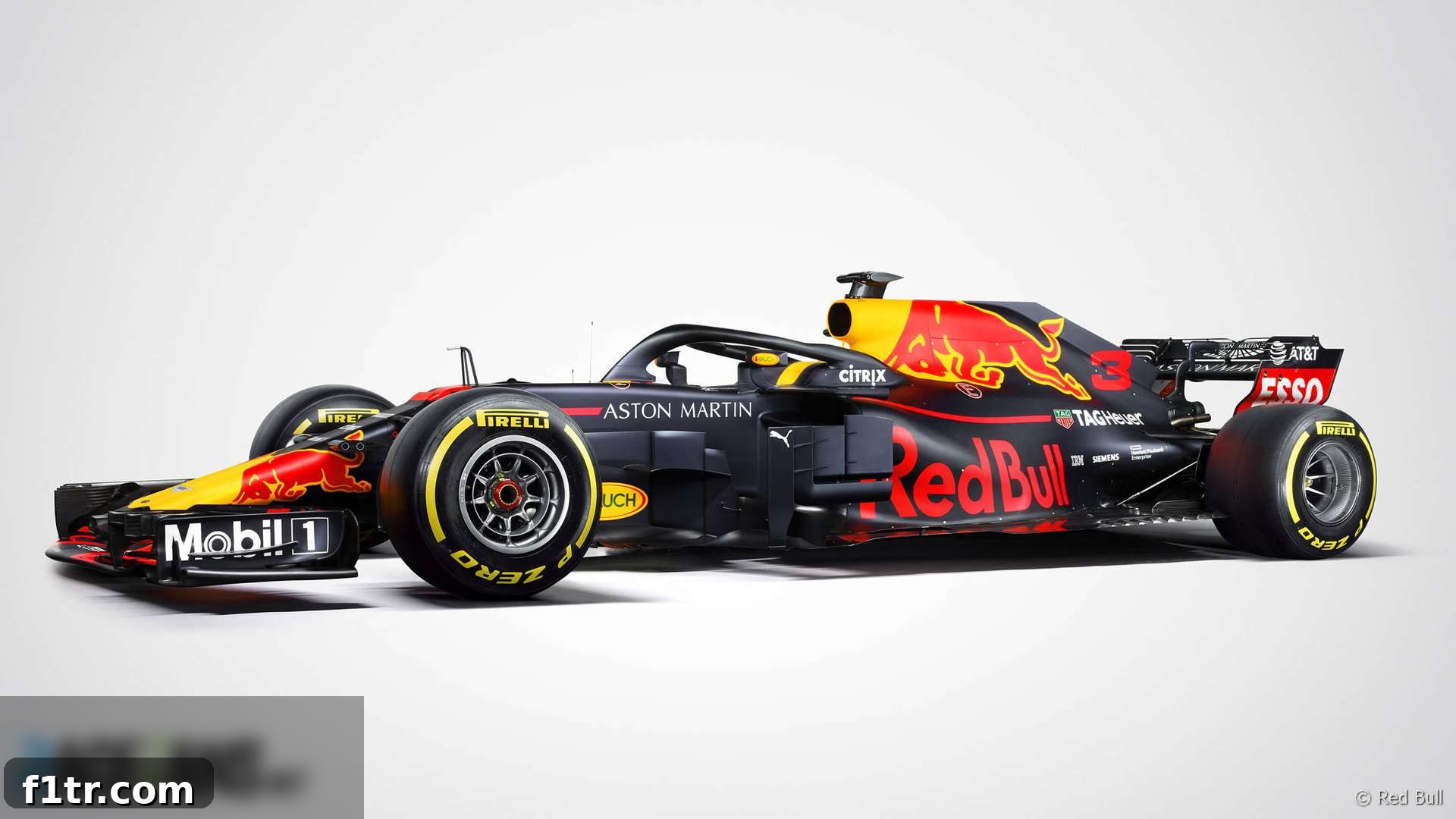
The highly anticipated 2018 Formula 1 season saw Red Bull Racing unveil its challenger, the RB14, not once, but twice. Initially presented in a striking ‘special edition’ launch livery that captured immediate attention, the team later revealed the car in the definitive paint scheme it would sport throughout the 2018 championship. This crucial moment marked the final step before the car hit the tracks for pre-season testing, offering fans and rivals a clear glimpse of Red Bull’s intentions and aesthetic for the forthcoming campaign.
The initial reveal of the RB14 had been a strategic move, often employed by teams to create buzz and generate excitement. This ‘special edition’ livery, while visually stunning, served as a temporary placeholder, allowing the technical teams to focus purely on the car’s development without the added pressure of simultaneously perfecting the final cosmetic details. It provided an opportunity for the world to see the underlying aerodynamic concepts and structural innovations that Red Bull engineers had painstakingly crafted during the off-season. As is common in modern Formula 1, the unveiling of a new car is more than just a ceremony; it’s a statement of intent, a display of engineering prowess, and a crucial marketing exercise.
From Stealthy Launch to Bold Race Trim: The RB14’s Visual Evolution
The transition from a unique launch livery to the official race colours is always a significant event for any Formula 1 team. For Red Bull, known for its distinctive blue, yellow, and red branding, this reveal was particularly important. The special launch livery of the RB14 had initially featured a predominantly matte blue and black design, giving it a sleek, almost stealth-like appearance. This temporary visual departure from their traditional colours certainly sparked conversation and speculation among fans and pundits alike, wondering if it hinted at a broader rebrand or a new direction for the team.
However, the subsequent reveal confirmed a return to the iconic colour scheme that has become synonymous with Red Bull Racing. The definitive 2018 race livery showcased the vibrant matte blue base, accented with the prominent Red Bull logos in yellow and red. This design is not merely aesthetic; it’s a vital part of the team’s identity and brand recognition. The bold colours ensure the car is instantly recognizable on track, even at high speeds, reinforcing Red Bull’s powerful brand presence globally. The design also cleverly integrates the branding of key sponsors, turning the race car into a high-speed billboard that travels the world.
Technical Specifications and Design Philosophy of the RB14
Beyond the paint scheme, the RB14 itself represented Red Bull’s latest effort to challenge for the championship. Designed by Adrian Newey’s renowned technical team, the RB14 was a refinement of its predecessors, aiming to improve on areas identified as weaknesses in previous seasons, particularly aerodynamics and chassis stability. The 2018 regulations brought minor changes but continued to emphasize aerodynamic efficiency, with the controversial ‘halo’ cockpit protection device becoming mandatory for the first time. Integrating the halo seamlessly into the car’s design without excessively hindering airflow or increasing weight was a significant challenge for all teams, and Red Bull’s approach was keenly observed.
The RB14 was engineered to be an agile and aerodynamically efficient machine, perfectly suited to tracks demanding high downforce and quick changes of direction. Red Bull Racing’s philosophy has always revolved around creating a car with exceptional cornering speed, often compensating for a power deficit against engine suppliers like Mercedes and Ferrari. The chassis, suspension, and overall packaging were meticulously designed to extract every ounce of performance, working in tandem with the Renault power unit. While the engine supply from Renault was a consistent talking point, the Red Bull chassis was widely regarded as one of the best on the grid, capable of challenging for wins when conditions favoured its strengths.
Red Bull’s Driver Lineup and Championship Ambitions in 2018
The 2018 season saw Red Bull field one of the most exciting driver pairings on the grid: the seasoned race-winner Daniel Ricciardo and the prodigious talent of Max Verstappen. Both drivers were proven winners and fierce competitors, known for their aggressive driving styles and ability to extract maximum performance from their machinery. The dynamic between Ricciardo and Verstappen was a compelling storyline throughout the year, as both vied for supremacy within the team and aimed to challenge the dominance of Mercedes and Ferrari.
Daniel Ricciardo, entering his fifth full season with Red Bull, brought invaluable experience and consistency. His remarkable overtakes and infectious personality made him a fan favourite. Max Verstappen, on the other hand, was seen as the future of the sport, possessing raw speed and an unyielding will to win. Their collective talent placed Red Bull Racing in a strong position to contend for both individual race victories and a significant challenge in the Constructors’ Championship. The expectation was that the RB14, combined with their driving prowess, would allow Red Bull to be consistent front-runners, especially on circuits that suited their car’s characteristics.
Pre-Season Testing and the Road to Melbourne
Following the livery reveal, the RB14 proceeded to extensive pre-season testing at circuits like Circuit de Barcelona-Catalunya. These testing sessions are critical for teams to fine-tune their new cars, assess reliability, and gather crucial data before the opening Grand Prix. For Red Bull, testing was about understanding the nuances of the RB14, optimizing the integration of the Renault power unit, and experimenting with various aerodynamic configurations and tyre compounds.
Engine reliability and performance were particular areas of focus, given Red Bull’s historically fraught relationship with their engine suppliers. The team aimed for a smoother, more powerful, and more reliable season compared to previous years. Drivers and engineers worked tirelessly to iron out any kinks, ensuring the car was ready for the intense demands of a full Formula 1 championship. Every lap, every data point collected during testing contributed to refining the RB14, transforming it from a concept into a formidable racing machine.
The Competitive Landscape of the 2018 F1 Season
The 2018 Formula 1 season was shaping up to be a fascinating battle at the front of the grid. Mercedes, with Lewis Hamilton, and Ferrari, featuring Sebastian Vettel, were expected to be Red Bull’s primary rivals. Both teams had strong car packages and formidable driver lineups. Red Bull’s objective was to close the gap to these powerhouses and consistently challenge for wins, particularly on tracks where engine power was less critical and aerodynamic efficiency shone through.
The midfield battle was also intensifying, with teams like Force India, McLaren (with their new Renault engine supply), and Renault factory team all aiming to make significant progress. This fierce competition across the grid meant that every point scored, every strategic decision, and every pit stop executed flawlessly would be crucial. Red Bull’s ability to maximize their package and avoid costly errors would be paramount in their quest to climb higher in the Constructors’ Championship standings and allow their drivers to fight for individual glory.
Looking Ahead: The RB14’s Legacy and Red Bull’s Trajectory
The RB14 played a pivotal role in Red Bull Racing’s ongoing narrative within Formula 1. While it didn’t ultimately secure a championship title, it delivered several memorable victories for both Daniel Ricciardo and Max Verstappen, showcasing the team’s relentless pursuit of excellence. The car’s performance highlighted Red Bull’s capacity to produce a chassis that could rival the best, even when contending with what was often perceived as a power disadvantage. It further solidified their reputation as innovators and fierce competitors, always pushing the boundaries of design and strategy.
The 2018 season with the RB14 also marked a significant juncture for Red Bull Racing as they looked towards their future engine partnerships. The challenges faced during this period, particularly with engine reliability and performance gaps, subtly paved the way for strategic decisions that would shape the team’s trajectory in subsequent years. The groundwork laid with the RB14, both in terms of engineering and driver development, served as a crucial foundation for their eventual success in the following seasons, especially with the impending shift to Honda power units, a partnership which the related articles below touch upon.
2018 F1 season
- F1 feared “death knell” for Drive to Survive after Ferrari and Mercedes snub
- McLaren staff told us we were “totally crazy” to take Honda engines in 2018 – Tost
- ‘It doesn’t matter if we start last’: How Red Bull’s junior team aided Honda’s leap forward
- Honda’s jet division helped F1 engineers solve power unit problem
- McLaren Racing losses rise after Honda split
Browse all 2018 F1 season articles