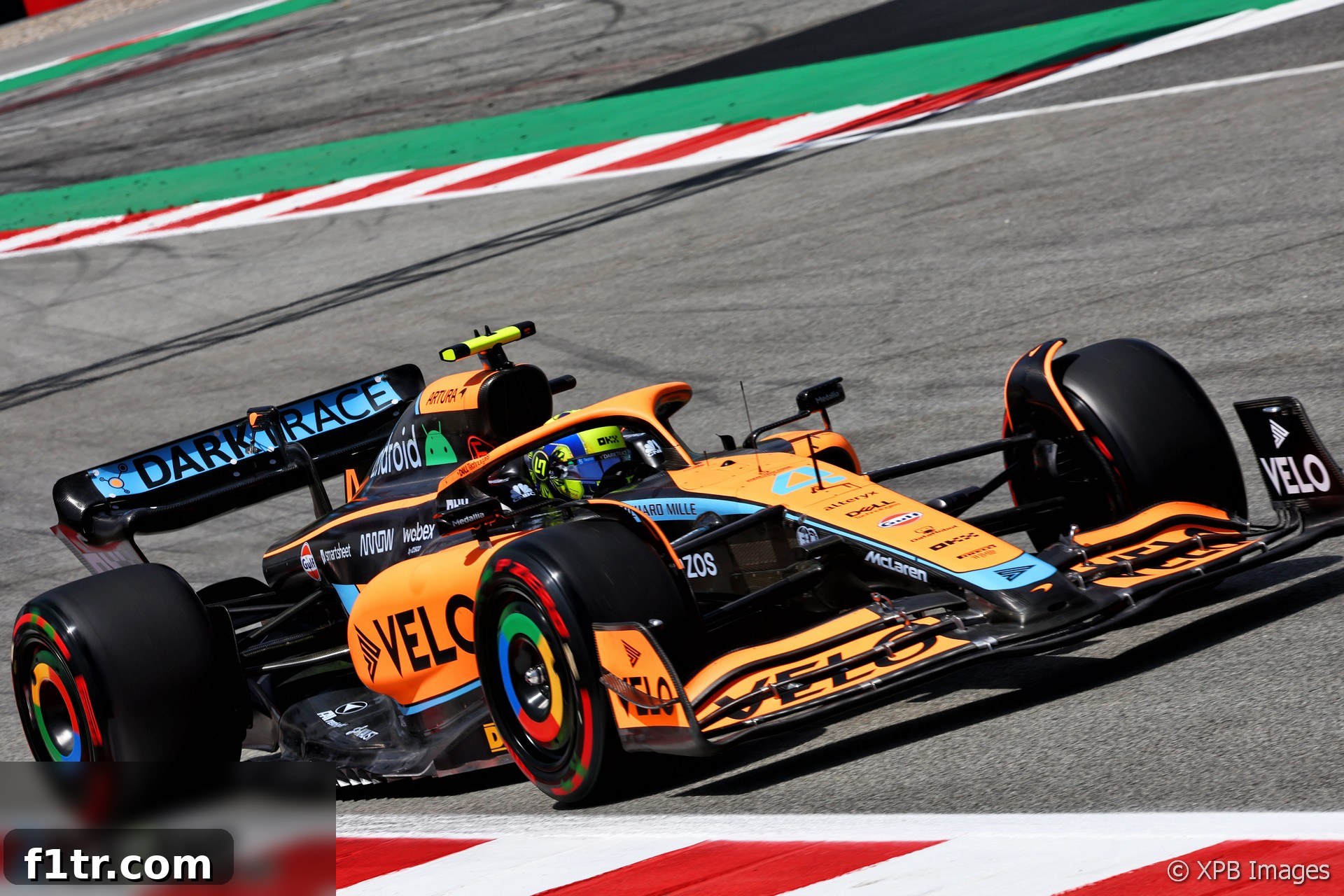
Formula 1’s Budget Cap Under Threat: McLaren Calls for Urgent Adjustment Amid Soaring Costs
Formula 1’s ambitious budget cap, designed to foster a more level playing field and promote financial sustainability, is facing an unprecedented challenge. A sharp and unexpected increase in global costs has put significant pressure on teams, making adherence to the current spending limit “pretty much impossible” for the 2022 season, according to McLaren Team Principal Andreas Seidl.
The cost cap, a cornerstone of F1’s new era, was introduced in 2021 with a limit of $145 million. For the 2022 season, this was further reduced to $140 million, with plans to drop to $135 million by 2023. These figures are exclusive of certain expenditures like driver salaries, top three personnel salaries, and marketing costs, but strictly govern the operational and developmental spending of the teams.
McLaren, a vocal advocate for the budget cap from its inception, championed its introduction as a vital step towards a more competitive and financially robust sport. The objective was clear: curb the runaway spending of larger teams, prevent smaller outfits from collapsing under financial strain, and ultimately create a grid where performance is dictated more by ingenuity and efficiency than by sheer monetary might.

Unforeseen Economic Headwinds Threaten Compliance
However, the global economic landscape has shifted dramatically since the cap figures were set. The beginning of 2022 witnessed a confluence of factors, including geopolitical events and post-pandemic supply chain disruptions, which have sent energy, transportation, and raw material costs soaring. Andreas Seidl highlighted the severity of this situation, pointing to “unbelievable increase of freight costs” and rising utility bills as primary drivers of the financial strain.
“It is clear for us sticking to the cost cap is an absolute necessity for the sport,” Seidl affirmed, reiterating McLaren’s foundational commitment to the principle. “It’s not a secret that we were pushing quite a lot for introducing this budget cap and also pushing towards the numbers we are having now. At the same time, I think it’s important that if exceptional circumstances arise like the ones we have this year… that it must be possible to have a discussion between all the teams together with the FIA in order to find fair solutions.”
The cumulative impact of these cost increases amounts to “several millions” for teams. For an operation as complex and globally active as an F1 team, freight costs alone are a colossal expenditure. Transporting cars, spare parts, and equipment across continents for 20+ races in a season means any percentage increase in shipping, fuel, or logistical services translates into a substantial hit to the balance sheet.
The core problem lies in the timing. Teams meticulously plan their annual budgets and expenditure well in advance of the season, locking in contracts and supply chains based on projected costs. With the season already in full swing, opportunities to significantly cut spending are severely limited. Most major development and operational expenditures for the year have already been committed, leaving little room for maneuver. This reality makes it “pretty much impossible” for many teams to stay within the existing $140 million threshold without compromising core operations or even facing penalties for non-compliance.
Seeking Fair Solutions: A Call for Flexibility
Given the extraordinary nature of these economic pressures, McLaren argues for a pragmatic approach: a collective discussion involving all teams and the FIA to forge fair solutions. Seidl suggests that a sensible way forward would be to “increase the cap maybe linked to these specific costs that have increased significantly.” This approach would target the root cause of the problem directly, offering relief where it is most needed without undermining the overall spirit of the budget cap.
Such an adjustment mechanism would need careful consideration. It couldn’t simply be a blanket increase but would ideally be tied to verifiable external cost escalations, such as documented rises in fuel prices for freight or energy costs at factory facilities. This would ensure transparency and prevent teams from exploiting the situation for competitive advantage, maintaining the integrity of the regulation.

The Russian Grand Prix Cancellation: A Mixed Blessing
Further complicating the budget cap discussion was F1’s decision not to replace the cancelled Russian Grand Prix for the 2022 season. This move, while made for justifiable geopolitical reasons, has a dual impact on team finances and the budget cap. On the one hand, a reduction in the total number of races means teams incur lower freight costs and other operational expenses associated with attending that particular event. This offers a small measure of financial relief and, importantly, reduces the burden on team personnel.
However, the budget cap is intrinsically linked to the number of races on the calendar. With one less race, the cap automatically decreases by $1.2 million, as confirmed by Seidl. While teams save costs by not traveling to Russia, the cap’s reduction partially offsets these savings. Seidl, nonetheless, acknowledged that this specific point “wouldn’t say that’s the biggest point of discussion at the moment” compared to the wider inflation challenges. He also expressed McLaren’s support for F1’s decision to not replace the Sochi round, highlighting the positive impact on the team’s workforce.
“In principle we are committed to do these 23 races this year and we have lined up everything in the team in order to do it,” Seidl explained. “But of course, not doing a race now at this specific weekend and doing one less is definitely something which is quite welcome by everyone within the team in terms of the burden we put on our people. In the end it was a decision F1 had to make – after being clear that we don’t go to Russia, which was the right decision – to see if it makes sense to do another race. This is something that they studied in detail and in the end they came to their conclusion which is the right compromise when you look at the financials, but also in terms of the logistics, and so we are happy with that.”
The Inflation Adjustment Mechanism: A Pre-Existing Blueprint
Interestingly, the architects of the original budget cap regulations had already foreseen the need for future adjustments due to inflation. A specific mechanism was defined two years prior, intended to come into effect from 2024 onwards. This foresight now offers a potential blueprint for addressing the current predicament. The ongoing review focuses on whether this pre-defined mechanism is suitable for the immediate crisis or if it can be refined to react more effectively to current global economic volatility.
This discussion highlights the complexity of financial regulations in a dynamic sport like Formula 1. Striking the right balance between strict financial control and necessary flexibility in exceptional circumstances is crucial for the long-term health of the championship. The current economic climate is proving to be a rigorous test for the robustness and adaptability of the budget cap framework.
The Political Landscape: Divergent Interests and the FIA’s Role
As is often the case in Formula 1, finding a consensus on budget cap adjustments is complicated by the diverse interests of the various teams. Seidl readily acknowledged this reality: “As always, there’s different interests around, which is normal. There’s teams that are in a strong sporting position, for example, at the moment. Teams that are not running at the cap so they don’t have this issue. Obviously they don’t want to give up this sporting advantage they’re having at the moment because they see it as an advantage for them.”
Teams whose current budgets already sit comfortably below the cap, or those who believe the current financial squeeze inadvertently benefits their more efficient operations, are naturally less inclined to support a relaxation of the rules. They view strict adherence to the cap as a competitive advantage that they have either achieved through superior management or inherent smaller operational scales. This dynamic creates the familiar political friction within the F1 paddock.
In this competitive and often “opportunistic” environment, the role of the FIA becomes paramount. As the sport’s governing body, the FIA must act as an impartial arbiter, steering discussions towards solutions that serve the “best interest of the entire paddock and the sport,” rather than merely individual team agendas. Their ability to facilitate a fair and equitable outcome will be crucial in navigating this challenging period.
Hope for a Common Sense Solution
When asked about the likelihood of a solution being found, Seidl offered a wry laugh, conceding, “It’s the Formula 1 paddock so it is very unlikely!” However, he quickly tempered this cynicism with a dose of optimism. “But I still hope,” he added. “I think we have shown in the past in recent years that whenever there was something which just made sense most of the time we found common sense solutions steered by Formula 1 or FIA. So I’m still hopeful with the FIA steering this topic that we’ll find a good solution.”
This sentiment underscores a belief that despite the inherent competitiveness and political maneuvering, there is a collective understanding that the overall health and stability of Formula 1 supersede individual gains. The budget cap itself was a testament to this, born out of a shared desire to ensure the sport’s long-term viability. The current crisis presents another opportunity for the F1 community, guided by the FIA, to demonstrate its capacity for collaboration and adaptation.
The integrity of the budget cap is vital for Formula 1’s future. Finding a flexible yet fair mechanism to adjust for unforeseen economic shocks will not only help teams navigate the immediate crisis but also strengthen the credibility and longevity of this crucial financial regulation. The coming weeks will undoubtedly see intense discussions as the sport grapples with ensuring competitive fairness amidst global economic uncertainty.
Related Articles: 2022 Spanish Grand Prix Insights
- Q&A: Kubica ‘shocked’ by ‘completely different’ Alfa Romeo in Spain
- How heat and traffic trouble left F1 fans fuming after the Spanish Grand Prix
- Mercedes not yet certain their porpoising problem has “disappeared”
- Sticking to budget cap “pretty much impossible” due to rising costs – McLaren
- Ricciardo hoping to find an explanation for Spanish GP pace deficit to Norris
Browse all 2022 Spanish Grand Prix articles