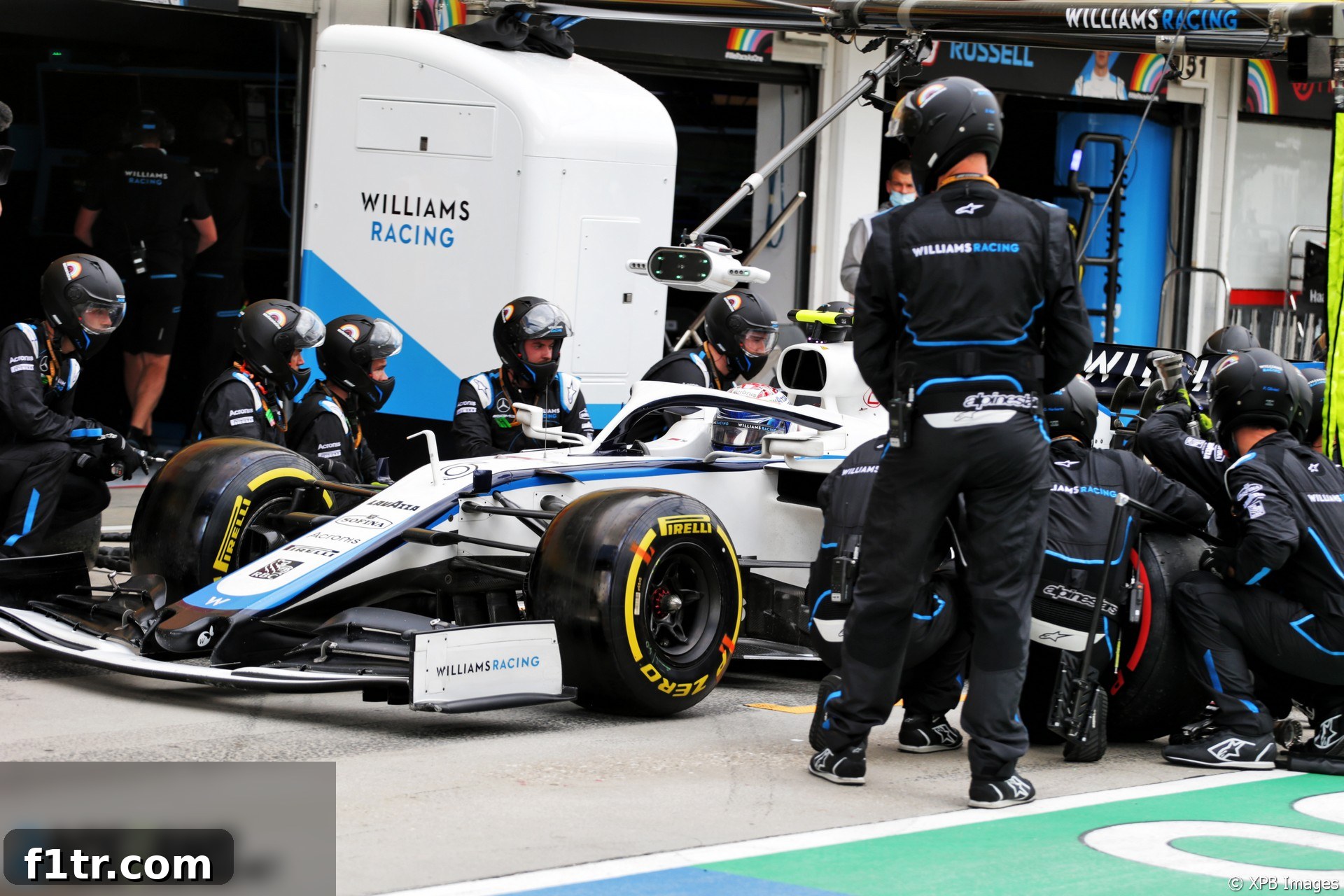
In the high-stakes world of Formula 1, where milliseconds define victory and defeat, the pit stop is a critical juncture demanding unparalleled precision, speed, and absolute safety. However, even the most meticulously planned operations can encounter unforeseen challenges, as demonstrated by a significant incident involving Williams Racing driver Nicholas Latifi at the Hungarian Grand Prix. This event, a pit lane collision that severely compromised Latifi’s race, prompted the team to implement a crucial new failsafe measure, reinforcing their commitment to driver safety and operational integrity.
The incident unfolded during a chaotic phase of the Hungarian Grand Prix, notorious for its unpredictable weather conditions that often force strategic decisions. As drivers switched from intermediate tyres to slicks on a rapidly drying track, the pit lane became a hive of activity. Nicholas Latifi, exiting his pit box, found himself in a collision with Carlos Sainz Jnr, who was passing through the congested pit lane. The contact resulted in a puncture for Latifi and a subsequent time penalty, effectively derailing his performance in the race and adding to the challenges faced by the Williams team.
For Latifi, the collision was a perplexing moment. He recounted observing the customary green light, which signals a clear and safe exit from the pit box. “I saw the green light,” Latifi stated, emphasizing the driver’s ingrained response to this visual cue. “The green light goes, you go and you don’t want to have any hesitation.” This immediate reaction underscores the trust drivers place in the automated systems designed to ensure their safe release into the fast-moving pit lane. The incident highlighted a critical flaw, as the system, despite indicating a clear path, failed to account for the immediate presence of a rival car, leading to the unfortunate contact with Sainz Jnr.
Understanding the gravity of the situation and its implications for driver safety, Williams Racing immediately initiated a thorough review of their pit stop procedures. The investigation delved into the specifics of why their existing light-based warning system, designed to alert drivers to incoming traffic, did not activate or provide sufficient warning in this particular scenario. Latifi himself was deeply involved in these discussions, collaborating with the team to pinpoint the exact failure point and prevent future recurrences.
The team’s analysis revealed a “specific reason why it didn’t go off,” indicating a gap in the automated system’s ability to handle certain complex, dynamic pit lane situations. While the fundamental light-based warnings are generally robust, the unique confluence of factors at the Hungarian Grand Prix — the sheer volume of cars pitting simultaneously, the rapid pace of changes in the pit lane, and the precise timing of Sainz Jnr’s approach — overwhelmed the existing protocol. This realization paved the way for the development of an enhanced, multi-layered safety approach.
As a direct consequence of this comprehensive review, Williams Racing has introduced an additional human element to their pit stop safety protocols. They have designated a specific team engineer whose sole responsibility is to serve as an auditory failsafe, communicating directly with the driver via radio if there’s any perceived risk of proximity to a rival car while exiting the pit box. This measure is not intended to replace the established light systems but rather to act as a crucial layer of redundancy, offering an extra pair of eyes and ears in a high-pressure environment.
Latifi elaborated on this new procedure, confirming, “We will have a little bit more of a failsafe with one of the engineers on the radio just in case something like that needs to happen.” This engineer-led warning system is a testament to F1 teams’ continuous pursuit of perfection and safety. It acknowledges that while technology provides incredible precision and speed, human judgment and real-time communication can offer an invaluable additional layer of protection, particularly in rapidly evolving and unpredictable scenarios like a busy pit lane during a tire change window.
The implementation of this new failsafe underscores the critical importance of a robust safety culture within Formula 1. Every team operates under immense pressure, but the safety of their drivers remains paramount. Williams’ proactive response to the Hungarian Grand Prix incident demonstrates a commendable commitment to learning from mistakes and evolving their practices. By integrating a human-verified check, they are enhancing the decision-making process for drivers, giving them a more complete picture of their immediate surroundings beyond what an automated light system can convey in complex situations.
Pit stops, often regarded as a ballet of precision engineering and human coordination, have evolved dramatically over the decades. From the leisurely stops of yesteryear to the sub-two-second marvels of today, every aspect has been optimized for speed. However, this relentless pursuit of efficiency must always be balanced with an unwavering focus on safety. Incidents like the one involving Latifi and Sainz serve as stark reminders that even minor errors or system shortcomings can have significant consequences, not only for the drivers involved but also for the integrity of the race.
The role of the pit crew and the entire race operations team is multifaceted, encompassing not just the physical act of changing tyres but also the strategic timing of the stop, the management of traffic, and the precise release of the car back onto the track. A green light is typically the final signal, but it relies on an array of sensors and human checks upstream to ensure its validity. When this chain of checks experiences a failure, as it did for Williams in Hungary, it necessitates a deeper dive into the procedural architecture.
This incident also highlights the intricate regulatory framework governing pit lane conduct. The FIA (Fédération Internationale de l’Automobile) sets stringent rules regarding pit lane speed limits, safe release protocols, and penalties for infractions. While Latifi was penalized for an unsafe release, the team’s subsequent actions demonstrate an internal commitment to go beyond mere compliance, actively seeking to eliminate the root causes of such safety breaches through innovative solutions.
The adoption of an additional radio engineer to provide real-time traffic warnings represents a practical and effective enhancement. It provides the driver with an immediate, verbal confirmation or warning, which can be processed alongside the visual cues. In a sport where every fraction of a second counts and peripheral vision is often obscured by the car’s structure, an explicit verbal command or caution from a trusted engineer can make all the difference, preventing potential collisions and ensuring a safer environment for all competitors.
Williams Racing, a team with a storied history in Formula 1, has consistently strived for excellence and innovation. While recent seasons have presented significant challenges, their dedication to improving every facet of their operation, particularly in critical areas like safety, remains unwavering. This proactive step to bolster pit stop safety not only protects their drivers but also sets a precedent for continuous improvement, potentially influencing other teams to review and refine their own protocols.
Ultimately, the Hungarian Grand Prix incident served as a powerful lesson for Williams, transforming a moment of operational failure into an opportunity for growth and enhanced safety. The new failsafe, integrating human judgment with technological indicators, is a testament to the dynamic nature of F1 safety protocols. It ensures that while the sport pushes the boundaries of speed and engineering, the welfare of its gladiators remains at the forefront of every strategic and operational decision, allowing drivers like Nicholas Latifi to compete with renewed confidence in their team’s unwavering commitment to their protection.
2020 F1 season
- Grosjean to make F1 test return tomorrow for first time since Bahrain horror crash
- Pictures: Wrecked chassis from Grosjean’s Bahrain fireball crash to go on display
- Bottas vs Rosberg: Hamilton’s Mercedes team mates compared after 78 races each
- F1 revenues fell by $877 million in Covid-struck 2020 season
- Hamilton and Mercedes finally announce new deal for 2021 season
Browse all 2020 F1 season articles