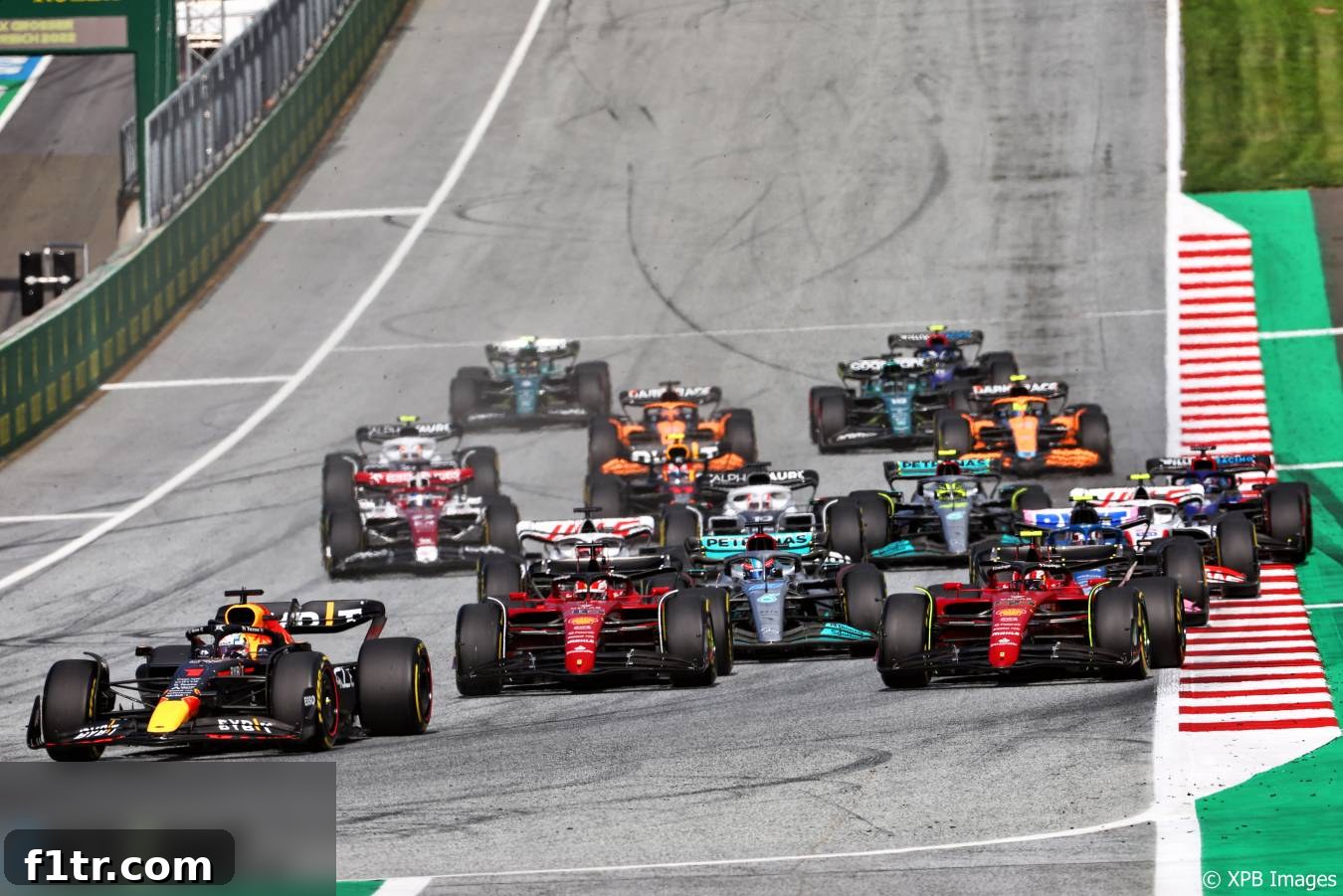
The highly competitive world of Formula 1 often hinges on split-second decisions and pinpoint precision, none more so critical than the race start. This weekend’s French Grand Prix marks a pivotal moment for Ferrari and its customer teams, as they introduce a brand-new clutch system specifically engineered to dramatically enhance their performance off the grid.
Race starts are not merely about initial acceleration; they dictate track position, influence strategy, and can make or break a team’s entire race. For Ferrari-powered cars, including the works team and its customer outfits like Alfa Romeo, the 2022 season has presented an unexpected hurdle in this crucial phase, costing valuable positions and potential championship points.
Alfa Romeo, one of two customer teams running Ferrari power units alongside the Scuderia itself, has notably grappled with inconsistent race start performance since the outset of the 2022 campaign. Their struggles have been particularly pronounced when battling rivals in the fiercely contested midfield, where every single position can be the difference between scoring points or finishing outside the top ten.
Ahead of the much-anticipated French Grand Prix at Circuit Paul Ricard, Alfa Romeo driver Valtteri Bottas shed light on the impending solution. He revealed that Ferrari had diligently developed and provided them with a sophisticated new clutch system, directly addressing the start-line issues that have hampered their ability to launch effectively and consistently from their grid slots.
“We have a new clutch here, finally,” Bottas stated with an evident sense of relief and anticipation. “We will try it in the practice for the first time. This is something that Ferrari has been working on for quite some time. Now, finally, we have some new bits for the clutch that should prevent the oscillations we’re having.”
Bottas’s comments underscore the depth of the problem. “Oscillations” in a racing clutch context typically refer to inconsistent torque delivery, leading to wheelspin, poor traction, or an unpredictable bite point. Such issues can significantly undermine a driver’s confidence and ability to execute a perfect launch, forcing them to react rather than control the initial phase of the race. The technical complexity of an F1 clutch, operating within milliseconds and under immense pressure, means even subtle imperfections can have profound consequences.
When questioned about the extent to which their power unit provider’s clutch problems had impacted Alfa Romeo during the first half of the season, Bottas candidly admitted it had been “quite a big compromise.” This ‘compromise’ translated directly into tangible disadvantages on track.
“We’ve tended to lose positions, on average, at the start and that’s not great because the midfield is so tight that once you drop behind somebody, then you’re stuck for like 20 laps,” he explained. “It doesn’t make your life easier. So hopefully [now] it’s okay.” His frustration highlights the domino effect of a poor start: losing positions immediately funnels a car into a dense pack, making overtakes incredibly difficult and often forcing drivers into sub-optimal strategies or prolonged battles that wear out tires and compromise overall race pace. For a team like Alfa Romeo, fighting for every point, such setbacks are incredibly costly.
The problem, however, was not exclusive to Ferrari’s customer teams. Ferrari’s own performance off the line has also been visibly restricted throughout the 2022 season, a fact conceded by Scuderia driver Carlos Sainz Jnr. This admission from within the works team itself underscores the systemic nature of the clutch challenge.
“We’ve identified an issue on our car here that is not allowing us to perform the starts that we were doing last year and probably is affecting our fellow engine team mates,” Sainz confirmed. His statement validates the shared struggle across all Ferrari-powered cars, suggesting a common component or design characteristic was at the heart of the problem. The synergy between a works team and its customers means that improvements in core components often benefit all, and conversely, issues can propagate through the network.
“But we know where the problem lies,” Sainz added, offering a glimmer of hope. “We’re keeping it very private and we don’t speak a lot about it because it’s not like in every start we are falling back or anything, but it’s probably not the best starts that we can get with this car. Hopefully we will keep improving it through the year and into next year.” The decision to keep the specifics “very private” is typical in Formula 1, where competitive advantage often hinges on proprietary technical details. This discreet approach suggests the issue was significant enough to warrant secrecy, but also that Ferrari’s technical department had a clear understanding and a targeted solution in mind.
The impact of this new clutch system cannot be overstated. In a championship battle as tight as 2022, where Ferrari and Red Bull have been locked in a fierce contest, even minor performance gains or losses can swing the momentum. For Alfa Romeo and Haas (the other Ferrari customer team), consistent starts mean a better chance to hold or gain positions, translating into crucial points that could determine their final standing in the constructors’ championship.
The 2022 regulations brought significant changes to F1 car design, including larger 18-inch wheels and new aerodynamic philosophies. These changes inevitably presented new challenges for engineers, not just in aerodynamics and suspension, but also in how power is delivered to the ground, especially during the crucial launch phase. Adapting the clutch system to these new dynamics, while maintaining reliability and performance, is a testament to the continuous development cycle that characterizes Formula 1.
The French Grand Prix at Paul Ricard will serve as the immediate proving ground for this new component. The flat, wide track and varied corners will offer ample opportunity for data collection and real-world testing. All eyes will be on the Ferrari-powered cars during the practice sessions and, more critically, at the start of the race itself. A clean, strong launch from Bottas, Sainz, Leclerc, and Schumacher (for Haas) would signal a successful intervention and a significant step forward.
Ultimately, the introduction of this new clutch system is more than just a technical upgrade; it’s a statement of intent from Ferrari. It demonstrates their commitment to addressing critical performance deficits and supporting their customer teams. If successful, this could unlock significant untapped potential, helping Ferrari solidify its championship bid and allowing its customer teams to consistently maximize their points-scoring opportunities as the 2022 season progresses and looks towards 2023.
2022 French Grand Prix Insights
- Ferrari’s season of missed chances led to “difficult” criticism for Binotto
- McLaren looking into why their starts are “more inconsistent” this year
- Mercedes expect Hungarian GP will ‘expose our qualifying weakness’
- Hamilton and Russell ‘out-performing a car that’s not good enough’ – Wolff
- “We need to decide now”: Inside Sainz and Ferrari’s French GP strategy dilemma
Browse all 2022 French Grand Prix articles