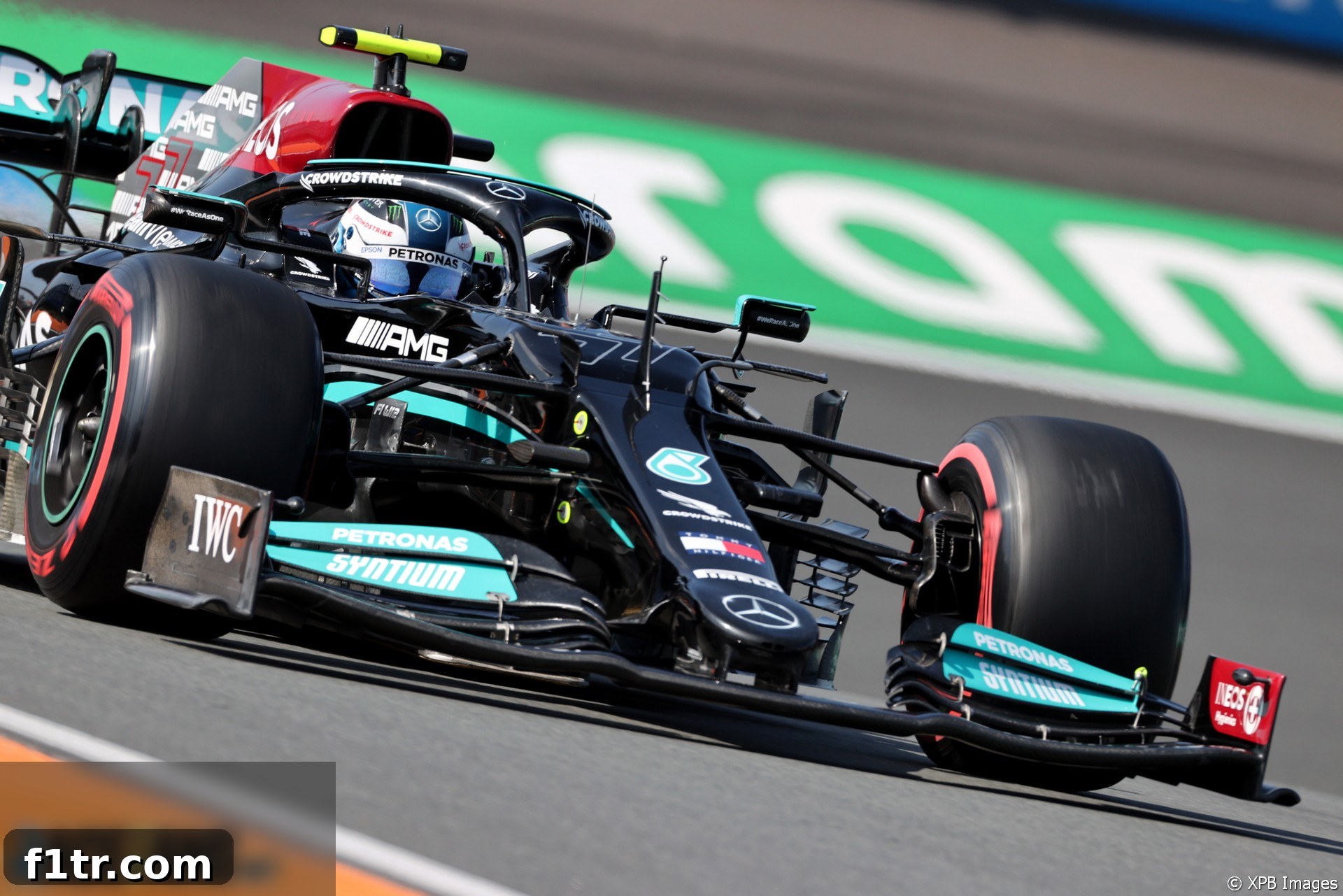
The upcoming two races on the Formula 1 calendar, set to take place in Mexico and Brazil, have historically presented a unique challenge for Mercedes-AMG Petronas F1 Team, often proving to be strongholds for their rivals, Red Bull Racing. However, Valtteri Bottas, then a key driver for Mercedes, expressed cautious optimism regarding his team’s prospects for these high-altitude events. He believed that significant advancements and optimizations had been made, potentially mitigating the traditional disadvantage Mercedes faced in the thinner air.
Mercedes’ Uphill Battle at High-Altitude Venues
The circuits in Mexico City and São Paulo are renowned for their elevated locations. The Autódromo Hermanos Rodríguez, host of the Mexican Grand Prix, sits at an astonishing 2,240 meters (7,349 feet) above sea level, making it the highest track on the F1 calendar. This extreme altitude creates a distinct set of engineering and performance hurdles. The air density is considerably lower, impacting every facet of a Formula 1 car’s operation, from engine performance to aerodynamic grip and cooling efficiency. Turbochargers have to work harder, cooling systems are less efficient, and the reduced air pressure significantly impacts downforce generation, fundamentally altering car balance and driving dynamics.
Historically, Mercedes has openly acknowledged that these conditions tended to expose a specific vulnerability in their package, particularly concerning the power unit. The internal combustion engine, turbocharger, and MGU-H all operate under immense stress in reduced atmospheric pressure. While all teams face this, some engine architectures and car philosophies adapt better than others. Red Bull, often powered by Honda (and previously Renault), demonstrated a consistent ability to excel in these specific conditions. Their chassis and aerodynamic efficiency seemed less compromised by the thin air, allowing them to maintain a competitive edge where others struggled to find the right balance between straight-line speed and cornering grip.
The Mexican Grand Prix: A Red Bull Stronghold
The Mexican Grand Prix has, in recent seasons, become synonymous with Red Bull’s dominance. Max Verstappen, in particular, has enjoyed considerable success at the Autódromo Hermanos Rodríguez, securing victories in the years preceding the article’s context. His aggressive yet precise driving style, combined with Red Bull’s renowned chassis agility and superior downforce generation at altitude, allowed him to extract maximum performance from the package. The relatively short straights and twisty sections of the Mexican circuit, coupled with the unique atmospheric conditions, often played directly into Red Bull’s strengths, enabling them to minimize the engine power deficit typically seen at other tracks.
Despite Red Bull’s general prowess in Mexico, the previous race in Mexico City, which saw Lewis Hamilton clinch victory, was not without its drama and an element of fortune for Mercedes. Verstappen, who had been the pace-setter throughout that weekend, suffered a critical setback. A yellow flag violation during qualifying cost him pole position, a crucial blow to his starting advantage. Furthermore, an early-race puncture further hampered his efforts, forcing him into an unscheduled pit stop and dropping him down the order. These incidents opened the door for Hamilton to capitalize and take the win, demonstrating that even in their favored conditions, challenges and unforeseen circumstances can heavily influence the outcome, adding another layer of intrigue to the championship battle.
Valtteri Bottas’s Renewed Optimism: A Glimmer of Hope for Mercedes?
Against this backdrop of historical disadvantage, Valtteri Bottas’s comments brought a fresh wave of optimism to the Mercedes camp. He candidly admitted, “For Mexico, we know it’s been usually a bit of a weakness for us. And it feels like quite a big chunk [of that] has been, in the recent years, from the power unit with high altitude.” This acknowledgement highlighted the specific area where Mercedes believed they were losing out to their competitors, emphasizing the critical role of the engine in these unique atmospheric conditions. The challenges ranged from managing combustion efficiency to ensuring the turbocharger could operate optimally without overheating or losing pressure, all while maintaining durability.
However, Bottas quickly followed this by expressing confidence in the team’s relentless pursuit of improvement: “But I think we’ve been able to optimise a lot since, so I would expect us to be in better place than in the recent years.” This statement hinted at significant technical advancements behind the scenes. Optimisation in this context could refer to a multitude of areas. For the power unit, this might involve revised engine mapping to compensate for lower oxygen levels, refinements to the turbocharger’s efficiency at higher altitudes, or enhanced cooling solutions to manage thermal loads despite the less efficient air flow. Furthermore, chassis setup and aerodynamic tweaks would be crucial to ensure the car maintains stability and grip without relying solely on downforce generated by increasingly less dense air. This holistic approach, combining powertrain adjustments with chassis and aero fine-tuning, aimed to create a more balanced and effective package for the unique demands of high-altitude circuits.
The ability to “optimise a lot” suggested that Mercedes had invested considerable resources and engineering talent into understanding and mitigating the unique challenges posed by high-altitude racing. Such improvements would be invaluable, not just for the individual race outcomes, but for the psychological advantage in a tight championship fight. If Mercedes could genuinely narrow the gap or even challenge Red Bull at their supposed strongholds, it would send a powerful message about their adaptability and overall strength, potentially shifting the momentum in their favor during the crucial final stages of the season. The team’s commitment to overcoming perceived weaknesses underscored their dedication to securing every possible advantage in a highly competitive year.
Brazil’s Interlagos: The Second High-Altitude Test
Following the Mexican Grand Prix, the F1 circus traditionally moves to Brazil for the São Paulo Grand Prix at the Autódromo José Carlos Pace, better known as Interlagos. While not as high as Mexico City, Interlagos still sits at a considerable altitude of approximately 800 meters (2,600 feet) above sea level. This makes it the second-highest track on the calendar and presents a similar, albeit less extreme, set of challenges as Mexico. The thinner air still impacts engine performance and aerodynamic efficiency, though perhaps to a lesser degree, requiring a nuanced approach to car setup and strategy.
Interlagos is a circuit celebrated for its flowing corners, significant elevation changes, and relatively short lap length. It often produces thrilling races and unpredictable outcomes, where car balance, tyre management, and driver skill are paramount. The circuit’s distinctive layout, featuring a long uphill straight followed by tight corners and a sweeping downhill section, demands a versatile car capable of performing well across various conditions. Despite the optimism surrounding Mercedes’ high-altitude improvements, Bottas remained realistic about the inherent strengths of their rivals at such venues. He conceded, “Still, on paper, we think they’re really strong places for Red Bull.” This acknowledgment underscores the deep-rooted advantages Red Bull seemed to possess in conditions where engine power might be slightly mitigated, and chassis dynamics, especially mechanical grip and aerodynamic efficiency in thinner air, become even more critical for overall performance.
The Mercedes team’s approach, as articulated by Bottas, was one of thorough preparation based on past experiences: “We’ve just really tried to [take] all the learnings we’ve done from previous years and prepare the best that way.” This signifies a data-driven strategy, meticulously analyzing previous performances, identifying areas for improvement, and implementing changes across the entire car package. This comprehensive preparation would include extensive simulator work, powertrain dyno testing at simulated altitudes, and rigorous setup evaluations to find the optimal compromise for the unique demands of these circuits. Every piece of data from previous years would be scrutinized to gain a crucial performance edge, highlighting the scientific and analytical depth of modern F1 racing.
The Championship Stakes: Every Point Counts
In the context of the highly competitive 2021 Formula 1 season, where the championship battle between Lewis Hamilton and Max Verstappen was intensifying with each passing race, the performances in Mexico and Brazil held immense significance. These back-to-back high-altitude races represented a crucial double-header that could swing the momentum decisively in one direction or the other. For Mercedes, turning a historical weakness into a competitive advantage, or at least neutralizing it, would be a monumental achievement, vital for Hamilton’s title aspirations and the constructors’ championship. The points gained or lost in these races could easily dictate the final standings.
Conversely, for Red Bull, maintaining their dominance at these tracks would be critical to their own championship ambitions. The pressure on both teams was immense, with engineers and strategists working tirelessly to extract every millisecond of performance. The fight was not just on track but also in the meticulous preparation, the technical developments, and the strategic foresight. Bottas’s concluding remark perfectly encapsulated the relentless nature of the sport: “So they’re not going to be easy weekends, but it’s never easy in this sport.” This sentiment resonated deeply within the paddock, acknowledging the immense effort required to succeed at the pinnacle of motorsport.
The anticipation leading into these races was palpable. Fans and pundits alike were eager to see if Mercedes’ claimed improvements would truly manifest on track, offering a genuine challenge to Red Bull’s historical supremacy. The outcome would not only impact the drivers’ championship but also the constructors’ title, adding further layers of strategic importance to every practice session, qualifying lap, and race stint. The performance at these unique venues would undoubtedly be a major talking point and a key indicator of which team had the upper hand in the latter stages of the thrilling 2021 season.
Ultimately, the performance at these high-altitude races would serve as a crucial barometer for the progress and adaptability of both teams. It would demonstrate which team had better understood and optimized their package for the most challenging environmental conditions Formula 1 presents, thereby influencing the final stages of a memorable championship campaign and shaping the narrative of one of F1’s most intense title fights in recent memory.
2021 Mexico City Grand Prix Articles
- No one will win more F1 races than Verstappen this year
- Alfa Romeo’s misjudgement which prompted Giovinazzi’s sarcastic ‘thanks’
- “Nice catch”: How Verstappen’s canny bid to thwart Bottas almost succeeded
- 2021 Mexico City Grand Prix Star Performers
- Wolff “surprised” stewards did not investigate Ricciardo over Bottas collision
Browse all 2021 Mexico City Grand Prix articles