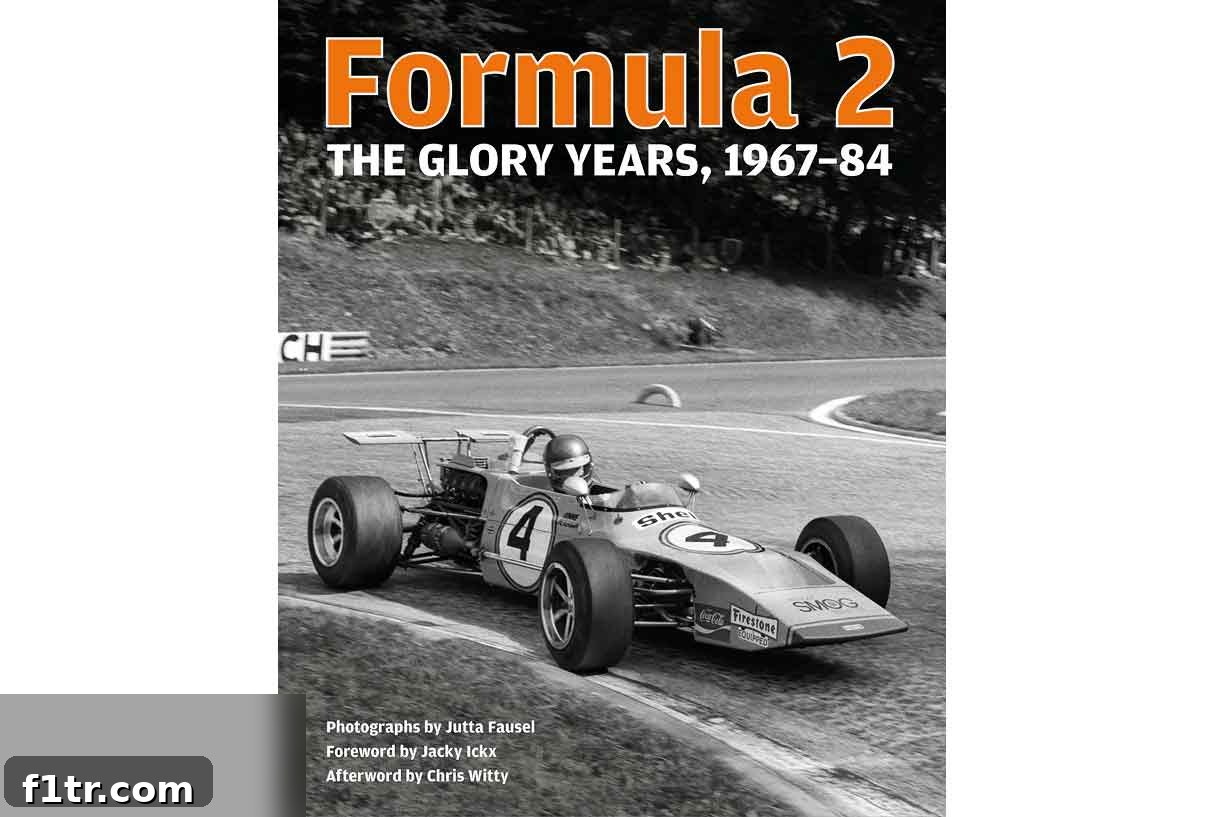
Reliving the Golden Age: A Comprehensive Review of “Formula 2 The Glory Years, 1967-84”
Modern Formula 2 racing has earned a formidable reputation for delivering some of the most thrilling and unpredictable contests in motorsport. Benefitting from a larger grid and identical machinery, it often eclipses the main event, Formula 1, in terms of on-track spectacle and fierce competition. However, this era of standardized racing is a relatively recent development. For decades, Formula 2 was a crucible of innovation, a true ‘formula’ series where multiple chassis, engine, and tyre manufacturers battled for supremacy. It was a championship that not only forged future F1 stars but also served as a vital proving ground for emerging engineering talent and ambitious racing teams.
This rich and dynamic period, specifically between 1967 and 1984, is magnificently chronicled in Evro Publishing’s latest offering, “Formula 2 The Glory Years.” Penned by a team of esteemed motorsport luminaries and featuring an unprecedented collection of photography, this book promises to transport readers back to an era when F2 was at its zenith. When this weighty tome, spanning over 500 pages, arrived, it immediately signaled a deep dive into an important chapter of racing history, sparking anticipation for hours of immersive exploration.
The Evolution of Formula 2: From Innovation to Standardization
The historical context of Formula 2 is crucial to appreciating the “Glory Years.” Unlike its contemporary counterpart, the F2 of 1967-1984 was a beacon of diverse engineering. It was a battleground where pioneering chassis constructors like March, Ralt, Chevron, and Lola constantly pushed the boundaries of design, often experimenting with aerodynamics and ground effect long before these technologies became standard in Formula 1. Engines from manufacturers such as BMW, Cosworth (with their legendary BDG units), Hart, Alfa Romeo, and Renault provided a symphony of mechanical prowess, each vying for power and reliability. Furthermore, tyre giants like Goodyear, Michelin, and Pirelli were locked in an intense development race, bringing cutting-edge rubber compounds to the grid.
This multi-faceted competition transformed Formula 2 into an indispensable training ground, far beyond just driver development. It was here that engineers refined their craft, testing new concepts and pushing the limits of automotive performance in a competitive environment. Entire teams cut their teeth in F2, learning the intricate art of race preparation, strategy, and logistics. Many legendary drivers who would go on to achieve greatness in Formula 1 honed their skills in this demanding series, including icons such as Ronnie Peterson, James Hunt, Jean-Pierre Jabouille, Patrick Depailler, Jacques Laffite, Didier Pironi, René Arnoux, Keke Rosberg, Teo Fabi, Michele Alboreto, and Stefan Bellof, among others. Their raw talent, coupled with the varied machinery, made for an incredibly compelling spectacle.
This golden era, however, began to draw to a close with the introduction of Formula 3000 in the mid-eighties, a move that eventually ushered in greater standardization. The modern Formula 2 championship, while exciting, now operates as a single-spec series, emphasizing driver skill above all else. “Formula 2 The Glory Years” thus serves as an invaluable chronicle of a period when the championship truly lived up to its ‘formula’ designation, showcasing an era where technical innovation and fierce manufacturer rivalries were as central to the drama as the drivers themselves.
“Formula 2 The Glory Years”: A Visual Journey Through a Legendary Era
Evro Publishing’s “Formula 2 The Glory Years” stands out as a triumph of visual storytelling. While the book’s substantial page count hints at comprehensive detail, it is the sheer volume and quality of its photographic content that truly defines it. Featuring an astonishing nine hundred photographs, the book is a testament to the dedication of its primary visual chronicler, Jutta Fausel. Credited on the cover, Fausel’s lens captured the essence of F2 racing with unparalleled intimacy and breadth, offering a unique perspective from inside the paddock and trackside.
The images within these pages are a treasure trove for any motorsport enthusiast. They beautifully illustrate the evolution of racing car design during this period, from the more conventional shapes of the late 1960s to the aggressive, wing-laden, and ground-effect machines of the early 1980s. Each photograph allows readers to appreciate the distinctive lines and technological nuances that differentiated various chassis manufacturers. Beyond the machinery, Fausel’s work vividly portrays the up-and-coming drivers – their intense focus, moments of joy, and the raw emotion of competition. Candid shots abound, offering rare glimpses into the personalities behind the helmets, capturing the camaraderie and rivalries that defined the F2 paddock.
Furthermore, the book masterfully showcases the rough-edged circuits that played host to these thrilling contests. F2 often graced spectacular venues that the Formula 1 World Championship either never visited or had long abandoned. The iconic Pau street circuit in France, with its narrow, unforgiving urban layout, and Germany’s formidable Nürburgring Nordschleife, a legendary test of courage and skill, are just two examples brought to life through Fausel’s exquisite photography. These images convey the unique character and challenges of circuits that demanded absolute commitment from both driver and machine. Other classic European tracks such as Monza, Hockenheim, Silverstone, Zandvoort, and Österreichring also feature, providing a rich tapestry of the European racing scene of the time.
Fausel’s photographic artistry extends beyond static portrayals. Her dynamic shots capture the speed and drama of the racing, including the inevitable, often spectacular, crashes that were a part of the era’s high-stakes competition. Despite a dramatic monochrome cover, a significant portion of the book’s images are presented in vibrant color, bringing the liveries, trackside action, and paddock atmosphere to life with stunning clarity. This blend of black-and-white and color photography not only adds to the aesthetic appeal but also provides a distinct historical texture, allowing readers to truly immerse themselves in the “Glory Years” of Formula 2.
Beyond the Visuals: An Analysis of the Narrative Content
Given the immense quantity of illustrations, “Formula 2 The Glory Years” is perhaps best categorized as a meticulously crafted illustrated history rather than a purely text-driven narrative. While some readers, particularly those expecting an exhaustive academic treatise for its premium price, might initially perceive the textual content as concise, it is important to recognize the quality and authority behind it. The accompanying text, though often brief, is exceptionally well-researched and presented, serving as an authoritative complement to the visual feast.
The book benefits immensely from the collective expertise of its contributors: Bob Constanduros, Peter Higham, Mark Hughes, and Ian Phillips. Each author brings a unique perspective and deep understanding of motorsport history. Bob Constanduros, renowned for his commentary and journalism, provides insightful overviews. Peter Higham, a respected statistician and historian, ensures factual accuracy and detail. Mark Hughes, one of motorsport’s most celebrated journalists, offers sharp analytical perspectives, while Ian Phillips, with his background as a team manager, brings an insider’s view to the paddock dynamics and technical developments. This collaborative effort ensures that the narrative, while succinct, is always accurate, engaging, and rich with authoritative context.
What text there is covers the period from 1967 to 1984 comprehensively, detailing the key races, championship battles, significant technical innovations, and the careers of the drivers involved. It provides year-by-year summaries, highlighting pivotal moments and rivalries that shaped the championship. Crucially, the narrative is robustly supported by detailed results tables, offering invaluable data for statistics enthusiasts and historians. Furthermore, clear track layout graphics accompany discussions of specific races, helping readers visualize the challenges and strategic nuances of each circuit. While not designed to be a chapter-by-chapter literary exposition, the text serves as a brilliant narrative anchor, contextualizing the stunning visuals and providing essential factual grounding for this captivating historical record.
The Legacy of Formula 2 and the Book’s Value
The period covered by “Formula 2 The Glory Years” represents a crucial epoch in motorsport, underscoring F2’s role not just as a stepping stone but as a vibrant championship in its own right. The era from 1967 to 1984 was characterized by a rare blend of mechanical ingenuity, raw driving talent, and genuine competition between multiple constructors. It fostered an environment where groundbreaking innovations were tested, and future legends were forged. This book meticulously documents that unique legacy, capturing the spirit and intensity of a championship that was, arguably, at its most diverse and compelling.
At a price point of £95, this book positions itself as a premium collector’s item. However, when considering the impeccable quality of Evro Publishing’s production, the sheer volume and historical significance of Jutta Fausel’s photographic archive, and the authoritative contributions from a quartet of motorsport experts, the investment becomes understandable. It is a substantial, high-quality publication designed for serious enthusiasts.
This book is essential for a specific audience: dedicated motorsport historians, collectors of high-end racing literature, fans of classic F2 cars and legendary drivers, and anyone who wishes to delve deep into the formative years of Formula 1’s feeder series. It offers a tangible connection to a time when racing was perhaps more visceral, more experimental, and utterly captivating. While it may not be a traditional narrative heavy book, its strength lies in its ability to visually transport the reader, providing an unparalleled photographic journey through F2’s most glorious period.
Conclusion
“Formula 2 The Glory Years, 1967-84” by Bob Constanduros, Peter Higham, Mark Hughes, and Ian Phillips, with the extraordinary photography of Jutta Fausel, is an essential addition to any serious motorsport library. It is a magnificent visual chronicle, serving as a powerful testament to a bygone era of dynamic and fiercely competitive Formula 2 racing. While its emphasis is decidedly on its breathtaking array of images, the accompanying expert text provides robust context, making it far more than just a picture book.
Ultimately, this Evro Publishing release masterfully achieves its goal of documenting the “glory years” of Formula 2. It’s a book that demands to be savored, offering a nostalgic and insightful journey through a pivotal period in racing history. It may be an illustrated history, but it’s one that speaks volumes, making it a highly recommended acquisition for those passionate about the golden age of motorsport.
Read all the RaceFans book reviews.
Formula 2 The Glory Years, 1967-84
Author: Bob Constanduros, Peter Higham, Mark Hughes, Ian Phillips, with photographs by Jutta Fausel
Publisher: Evro
Published: 2024
Pages: 560
Price: £95
ISBN:9781910505199
Related Reviews
- Controversies, Norris, Newey and more: Five new motorsport books reviewed
- Next new F1 game to arrive in 2027, EA to offer 2026 season as paid DLC
- “F1 Insider: Notes from the Pit Lane” – Ted Kravitz’s new F1 book reviewed
- “Rennsport”: The RaceFans review
- “Grid to Glory: 75 Milestone F1 Moments” – Alex Jacques’ new book reviewed
Browse all Reviews