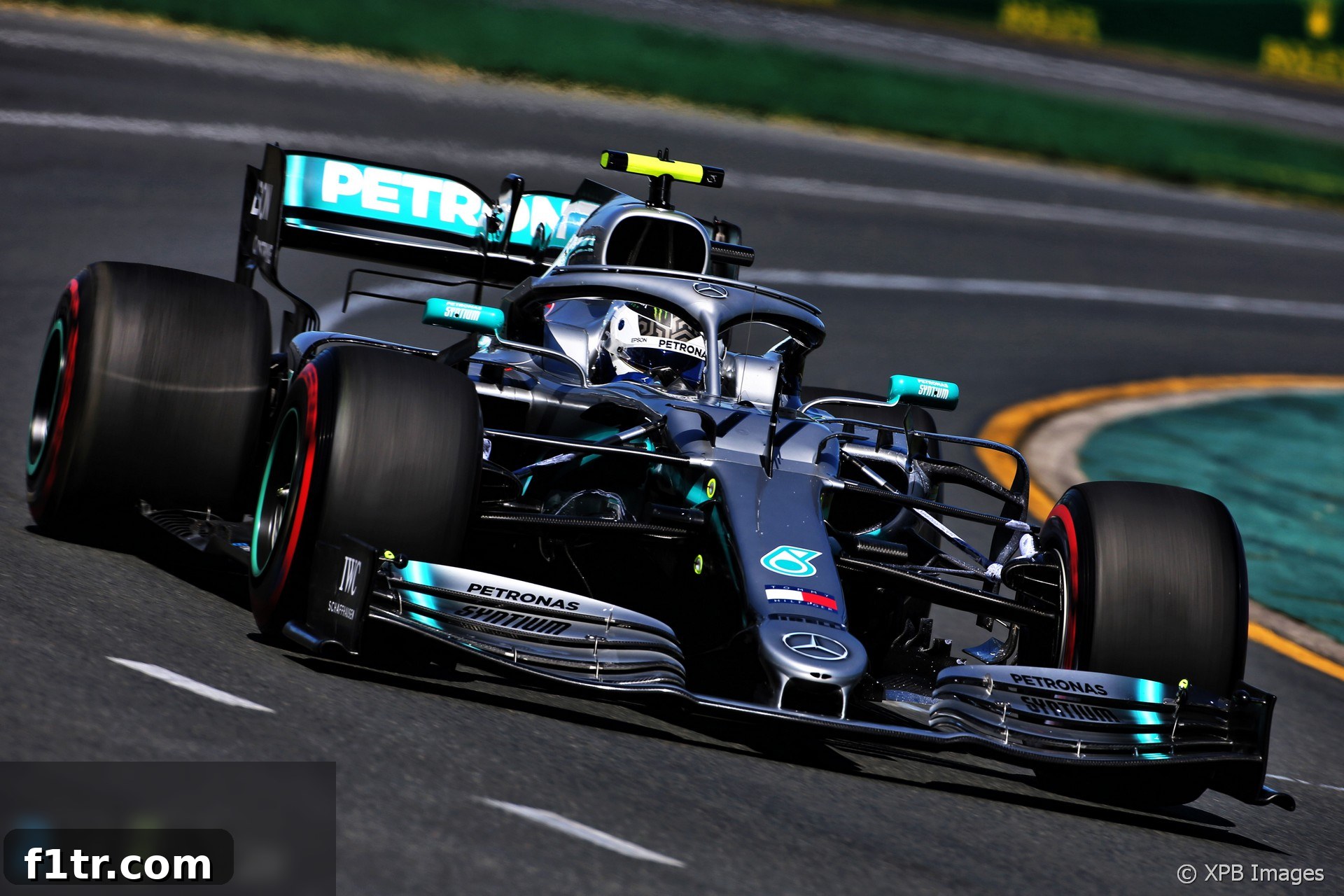
The highly anticipated start of the 2019 Formula 1 season in Melbourne, Australia, brought with it an immediate and fiery debate, sparked by none other than four-time world champion Sebastian Vettel. Following the second practice session for the Australian Grand Prix, the Ferrari driver candidly dismissed Mercedes’ pre-season claims of lagging behind their Italian rivals as nothing short of “bullshit.” This blunt assessment came after Mercedes, specifically Lewis Hamilton, showcased a blistering pace, creating a significant performance gap that defied their earlier narrative of struggle.
The build-up to the 2019 season had been dominated by speculation, particularly regarding the pecking order between the reigning champions, Mercedes, and their perennial challengers, Ferrari. Pre-season testing in Barcelona had painted a picture suggesting Ferrari held a distinct advantage, with many pundits and even Mercedes themselves hinting at a significant deficit. Lewis Hamilton, the reigning world champion, had publicly stated that Ferrari appeared to be “half a second quicker” than Mercedes, setting a cautious tone for the Silver Arrows’ prospects. Such pronouncements are often part of the intricate mind games played in Formula 1, aimed at managing expectations, potentially lulling rivals into a false sense of security, or simply relieving pressure on the team.
However, Friday’s practice sessions at Albert Park quickly shattered any illusion of Mercedes being on the back foot. While the first practice session offered an initial glimpse, it was the second practice (FP2), typically more representative of qualifying and race pace, where Mercedes truly flexed their muscles. Lewis Hamilton delivered a dominant performance, outpacing the closest competitors by a substantial eight-tenths of a second. This commanding display was a stark contrast to the narrative Mercedes had carefully cultivated throughout the winter break and during testing, prompting Vettel’s immediate and unfiltered reaction.
“What was all their bullshit about ‘oh we’re in such bad shape’ and so on?” a visibly perplexed Sebastian Vettel questioned reporters after the session. “I didn’t understand that to be honest.” His comments underscored the palpable frustration and surprise within the Ferrari camp. The German driver’s directness highlighted the dramatic shift in perception from pre-season hopes to the harsh reality of early track performance. For F1 fans, it was a moment of revealing honesty, pulling back the curtain on the strategic posturing that often precedes the opening race weekend.
Vettel openly admitted that the sheer scale of Mercedes’ advantage was completely unexpected. “It was a bit of a surprise. They looked really quick,” he conceded, acknowledging the raw speed demonstrated by their rivals. This acknowledgement points to a potential misreading of the competitive landscape during testing or perhaps a more effective car development strategy from Mercedes than Ferrari had anticipated. The significant time gap in FP2 suggested not just a marginal edge but a potentially dominant performance, leading Vettel to believe Mercedes was “in a league of their own.”
The Ferrari driver also pondered whether his own team’s struggles contributed to the perceived gap. “I don’t know if it was just us struggling a bit today or also others. But as a matter of fact I think they were in a league of their own. Maybe everyone else was struggling and then we can turn it around.” This internal reflection reveals the dual challenge facing Ferrari: understanding Mercedes’ unexpected pace while simultaneously diagnosing their own performance issues. Optimism still lingered that the situation could be reversed, but the immediate impact was undeniably concerning for the Maranello-based squad.
Delving deeper into Ferrari’s challenges, Vettel expressed a personal struggle with the car’s behaviour on track. He noted a disconnect between the feel of the car during testing and its performance in Melbourne. “I can feel I have the car under me that I had in testing but it doesn’t do the same things. It’s not doing exactly what I like here and there and that’s why I’m lacking confidence,” he explained. This sentiment is critical for any racing driver, as confidence in the car’s limits and predictability is paramount for extracting maximum performance. A car that doesn’t respond as expected can lead to hesitations, missed apexes, and ultimately, slower lap times.
The discrepancy between testing and race weekend performance can often be attributed to several factors. The track characteristics of Albert Park, a semi-street circuit, differ significantly from the smooth, high-grip surfaces of a permanent test track like Barcelona. Changes in ambient temperature, wind direction, and track evolution can all have a profound impact on a car’s aerodynamic balance and tire performance. Vettel’s comments suggest Ferrari might have struggled to adapt their SF90 chassis to the unique demands of the Australian circuit, leading to a loss of the precise handling and stability he experienced in Spain.
The immediate task for Ferrari, according to Vettel, was intensive data analysis and problem-solving. “At this point I think we are all flat-out trying to understand what happened in the session, the things that we tried, how we changed it and so on.” This highlights the intricate work that goes on behind the scenes in Formula 1, with engineers and strategists poring over telemetry data, lap-by-lap analysis, and driver feedback to identify areas for improvement. Despite the challenging session, Vettel maintained a degree of optimism, noting that not all was lost. “I don’t think it was an awful session, I think here and there there were bits that were really good and we can build on so now it’s about stringing it together and have a better day tomorrow.” This fighting spirit is characteristic of a top team, always looking for incremental gains and opportunities to recover.
The dramatic turn of events in Melbourne’s practice sessions served as a stark reminder of Formula 1’s inherent unpredictability and the high stakes involved in the opening round of any championship. While practice times are not always a definitive indicator of race day results, a significant gap, particularly from a team that had claimed to be behind, sends a clear message. Mercedes’ performance, and Vettel’s reaction, set a thrilling precedent for what promised to be an enthralling 2019 season, reigniting the intense rivalry between two of the sport’s most dominant forces.
The practice sessions laid bare the psychological warfare that is as much a part of F1 as the technical battle. Whether Mercedes’ pre-season downplaying was genuine caution or a masterful strategic bluff, the outcome on track firmly repositioned them as the team to beat. Ferrari, on the other hand, faced the immediate challenge of overcoming both a performance deficit and the psychological blow of being seemingly outmanoeuvred. As teams headed back to their garages for an intense night of analysis and adjustments, the stage was perfectly set for qualifying and the race, promising a captivating spectacle to kick off the new season.
Further Reading on the 2019 F1 Season
- Crying in the Melbourne car park at 2019 grand prix was my career low – Ocon
- McLaren Racing reports reduced £71 million loss in 2019
- Kvyat: Hockenheim podium last year was “my biggest achievement” so far
- How the FIA’s new encrypted fuel flow meter targets Ferrari’s suspected ‘aliasing’ trick
- “He smashed my office door”: 23 must-see moments from ‘Drive to Survive’ season two
Browse all 2019 F1 season articles