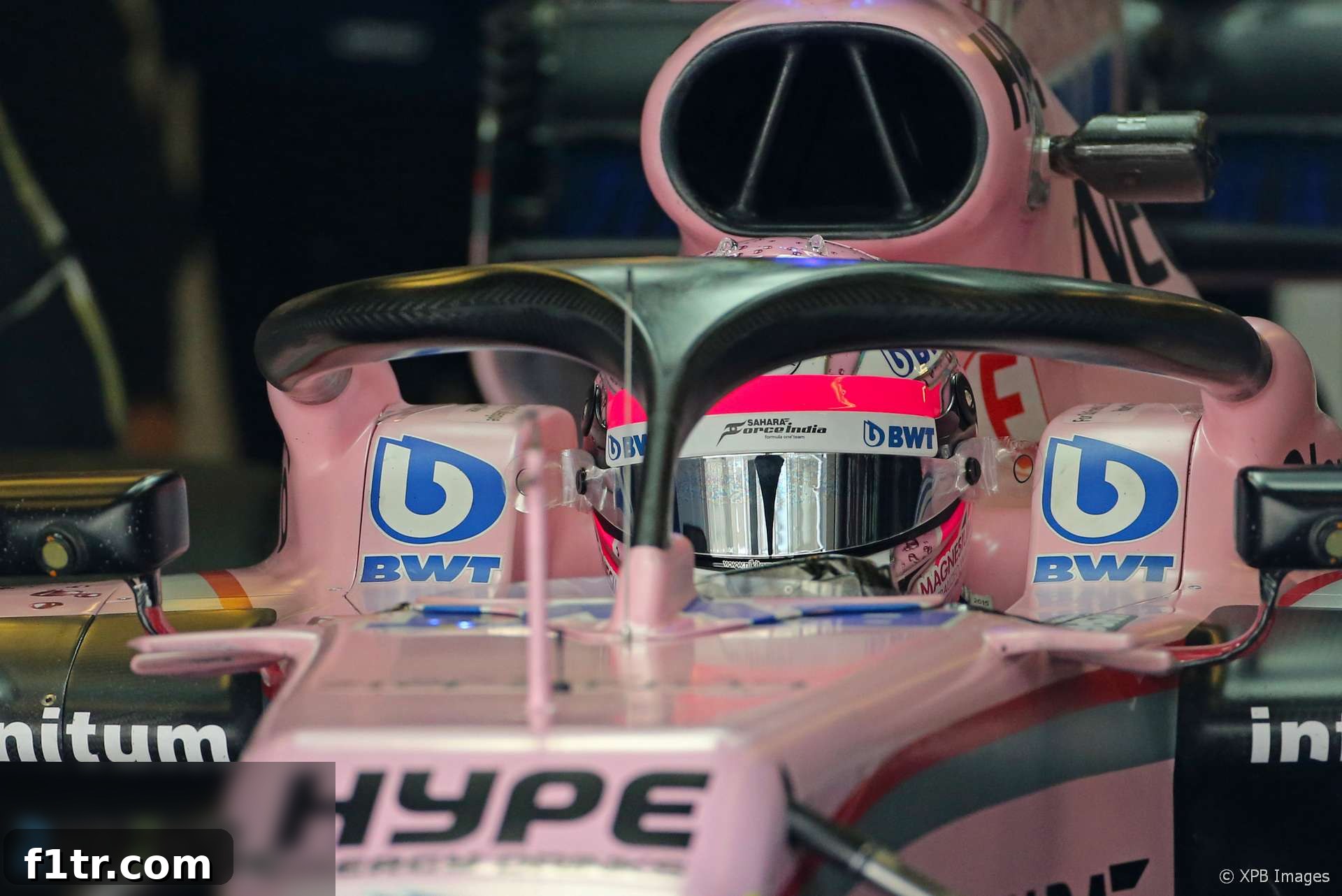
Force India VJM11 Kicks Off 2018 F1 Pre-Season Testing with Dynamic Driver Line-up
The anticipation for the 2018 Formula 1 season officially heightens as Sahara Force India prepares to unleash its new challenger, the VJM11, onto the Circuit de Catalunya. This eagerly awaited debut marks a crucial phase for the team, renowned for its efficiency and ability to punch above its weight in the highly competitive world of F1. The pre-season tests in Barcelona are not merely shakedowns; they are intense data-gathering exercises, pivotal for validating design concepts, understanding new regulations, and preparing the car for a demanding championship. The performance of the VJM11 in these initial runs will set the tone for Force India’s ambitious campaign, as they aim to solidify their position among the elite midfield contenders.
Force India, consistently a formidable presence in the constructors’ championship, aims to build upon its impressive track record. The VJM11 represents months of dedicated work by hundreds of engineers and designers, all striving for marginal gains that can translate into significant performance advantages on track. The initial testing phases are particularly critical, offering the first real-world insights into the car’s aerodynamics, reliability, and handling characteristics. Every lap provides invaluable data, allowing the team to fine-tune the car’s setup and identify any areas requiring immediate attention. This meticulous process ensures the VJM11 is optimized before the season-opening Grand Prix, laying a robust foundation for competitive racing.
A Strategic Driver Rotation for Initial VJM11 Shakedowns
The team has confirmed an exciting and strategic driver rotation for the crucial opening four-day test at the Circuit de Catalunya. This multi-driver approach allows for diverse feedback and maximizes the data acquisition process during the initial crucial stages of car development. The selection of drivers—a blend of young talent and seasoned race experience—underscores Force India’s comprehensive strategy for assessing the VJM11’s capabilities from multiple perspectives. This varied input is essential for a thorough understanding of the new car’s performance envelope and identifying the optimal development path.
Kicking off the testing proceedings will be Nikita Mazepin, an 18-year-old talent who has steadily risen through Force India’s development program. Mazepin’s role is particularly significant; as the first driver to pilot the VJM11, his initial impressions and feedback will be invaluable. Having already demonstrated his capabilities in previous tests for the team over the past two seasons, Mazepin brings a familiarity with the team’s operational procedures and a fresh perspective to the new machinery. His precision and attention to detail will be vital in identifying any early anomalies and ensuring the car’s fundamental systems are functioning as expected. This early validation by a dedicated test driver allows the race drivers to focus on performance optimization later in the test schedule, knowing the basic functions are sound.
Race Drivers Take the Wheel: Esteban Ocon and Sergio Perez
Following Mazepin’s initial shakedown, the VJM11 will be handed over to the team’s full-time race drivers, starting with Esteban Ocon on Tuesday. Ocon, who impressed profoundly in his debut full season in 2017, is keen to get to grips with the new car. His natural speed, consistency, and analytical approach will be crucial in pushing the VJM11 closer to its performance limits. Ocon’s feedback will primarily focus on driveability, balance, and how the car responds to setup changes, laying the groundwork for more intensive development work. His insights will be pivotal in translating simulated performance into real-world lap times and identifying areas for immediate improvement, particularly regarding the car’s behavior in cornering and under braking. This detailed feedback is essential for tailoring the car to competitive racing conditions.
The third day of testing will see the experienced Sergio Perez take command of the VJM11. Perez, a veteran campaigner with multiple podium finishes, brings a wealth of experience in car development and racecraft. His ability to provide nuanced feedback on the car’s behavior under race conditions and his understanding of tire degradation will be indispensable. Perez’s input will be particularly valuable for fine-tuning the car for longer runs and understanding its performance windows across different tire compounds. His established synergy with the engineering team ensures that his observations will be effectively integrated into the ongoing development process, contributing significantly to the VJM11’s competitive readiness. His experience in managing races and extracting performance over full stints will be critical in simulating real Grand Prix scenarios.
New Talent Joins the Fold: Nicholas Latifi’s Debut
Concluding the inaugural four-day test will be Nicholas Latifi, making his debut as a Force India test driver. Latifi’s inclusion signals the team’s continuous investment in nurturing talent and expanding its driver pool. While new to the Force India environment, Latifi has demonstrated strong performances in junior categories, suggesting a promising future within Formula 1. His fresh perspective and hunger to impress will provide another layer of feedback for the engineering team, offering different insights into the car’s handling and characteristics. This opportunity is not only crucial for Latifi’s development and integration into the F1 environment but also for the team to assess new methodologies and potentially uncover unexpected areas of improvement. The strategic rotation of drivers allows for a holistic assessment of the VJM11, leveraging diverse skill sets and experiences to maximize data collection.
Notably, the announcement did not include a role for Alfonso Celis, who had previously contributed to the team’s testing efforts over the past three seasons. This shift underscores the dynamic nature of Formula 1 test driver roles and the constant evolution of team personnel, as new talents are integrated and strategies adjusted to optimize development pathways. Teams continuously seek fresh perspectives and align their test driver rosters with their current development priorities and future talent pipeline.
Intensive Development Continues: The Second Pre-Season Test
The second pre-season test, also held at the Circuit de Catalunya, will see a more focused approach, with race drivers Sergio Perez and Esteban Ocon solely handling driving duties. Each driver will undertake two full days of running, allowing them to accumulate significant mileage and conduct extensive race simulations, long runs, and qualifying-style performance tests. This phase is critical for driver familiarization with the VJM11 under various conditions, enabling them to build confidence and extract maximum performance. It’s also an opportunity for the team to experiment with more aggressive setup changes and conduct detailed analysis of aerodynamic components, engine mapping, and tire performance in preparation for the season opener. The intense two-day schedule for each race driver is designed to refine the car’s setup to their specific driving styles, ensuring optimal performance from the very first Grand Prix in Australia.
The VJM11: Force India’s Ambition for 2018
Force India’s journey in Formula 1 has been characterized by remarkable efficiency and a consistent ability to challenge significantly larger, better-funded teams. The VJM11 is the latest iteration of this philosophy. The 2018 season brings with it new challenges, including the mandatory introduction of the Halo safety device, which necessitates significant design adjustments and aerodynamic considerations. Teams must meticulously integrate this new element without compromising performance, adding another layer of complexity to an already intricate design process. The VJM11 is expected to feature a refined aerodynamic package, optimized for the current regulations, and will continue to be powered by the formidable Mercedes-Benz power unit, a critical asset that provides both performance and reliability for the Silverstone-based squad.
While Force India has historically been among the last teams to officially launch their car, often opting for a quiet pit lane reveal, preferring to maximize development time, the anticipation for the VJM11’s full unveiling and its performance on track is palpable. This strategic choice allows engineers to implement the latest design iterations right up until the last possible moment, aiming to hit the ground running with the most evolved package. The goal for 2018 remains ambitious: to consolidate their position as a top midfield contender and challenge for podiums whenever the opportunity arises, building on their consistent fourth-place finishes in previous constructors’ championships. The VJM11 is not just a new car; it represents the collective ambition and relentless pursuit of excellence that defines Sahara Force India in the competitive world of Formula 1.
The Broader Landscape of the 2018 F1 Season
The 2018 Formula 1 season promises to be another thrilling chapter in the sport’s rich history. With revised aerodynamic regulations, including the lower engine covers and shark fins, and the ongoing development battles between the sport’s biggest manufacturers, every team’s pre-season preparations are under intense scrutiny. The VJM11’s performance in testing will be a key indicator of Force India’s potential to contend with rivals like Renault, McLaren, and Williams for crucial constructors’ championship points. The fight for supremacy will be fierce, and Force India’s ability to extract performance and reliability from their new car will be paramount to their success. Fans eagerly await the unveiling of all the new challengers and the commencement of what is expected to be a tightly contested championship. The testing period serves as a tantalizing prelude to the spectacle that awaits us, with each lap providing valuable clues about the pecking order and potential narratives of the season ahead.
Don’t Miss Anything New from RaceFans
Follow RaceFans on social media for the latest updates:
- Join RaceFans on Facebook
- Follow RaceFans on Twitter
- Get daily email updates from RaceFans
Explore More About the 2018 F1 Season
Delve deeper into related stories and insights:
- F1 feared “death knell” for Drive to Survive after Ferrari and Mercedes snub
- McLaren staff told us we were “totally crazy” to take Honda engines in 2018 – Tost
- ‘It doesn’t matter if we start last’: How Red Bull’s junior team aided Honda’s leap forward
- Honda’s jet division helped F1 engineers solve power unit problem
- McLaren Racing losses rise after Honda split
Browse all 2018 F1 season articles