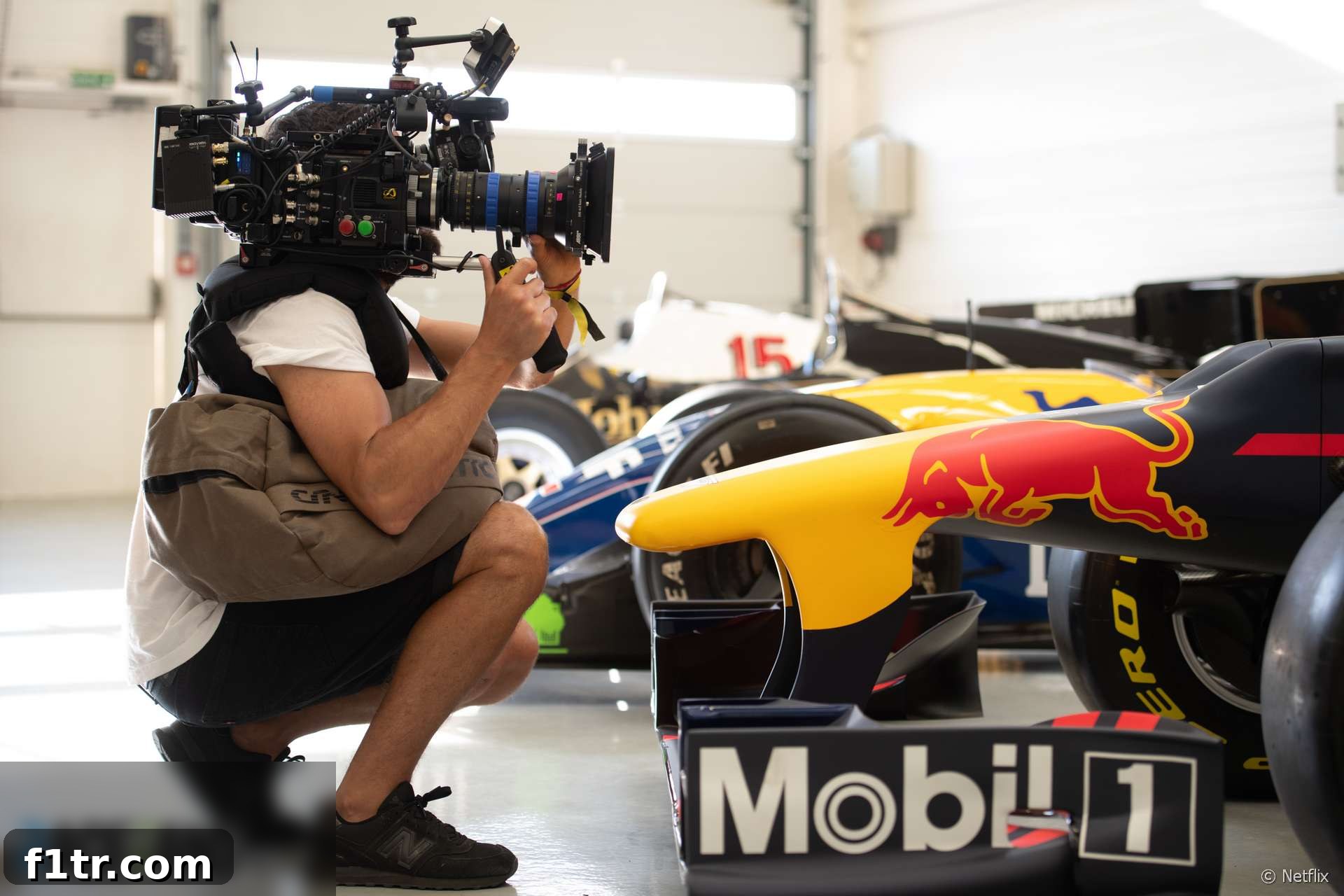
The global phenomenon that is Formula 1 has experienced an unprecedented surge in popularity over recent years, a transformation widely attributed to the critically acclaimed Netflix docu-series, “Formula 1: Drive to Survive.” However, the journey to this resounding success was not without its significant hurdles. In its nascent stages, the very future of the series hung precariously in the balance, threatened by the initial refusal of two of motorsport’s most iconic and dominant teams, Ferrari and Mercedes, to participate. This early resistance created genuine apprehension within Formula 1’s leadership, who feared that the absence of these championship contenders would prove to be a fatal blow to the ambitious project.
Support independent journalism: Become a Supporter & go ad-free
Despite these initial concerns, “Drive to Survive” has transcended its origins to become a monumental hit for F1, credited with opening the intricate world of Formula 1 to a vast, new, and diverse audience worldwide. The series, produced by Box to Box Films, grants unprecedented behind-the-scenes access to all ten teams during various race weekends, offering a raw and often dramatic insight into the lives of drivers, team principals, and the intense pressures of elite motorsport. Yet, when filming first commenced in 2018 for the inaugural season, Ferrari and Mercedes controversially withheld their permission, a decision that fundamentally shaped the early narrative arcs of the show and presented a daunting challenge for its creators.
Ian Holmes, Formula 1’s esteemed director of media rights, candidly admitted the deep-seated fears that gripped F1 management at the time. “We were in discussions with another worldwide streamer who were interested in a series that focused on one team,” Holmes recalled in an interview published by Pirelli. “So, we pivoted away from one streamer and ended up with another streamer, Netflix.” This strategic shift paved the way for “Drive to Survive,” but the optimism was tempered by the looming shadow of non-participation from the sport’s two powerhouse teams. Holmes articulated the gravity of the situation, stating, “But we had no idea it was going to be quite as successful as it was. In series one, Mercedes and Ferrari didn’t participate and we thought that might be the sort of death knell for the series. Ironically, it was probably one of the things that helped it.” This unexpected turn of events highlights the unpredictable nature of groundbreaking content creation and the unique path to success that “Drive to Survive” ultimately carved.
The “irony” Holmes alluded to lies at the very heart of the series’ appeal. By necessity, the early seasons of “Drive to Survive” were compelled to shift focus away from the teams consistently battling for race wins and championships. Instead, they delved into the compelling narratives of the midfield teams – the underdogs, the aspiring talents, and the often-overlooked personalities striving for glory. This narrative pivot proved to be a masterstroke. “It helped demonstrate the nature of the series and the narrative,” Holmes explained, emphasizing that the show was not merely “about who won a race or who won the championship and who came second.” Instead, it became a rich tapestry of human stories, organizational challenges, and the intricate behind-the-scenes drama that defines Formula 1 beyond the podium. This approach resonated deeply with viewers, proving that interest extended far beyond the traditional race results and into the personal struggles and triumphs of those involved.
Your support helps us deliver more F1 content. Become a RaceFans supporter andgo ad-free
The decision to focus on the human element, rather than solely on the dominant teams and their inevitable victories, was instrumental in forging the unique identity of “Drive to Survive.” As subsequent series have consistently demonstrated, some of the most memorable and beloved characters to emerge from the show have not been from the traditional F1 powerhouses like Ferrari and Mercedes. These individuals, often from teams battling further down the grid, captivated audiences with their raw emotions, candid interviews, and compelling arcs, transforming them into household names. While the allure of star drivers and legendary teams remains undeniable, the series successfully tapped into a universal desire for human interest stories, revealing the vulnerability, ambition, and camaraderie that underpin the high-stakes world of Formula 1 racing. This broadened perspective has been crucial in engaging new fans who might not have been drawn to the technical complexities of the sport alone.
As the series gained momentum and its cultural impact became undeniable, both Mercedes and Ferrari eventually reversed their initial stance, recognising the immense value of “Drive to Survive” in expanding the sport’s global footprint. Their participation, beginning from the second season, further enriched the storytelling, allowing for a more complete portrayal of the F1 paddock. However, the path was not always smooth even with all teams on board. Max Verstappen, the reigning world champion, notably expressed his reservations and temporarily refused to take part in the documentary, criticising the programme makers for what he perceived as the creation of “false narratives” and exaggerated drama. His boycott highlighted the delicate balance between authentic storytelling and the demands of dramatic television. Nevertheless, recognising the show’s unparalleled reach, Verstappen eventually resumed his cooperation for its fifth season, signifying the pervasive influence of “Drive to Survive” even among the sport’s most prominent figures.
The success of “Drive to Survive” is intrinsically linked to the masterful storytelling capabilities of its producers, Box to Box Films. Currently, they are diligently filming the seventh season of the acclaimed series, which is slated for broadcast next year. Holmes credits their expertise in humanising a complex and often intimidating sport as the key to its triumph. “Our sport is a complex sport, it’s a technical sport that’s superbly covered, I would say, by Formula 1’s own on-site production covering the racing on the track,” he observed. “But it’s difficult to cover that off in a traditional way.” This insight underscores the challenge of making technical racing accessible to a broad audience. “What Box to Box, who produce it for Netflix, have been successful in doing, is picking out the individual stories, the narratives around drivers in particular – and who knew team principals would become quite so popular – and so on and so forth.” Indeed, figures like Guenther Steiner, once relatively obscure outside hardcore F1 circles, achieved global celebrity status through the show, testament to its power to forge compelling personalities.
Building on the foundation laid by “Drive to Survive,” Formula 1 is now embarking on another ambitious project: an officially sanctioned feature film set within the F1 universe, expected to debut next year. Holmes, with palpable excitement, predicts this cinematic venture will be “a very, very, very big hit.” This move represents a natural progression for F1’s content strategy, leveraging the newfound global interest in the sport.
Support our independent journalism. Become a RaceFans supporter andgo ad-free
“It will have a meaningful theatrical release,” Holmes confirmed, detailing the ambitious distribution plans. “Don’t ask me what exactly means, but it will be in cinemas all over the world, for a relatively modest period of time, but enough. And then we’ll end up on Apple TV.” The multi-platform approach, starting with a global theatrical run before moving to a major streaming service, is designed to maximise reach and cultural impact. “But looking at what Apple are planning on doing and looking at what Warner Brothers Discovery will be doing in distribution are planning on doing with the film, it’ll be everywhere,” he added, emphasizing the comprehensive marketing and distribution effort behind the project.
The film, simply titled “F1,” is anticipated to emulate and even exceed the audience-generating success of “Drive to Survive,” albeit through a different medium. Holmes firmly believes that the sheer star power attached to the project will be its primary draw. With luminaries such as Brad Pitt leading the cast, and a formidable production team including Javier Bardem, Jerry Bruckheimer, and Joseph Kosinski at the helm, the film boasts an undeniable gravitational pull. “These are big, big names who, just because of who they are and their popularity, are going to bring in a lot of people,” Holmes stated confidently. He further elaborated on the strategic intent: “And, I’d like to think, another set of people, over and above what Drive to Survive has brought in.” This highlights F1’s multifaceted strategy to continually broaden its demographic appeal and attract new fans through diverse content offerings.
This film is but one facet of Formula 1’s broader, holistic content strategy designed to permeate various cultural touchpoints. “We’ve been trying to develop a policy of making getting Formula 1 content available in as many different areas as possible through different genres,” Holmes explained. This expansive vision encompasses a wide array of formats: “short form, long form, scripted, unscripted film series.” Beyond the core racing narratives, F1 is actively exploring innovative content avenues, including developing a series focused on “travel and cooking,” capitalising on the global circuit and the diverse culinary experiences associated with it. “We travel a lot and there’s wonderful food,” he noted, hinting at the rich potential of such projects.
Stay informed and help us grow. Become a RaceFans supporter andgo ad-free
Furthermore, the strategy extends into the technological realm, an area where F1 has historically excelled. “We’re looking at the technology side, which is an area we’ve played in before,” Holmes confirmed, indicating a desire to showcase the innovation and engineering marvels of the sport. Crucially, F1 is also investing in engaging younger demographics: “We’re looking at some kids, adolescent and younger kids projects.” The overarching objective is clear: “What we want is to seed Formula 1 in an appropriate manner into as many different areas as possible. And the film is another example of that.” This comprehensive approach aims to integrate Formula 1 into the fabric of popular culture, ensuring its enduring relevance and continued growth across generations and diverse interest groups.
Miss nothing from RaceFans
Get a daily email with all our latest stories – and nothing else. No marketing, no ads. Sign up here:
More Formula 1 News and Features
- Controversies, Norris, Newey and more: Five new motorsport books reviewed
- One of F1’s greatest races happened 15 years ago today. Or did it?
- “Overtaking is overtaking”: Domenicali denies F1’s yo-yo racing is “artificial”
- The crashes F1 is trying to prevent may be rare – but the danger is obvious
- F1 returning to India soon after 2027 sounds like wishful thinking
Browse all Formula 1 articles