For fifteen years, Formula 1 has journeyed to Shanghai for the Chinese Grand Prix, firmly establishing its presence in the Far East. Yet, despite this enduring relationship, the process of securing a visa for this prestigious race continues to be an arduous and often frustrating ordeal for many. This recurring challenge raises a fundamental question: why does such a significant hurdle persist for a global sport that prides itself on seamless logistics and international collaboration?
As the F1 circus descended upon the Shanghai International Circuit for its historic 1000th points-paying round, the air buzzed with anticipation and an undercurrent of collective travel fatigue. For seasoned observers like Dieter Rencken, arriving armed with a notebook full of questions, the intricate dance between high-octane sport and complex international bureaucracy was as much a part of the weekend narrative as the race itself.
Thursday 8:30am: A Dawn in Jiading, Far from the F1 Glitz
The first sliver of daylight filtered through the hotel curtains, signaling the start of another demanding Grand Prix weekend. My location, Jiading, a district just outside the bustling metropolis of Shanghai, offered a stark contrast to the perceived glamour of Formula 1. A twenty-minute taxi ride separated me from the heart of the circuit, a distance that felt both significant and a minor inconvenience after days of intense travel.
The preceding forty hours had been a blur of airports and cabin pressure: a journey from Brussels to Shanghai, punctuated by a layover in Dubai, and perhaps eight hours of fractured sleep across three distinct attempts at rest. Such is the reality for many within the F1 paddock – a ceaseless global trek that often erodes the romanticized image of the sport. As we often quip, however, it certainly beats a traditional nine-to-five.
Breakfast was heralded as a ‘full English,’ a universally recognized culinary concept. While all the individual components were indeed present on the plate – eggs, bacon, sausage, toast – their collective execution left much to the imagination. It was sustenance, certainly, but an unremarkable rendition of a classic, serving as a fitting metaphor for the sometimes-unpredictable comforts of life on the F1 trail.
10am: Navigating the Grand Stage of the 1000th Race
A short taxi ride, costing a mere 35 yuan (approximately seven pounds), delivered me to the main entrance of the circuit. From there, a brisk mile-long walk led me into the colossal, yet strangely impersonal, paddock. The scale of the Shanghai International Circuit is truly immense, designed with an architectural ambition that mirrors China’s modernity, but at times lacks the intimate, bustling charm found at some of F1’s more historic venues. Yet, despite its sprawling nature, the atmosphere was undeniably charged with a unique energy.
Preparations for the 1000th round of the World Drivers’ Championship were in full swing, turning the paddock into a living museum of motorsport history. Legendary Formula 1 cars, beautifully restored and polished, were already lined up, their iconic liveries gleaming under the morning sun. Displays of drivers’ racing gear, from helmets to race suits, were meticulously assembled, each piece a silent testament to the heroes and stories of the sport’s rich past. The sense of occasion was palpable, a grand celebration of a millennium of races.
As I navigated through the busy pathways, a fleeting moment of amusement struck me when I passed a particularly striking black and gold Lotus. It instantly triggered memories of a paddock intrigue I had previously recounted earlier in the year, a fascinating tale of backroom dealings that was subsequently confirmed by the then-Lotus boss, Eric Boullier. Such anecdotes are the lifeblood of the paddock, whispered amongst insiders and adding layers to the public narrative of the sport.
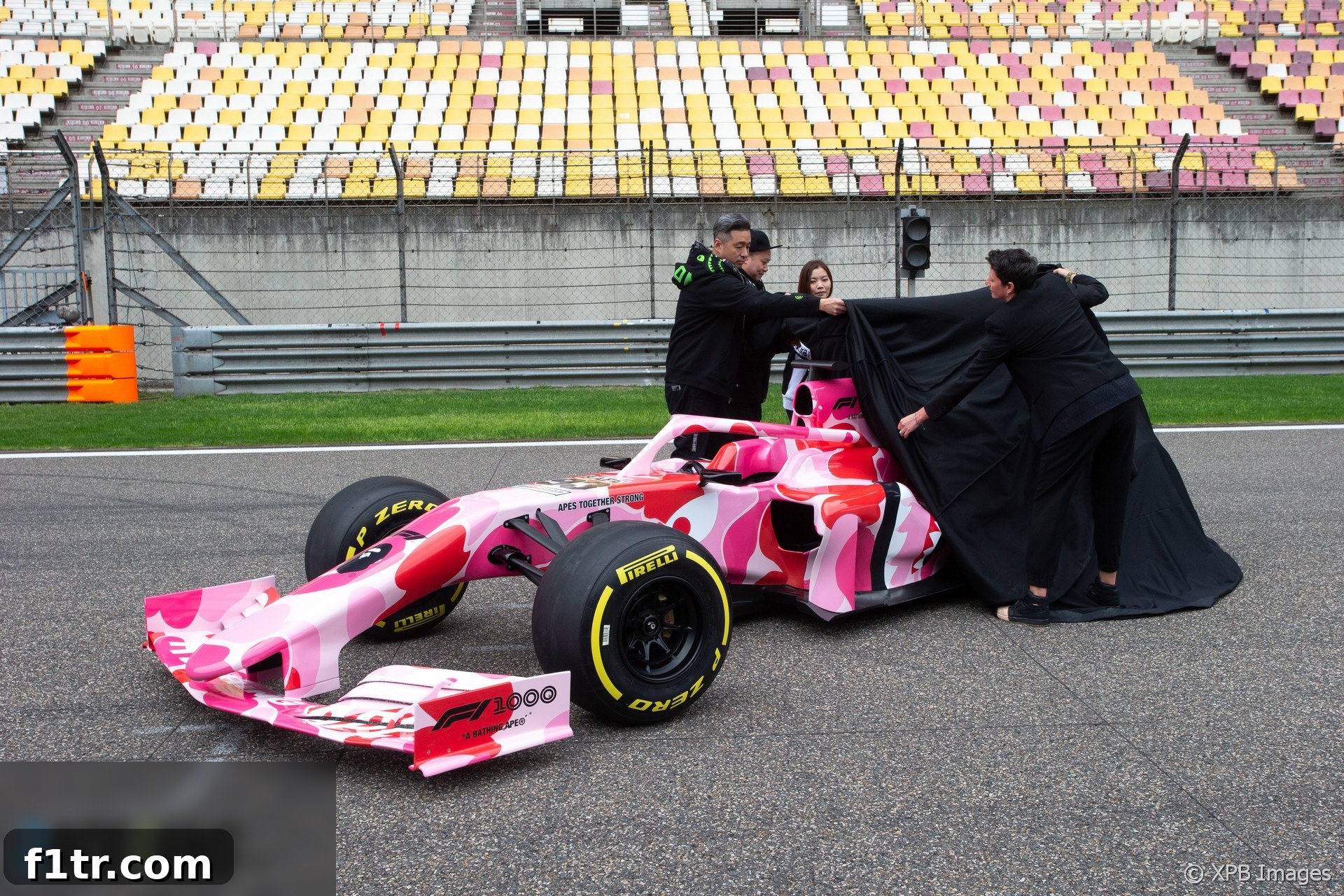
However, my amusement soon gave way to bemusement upon encountering a Formula 1 car inexplicably painted in a pink, camouflage-style livery. This peculiar aesthetic was, I learned, a tribute to a fashion sponsor. Exactly what this avant-garde design had to do with the upcoming festivities or the spirit of motor racing eluded me, and indeed, everyone I inquired of. It served as a vivid reminder of F1’s perpetual balancing act between sporting integrity and commercial demands, sometimes with truly puzzling results.
Following my comprehensive walk-through, which offered a glimpse into the meticulous pre-race operations, I ascended to the media centre. Perched on the ninth floor of the circuit’s distinctive ‘wing’ structure, directly above the start/finish line, the media centre boasted breathtaking, panoramic views across virtually the entire circuit. It was a privileged vantage point, allowing us to absorb the full scale and drama of the Shanghai International Circuit. I secured a seat near the window, ready to begin the day’s demanding work.
11am: The Unyielding Visa Gauntlet
As the media centre slowly filled, a pervasive theme emerged from countless casual conversations: the shared ordeal of simply getting to China. Almost everyone I spoke with recounted some form of travel woe – whether it was exasperating visa hassles, interrupted flights, or, in many cases, a combination of both. It became clear that the challenges were not isolated incidents but a systemic issue for foreign visitors navigating Chinese entry requirements.
My own experience was no less fraught, a delicate dance with bureaucracy that had me wondering until the very last moment whether I would make it. Despite diligently jumping through every required bureaucratic hoop well in advance, for the third consecutive year, critical documents somehow went astray on the receiving end. The visa was ultimately issued, but only after I was compelled to pay a hefty emergency processing fee to the visa service centre. Once, such an occurrence might be dismissed as unfortunate. Twice, it begins to look suspicious. But for it to happen for a third time in a row, it frankly reeks of a deliberate scam, or at the very least, an astonishingly inefficient and predatory system. This recurring difficulty stands in stark contrast to the global nature of Formula 1, where seamless international movement for teams, media, and personnel is typically a given, highlighting a persistent and frustrating bottleneck for the Chinese Grand Prix.
Noon: Fueling Up and Facing the Press
Having indulged in a slightly later breakfast, I opted to skip a formal lunch, instead grabbing a few satisfying smoked-chicken filled pitta rolls from the media catering area. The sheer volume of journalists, photographers, and team personnel made the catering area a hub of activity, a vibrant microcosm of the F1 community. My gaze was then drawn to a quirky centerpiece: a grand 1,000th birthday cake, adorned with charming alloy wheel-shaped cookies, complete with an ironic ‘Do not eat’ sign. It was a playful nod to the momentous occasion, appreciated by the weary but spirited F1 fraternity.
Before the day’s official FIA press conference, a couple of teams had scheduled their own media sessions. The Williams duo was first up, their faces displaying a brave front despite the team’s dire performance situation. Their candidness, even in adversity, was admirable. They were followed by representatives from Haas, who likewise fielded questions about their season’s progress and challenges.
The FIA press conference commenced, bringing together a panel of prominent drivers. It was during this session that I posed a somewhat left-field question to the three fathers present on the panel: Kimi Raikkonen, Sergio Perez, and Romain Grosjean. My query delved into the ethics of sponsorship, specifically asking whether they believed McLaren’s sponsorship in Bahrain by a vaping brand set an appropriate example, particularly for their children.
Romain Grosjean responded thoughtfully, weighing his words carefully. “I don’t know much about e-cigarettes, to be fair,” he admitted, demonstrating a nuanced perspective often lacking in quick soundbites. “But if it’s better for health reasons, if it’s less smelly as well – we just came up the stairs and it smelled of cigarettes like hell, same when you leave an airport, first thing you do when you go out of an airport, everyone is smoking his first cigarette and it stinks – if this year it can be better somehow then great.” His response highlighted a pragmatic, health-conscious viewpoint, contrasting with the immediate negative perception of vaping.
Kimi Raikkonen, known for his stoic demeanor, was resplendent in the vibrant red of his Alfa Romeo gear, a stark visual reminder of his past affiliations with tobacco sponsors like West and Marlboro earlier in his career. He stated, with characteristic nonchalance, that branding on cars had never influenced his personal choices, nor did he anticipate it would influence his son’s. Unfortunately, the conference was prematurely brought to a close before I had the opportunity to ask whether his present sponsors shared a similar indifference to the immense value and persuasive power of their multi-million-dollar marketing investments. This exchange underscored the ongoing tension between F1’s commercial imperatives and its role model status, particularly regarding sponsorships that touch upon public health debates.
3pm: The Paddock’s Hectic Pace and Driver Insights
The conclusion of the FIA press conference signaled a sharp escalation in the day’s tempo. The paddock, already a hive of activity, became even more frenetic. The sheer size of the complex, coupled with the logistical quirk of teams often having two hospitality ‘houses’ not situated in close proximity to each other, meant a constant scramble. My schedule was packed, involving interviews with a diverse group of drivers: Daniil Kvyat, Carlos Sainz, Lando Norris, and the two Red Bull drivers, Max Verstappen and Pierre Gasly.
My session with Max Verstappen was particularly engaging, marked by some enjoyable banter as we delved into discussions about his contractual situation. Verstappen, known for his directness and confidence, navigated the questions with a blend of candour and strategic evasion, offering glimpses into the high-stakes world of driver contracts and team loyalties. Meanwhile, Pierre Gasly, who was enduring a difficult start to his Red Bull career, did well to disguise the immense pressure he was undoubtedly under. His composure under scrutiny, despite the challenging circumstances, spoke volumes about the mental fortitude required at the pinnacle of motorsport.
Each interview offered a unique window into the minds of these elite athletes – their aspirations, frustrations, and the relentless demands of competing at the highest level. The discussions ranged from technical feedback on their cars to personal reflections on their careers, painting a comprehensive picture of life as a Formula 1 driver.
5pm: The Digital Bottleneck and the Long Road Home
With the last of the interviews completed, the focus shifted to the critical task of transmitting the day’s recordings back to base. This seemingly simple administrative chore proved to be one of the most frustrating challenges of the day. The internet infrastructure at the circuit, particularly during peak times when hundreds of media personnel were simultaneously uploading large files, was painfully slow. What should have been a quick transfer stretched into an agonizing nearly two-hour wait, highlighting a persistent technological bottleneck in an otherwise hyper-efficient sport. The reliance on robust connectivity for global reporting often clashes with the reality of local infrastructure.
Thereafter, exhausted but with the day’s primary tasks accomplished, I made my way towards the main gate, venturing out into the evening hoping to hail a taxi. The search for a ride at the end of a long Grand Prix day can often be a chaotic affair, with demand far outstripping supply. I was fortunate to quickly intercept a driver who had just dropped off a fare, saving me from a potentially lengthy wait. By 8 pm, I finally found myself back in the quiet sanctuary of my hotel room.
The thought of anything beyond the simplest dinner was unbearable. The cumulative effect of jet lag, the intense travel, and the relentless demands of a media day had by now hit me with a vengeance. Dinner would, inevitably, be some form of McDonald’s – a familiar, unchallenging meal that required no decision-making beyond simply ordering. It was a stark, yet common, ending to a day spent at the glittering, high-tech frontier of Formula 1, underscoring the demanding and often unglamorous reality behind the scenes of Grand Prix weekends.
2019 Chinese Grand Prix: Relive the Action and Behind-the-Scenes Stories
- Top ten pictures from the 2019 Chinese Grand Prix
- 2019 Chinese Grand Prix Star Performers
- Hamilton cruises to sixth China win as Ferrari tactics backfire
- Third consecutive one-two gives Mercedes chance to break record
- Paddock Diary: Chinese Grand Prix day four
Browse all 2019 Chinese Grand Prix articles