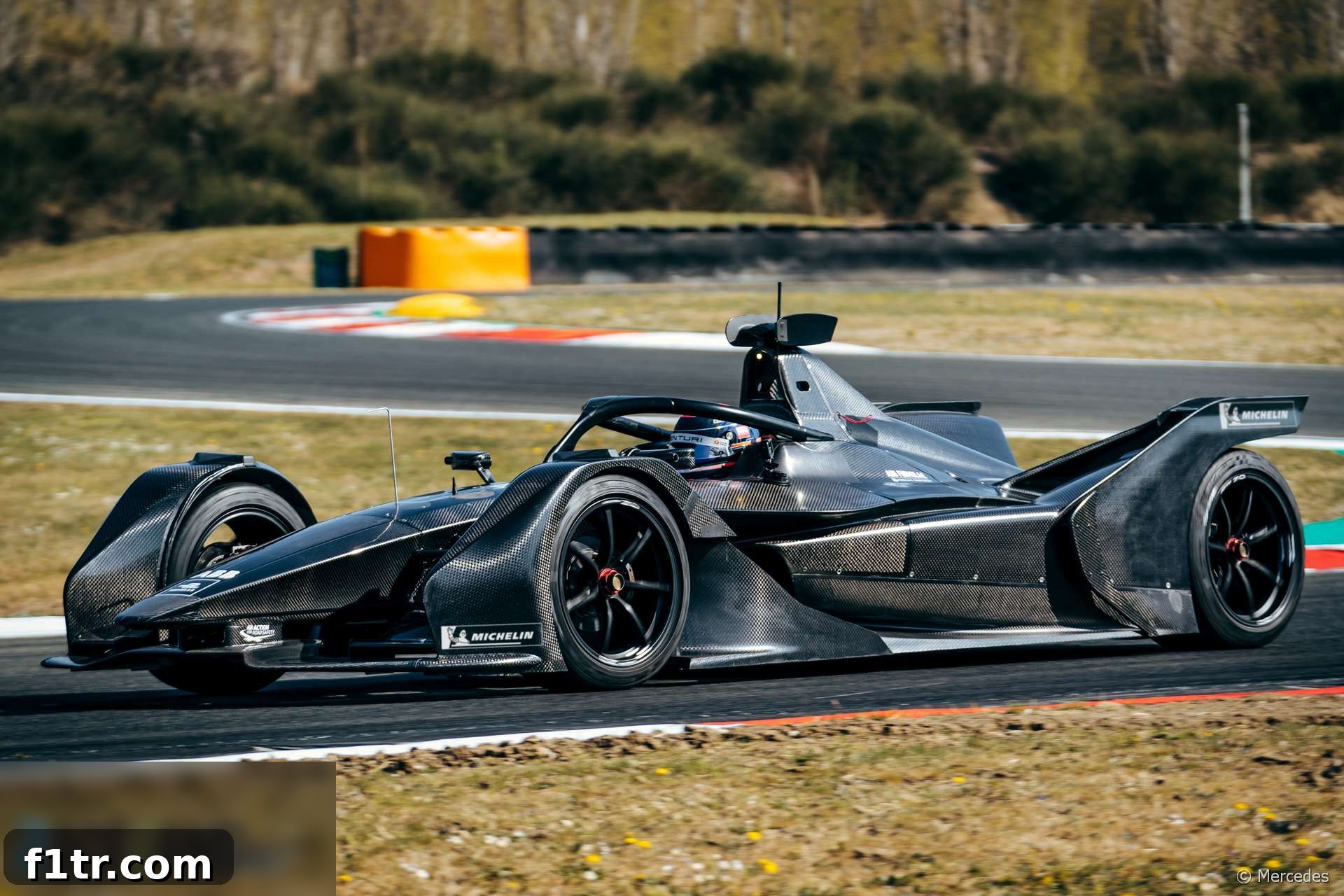
Mercedes-Benz EQ Formula E Team Unveils New Electric Challenger in Inaugural Varano Test
The dawn of a new era for Mercedes-Benz in electric motorsport officially commenced last week as the Mercedes-Benz EQ Formula E Team successfully completed the inaugural track testing of its brand-new Formula E car. The highly anticipated Gen2 challenger, developed with Mercedes’ renowned engineering prowess, hit the asphalt for three intensive days at the challenging Varano circuit in Italy. This significant shakedown and development run saw the revolutionary electric racer cover an impressive total of 527 kilometres, a crucial step in preparing for its competitive debut in the upcoming Formula E season.
This initial outing represents far more than just a test; it signifies Mercedes-Benz’s unwavering commitment to sustainable mobility and its strategic move into the burgeoning world of electric racing. For a manufacturer with such a storied history in top-tier motorsport, from its dominant Formula 1 campaigns to its successes in touring car racing, entering Formula E is a logical yet ambitious step. It allows the brand to not only showcase its technological capabilities in a cutting-edge environment but also to accelerate the development of its EQ electric vehicle sub-brand by transferring race-proven innovations to road cars. The global platform of Formula E, with its urban street circuits and focus on efficiency, perfectly aligns with Mercedes-Benz’s future vision for automotive excellence.
Pioneering Drivers Lead the Charge in Crucial Development
Guiding the innovative Mercedes Formula E machine through its first kilometres were two drivers with diverse yet highly relevant backgrounds. Former McLaren Formula 1 driver Stoffel Vandoorne was one of the two pilots entrusted with this monumental task. Vandoorne, who currently races for the Mercedes-affiliated HWA team in Formula E, brings invaluable experience from both the pinnacle of motorsport and the unique demands of electric street racing. His insights into energy management, regenerative braking strategies, and adapting to the Gen2 car’s characteristics will be absolutely critical for Mercedes’ development program. Having already competed in the series, Vandoorne possesses a nuanced understanding of Formula E’s intricate dynamics, offering a crucial head start for the new team.
Joining Vandoorne at the helm was former Mercedes DTM driver Edoardo Mortara. Mortara stepped in for Vandoorne’s regular Formula E teammate, Gary Paffett, who was competing at Laguna Seca during the same period. Mortara’s extensive history with Mercedes in the fiercely competitive DTM series, coupled with his own Formula E experience gained with Venturi, made him an ideal candidate to contribute to the maiden test. His ability to provide precise feedback on car dynamics and handling, honed over years in high-performance touring cars and electric open-wheelers, will be instrumental in shaping the car’s initial setup and performance envelope. The synergy between these two accomplished drivers, each bringing a unique perspective from their respective careers, is crucial for accelerating the learning curve of a brand-new racing outfit and gathering comprehensive data from the very first laps.
Toto Wolff’s Vision: A Special Milestone and Future Foundation
Reflecting on this pivotal moment, Mercedes’ Head of Motorsport, Toto Wolff, articulated the profound significance of the test. “When a new racing car comes to life for the first time and goes out onto the track, that’s always a very special moment,” Wolff stated. His words capture the essence of anticipation and satisfaction that accompanies the culmination of months, if not years, of meticulous design, engineering, and manufacturing work. This sentiment extends beyond mere mechanical triumph, encompassing the strategic direction of the entire Mercedes-Benz brand as it fully embraces electrification.
Wolff further emphasized the dual impact of this initial run: “Not only have we reached an important milestone for our as yet young team, but we have also laid a solid foundation for further development.” This statement underscores the dual objective of the test – validating the physical machine and establishing a robust platform for continuous refinement. For a team embarking on its journey in a championship as dynamic and technologically driven as Formula E, establishing a strong foundation early on is paramount. It allows engineers to gather critical data, identify initial strengths and weaknesses, and plan future development cycles with greater precision, all while building team cohesion and operational readiness.
However, Wolff was quick to temper enthusiasm with a dose of reality, acknowledging the substantial challenges ahead. “But there is still a lot of work to do before our race debut when the next season starts towards the end of this year.” This candid assessment highlights the competitive nature of Formula E and the steep learning curve faced by any new entrant, even one with Mercedes’ formidable resources. The team will need to master everything from energy management strategies and race simulations to pit stop procedures, fan boost activation, and navigating the unforgiving street circuits that define the series. The 527 kilometres covered at Varano are just the beginning of what promises to be an intense and demanding development journey towards championship contention.
The Journey to the Grid: Advanced Technology and Future Challenges
The Varano test marks the beginning of an extensive development programme. While Formula E operates with a spec chassis and battery unit (supplied by McLaren Applied Technologies), manufacturers are free to develop their own electric powertrains. This critical area includes the electric motor (MGU), inverter, gearbox, and the sophisticated energy management software that dictates how power is delivered and energy is recovered. This is precisely where Mercedes-Benz, with its extensive experience in high-performance hybrid powertrains from Formula 1, aims to gain a crucial competitive edge. The knowledge accumulated from years of perfecting hybrid F1 engines is highly transferable to the demands of electric racing, particularly in areas like energy recovery efficiency and thermal management.
The Gen2 Formula E car itself is a marvel of engineering, featuring increased power output (250 kW for qualifying, 200 kW for races) and double the usable energy storage capacity (54 kWh) compared to its predecessor. This advancement allows for an entire race distance to be completed without the mid-race car swaps that characterised earlier seasons, making races more dynamic and strategically complex. Mastering this complex technology, optimising its performance for various track layouts, and ensuring rock-solid reliability under race conditions are the immediate priorities for the Mercedes-Benz EQ team. The meticulous data collected from the Varano test – covering everything from thermal management of the powertrain components to aerodynamic characteristics and tyre degradation – will be meticulously analysed to refine every aspect of the car before its official unveiling.
Mercedes-Benz’s Broader Electric Vision and Formula E Integration
Mercedes-Benz’s entry into Formula E is intrinsically linked to its broader corporate strategy: “Ambition 2039,” which aims for a carbon-neutral new car fleet across its entire value chain by 2039. The Formula E championship serves as an ideal platform to demonstrate the performance, excitement, and sustainability of electric vehicles in a highly competitive arena. It’s a living laboratory for developing advanced electric vehicle technology that will ultimately benefit the consumer through improved range, efficiency, and driving dynamics in Mercedes-EQ road cars. The explicit integration of the EQ sub-brand into the team’s name underscores this synergy, making the racing effort a direct and tangible extension of the company’s push towards electrification and a sustainable future.
Anticipation Builds for a Challenging and Electrifying Season
As the Mercedes-Benz EQ Formula E Team continues its rigorous testing schedule, the motorsport world watches with keen interest. The expectation for a team of Mercedes’ calibre is undoubtedly high, especially given their unparalleled success in other major racing disciplines. While the transition to electric racing presents a unique set of challenges – from mastering energy management on unforgiving street circuits to adapting to the unique fan engagement formats – the combination of a well-resourced manufacturer, highly experienced drivers, and a clear strategic vision positions Mercedes as a formidable contender right from its debut season.
The lessons learned from the Varano circuit and subsequent testing sessions will be instrumental in fine-tuning the car’s performance and optimising its reliability ahead of its competitive unveiling. Every kilometre driven, every data point collected, and every piece of driver feedback will contribute to building a championship-challenging package. The journey from a static concept to a race-winning machine is arduous, demanding relentless innovation and adaptation, but for Mercedes-Benz, it’s a path paved with pioneering spirit and a clear commitment to shaping the electrifying future of motorsport.
More on Formula E
Stay updated with the latest news and developments from the electrifying world of Formula E:
- McLaren to quit Formula E at end of season
- Wehrlein beats Jaguar pair to title in dramatic Formula E finale
- Wehrlein’s London win sets up thrilling three-way title showdown in finale
- Da Costa takes hat-trick of wins in chaotic second Portland race
- Da Costa inherits Portland win from Evans after Cassidy spins lead away
Browse all Formula E articles