Kuwait Motor Town: Unlocking New Frontiers for Single-Seater Racing in the Middle East
The Middle East has rapidly emerged as a vital hub for Formula 1, hosting 36 Grands Prix across four distinct tracks since its inaugural visit in 2004. Circuits in Bahrain, Abu Dhabi, Saudi Arabia, and Qatar have firmly established the region’s presence on the global motorsport calendar. Yet, despite this extensive engagement, the vast deserts bordering the Persian Gulf still hold significant untapped potential for premier racing events and the broader development of motorsport.
While Formula 1 has deeply embedded itself in certain parts of the region, it has surprisingly overlooked other promising venues. For instance, the renowned Dubai Autodrome, a circuit recognized for its challenging layout and world-class facilities, has never hosted a Formula 1 World Championship race. In late 2013, the track made an earnest, albeit unsuccessful, bid to position itself as a future home for F1 pre-season testing. Its failure to secure this role highlights the competitive landscape and specific criteria F1 seeks when expanding its operations or choosing testing grounds.
Kuwait Motor Town: A New Era for Regional Motorsport
A more recent and particularly exciting development in the Middle Eastern motorsport landscape is the emergence of Kuwait Motor Town (KMT). Since its completion in 2019, this state-of-the-art facility has gained considerable attention. The 5.6-kilometre track, a significant investment in Kuwait’s sporting infrastructure, now proudly boasts the coveted FIA Grade 1 rating. This classification is crucial, as it signifies that the circuit meets the stringent safety and operational standards required to host Formula 1 races, placing it among an elite group of tracks worldwide.
However, despite its impressive homologation, Kuwait Motor Town has remained largely unknown within the international single-seater racing community until very recently. The primary reason for this obscurity was its lack of prior experience with single-seater categories. Before this week, KMT had never hosted a competitive single-seater race, meaning it had never truly entered the radar of Formula 1 or its feeder series as a potential venue for their high-speed, open-wheel machines.
A Groundbreaking Week for Kuwait Motor Town
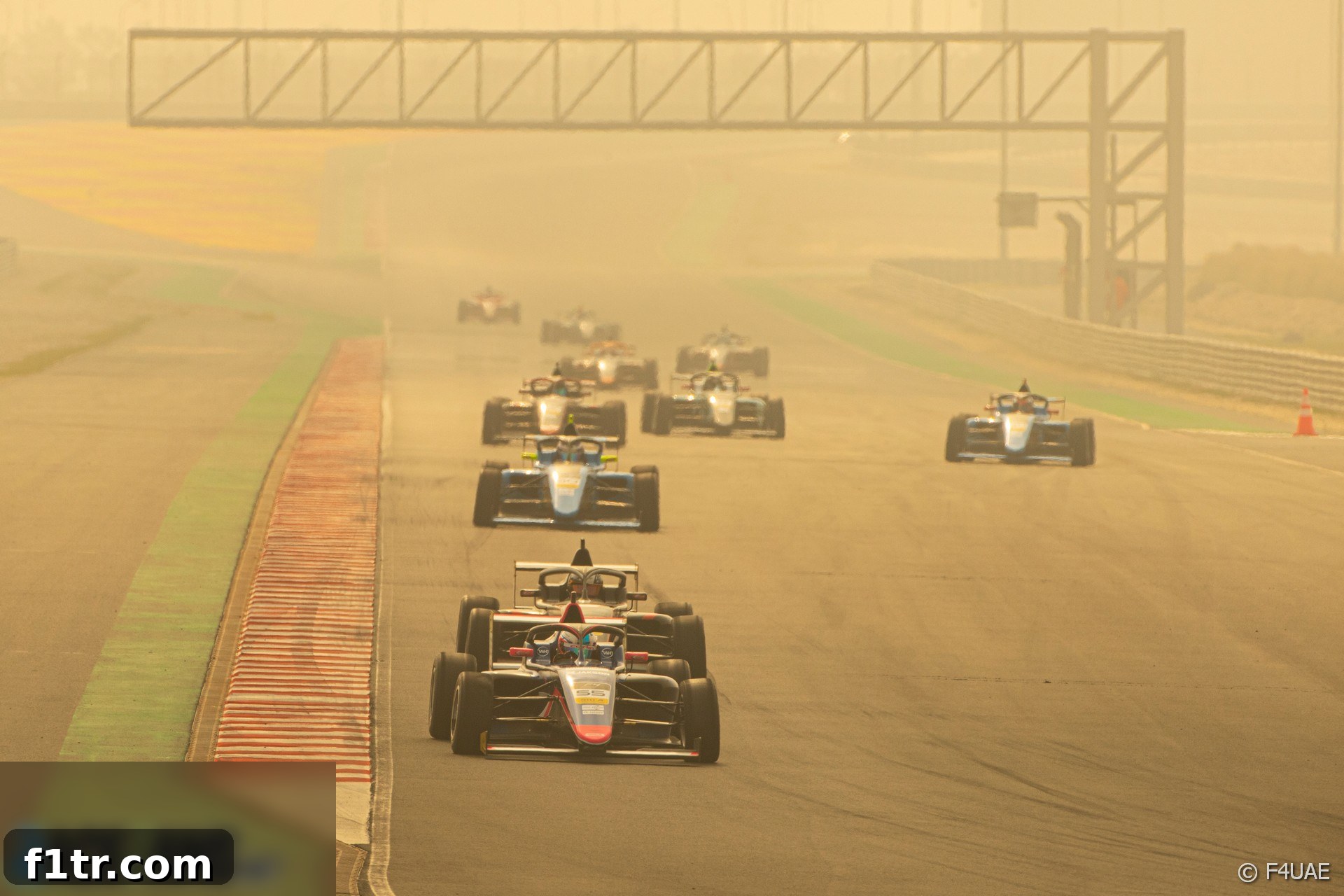
That narrative is now dramatically changing. This week marks a pivotal moment in Kuwait Motor Town’s history as it hosts two prestigious championships: the Formula Regional Middle East (FRME) and Formula 4 United Arab Emirates (F4 UAE) series. This seven-day motorsport festival will feature two full rounds for each championship, offering an unprecedented opportunity for teams and drivers to experience this Grade 1 circuit.
Adding to the unique nature of this event is its unconventional schedule. Unlike the typical motorsport weekend structure, the competitive sessions for the first round will unfold from Thursday to Saturday, followed by the second round running from Monday to Wednesday. This deviates significantly from standard European motorsport calendars, where races are predominantly held on Sundays, with support series often on Saturdays. While the definition of a weekend in Kuwait is not universally standardized, all local conventions include Fridays, meaning that the usual Sunday race day is a non-starter.
Formula 1 itself is set to break a decades-long tradition this year with the Las Vegas Grand Prix moving to a Saturday night slot. Yet, F1 has historically been less adaptable to different weekend conventions in other Middle Eastern countries, typically maintaining a Sunday race format. The FRME and F4 UAE championships, however, are embracing the local customs, presenting a rigorous challenge for their competitors: six races packed into just six days. This compressed schedule demands exceptional physical stamina, mental focus, and rapid adaptability from every driver and team member.
Navigating the Unknown: Unique Challenges at KMT
The drivers and teams descending upon Kuwait Motor Town this week are encountering a series of unprecedented challenges, extending far beyond the unusual racing schedule. The most significant hurdle stems from the circuit’s lack of single-seater racing history. In the highly data-driven world of modern motorsport, teams typically arrive at a new venue armed with a wealth of preparatory information.
This includes extensive simulator data, gleaned from virtual representations of the track, allowing drivers to practice lines and engineers to fine-tune setups long before hitting the asphalt. Additionally, a plethora of online onboard videos from previous single-seater events at the circuit provides invaluable visual references for braking points, apexes, and optimal racing lines. Furthermore, driver feedback from past races offers critical insights into track characteristics, grip levels, and potential hazards. At Kuwait Motor Town, however, all of this crucial data is simply non-existent. Teams have arrived with a blank slate, forcing them to adopt a radically different approach to preparation and track learning.
Unexpected Desert Deluge
The challenges were immediately compounded on Wednesday during the pre-event test sessions. As the Formula Regional drivers took to the track for their inaugural runs, they were met with an entirely unexpected phenomenon: a wet track surface. Rain, a rare occurrence in this desert climate, fell during their opening session, severely restricting the amount of productive running they could achieve. Consequently, not a single one of the 28 participating drivers was able to set a representative lap time.
The track only began to dry sufficiently towards the very end of the session, offering drivers a fleeting glimpse of the speed they might be able to carry through the circuit’s demanding corners. With a racing line still in its nascent stages, there was no distinct “dry” line that provided significantly more grip than other parts of the track. This left drivers using their subsequent test session not just to learn the layout, but to collectively decipher the quickest and safest way around Kuwait Motor Town’s virgin asphalt, a task usually supported by months of accumulated data and experience.
A Physically Demanding Anti-Clockwise Layout
Kuwait Motor Town’s design further adds to the physical and mental demands placed on drivers. The circuit features a challenging 20-corner, anti-clockwise layout. A significant proportion of these corners are high-speed, including several long, multi-apex sweeps that are notoriously taxing on a driver’s neck muscles. Driving anti-clockwise is an irregular experience for many, as the majority of racing circuits worldwide run in a clockwise direction. This means that specific muscle groups are stressed in an unfamiliar way, requiring enhanced physical conditioning.
Of the 23-event Formula 1 calendar, only nine tracks run anti-clockwise. Furthermore, only five of these were staples of the F1 calendar prior to 2020, and just two are routinely used by multiple F1 feeder series. This relative rarity means that drivers often have less experience with such layouts, making KMT’s characteristics a unique physical test. The sustained G-forces through the sweeping corners place immense strain on the neck, a muscle group traditionally conditioned for clockwise turns. This distinct physical challenge, combined with the lack of prior data, demands exceptional adaptability and fitness from the young drivers competing this week.
Weather Whims: Beyond the Expected Desert Heat
Adding another layer of complexity, teams’ pre-event preparations were based on the assumption of typical desert conditions: hot, dry, and dusty. While sand in the air was indeed a visible issue during Wednesday’s test sessions, as captured in various pictures, the anticipated high temperatures were absent. Instead, drivers experienced unusually cool conditions, coupled with the unexpected rainfall. This unpredictable weather further complicated car setup and tire management, forcing teams to react on the fly and adapt to rapidly changing track conditions, rather than relying on historical data or well-established desert racing strategies.
The Future of Kuwait Motor Town and Middle Eastern Motorsport
This inaugural single-seater event at Kuwait Motor Town is being closely watched by a wide array of stakeholders, including other international single-seater series and the FIA itself. Their collective gaze is fixed on several critical aspects: the quality of racing the track produces, the effectiveness of the circuit’s infrastructure, and crucially, the predictability of the local weather conditions. A successful and well-received event this week could pave the way for Kuwait Motor Town to become a regular fixture on international motorsport calendars, potentially hosting a diverse range of championships in the future.
The investment in a Grade 1 circuit like KMT underscores Kuwait’s ambition to become a significant player in regional and global motorsport. Its successful integration into the single-seater ecosystem could not only boost its profile but also serve as a catalyst for motorsport development across the wider Middle East. By demonstrating its capability to host high-level competition, KMT could attract further investment, inspire local talent, and contribute to the region’s growing reputation as a premier destination for top-tier racing. The groundbreaking races unfolding this week are just the beginning of what promises to be an exciting chapter for Kuwait Motor Town and the future of motorsport in the desert.
Other Motorsport News
- Formula 2 to debut in Miami and Montreal after Iran war cancellations
- IndyCar driver McLaughlin cleared of injury after crashing through barrier at Barber
- Verstappen to tackle Nurburgring 24 Hours in a Mercedes-AMG GT3
- Ex-McLaren junior Dunne’s move to Alpine finally confirmed
- WEC cancels its Qatar season-opener due to US-Iran war
Browse all other motorsport articles