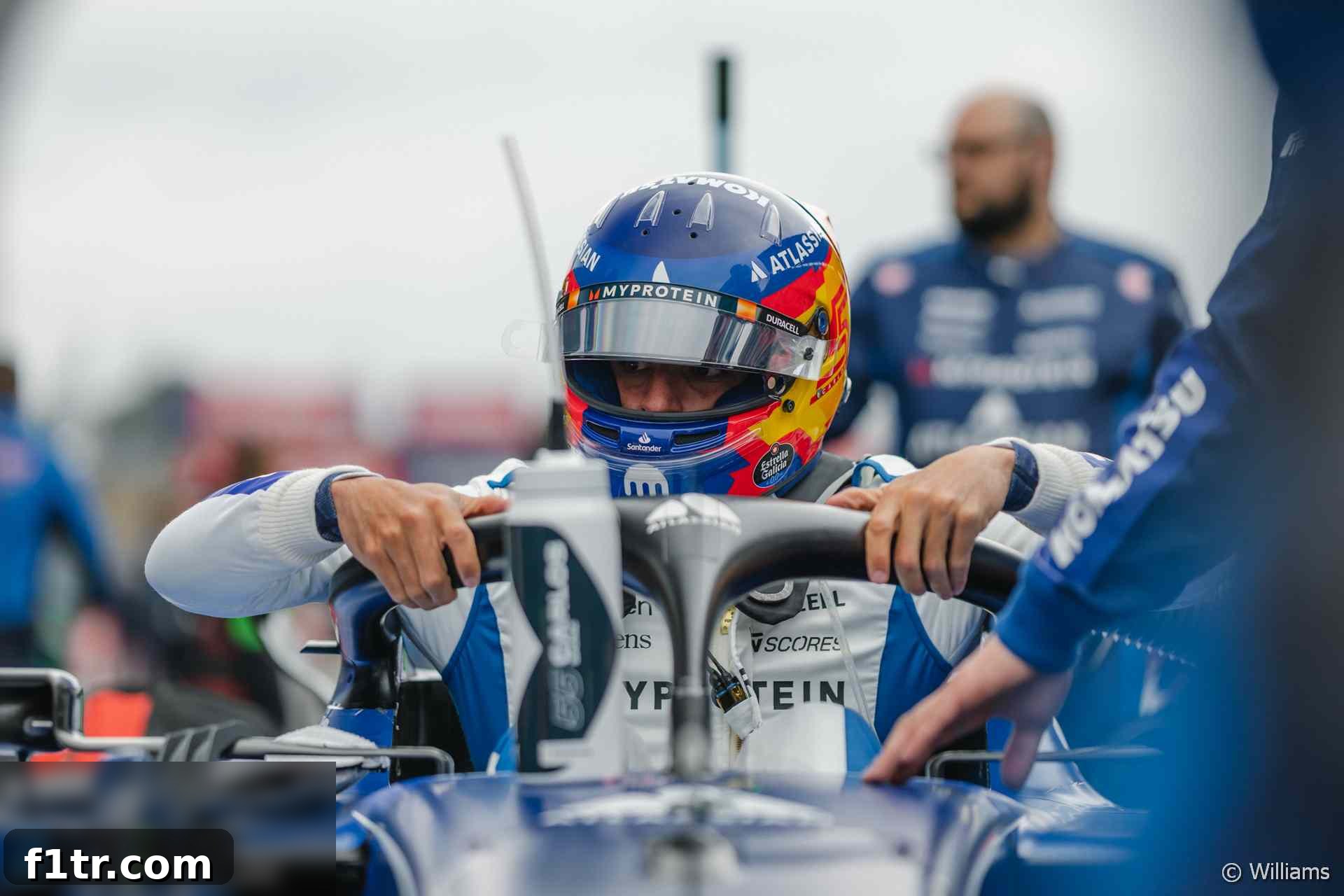
In a notable enforcement of Formula 1’s strict protocol, Ferrari driver Carlos Sainz Jnr was issued a €20,000 (£17,000) fine by the stewards at the Japanese Grand Prix. The penalty stemmed from his late arrival to the solemn pre-race national anthem ceremony, an incident that underscored the FIA’s unwavering commitment to upholding respect for host nations and their traditions. Half of this substantial fine, however, was suspended, contingent on Sainz avoiding any similar breaches of the rules over the subsequent twelve months, a clause that serves as a strong deterrent for future adherence.
The incident unfolded on a significant race day at the iconic Suzuka circuit, a venue steeped in racing history and revered by motorsport enthusiasts worldwide. Adding to the gravity of the occasion, Princess Akiko of Mikasa was among the distinguished guests in attendance, highlighting the cultural importance of the event to Japan. Stewards were keen to emphasize that all drivers had been “reminded of the requirement to be in position by the time prescribed in the regulations and the need to show respect for the host country’s anthem,” reiterating a clear and standing directive.
Upon review, Sainz provided a compelling explanation for his tardiness, attributing his delay to an unexpected stomach complaint. This medical issue was subsequently verified by Dr. Messina of Med-Ex, the official medical service provider for Formula 1, who confirmed the discomfort and stated that appropriate medication had been administered to the Spanish driver. This crucial medical corroboration played a pivotal role in the stewards’ decision, leading them to significantly reduce the fine from the FIA’s standard guideline value of €60,000 (£54,000) for such an infraction. The reduction reflected a pragmatic approach, balancing the need for discipline with an understanding of unforeseen personal circumstances.
Understanding FIA Regulations on Pre-Race Protocol
The FIA (Fédération Internationale de l’Automobile), as the governing body for global motorsport, sets forth a comprehensive set of regulations, not only for the technical and sporting aspects of racing but also for the conduct and decorum expected of all participants. Appendix B of the FIA International Sporting Code specifically outlines penalties for various offences, including breaches of pre-race protocol. The guideline value of €60,000 for a national anthem infringement is a testament to how seriously the FIA views these ceremonial obligations. During the mandatory drivers’ briefing held on the Friday of each Grand Prix weekend, these requirements are explicitly reinforced, ensuring that all competitors are fully aware of their responsibilities.
The importance of the national anthem ceremony extends far beyond mere formality. It is a moment of profound respect and cultural acknowledgment, honoring the host nation and its people. For a global sport like Formula 1, which traverses continents and cultures, demonstrating such respect is paramount to maintaining good relations with host countries and projecting a positive image worldwide. Drivers, as ambassadors of the sport, are expected to embody this professionalism. Their presence and respectful demeanor during these ceremonies contribute significantly to the overall grandeur and tradition of a Grand Prix weekend, reinforcing the sport’s connection to its international audience and local communities.
The stewards’ statement further elaborated on the gravity of the situation: “Notwithstanding the above, displaying respect for the national anthem is a high priority and all parties need to consider every eventuality in planning to be in position for the anthem by the required time.” This indicates that while Sainz’s medical issue was acknowledged, the onus remains on drivers and their teams to plan meticulously, anticipating potential delays to ensure punctual attendance at such critical moments. The emphasis is on proactive preparation to uphold the dignity of the ceremony, irrespective of individual circumstances.
Precedent: Yuki Tsunoda’s Fine at the Canadian Grand Prix
The penalty imposed on Carlos Sainz at Suzuka was not an isolated incident but rather aligned with previous enforcement actions taken by the FIA stewards. The official statement from the Japanese Grand Prix stewards explicitly referenced a “penalty similar to that imposed for a similar breach in Canada in 2024,” providing a direct comparison and reinforcing the consistency of their adjudications. This reference points to the incident involving home hero Yuki Tsunoda at the Canadian Grand Prix in a prior season (the original text mentions ‘last year’, which would be 2024 relative to a hypothetical 2025 event or 2023 if the article was written in 2024), where he was fined €10,000 for also arriving late to the national anthem performance.
Comparing the two incidents offers insights into the stewards’ decision-making process. While both drivers were penalized for the same offence – tardiness to the national anthem – the fines differed. Tsunoda received a €10,000 penalty, whereas Sainz’s fine was €20,000, albeit with half suspended. The difference could be attributed to several factors: the specific circumstances surrounding each delay (Tsunoda’s reasons were not detailed in the provided text, while Sainz had a verified medical condition), the presence of mitigating factors, or potentially the evolving strictness of enforcement. The suspended portion of Sainz’s fine could also be seen as a more nuanced approach, providing a severe immediate penalty while also offering a probationary period for future compliance. This ensures that while individual situations are considered, the underlying principle of respecting the national anthem remains non-negotiable.
The Broader Significance of F1 Etiquette and Professionalism
Beyond the immediate financial penalties, these incidents serve as crucial reminders about the broader expectations of professionalism and etiquette within Formula 1. F1 is a global spectacle, a high-stakes sport that commands billions of eyes worldwide. Every action by a driver, both on and off the track, is subject to intense scrutiny. Adherence to pre-race protocols, such as the national anthem ceremony, is a fundamental aspect of maintaining the sport’s prestigious image and upholding its values.
The meticulous planning and execution required for a Grand Prix weekend extend to every detail, including the precise timing of ceremonies. Teams invest heavily in logistics, strategy, and driver management to ensure optimal performance. Part of this management includes preparing drivers for their public duties, which encompass media engagements, fan interactions, and formal ceremonies. While unforeseen circumstances like a sudden illness can occur, the FIA’s stance emphasizes that drivers and their teams must factor in every potential variable to ensure compliance. This reinforces the idea that punctuality and respect are integral components of being a top-tier Formula 1 driver, just as much as driving skill and race craft.
The decision to issue a significant fine, even with mitigating circumstances, sends a clear message across the paddock: respect for national symbols and adherence to sporting regulations are non-negotiable priorities. This helps to maintain a consistent standard of conduct across all Grand Prix events, ensuring that the sport continues to be seen as a model of professionalism and international respect. The suspended portion of Sainz’s fine acts as a direct challenge and an incentive for future impeccable conduct, ensuring heightened awareness and proactive measures from both the driver and his Ferrari team.
Future Implications and Preventative Measures
The stewards’ ruling at the Japanese Grand Prix will undoubtedly prompt teams and drivers to review and potentially revise their pre-race routines. The clear message is that robust contingency plans are essential to prevent any future breaches of protocol. Teams might implement stricter schedules, incorporating buffer times specifically for ceremonial duties, and ensure that drivers are closely monitored for any potential issues that could impact their punctuality.
For Carlos Sainz himself, the suspended half of his €20,000 fine means that he will be under increased scrutiny regarding his adherence to regulations for the next twelve months. Any similar infringement during this period would likely trigger the enforcement of the remaining €10,000, in addition to any new penalty for the subsequent breach. This probationary element is a powerful motivator for drivers to prioritize ceremonial obligations, understanding the financial and reputational implications of non-compliance.
Ultimately, the incident at Suzuka, while a minor blip in an otherwise thrilling race weekend, serves as a significant reminder of the meticulous standards expected in Formula 1. It underscores the FIA’s dedication to upholding the integrity and respect associated with the sport, ensuring that tradition and professionalism remain at the forefront of every Grand Prix event globally. Drivers are not just athletes; they are representatives of a sport that prides itself on precision, discipline, and international camaraderie, making adherence to these fundamental protocols paramount.
The resolution of this incident reinforces the notion that while the FIA can be understanding of genuine extenuating circumstances, it will not compromise on the core principles of respect and regulation. This ensures that the spectacle of Formula 1 continues to be a blend of high-octane racing and dignified global celebration.
2025 Japanese Grand Prix
- McLaren has to accept upsetting either of its drivers sometimes – Stella
- Verstappen ‘can test our car, I look forward to seeing his disappointment’ – Norris
- Verstappen insists McLaren domination claim was ‘no joke’ after Piastri’s doubt
- Extra mandatory pit stop won’t create more passing at tracks like Suzuka – Sainz
- Mercedes took note of Verstappen’s out-lap tactics after stunning Suzuka pole position
Browse all 2025 Japanese Grand Prix articles