The 2005 US Grand Prix: Formula 1’s Unforgettable Indianapolis Farce
The 2005 Formula 1 season was already marred by simmering political tensions behind the scenes, but nothing could prepare the sport for the dramatic collapse of the United States Grand Prix at Indianapolis. What unfolded on that fateful weekend was an unedifying spectacle, a farcical event that inflicted potentially irreparable damage on F1’s standing in the lucrative American market and tested the very integrity of the championship. This infamous race, often dubbed ‘IndyGate’, became a stark reminder of the complexities and potential pitfalls when safety, regulations, and competition collide.
Advert | Become a Supporter & go ad-free
An Ominous Prelude: Ralf Schumacher’s High-Speed Impact
The first sign of looming trouble emerged on Friday morning during the opening practice sessions. Tragedy struck when Ralf Schumacher’s Toyota violently collided with the Steel And Foam Energy Reduction (SAFER) barrier at the apex of Turn 13. This corner, a notoriously fast, high-load banking section of the Indianapolis Motor Speedway oval, was eerily familiar – it was precisely where Schumacher had sustained a debilitating back injury the previous year. The paddock collectively held its breath, acutely aware of the severity of the shunt and the grim coincidence of a repeat incident at such a critical part of the track.
The repercussions of this impact quickly escalated beyond a mere accident. The powerful forces exerted on Schumacher’s car and body forced him to withdraw from the race weekend, needing time to recuperate. His unexpected absence led to Ricardo Zonta being called upon to fill his seat, an unforeseen substitution that added an early layer of uncertainty to the unfolding drama, foreshadowing the deeper issues that were about to surface.
Michelin’s Dire Discovery: A Manufacturing Flaw Unleashed
In the direct aftermath of Schumacher’s crash, tyre supplier Michelin initiated urgent investigations. Their engineers soon revealed profound concerns about the performance and, more critically, the safety of their tyres. Schumacher’s incident was not an isolated case; a similar high-speed blow-out had been experienced by Ricardo Zonta during Friday’s practice, and observations from all other Michelin-equipped teams indicated a disturbing pattern of up to eleven distinct tyre failures across the weekend’s sessions. The initial investigations swiftly pinpointed the root cause: a critical manufacturing error, rather than an overly aggressive or soft compound designed purely for maximum race pace. Crucially, Schumacher’s tyre failure had occurred on only his first flying lap, unequivocally highlighting the immediate and inherent danger of the compromised tyres.
For Saturday morning, in a desperate attempt to mitigate the risks and allow their teams to participate, Michelin teams were instructed to run their tyres at significantly higher pressures. The aim was to reduce sidewall flex and thereby decrease the stress on the compromised tyre structure. While Jarno Trulli managed to secure Toyota’s first-ever pole position that day, the underlying safety concerns persisted. Despite these temporary measures, it became increasingly clear that Michelin could not guarantee their tyres would safely withstand the demanding conditions of a full race distance on the Indianapolis oval without risking further catastrophic failures.
A Standoff of Unprecedented Proportions: The Battle Lines Are Drawn
As the gravity of Michelin’s predicament became undeniable, the paddock descended into a fierce dispute over the appropriate path forward. The nine teams supplied by Michelin (Renault, McLaren, Williams, BAR, Sauber, Red Bull, Toyota, Force India, and BMW Sauber) quickly coalesced into a unified “Group of Nine.” They found themselves at loggerheads with Ferrari, the sole remaining top team on Bridgestone tyres, and the sport’s governing body, the FIA. This wasn’t merely a disagreement about safety; it was the culmination of long-standing political friction that had simmered between the teams and the FIA since October 2004, now boiling over into a full-blown crisis with global implications.
It rapidly became apparent that neither side was willing to concede ground. The Michelin teams desperately sought a solution that would allow them to compete safely, proposing various compromises. These included the installation of a temporary chicane in Turn 13 to reduce speeds and tyre stress, or, failing that, allowing the Michelin-shod cars to start from the back of the grid, or even to race without scoring points. Such measures, they argued, would prioritize driver safety, uphold the sporting spectacle for the fans, and preserve the integrity of a full grid.
Advert | Become a RaceFans supporter andgo ad-free
The FIA’s Unwavering Stance and Ferrari’s Resistance
However, from the Fédération Internationale de l’Automobile (FIA), led by then-President Max Mosley, there was an uncompromising refusal to entertain any of the Michelin teams’ proposals. The FIA maintained that altering the track mid-event was against existing regulations and would unfairly disadvantage the Bridgestone teams (Ferrari, Jordan, Minardi) who had arrived prepared to race on the existing layout. Furthermore, allowing cars to race without scoring points, or from the back without proper qualification, was deemed a breach of sporting regulations that could set a dangerous precedent, potentially undermining the rulebook itself.
Ferrari, benefiting from their safe Bridgestone tyres and a strong relationship with the FIA, vehemently opposed any changes. Their team principal, Jean Todt, asserted that the rules must be upheld and that Michelin’s problem was their sole responsibility, a consequence of their tyre choice. Ferrari’s stance, while legally sound according to the letter of the law, was widely perceived as lacking sportsmanship and empathy in the face of a severe safety crisis affecting the majority of the grid. This rigid adherence to rules over practical compromise ultimately painted the FIA and Ferrari as inflexible, exacerbating an already volatile situation and pushing the sport towards an unprecedented catastrophe.
Race Day Disaster: The Six-Car Farce Unfolds
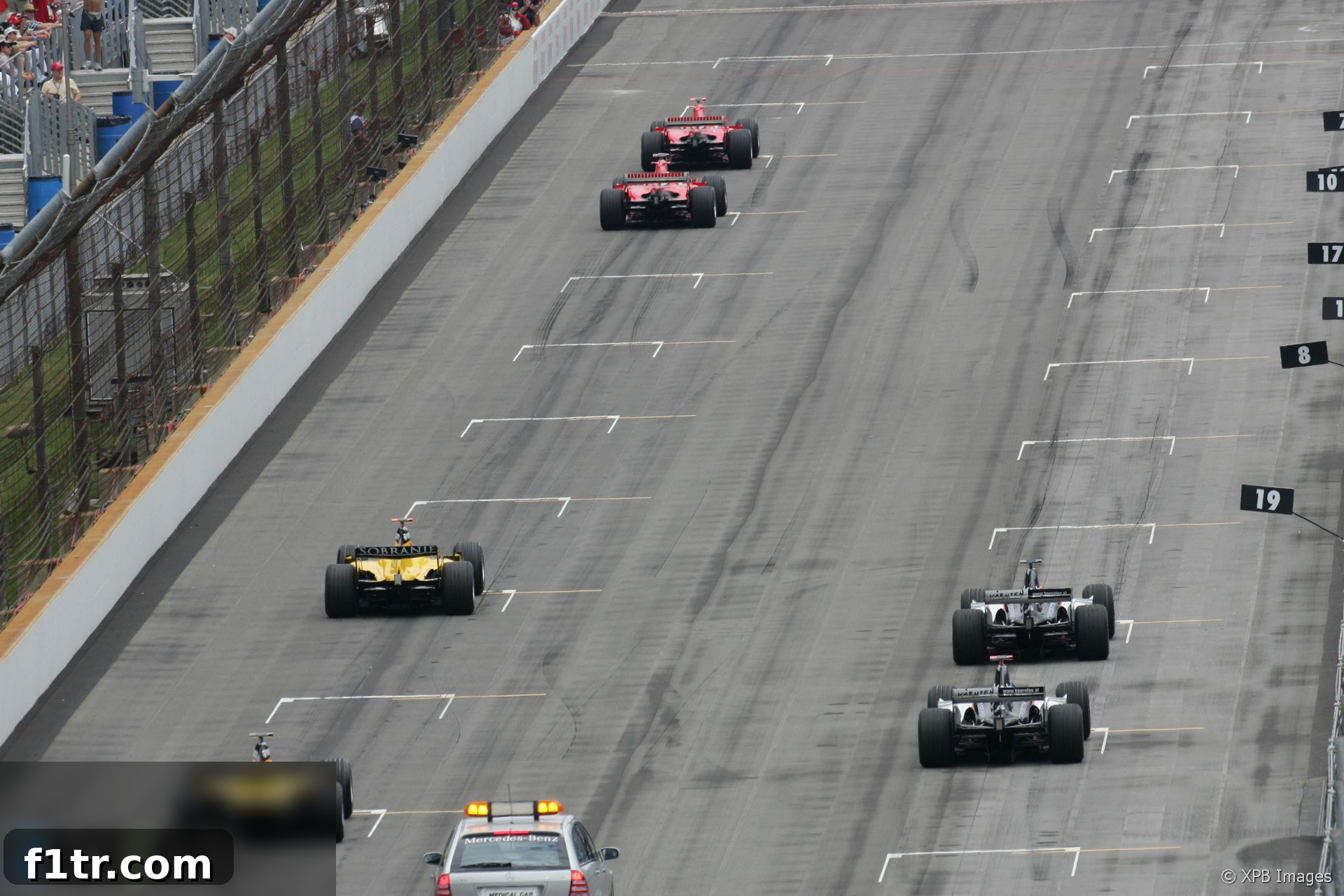
The outcome was effectively sealed by Sunday morning, but only after hours of frantic, tense, and ultimately fruitless meetings between the teams and the FIA. Ferrari, reportedly, declined to join these crucial discussions, further highlighting the deep ideological and competitive divide. The grim reality dawned as every single Michelin driver, following a collective decision backed by their teams, declined to take the start of the race. This left an astonishingly sparse grid of just six cars – the two Ferraris, two Jordans, and two Minardis – all equipped with Bridgestone tyres. The sight of nearly two-thirds of the grid pulling into the pit lane after the formation lap, leaving just six to race, was utterly preposterous and deeply humiliating for the sport and its global audience.
The capacity crowd at Indianapolis, having paid good money for a full Grand Prix spectacle, reacted with understandable fury. Boos and jeers rained down from the grandstands, and bottles were reportedly thrown onto the track in sheer disgust. This visceral display of outrage from thousands of disillusioned fans was a testament to the shattered expectations and deep embarrassment caused by the unfolding situation. But even this was insufficient to postpone or cancel the excruciatingly embarrassing farce that was about to unfold, as the six remaining cars lined up for a ‘race’ that would live in infamy.
The Shameful Spectacle and a Unique Podium
The “race” itself was a hollow procession. Michael Schumacher, starting from pole position, took an inevitable victory for Ferrari. His teammate Rubens Barrichello briefly held the lead after a pit stop issue, but eventually settled for second. The legitimacy of any competition in a six-car race was questionable at best; for many, it felt more like an orchestrated exhibition than a genuine sporting contest. Whether the brief pit stop drama was real or a subtle attempt to inject some semblance of excitement, hardly anyone in the disillusioned audience cared amidst the overwhelming sense of disappointment.
In a surreal turn of events, Jordan’s Tiago Monteiro, securing the final podium spot, found himself celebrating what was technically his first and only Formula 1 podium finish. His teammate Narain Karthikeyan finished fourth, marking Jordan’s best result of the season, but even this was tainted. The images of Monteiro ecstatically spraying champagne while the remaining spectators booed and whistled from the stands served as a stark, poignant reminder of how profoundly detached from sporting reality the event had become. It was a victory without true glory, a celebration overshadowed by the collective disappointment and anger of the F1 community and its fans.
Dissecting the Blame: Who Was Responsible for F1’s Darkest Hour?
The question of responsibility for the 2005 US Grand Prix fiasco is complex, yet certain elements are clear. Michelin bore the undeniable responsibility for the tyre failures. While it was a manufacturing fault rather than a fundamental design flaw of an overly radical tyre compound, a critical mistake was made, compromising driver safety and the integrity of the competition. Their inability to provide safe, race-distance tyres for their nine customer teams was the undeniable catalyst for the crisis.
However, the blame for the lack of a proper race, and the subsequent damage to Formula 1’s reputation, rests squarely with the FIA. As the sport’s ultimate governing body, its primary duty is to ensure both safety and the fair conduct of competition. The FIA’s rigid adherence to regulations, and its outright rejection of all proposed compromises – even those designed to maintain safety and allow all teams to participate, albeit under revised conditions – demonstrated a stark lack of decisive, adaptable leadership. A strong, accountable governing body should have intervened to find a mutually agreeable solution that prioritised driver safety and the spectacle of the sport over strict adherence to technicalities. Ferrari’s uncompromising stance, supported by the FIA, exacerbated the situation, turning a tyre crisis into a full-blown sporting disaster.
Even fellow Bridgestone users, Jordan and Minardi, who ultimately benefited from the situation by scoring unexpected points, found themselves in an uncomfortable position, their achievements overshadowed by the wider controversy. The irony of Tiago Monteiro’s celebrations, juxtaposed against a backdrop of furious fans, powerfully hammered home the absurdity and profound sadness of the situation.
Advert | Become a RaceFans supporter andgo ad-ad-free
The Aftermath and Lasting Legacy
The immediate aftermath of the 2005 US Grand Prix was brutal. The F1 community and global press justifiably tore into the pathetic disgrace of an event. ITV commentator and former driver Martin Brundle famously confronted Bernie Ecclestone on the grid, highlighting the palpable frustration that permeated the paddock and the stands. Ecclestone, usually the picture of nonchalant control and problem-solving, was rendered completely impotent, unable to resolve the crisis. The US Grand Prix of 2005 became a byword for sporting calamity, a cautionary tale of regulatory inflexibility, inter-team politics, and a governing body that demonstrably failed to protect its sport.
The damage to Formula 1’s reputation in the United States was profound and long-lasting. It took years for the sport to rebuild trust and re-engage with the American audience, ultimately leading to a single tyre supplier rule in subsequent seasons to prevent such a crisis from recurring. The ‘IndyGate’ scandal serves as an enduring reminder of a dark chapter in F1 history, a moment when the sport’s integrity was severely compromised, and its future in a crucial market hung by a thread. It underscored the critical need for strong, adaptive leadership capable of navigating complex technical and political challenges without sacrificing the spirit of competition or, most importantly, the safety of its participants. The Indianapolis fiasco remains a powerful lesson in what happens when the pursuit of victory overshadows the fundamental principles of sport.