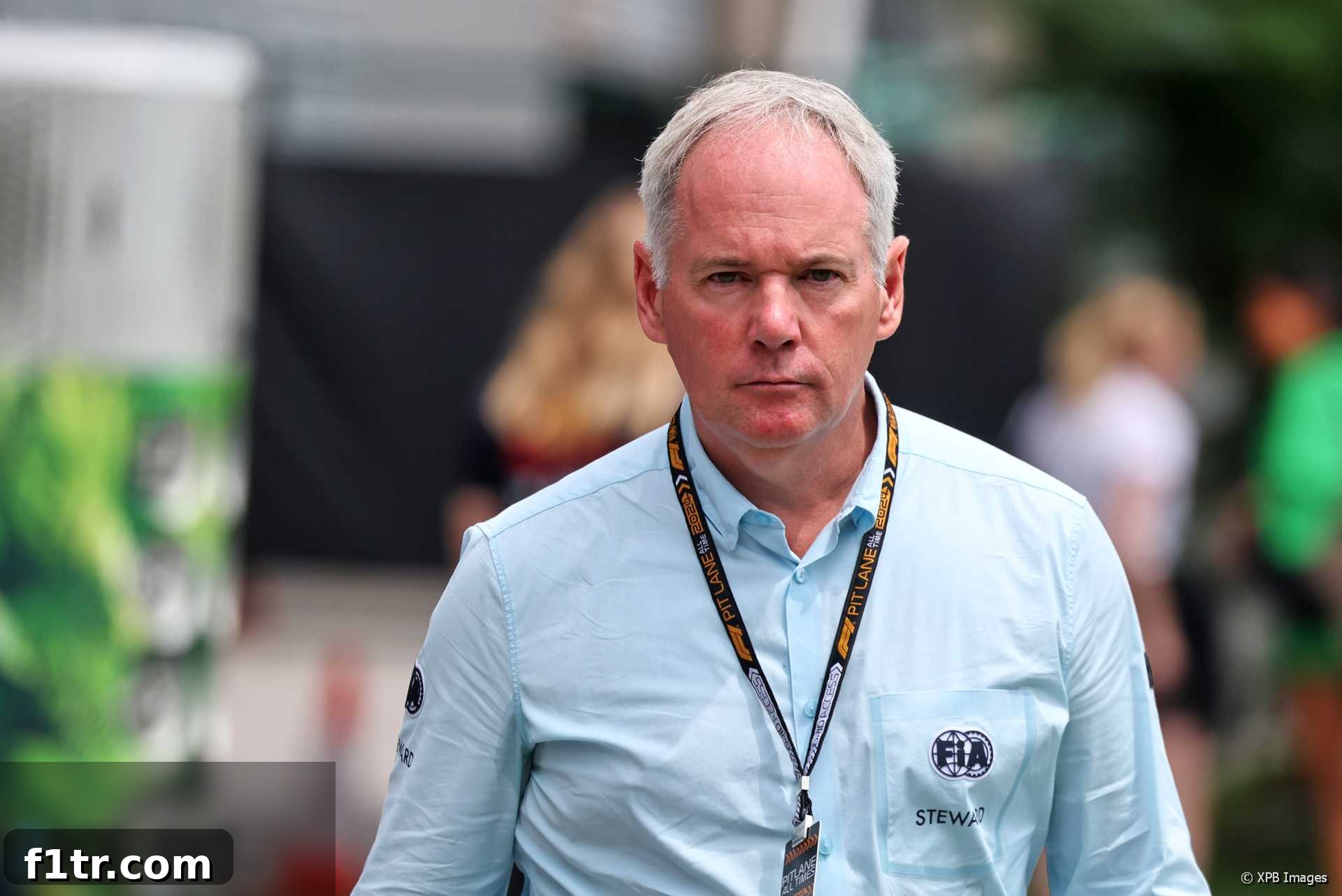
Tim Mayer Withdraws from FIA Presidential Race, Alleges Undemocratic Process
In a significant development that casts a shadow over the integrity of motorsport’s governing body, Tim Mayer has officially announced his withdrawal from the race to become the next president of the FIA (Fédération Internationale de l’Automobile). Mayer, a prominent figure seeking to unseat incumbent Mohammed Ben Sulayem, has not only stepped down but has also made serious allegations, claiming the election process is fundamentally flawed and effectively predetermined.
This dramatic exit underscores growing concerns about transparency and fairness within global sporting federations. Mayer’s decision, communicated through a formal statement, highlights what he describes as insurmountable obstacles preventing a genuine democratic contest, raising questions about the future leadership and direction of the FIA, which oversees an immense portfolio spanning both motorsport and global mobility.
Allegations of a Predetermined Election Process
Mayer’s withdrawal is rooted in what he perceives as a deeply restrictive and manipulated electoral system. According to his statement, the election has been decided in favor of Ben Sulayem due to a severely limited pool of eligible vice presidents approved by the FIA World Motor Sport Council (WMSC). The procedural hurdles, Mayer argues, effectively disenfranchise any candidate challenging the incumbent.
The FIA statutes mandate that each prospective presidential candidate must submit a “Presidential List” by October 24, which includes one vice president for sport from every global region. Crucially, these vice presidents must be selected from a list of names already nominated for positions on the World Motor Sport Council. Mayer points out a critical flaw in this system: the list of WMSC nominees for this election was already 27% smaller than in the previous election, significantly reducing the available talent pool and potential diversity of representation.
The Bottleneck of Regional Vice President Nominations
Mayer elaborated on how this system creates an almost insurmountable barrier for challengers. He explained, “If there is only one representative from a particular region, and that person has already declared support for the incumbent, then any presidential candidate is left without a chance of standing for election.” This specific clause, Mayer contends, was the direct cause of his inability to proceed with his candidacy.
He provided concrete examples to illustrate his point. In the crucial region of South America, only one candidate was nominated for the World Motor Sport Council, and that individual had already publicly aligned themselves with the incumbent president. This effectively left Mayer without a necessary component for his Presidential List, thereby disqualifying him from the election. A similar situation was observed in Africa, where only two candidates were nominated, both of whom were staunch supporters of the current president. These regional bottlenecks, Mayer argues, are not mere coincidences but rather systemic issues that stifle genuine competition.
This lack of choice at the regional vice president level creates a domino effect, ensuring that only candidates with pre-existing support from the incumbent’s network can realistically fulfill the stringent nomination requirements. For many observers, this raises serious questions about the spirit of democracy that should underpin the election of leaders for a global organization like the FIA.
“The Illusion of Democracy”: A System Without Choice
Tim Mayer did not mince words when describing his perception of the election’s legitimacy. “There is no choice,” he asserted. “There will be no vote between ideas, no contest of visions, no test of leadership. There will be only one candidate and that’s not democracy – that’s the illusion of democracy.” This powerful statement encapsulates the frustration felt by Mayer and his supporters, who believe the current structure undermines the very principles of fair governance.
In a truly democratic process, candidates should have the freedom to present their platforms, engage in debates, and allow member clubs to choose based on differing visions and leadership styles. Mayer’s claims suggest that the current FIA electoral framework, through its intricate and restrictive nomination requirements, effectively sidesteps this fundamental democratic ideal. When the outcome is perceived as a foregone conclusion, it erodes trust and diminishes the value of participation for member organizations worldwide.
The absence of a contested election means that the FIA’s direction under Mohammed Ben Sulayem will continue unchallenged from within the electoral framework. This lack of alternative perspectives and the inability for member clubs to genuinely weigh different leadership approaches could have long-term implications for the dynamism and responsiveness of the organization.
Impact on Other Challengers and the Broader Picture
Mayer was not alone in his ambition to challenge Ben Sulayem. Laura Villars had announced her candidacy in September, and Virginie Philippot joined the race earlier this month. However, Mayer is firmly convinced that none of them will ultimately have the opportunity to challenge Ben Sulayem, implying they face the same systemic hurdles he encountered.
If Mayer’s assessment is accurate, it paints a bleak picture for any aspiring leader seeking to bring fresh ideas and reforms to the FIA from outside the established power structures. The implications extend beyond individual candidacies, affecting the perception of the FIA as a truly representative and democratic body for global motorsport and mobility. Such allegations can deter future candidates, foster disillusionment among member clubs, and ultimately impact the organization’s credibility on the international stage.
The controversies surrounding the election process may also prompt external scrutiny from various stakeholders, including national sporting authorities, industry partners, and the media. A perceived lack of democratic accountability can undermine public confidence and potentially lead to calls for broader reforms within the FIA’s governance framework.
FIA’s Stance and Defence of the Process
Following Mayer’s pointed criticisms, the FIA has issued a statement defending its presidential election process. The governing body maintains that its procedures are robust, democratic, and adhere strictly to its established statutes. They would likely emphasize that all candidates are aware of the rules well in advance and that the system is designed to ensure a stable and orderly transition of leadership, prioritizing expertise and broad regional representation.
The FIA’s defense typically centers on the idea that the rules are in place to ensure serious candidates with legitimate support navigate a rigorous vetting process. However, the tension between strict adherence to statutes and the spirit of a truly competitive, democratic election remains a central point of contention. The current situation highlights the delicate balance between maintaining order and fostering genuine competition in the leadership of global federations.
The ongoing debate is crucial for the future legitimacy of the FIA. While the organization asserts its adherence to its own rules, the public perception of fairness and transparency is equally vital for its standing in the international sporting community. Addressing concerns raised by figures like Tim Mayer will be essential for the FIA to maintain its authority and respect among its diverse membership.
The “FIA Forward” Initiative Continues: A New Phase for Change
Despite his withdrawal from the presidential race, Tim Mayer has pledged to continue his “FIA Forward” initiative, demonstrating an unwavering commitment to bringing about significant changes within the governing body. Mayer views this as a new phase for his campaign, shifting from an electoral battle to an ongoing advocacy for reform and accountability.
“While the rules of the election mean that there will be no election, our cause continues,” Mayer stated. “Our campaign is not over, it is just entering a new phase.” This resilience suggests that Mayer and his allies intend to pursue their goals through other avenues, potentially focusing on internal pressure, lobbying member clubs, and raising awareness about governance issues within the FIA.
The “FIA Forward” initiative aims to champion crucial values such as democracy, service, and partnership. Mayer envisions a future where these are not merely abstract terms in a statute book but “the living values that define our federation every day.” The initiative seeks to foster an environment where fairness matters for every club, where sport and mobility clubs have equal access to information, funding, and opportunities, and where participants feel supported by the FIA, rather than in competition with it.
This commitment to advocacy highlights the broader struggle for governance reform in major international sporting bodies. When electoral paths are perceived as blocked, internal movements and sustained pressure from member organizations become vital mechanisms for driving change. Mayer’s ongoing efforts signify a determination to ensure the FIA evolves to meet the needs and expectations of its global membership, advocating for the “changes the FIA so desperately needs.”
Broader Implications for Global Motorsport Governance
Tim Mayer’s withdrawal and his subsequent allegations carry significant implications for the landscape of global motorsport governance. This incident is not merely about one election; it reflects fundamental challenges that many international federations face concerning transparency, accountability, and democratic representation.
The FIA, as the supreme governing body for motorsport worldwide, plays a critical role in shaping the sport’s future, from Formula 1 to grassroots racing, as well as influencing road safety and mobility policies. Therefore, the integrity of its leadership selection process is paramount. When potential leaders feel excluded by systemic barriers, it can stifle innovation, limit diverse perspectives, and potentially lead to a less responsive and representative leadership.
The call for “every club that still believes fairness matters” and for members to “feel free to speak for itself” underscores the importance of empowering individual member clubs within the federation. A healthy governing body thrives on open dialogue, constructive criticism, and the ability of its constituents to influence its direction. If these avenues are perceived as curtailed, it could lead to internal fragmentation and a weakening of the federation’s collective strength.
Looking ahead, this controversy could serve as a catalyst for renewed discussions about governance reforms within the FIA. While statutes provide structure, their interpretation and application must align with modern principles of democratic leadership and organizational ethics. The ongoing efforts of initiatives like “FIA Forward” suggest that the conversation about how the FIA is governed, and for whom, is far from over. This ongoing dialogue will be critical for ensuring the FIA continues to be a respected and effective leader in the world of motorsport and mobility.