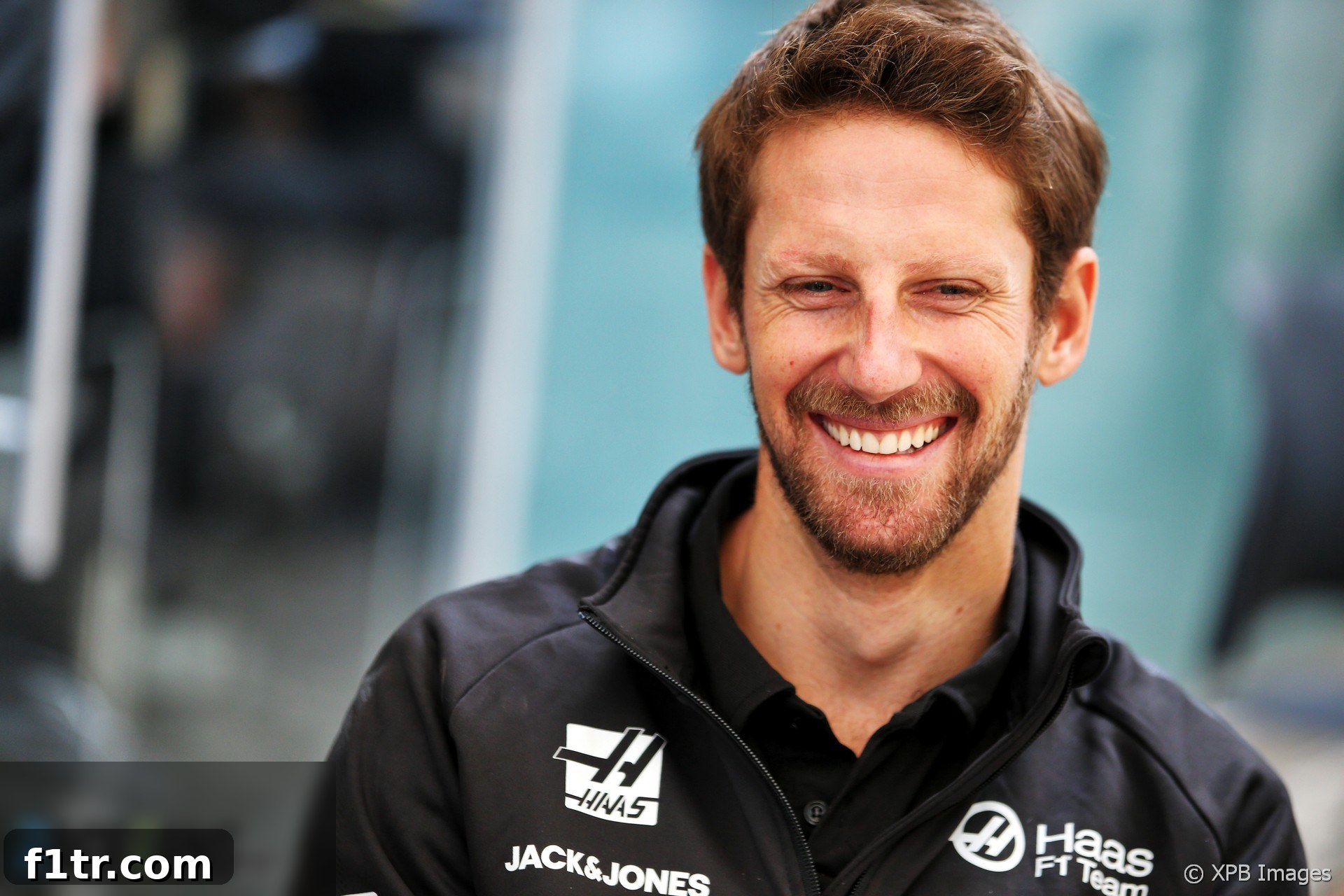
Romain Grosjean Pioneers Radical Haas F1 Setup Change Fueled by Simulator Innovation
In a bold move to tackle the persistent performance inconsistencies plaguing the Haas F1 Team, seasoned driver Romain Grosjean is set to implement a “very different” car setup for the upcoming Grand Prix weekend. This significant departure from their conventional approach is the direct result of extensive experimental work conducted within the team’s newly refined simulator, signaling a critical juncture in Haas’s challenging 2019 Formula 1 season.
The decision underscores the team’s urgent quest for solutions as they battle to extract consistent performance from their VF-19 chassis. With the season progressing, Haas has found itself in a precarious position, struggling repeatedly with the fundamental challenge of maintaining its Pirelli tyres within their optimal operating temperature window. This issue has frequently hindered their ability to translate promising qualifying pace into competitive race performance, often leaving both Grosjean and teammate Kevin Magnussen frustrated and out of the points.
Haas F1 Team’s Enduring Tyre Conundrum in the 2019 Season
The 2019 Formula 1 season proved to be a perplexing and often exasperating campaign for the Haas F1 Team. While the VF-19 occasionally demonstrated flashes of speed, particularly in single-lap qualifying runs, its race pace consistently suffered due to an inability to manage tyre temperatures effectively. This was not a minor inconvenience but a fundamental flaw that prevented the car from unlocking its full potential over a Grand Prix distance.
The complexities of tyre management in modern Formula 1 are immense, with teams needing to ensure the rubber is neither too cold, leading to a lack of grip, nor too hot, causing rapid degradation and blistering. For Haas, the VF-19 seemed particularly sensitive, struggling to keep the tyres in the narrow “sweet spot.” This issue often manifested as a significant drop-off in performance shortly after the start of a stint, leaving drivers vulnerable and unable to defend positions or mount overtakes.
In response to these persistent difficulties, the team made a significant strategic decision mid-season: to revert the VF-19 to its original aerodynamic specification, as used at the beginning of the year. This move was a tacit admission that subsequent aerodynamic upgrades had, in fact, exacerbated the problem rather than solved it. By rolling back the clock on their aero package, Haas aimed to create a more stable and predictable platform, hoping to provide Grosjean and Magnussen with a more manageable car and a clearer understanding of the underlying issues.
Despite this reversion, the core tyre temperature challenge remained formidable. The team’s engineers and drivers continued to grapple with an elusive understanding of the VF-19’s intricate interactions with its tyres. This context makes Grosjean’s upcoming setup change, derived from simulator data, not just an experiment but a desperate, calculated gamble in the pursuit of performance and consistency.
The Ascendance of Simulators in Modern Formula 1 Development
Formula 1 has always been at the forefront of technological innovation, and the role of high-fidelity driving simulators has grown exponentially over the past two decades. What once began as rudimentary driver training tools have evolved into indispensable, sophisticated engineering platforms, critical for every top-tier motorsport team.
Modern F1 simulators are far more than just glorified video games. They are complex ecosystems of hardware and software, meticulously replicating the physics of a Formula 1 car, the dynamics of various tyre compounds, and the nuanced characteristics of every circuit on the calendar. Equipped with advanced motion platforms, highly realistic steering feedback, and immersive visual environments, these machines allow drivers and engineers to experience and manipulate car parameters in a virtual world that closely mirrors reality.
Unlocking Performance: The Simulator’s Role in Setup Optimisation
For F1 teams, simulators serve multiple crucial functions. They provide a cost-effective and time-efficient alternative to real-world track testing, which is heavily restricted by regulations. Engineers can run countless virtual laps, experimenting with thousands of different car setups—adjusting suspension geometry, aerodynamic balance, differential settings, brake bias, and more—all without consuming valuable track time, fuel, or tyre allocations. This iterative process allows them to identify optimal baselines and explore radical setup directions that might be too risky or time-consuming to trial during a real Grand Prix weekend.
Furthermore, simulators are vital for driver preparation, allowing them to learn new tracks, practice specific procedures, and refine their driving style. They also play a pivotal role in the development of new components, enabling engineers to test virtual prototypes before committing to expensive manufacturing processes. For Haas, facing significant struggles, the simulator has become a lifeline – a controlled environment where they can diagnose complex issues and formulate targeted solutions without the pressures and limitations of a live race weekend.
It is within this high-tech crucible that Romain Grosjean’s “very different” setup has been forged. “The start set-up that I am having on my car comes from the simulator,” Grosjean confirmed, highlighting the profound trust the team is placing in its virtual development tools. He elaborated, “It’s very different from the way we normally set up the car. We’re going to try to see if it actually helps or not.” This statement reflects both the radical nature of the change and the cautious optimism surrounding its potential impact. The setup likely targets the VF-19’s specific tyre temperature issues, perhaps by altering mechanical grip, aerodynamic downforce distribution, or suspension characteristics in ways previously unexplored on track.
Behind the Screens: The Vital Contributions of Simulator Drivers
While the spotlight often shines on the Grand Prix drivers, the unsung heroes of Formula 1 development frequently operate away from the public eye: the simulator drivers. These dedicated individuals spend countless hours in the dark, simulated cockpits, logging thousands of virtual kilometers to aid their team’s progress. Romain Grosjean was quick to praise the invaluable contributions of Haas’s simulator drivers, Louis Deletraz and Pietro Fittipaldi, acknowledging their arduous work throughout the 2019 season.
“Louis and Pietro have done a really good job in the simulator,” Grosjean stated, recognizing the unique demands of their role. He went on to describe the nature of their work with striking honesty: “It’s a very frustrating job and can be very painful. You finish the day your brain is pretty tired – not to say a bad word! So they have really done a good job. The last time I jumped in it was a very good step forwards.”
The “frustrating” and “painful” aspects Grosjean refers to stem from the sheer repetitiveness and intense concentration required. Simulator drivers must meticulously test minute changes to the car’s setup, often completing hundreds of identical laps while focusing on tiny increments of performance difference. Unlike real-world testing, where subtle changes can be felt through g-forces and the raw sensation of speed, simulator work relies heavily on precise feedback interpretation and data analysis. The absence of physical forces, coupled with the mental strain of constant vigilance and problem-solving, can indeed be exhausting.
Their work involves not just driving, but also providing detailed technical feedback to engineers, helping to correlate the virtual model with real-world track data, and identifying new avenues for development. Their dedication is critical for a team like Haas, especially when grappling with complex issues like tyre management. The progress Grosjean observed during his own simulator session highlights the effectiveness of Deletraz and Fittipaldi’s efforts in refining the virtual platform and making it a more accurate and useful development tool.
Grosjean’s Pragmatic Approach: Bridging Dislike and Necessity
Romain Grosjean’s relationship with simulators is, by his own admission, a conflicted one. A veteran of over a decade in top-tier motorsport, Grosjean belongs to a generation of drivers who cut their teeth in an era where track testing was far less restricted, and direct experience on asphalt was paramount. This background perhaps explains his personal reservation towards virtual driving tools.
“If you ask me personally if I think is the right thing, I don’t think so,” he candidly admitted, articulating a common sentiment among some drivers who yearn for the raw, visceral experience that only a real racing car can provide. The lack of genuine g-forces, the subtle nuances of track surface changes that are hard to replicate perfectly, and the inherent artificiality of a virtual environment can often leave drivers feeling disconnected from the ultimate truth of the asphalt.
However, Grosjean is also a seasoned professional, keenly aware of the relentless march of technology and the competitive imperatives of Formula 1. He pragmatically acknowledged the simulator’s undeniable value: “But if it’s the thing to move forward and to do better, yes, it is. So we have to use it.” This statement encapsulates the modern F1 driver’s dilemma: balancing personal preferences with professional necessity. In an era where track testing is severely limited, and every hundredth of a second counts, ignoring any potential advantage, no matter how artificial it may feel, is simply not an option.
His willingness to embrace the simulator-derived setup, despite his personal reservations, speaks volumes about his commitment to the team and his desire to find solutions for the VF-19. He is putting his trust in the data, the engineers, and the dedicated work of the simulator drivers. With Pietro Fittipaldi actively working in the simulator during this crucial race weekend, Grosjean expressed confidence: “I’m sure Pietro will do as good as he can and [see] if we can get anything from it.” This collaborative approach underscores the team’s unified effort to leverage every available tool in their pursuit of performance.
Looking Ahead: What This Experiment Means for Haas
Romain Grosjean’s trial of a “very different” simulator-developed setup represents a pivotal moment for the Haas F1 Team. The outcome of this experiment could have significant ramifications, not only for the remainder of their challenging 2019 season but also for the team’s long-term development philosophy.
If the new setup proves successful, even incrementally, it would be a powerful validation of the team’s investment in its simulator program and the diligent work of its simulator drivers. It could signify a breakthrough in understanding the VF-19’s intricate tyre management issues, potentially unlocking more consistent performance and providing a clearer direction for future car development. A positive result would bolster team morale and offer a glimmer of hope in what has been a difficult campaign.
Conversely, should the experiment fail to yield the desired improvements, Haas will be forced back to the drawing board, perhaps facing even tougher questions about the fundamental design of the VF-19 and the correlation between their virtual and real-world data. However, even a negative outcome can provide valuable learning, eliminating one potential path and narrowing the focus for subsequent development efforts.
Regardless of the immediate result, this bold move highlights the relentless pursuit of performance in Formula 1. It demonstrates that teams are prepared to take calculated risks and push the boundaries of technology, even if it means challenging conventional wisdom or personal preferences, to gain a competitive edge. For Haas, Grosjean’s willingness to experiment with this radical setup is a testament to their unwavering determination to overcome adversity and return to a more competitive standing in the highly demanding world of Formula 1.
2019 F1 season
- Crying in the Melbourne car park at 2019 grand prix was my career low – Ocon
- McLaren Racing reports reduced £71 million loss in 2019
- Kvyat: Hockenheim podium last year was “my biggest achievement” so far
- How the FIA’s new encrypted fuel flow meter targets Ferrari’s suspected ‘aliasing’ trick
- “He smashed my office door”: 23 must-see moments from ‘Drive to Survive’ season two
Browse all 2019 F1 season articles