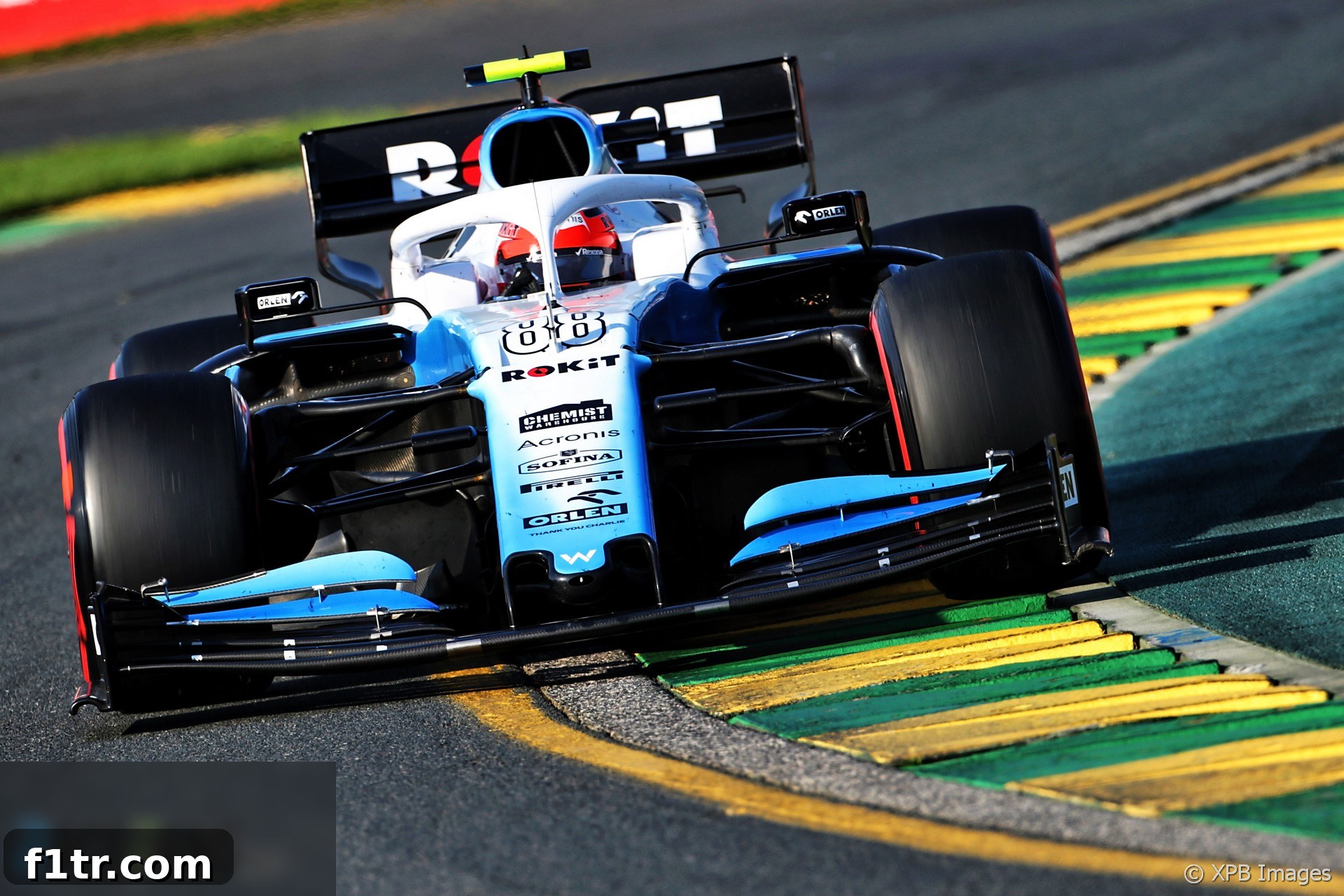
Robert Kubica, a name synonymous with extraordinary resilience and an unyielding will to return to the pinnacle of motorsport, vividly recounted the profound challenges he faced during his Formula 1 comeback at the 2019 Australian Grand Prix. The Polish driver revealed that the dire state of his damaged car during the race was so extreme, it nearly prompted him to laugh at the sheer absurdity of the situation. This candid admission underscored a weekend fraught with misfortune for Kubica and the struggling Williams team, a difficult re-entry into the high-octane world he had left over eight years prior.
Advert | Become a Supporter & go ad-free
A Long-Awaited Return: The Road Back to Formula 1
Kubica’s journey back to a Formula 1 grid was nothing short of miraculous. After suffering a life-threatening rally accident in 2011 that severely injured his right arm, many believed his F1 career was over. Yet, through years of intense rehabilitation, unwavering determination, and a relentless spirit, he defied medical odds to return to the sport he loved. The 2019 Australian Grand Prix marked his first F1 race start since the 2010 Abu Dhabi Grand Prix, an emotional and physically demanding comeback that captivated fans worldwide. However, his return was immediately overshadowed by the harsh realities facing his team, Williams Racing.
The Williams FW42 chassis proved to be critically uncompetitive from the outset of the 2019 season. Beset by development delays and fundamental design flaws, the car lagged significantly behind its rivals. Kubica, along with his rookie teammate George Russell, found themselves at the rear of the grid, a stark reminder of the monumental task ahead for the Grove-based outfit. Kubica’s qualifying performance saw him start last, a clear indicator of the car’s inherent lack of pace and the uphill battle he was destined to face throughout the weekend.
Race Day Challenges: From Grid Panic to First-Lap Drama
The race day itself began with an unexpected moment of high-pressure panic for Kubica even before the lights went out. “As expected it was not the easiest one,” Kubica reflected, setting the tone for his difficult afternoon. Recalling his first standing start in over eight years, he explained, “I never did a standing start with the grid since Abu Dhabi 2010. And actually it was quite good. But I had a bit of a panic because when I stopped, I couldn’t see the lights. The rear wing of the McLaren was hiding it. So I could see the first block but not the rest. And then I had to move to the left, there was additional lights, it was a bit of a panic moment.” This unforeseen obstacle, requiring quick thinking and improvisation, highlighted the unique pressures of an F1 race start and Kubica’s calm under duress.
Given the FW42’s significant performance deficit, which placed it well over a second off the pace throughout the entire weekend, Williams adopted a pragmatic approach for the Grand Prix. The team decided to treat the race “rather more a test for us to get more data,” Kubica explained. This strategy influenced their tyre choice, opting to start him on the more durable hard compound tyres, sacrificing early pace for an extended first stint and valuable data collection.
However, any strategic plan quickly unravelled at the very first corner. Kubica’s race took a dramatic turn for the worse when he found himself entangled in a collision with Pierre Gasly’s Red Bull Racing car. “I had a good launch but then I had a lot of wheelspin,” he recounted. “Running into Turn One, I took it very safe, actually I moved a lot to the inside over the kerbs. And once I thought ‘OK, this is over’, I went through the first corner.” Kubica’s perspective detailed the unfolding chaos: “From what I saw in-car, Gasly moved quite a lot to the right, I think there was contact with Sainz. I saw it [later] with the video that he moved a lot to the right [and] then he damaged my front wing. But I didn’t realise.” The initial contact seemed innocuous enough, but the true extent of the damage became frighteningly clear moments later. “A hundred metres later I lost all the wing – I thought I’d lost half of it. Then the wing caused other damage to the car so we had to pit.” The immediate loss of the front wing, a critical aerodynamic component, sent Kubica’s car spearing towards the pit lane, forcing an unscheduled stop and further compromising his race.
Advert | Become a RaceFans supporter andgo ad-free
The Absurdity of Adversity: “I Nearly Started Laughing”
Returning to the track after his unscheduled pit stop, Kubica’s ordeal was far from over. The damaged state of his car meant its handling was severely compromised, making every lap a struggle. “The car was not feeling great,” he admitted. To compound his difficulties, on just the third lap of the race, he lost one of his crucial side mirrors. This seemingly minor issue significantly complicated his race, especially when dealing with blue flags and faster cars attempting to lap him. Spatial awareness, already a challenge in a damaged car, became an even greater test without a functional mirror, adding to the inherent risks of Formula 1.
Despite the litany of misfortunes and the drastically compromised performance of the FW42, Kubica highlighted a curious paradox. “Once I was in free air I was told the pace was not bad, actually it was good for the car with the state I was having. I nearly started laughing because from the inside it felt very bad.” This observation perfectly encapsulates the disconnect between external data and the visceral, often brutal, experience from within the cockpit. To be told his pace was “not bad” while the car felt almost uncontrollable speaks volumes about Kubica’s ability to push boundaries even with severely limited machinery. The feeling of the car, with its broken aero and imbalance, must have been profoundly frustrating, yet his reaction of nearly laughing underscored a dark humour born from extreme adversity and the sheer unlikelihood of his situation.
Adjusting Expectations: A Realistic Outlook for the Future
Despite the incredibly challenging return to Formula 1, Kubica maintained a remarkably positive and pragmatic outlook. He acknowledged the grim reality of his situation but refused to be disheartened. “Overall I am leaving Australia with definitely more experience and reasonably happy. Although I would never think I would say something like this having this pace and finishing so far behind. But that’s the reality.” This statement reveals a profound understanding of the current landscape of Williams and his own role within it. The immediate expectations of wheel-to-wheel racing, which might have motivated him during his rehabilitation, needed to be adjusted in light of the team’s performance.
“Yesterday I was disappointed a few stuff. Probably I pretended and I focused too much like I would be racing with people,” he confessed, indicating a shift in his internal mental approach. Kubica recognised that for Williams, 2019 was “in a different phase.” He elaborated, “We have to understand that it’s not easy and we have to use race weekends as a kind of test.” This candid assessment painted a clear picture of the struggles Williams faced – a historic team forced to recalibrate its ambitions and effectively use Grand Prix weekends for fundamental development and data gathering, rather than competing for points. For a driver of Kubica’s calibre and competitive spirit, this required immense mental fortitude and a deep well of patience.
Kubica’s 2019 Australian Grand Prix comeback was undoubtedly a trial by fire. It was a race defined by a series of unfortunate events, from start-line confusion and first-lap contact to significant car damage and the profound sense of operating a fundamentally flawed machine. Yet, through it all, Kubica demonstrated the resilience, realism, and dry wit that have come to define his incredible career. His ability to extract any semblance of pace from the ailing FW42, coupled with his philosophical acceptance of the team’s challenging situation, solidified his reputation as one of motorsport’s most compelling figures. The road ahead for both Kubica and Williams was clearly going to be arduous, but his return to the grid in Melbourne served as a powerful testament to the human spirit’s capacity to overcome adversity, even if it meant nearly laughing in the face of it.
Advert | Become a RaceFans supporter andgo ad-free
2019 F1 season
- Crying in the Melbourne car park at 2019 grand prix was my career low – Ocon
- McLaren Racing reports reduced £71 million loss in 2019
- Kvyat: Hockenheim podium last year was “my biggest achievement” so far
- How the FIA’s new encrypted fuel flow meter targets Ferrari’s suspected ‘aliasing’ trick
- “He smashed my office door”: 23 must-see moments from ‘Drive to Survive’ season two
Browse all 2019 F1 season articles