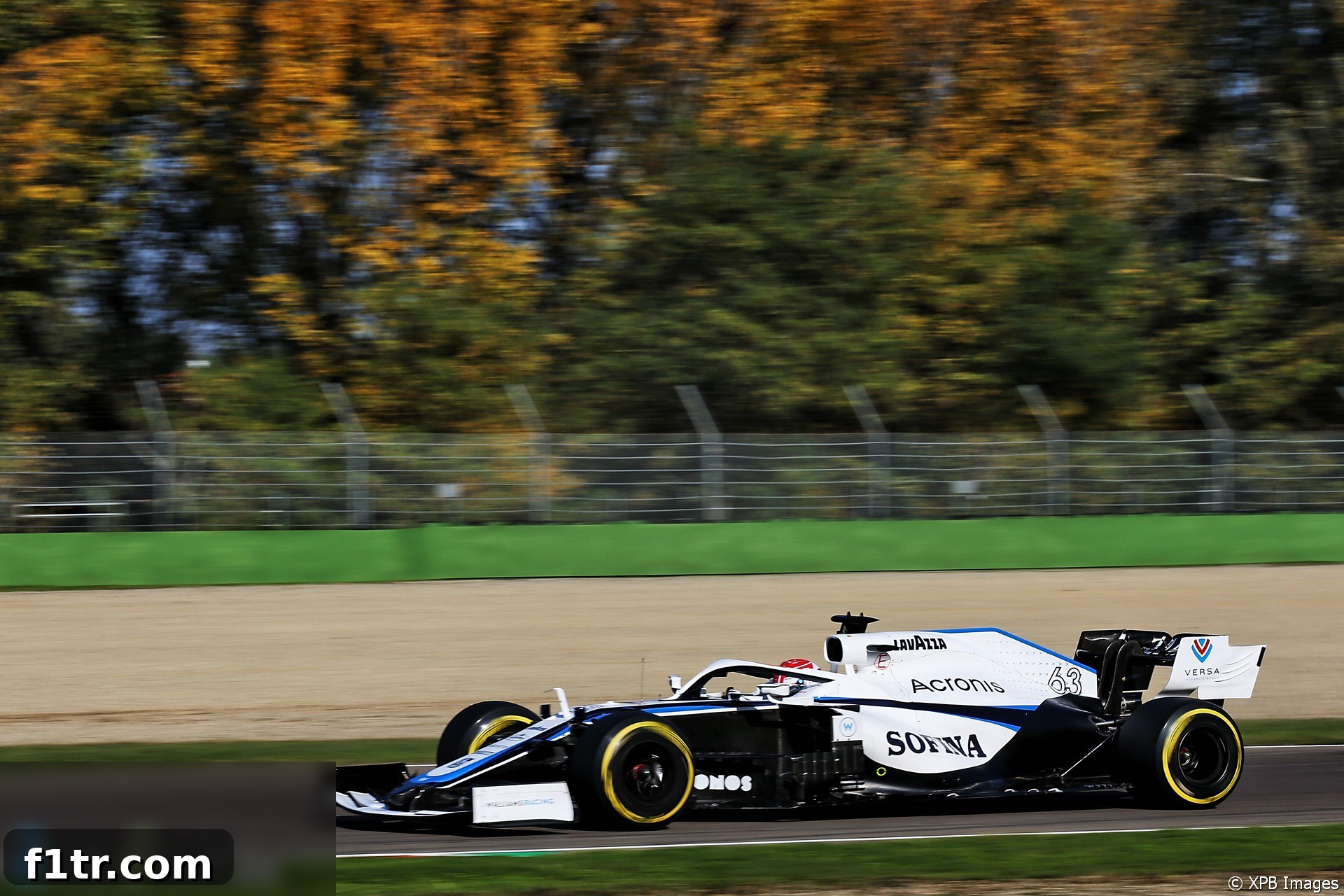
Formula 1’s Thrilling Return to Imola: Drivers Celebrate a True Old-School Challenge
The highly anticipated return of Formula 1 to the hallowed grounds of Imola, for the first time since the 2006 San Marino Grand Prix, resonated deeply with the sport’s elite. Following the initial day of practice and qualifying sessions at the storied Autodromo Enzo e Dino Ferrari, drivers were unanimous in their praise for the circuit’s unique character and formidable challenge. This historic Italian venue proved to be a refreshing addition to the modern F1 calendar, offering a stark contrast to some of the contemporary track designs.
Imola’s Enduring Appeal: A Testament to Classic Circuit Design
Imola is not merely a race track; it is a living legend etched into the annals of Formula 1 history. Its narrow confines, high-speed sections, and unforgiving gravel traps demand absolute precision and commitment from every driver. This “old-school” philosophy, where mistakes are punished swiftly and severely, is precisely what captivated the current generation of F1 stars. In an era dominated by expansive run-off areas and heavily sanitised layouts, Imola stands as a beacon for what many believe makes Grand Prix racing truly exhilarating.
Historical Significance and a Modern Comeback
For decades, Imola hosted the San Marino Grand Prix, creating countless memorable moments and epic battles. Its return, under the guise of the Emilia-Romagna Grand Prix, was met with a mix of nostalgia and excitement. Drivers, some of whom had only experienced the track virtually, relished the opportunity to push the limits of their modern Formula 1 machinery on a circuit that predates many of their careers. The compressed, two-day event format only amplified the intensity, forcing teams and drivers to adapt quickly and flawlessly.
Driver Perspectives: A Chorus of Praise for the Autodromo Enzo e Dino Ferrari
The feedback from the paddock was overwhelmingly positive, with drivers articulating a deep appreciation for the circuit’s blend of speed, technicality, and inherent risk.
Valtteri Bottas: Mastering the Unknown and Securing Pole
Valtteri Bottas, who impressively secured pole position for the event despite never having raced at Imola before, spoke passionately about his developing connection with the circuit. His initial lack of experience quickly transformed into a profound admiration as he extracted more and more performance from his car.
“I didn’t have much experience of this track but once we got down to the qualifying session and the laps keep getting faster and faster, you really start to appreciate this track more and more,” Bottas remarked after his qualifying triumph. “Towards the end of qualifying when you are flat-out on this track it’s really beautiful and enjoyable to drive. A proper old school track and that’s what we all like.”
Bottas’s comments highlight the visceral thrill of driving an F1 car at its absolute limit on such a demanding circuit. The progression from learning the lines to mastering them, culminating in a pole position, speaks volumes about Imola’s rewarding nature for those who dare to push. The feeling of being “flat-out” – accelerating through corners at maximum throttle – on a track with genuine character offers a unique satisfaction that modern, wider circuits often struggle to replicate. It’s a dance between man and machine, where every millimeter counts.
Advert | Become a Supporter & go ad-free
Daniel Ricciardo: Pure Adrenaline and Strategic Attack
Daniel Ricciardo, renowned for his enthusiastic driving style, was equally effusive in his praise. Securing an impressive fifth place on the grid, the Australian driver found the challenge of learning the circuit under intense pressure to be an integral part of the fun. The limited practice time, usually a source of stress, instead amplified the excitement for him.
“I’ve never competed around here so to try and learn everything in a few hours made it probably even more fun. It was really cool. I’m actually still buzzing from it,” Ricciardo exclaimed, still visibly charged from his qualifying performance.
Ricciardo provided a detailed breakdown of specific sections that make Imola so engaging. He singled out the first chicane as a crucial tone-setter for the entire lap, describing how nailing it could yield significant time. His ability to find nearly two-tenths quicker in Q3 through this section alone demonstrates the fine margins and the rewards for precision.
He also highlighted the appeal of the Variante Alta (turns 14/15), a slower chicane where drivers can aggressively attack the kerbs. “Even the chicane at turn 14/15 [Variante Alta], the slow speed chicane, it’s got kerbs that you can attack and that’s fun. You can really muscle the car and you see even some guys taking the bigger yellow parts of the kerbs and sacrificing a bit of a headache for a shorter track. So I really loved it all.” This aggressive kerb-riding, a hallmark of classic F1 circuits, allows drivers to physically wrestle their cars, extracting every last ounce of performance while flirting with disaster.
The iconic Piratella, a sweeping left-hander at the top of a hill, also earned Ricciardo’s admiration. “And Piratella at the top of the hill, that’s cool. It’s really nice because it’s banked. It kind of cambers in and then drops downhill and it’s got a lot of grip. So that one’s nice.” The combination of banking, elevation change, and high grip levels makes Piratella a truly unique and exhilarating corner, demanding both bravery and finesse.
Concluding his thoughts, Ricciardo reaffirmed his genuine affection for the track, making it clear his positive sentiment wasn’t merely a byproduct of a good qualifying result. “Then you go into Acqua Minerale – good old ‘sparkling water’. It’s honestly all fine. And I don’t want to just say it because I’m riding off a good qualifying. Regardless of result, it’s a really good circuit.” This sincere endorsement from a driver known for his candidness further cements Imola’s status as a driver’s favorite.
Advert | Become a RaceFans supporter andgo ad-free
George Russell: High Stakes, High Rewards
For Williams driver George Russell, the allure of Imola lay in its unforgiving nature – a track where even the slightest miscalculation carries significant consequences. This element of genuine risk, largely absent from many modern F1 venues, was precisely what made the experience so rewarding for him.
“It was a proper thrill out there,” said Russell. “We need to come to more tracks like this because it’s just so exhilarating for the driver pushing the car right to the limit. Knowing you’ll be in the gravel or in the wall if you make one little error is mega.”
Russell’s sentiments echo a broader desire among many F1 drivers for circuits that truly test their mettle. The presence of grass and gravel run-offs, coupled with barriers in close proximity at several points, means that exceeding track limits or making a small mistake leads to immediate and tangible penalties – be it a loss of time, a damaged car, or retirement from the race. This high-stakes environment elevates the driving experience, making every lap a thrilling tightrope walk between glory and disaster.
The Anatomy of a Classic F1 Circuit: What Makes Imola Unique
Imola’s appeal stems from a meticulously crafted layout that challenges every aspect of a driver’s skill. From technical chicanes to flowing high-speed sections and significant elevation changes, the circuit demands a complete package of bravery, precision, and car control.
- Tight Corners and Strategic Kerbs: Corners like the initial Tamburello chicane (reconfigured from its original flat-out form) and the Variante Alta exemplify Imola’s requirement for precise car placement and aggressive kerb usage. Drivers must balance speed with the risk of unsettling the car or incurring damage.
- Flow and Elevation: The circuit boasts remarkable natural flow, accentuated by elevation changes. Piratella, with its unique banking and downhill trajectory, creates a sensation of immense grip and speed. Acqua Minerale, another iconic sequence, blends fast and medium-speed corners that demand perfect rhythm.
- Unforgiving Nature: Perhaps the most defining characteristic is the lack of extensive tarmac run-off. Grass and gravel traps await errant cars, transforming minor errors into significant incidents. This, coupled with the close proximity of barriers, cultivates a heightened sense of consequence, forcing drivers to maintain unwavering focus and respect for the track.
The Modern F1 Car on a Historic Track
Driving a contemporary Formula 1 car, with its immense downforce, powerful hybrid engine, and advanced aerodynamics, on a circuit designed for a different era presents a unique dynamic. The sheer speed generated by these machines is amplified on Imola’s narrow, undulating tarmac. It requires drivers to be incredibly precise with their inputs, managing throttle, braking, and steering with surgical accuracy. The physical demands are immense, as drivers battle g-forces through corners that offer little respite. It’s a true test of both man and machine, showcasing the incredible performance of modern F1 cars while highlighting the timeless challenges posed by a classic circuit.
The drivers’ ability to adapt their cutting-edge machinery to Imola’s specific demands—finding grip on an older asphalt, navigating tight sequences, and managing potential bumps—is a testament to their skill and the versatility of modern F1 engineering. This blend of historic challenge and contemporary technology is what makes Imola’s return so captivating for both participants and spectators alike.
Why Imola Matters for F1’s Future
The enthusiastic reception for Imola’s return underscores an important sentiment within Formula 1: the enduring value of traditional, character-filled circuits. While new venues often bring state-of-the-art facilities and expand F1’s global reach, tracks like Imola offer an irreplaceable connection to the sport’s heritage and a purity of driving challenge that is increasingly rare. Drivers’ feedback is a powerful indicator, suggesting that a healthy balance between modern and classic circuits is crucial for maintaining F1’s identity and excitement. Circuits that actively challenge drivers, rather than forgiving every mistake, are often those that produce the most compelling racing and memorable performances.
Conclusion: A Welcome Return to Authenticity
Formula 1’s revisit to Imola was an unqualified success, delivering a fresh dose of authenticity and excitement that drivers eagerly embraced. The Autodromo Enzo e Dino Ferrari proved its worth as a premier racing venue, offering a challenging, rewarding, and undeniably thrilling experience. The unanimous praise from top drivers like Valtteri Bottas, Daniel Ricciardo, and George Russell serves as a powerful endorsement for the continued inclusion of “old-school” circuits on the Formula 1 calendar. As the sport looks to its future, the lessons learned from Imola’s triumphant return should serve as a reminder that some traditions are simply irreplaceable.
2020 Emilia-Romagna Grand Prix: Further Insights
- Gasly says potential lost podium at Imola was his most painful retirement yet
- An F1 marshal explains why Stroll’s Imola near-miss raises safety concerns
- McLaren must seek “smallest gains” in qualifying to fight for third
- Pirelli begins probe into Verstappen tyre failure
- 2020 Emilia-Romagna Grand Prix Star Performers
Browse all 2020 Emilia-Romagna Grand Prix articles