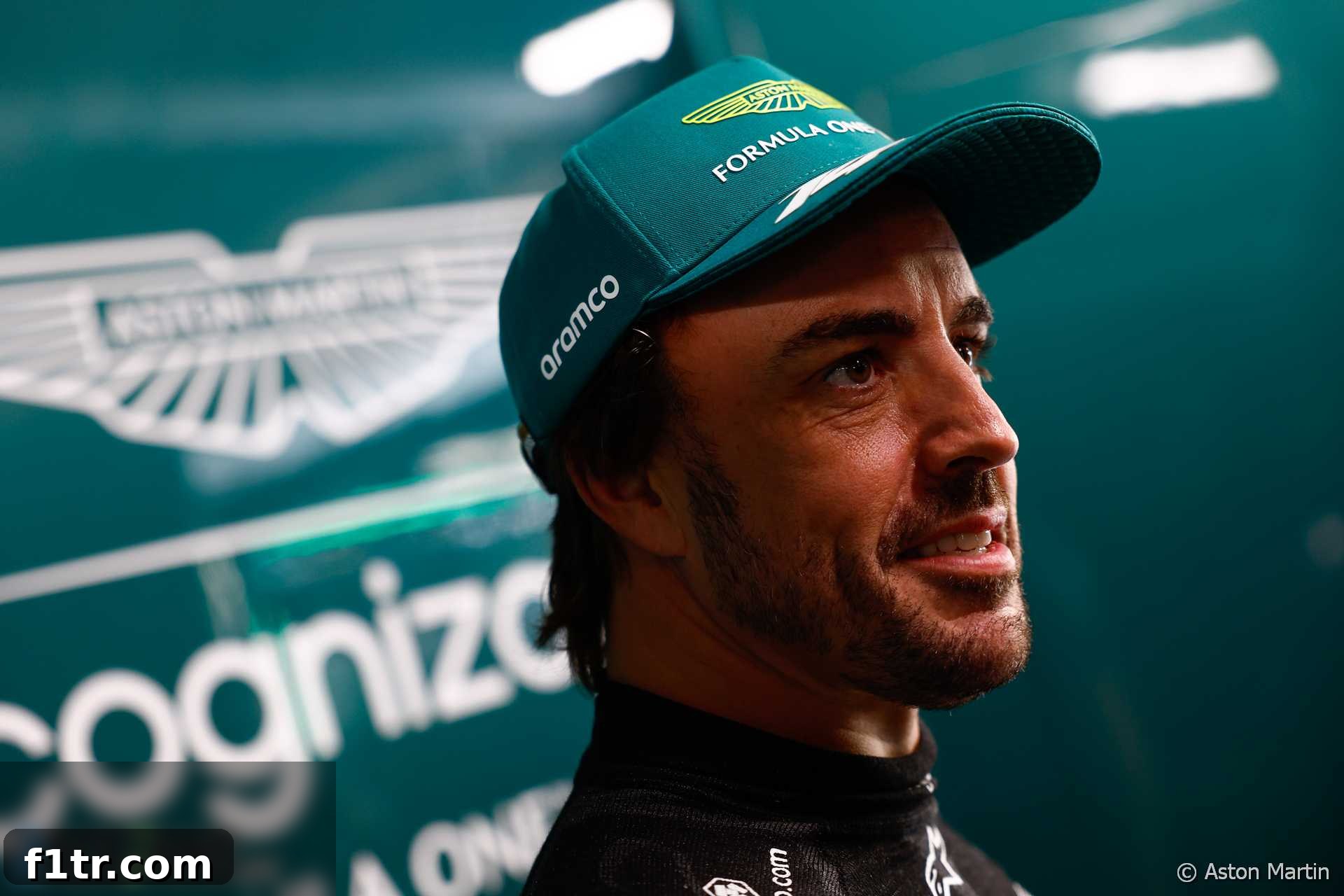
The highly anticipated Canadian Grand Prix weekend in Montreal took an unforeseen turn, leaving teams, drivers, and especially the dedicated Formula 1 fans, feeling let down. A critical malfunction in the circuit’s CCTV system forced the abandonment of the first practice session (FP1) after a mere four minutes of running, sparking considerable frustration and raising questions about operational readiness in the pinnacle of motorsport.
Advert | Become a Supporter & go ad-free
Among those expressing significant disappointment was two-time world champion Fernando Alonso. His Aston Martin team had arrived at the iconic Circuit Gilles Villeneuve with a clear agenda: to rigorously test a crucial series of aerodynamic and mechanical upgrades brought for their AMR23 car. These sessions are invaluable for data collection, understanding car behavior with new components, and fine-tuning setups for the challenging Canadian track. However, Alonso was only able to complete a paltry three laps before the red flags emerged, initially for a different issue, and then definitively sealing the fate of the session.
A Critical System Failure Undermines Practice
The initial red flag during FP1 was triggered by a problem with Pierre Gasly’s Alpine, which came to a stop on the circuit. This was attributed to a minor issue with a spare steering wheel that had been fitted for testing purposes. While Gasly’s incident was swiftly dealt with, it inadvertently exposed a far more critical underlying problem: a widespread fault with the circuit’s closed-circuit television (CCTV) system. Race control, the nerve center for managing Grand Prix sessions, relies absolutely on up-to-the-minute visual feeds from cameras strategically placed around the entire 4.3-kilometer track. This network of cameras is indispensable for monitoring every inch of the circuit, ensuring the safety of drivers, marshalling incidents, and making informed decisions during live running.
Without reliable and comprehensive CCTV coverage, race control found itself unable to safely monitor the track. The inability to see potential hazards, disabled cars, or even debris, rendered it impossible to guarantee driver safety – a non-negotiable aspect of Formula 1. Consequently, after a prolonged delay and a futile attempt to resolve the issue, the decision was made to abandon the session entirely. This was a stark reminder that while the cars and drivers represent the spectacle, the underlying infrastructure and operational protocols are the bedrock upon which the sport’s safety and integrity are built.
Alonso’s Frustration: “Shooting Ourselves in Our Feet”
The abandonment of FP1 resonated deeply with Fernando Alonso, who did not mince words in expressing his disappointment. “It was a shame,” he stated, highlighting the broader implications. “I think it was not ideal for the teams, but mostly it was for the fans that came very early to the circuit, and we were not able to run in FP1.” Alonso’s comments underscored a dual frustration: the lost opportunity for teams to conduct essential testing and the immense letdown for the thousands of passionate fans who had eagerly gathered, some arriving hours before, only to witness minimal track action.
His critique extended beyond the immediate inconvenience, touching upon the perceived systemic issues within the sport. “From time to time it seems that we are shooting [ourselves] in our feet as a sport. These things are a little bit embarrassing,” Alonso added. This pointed comment reflects a broader sentiment that Formula 1, despite its technological prowess and global appeal, occasionally stumbles on fundamental operational matters. For a team like Aston Martin, which has made significant strides and is locked in a fierce development battle, every minute of track time is precious. Losing an entire session meant critical data for their new upgrades remained ungathered, potentially hindering their competitive edge for the rest of the weekend and beyond.
Alonso further emphasized the lack of contingency planning: “We didn’t have time because FP1, unfortunately, the cameras or whatever on the circuit didn’t work and we didn’t have a Plan B, as all these times in this sport.” This highlights a crucial area for improvement: robust backup systems and protocols to prevent single points of failure from derailing entire sessions, especially given the high stakes and global visibility of Formula 1 events.
FP2: Extended, but Still Challenging Conditions
In an attempt to mitigate the lost track time, the subsequent second practice session (FP2) was extended. However, even this measure proved to be only a partial remedy, as the session itself was plagued by its own set of challenges. Fernando Alonso managed to cover 38 laps during the extended FP2, a stark contrast to his three laps in FP1. Yet, the session was red-flagged twice more, further interrupting the flow and continuity of data collection. Adding to the complexity, heavy rain began to fall during the final ten minutes, turning the track into a treacherous, wet surface and forcing teams to switch to intermediate or full wet tires, thereby limiting their ability to gather representative dry-weather performance data for their new upgrades.
These intermittent disruptions and the change in weather conditions meant that even with the extended duration, Aston Martin, and indeed many other teams, struggled to complete their planned testing programmes. Alonso reiterated this, stating that the delays left Aston Martin without enough time to fully evaluate the changes to their car. The unique demands of the Circuit Gilles Villeneuve, with its mixture of long straights and chicanes, require precise setup, and any lost track time in variable conditions compounds the challenge for engineers and drivers alike.
In contrast to Alonso’s pronounced frustration, his teammate Lance Stroll offered a more tempered perspective on the disruption. “It’s the same for everyone,” he remarked, acknowledging that all teams faced similar hurdles. Stroll expressed satisfaction with the car’s initial feel, adding, “The car is feeling good. I think we’re looking pretty good.” While Stroll’s outlook highlighted the shared nature of the adversity, it perhaps understated the specific impact on Aston Martin’s ambitious upgrade evaluation, particularly for a team aiming to solidify its position at the front of the grid.
Advert | Become a RaceFans supporter andgo ad-ad-free
Broader Implications: Fan Experience and Sporting Integrity
The incident at the Canadian Grand Prix, while seemingly a technical glitch, carries significant broader implications for Formula 1. First and foremost is the impact on the fan experience. Thousands of spectators invest considerable time, money, and effort to attend these prestigious events. Arriving early, often braving challenging weather or travel, they expect to witness the spectacle of F1 cars on track. When a fundamental operational failure leads to the cancellation of a session, it creates immense disappointment and can erode confidence in the event’s organization. F1 prides itself on being a premier global sport, and such “embarrassing” moments, as Alonso described them, can tarnish its polished image.
From a sporting integrity standpoint, the emphasis on driver safety is paramount and non-negotiable. Race control’s decision to abandon FP1 was, unequivocally, the correct one under the circumstances. The risks associated with not having full track visibility are too high to ignore. However, the incident raises crucial questions about the robustness of circuit infrastructure and event management protocols. In an era of advanced technology, should such critical systems lack immediate, effective backup solutions? This event underscores the need for continuous audits and upgrades of all operational systems at every Grand Prix venue to ensure seamless and safe execution.
For the teams, the loss of track time in FP1 represents not just a momentary inconvenience but a strategic setback. Practice sessions are meticulously planned, with specific test items, tire evaluations, and setup changes allocated to each hour on track. For teams like Aston Martin, bringing significant upgrades, this lost time translates into delayed feedback, incomplete data sets, and potentially compromised setup decisions for qualifying and the race. The knock-on effect can be felt throughout the weekend, influencing performance and strategy. While some drivers might play it down as “the same for everyone,” the impact is rarely truly equal across all teams, especially those with specific development agendas.
Moving Forward: Lessons from Montreal
The Canadian Grand Prix FP1 abandonment serves as a valuable, albeit unwelcome, lesson for Formula 1. It highlights the delicate balance between cutting-edge racing technology and the foundational infrastructure required to support it. While the excitement of the sport often centers on the high-speed action and thrilling overtakes, the underlying operational excellence is what guarantees safety and a consistent, high-quality spectacle for fans worldwide.
Looking ahead, it is imperative for Formula 1, the FIA, and circuit promoters to review and strengthen their contingency plans. Ensuring robust backup systems for critical safety infrastructure, clear communication protocols in the event of disruptions, and agile solutions to mitigate lost track time are essential. The passion of the fans, the dedication of the teams, and the competitive spirit of the drivers deserve an environment where such fundamental operational issues are proactively addressed and prevented. While the Montreal incident was a blip on the radar, its echoes serve as a reminder that the pursuit of perfection in Formula 1 extends far beyond the racetrack itself, encompassing every aspect of its global operation.
2023 Canadian Grand Prix
- Norris ‘even more’ sure Canada penalty was wrong after review request fails
- McLaren seeking more than just downforce gains from major upgrade
- Winning more races won’t necessarily lead to F1 seat – Palou
- Red Bull’s testing restriction will “massively affect” 2024 car development
- Schumacher’s set-up input gives Mercedes a “super advantage” – Wolff
Browse all 2023 Canadian Grand Prix articles