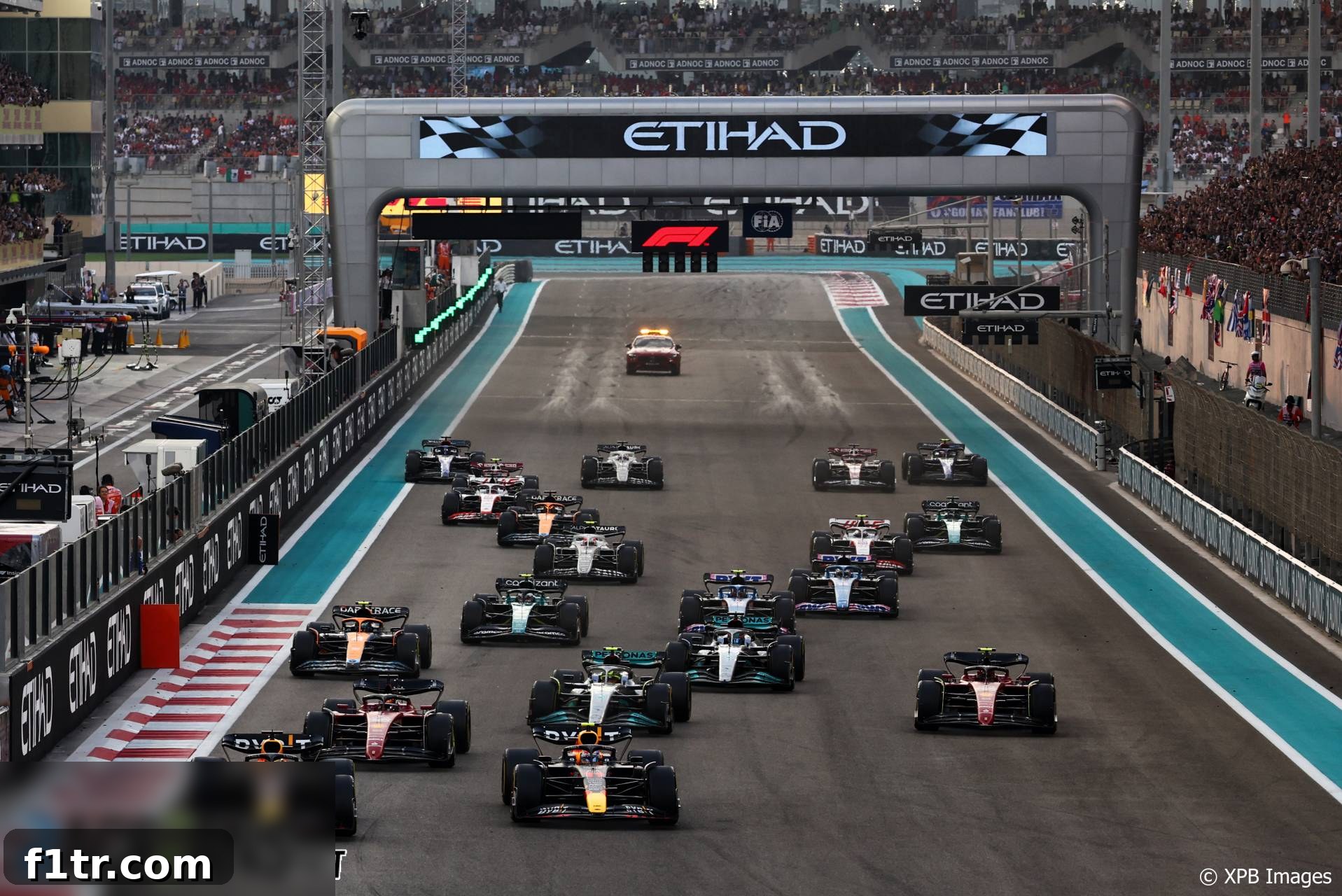
The global motorsport landscape is buzzing with speculation following reports of a staggering $20 billion (£16.16 billion) bid for Formula 1 by a Saudi Arabian fund. Amidst these high-stakes financial maneuvers, the president of the FIA, Mohammed Ben Sulayem, has issued a stark reminder for any potential buyer to apply “common sense” and prioritize the sport’s long-term health over immediate profit. His intervention underscores the complex interplay between Formula 1’s skyrocketing commercial value and its fundamental sporting integrity, a balance the FIA, as the sport’s governing body, is keen to maintain.
Formula 1’s Exponential Growth and Valuation
Last week, reports surfaced alleging that the Saudi Arabian Public Investment Fund (PIF) had approached Formula 1’s current owners, Liberty Media, with an offer to acquire the pinnacle of motorsport for an unprecedented sum. This audacious bid, however, was reportedly turned down. The proposed $20 billion valuation represents a monumental increase from the $8 billion (£6 billion) deal in 2016 when Liberty Media acquired the series from CVC Capital Partners and other stakeholders. Since that acquisition, the Formula One Group’s stock prices (FWONK) have soared dramatically, climbing from approximately $18.26 to an impressive $69.89, reflecting the sport’s burgeoning global appeal and commercial success.
Under Liberty Media’s stewardship, Formula 1 has experienced an unparalleled resurgence, transforming from a sport with a niche following into a global entertainment powerhouse. Key to this transformation has been a multi-faceted strategy encompassing digital engagement, expansion into new markets, and a significant boost in fan interaction. The highly successful Netflix docuseries “Drive to Survive” played a pivotal role in attracting a younger, more diverse audience, particularly in the crucial North American market. This enhanced visibility has translated into increased sponsorship revenues, higher broadcasting rights fees, and greater interest from host cities, all contributing to the sport’s elevated financial standing.
The FIA’s Mandate: Guardianship Over Commercial Gain
FIA president Mohammed Ben Sulayem has voiced significant caution regarding the speculative $20 billion sale price, highlighting potential negative consequences for the sport’s ecosystem. As the overarching governing body for motorsport worldwide, the FIA operates as a non-profit organization with a core mission to promote the healthy development of motorsport. Ben Sulayem articulated this stance clearly on social media:
“As the custodians of motorsport, the FIA, as a non-profit organisation, is cautious about alleged inflated price tags of $20bn being put on F1. Any potential buyer is advised to apply common sense, consider the greater good of the sport and come with a clear, sustainable plan – not just a lot of money. It is our duty to consider what the future impact will be for promoters in terms of increased hosting fees and other commercial costs, and any adverse impact that it could have on fans.”
This statement reflects the FIA’s profound concern that an excessively high valuation could lead to unsustainable commercial pressures. Such pressures might force Grand Prix promoters to demand even higher hosting fees, inevitably impacting ticket prices for fans and potentially making the sport less accessible. The FIA’s role extends beyond simply regulating races; it involves safeguarding the sport’s long-term viability, ensuring fair competition, promoting safety, and fostering grassroots development. From this perspective, a purely profit-driven acquisition without a robust, sustainable strategy could jeopardize the very foundations upon which Formula 1 is built.
The Call for a Sustainable Vision
Ben Sulayem’s emphasis on a “clear, sustainable plan” rather than just “a lot of money” is crucial. This implies a buyer should demonstrate a commitment to investing in the sport’s infrastructure, nurturing talent, expanding its global footprint responsibly, and ensuring that commercial growth does not come at the expense of sporting integrity or fan engagement. A sustainable plan would likely involve strategies for fair wealth distribution among teams, investment in new technologies, and a concerted effort to maintain the sport’s competitive balance. The FIA champions a holistic view, where financial prosperity supports, rather than dictates, the essence of motorsport.
Emerging Tensions: FIA vs. Formula 1 Commercial Rights Holder
The recent remarks by the FIA president are not isolated; they highlight growing points of divergence between the FIA, as the sport’s regulator, and Formula 1’s commercial rights holder, Liberty Media. These dividing lines underscore a fundamental tension: the FIA’s duty to govern and regulate the sport versus F1’s prerogative to maximize its commercial potential.
A prominent example of this friction is the debate surrounding the expansion of the Formula 1 grid. Mohammed Ben Sulayem recently announced the initiation of a formal process to admit a new team to the series, prompted by considerable interest from entities like Andretti Global. Andretti, a renowned name in motorsport, has publicly expressed its ambition to join F1, outlining detailed plans for its entry. Conversely, F1 CEO Stefano Domenicali has consistently stated that he sees no compelling need to expand the grid beyond its current 10 teams. Domenicali’s position is often understood to reflect the existing teams’ concerns about the dilution of prize money, the maintenance of the sport’s exclusivity, and logistical challenges associated with increasing the number of competitors.
This specific disagreement illustrates a broader power struggle. The FIA, in its regulatory capacity, believes that adding new teams could invigorate the sport, fostering competition and potentially opening up new markets or talent pools. However, the commercial entity, F1, and its existing teams view such expansion through a different lens, primarily focusing on financial impact and the perceived value of their franchises. These differing perspectives highlight the inherent challenge in balancing sporting development with commercial interests, a challenge that will only intensify as Formula 1’s financial value continues to ascend.
The Future Impact of Formula 1’s Valuation
The reported $20 billion valuation of Formula 1, regardless of whether a sale materializes in the near future, sends a clear signal about the sport’s incredible trajectory and its appeal as a global investment. However, this high valuation comes with significant responsibilities and potential challenges. For Grand Prix promoters worldwide, the specter of increased hosting fees looms large. These fees, already substantial, are a critical component of a circuit’s ability to host an F1 race. Any significant increase could strain budgets, potentially leading to fewer races in certain regions or a shift towards countries with greater financial resources, possibly impacting the sport’s geographic diversity.
For the fans, the implications are equally pertinent. Higher operational costs for promoters and teams could translate into steeper ticket prices, more expensive merchandise, and premium broadcasting subscriptions. The FIA’s concern for “any adverse impact that it could have on fans” is a direct acknowledgment of this potential pitfall. Maintaining accessibility and affordability for fans is crucial for the long-term health and popularity of the sport, preventing it from becoming an exclusive spectacle reserved only for the elite.
Ultimately, the saga surrounding F1’s valuation and potential ownership bids underscores a pivotal moment for the sport. It forces all stakeholders – from the governing body to the commercial owners, teams, and fans – to confront fundamental questions about Formula 1’s identity. Is it first and foremost a sport driven by competition, innovation, and global appeal, or is it primarily a commercial enterprise seeking maximal returns? The path chosen will define Formula 1’s legacy for generations to come, making the FIA’s call for “common sense” and a “sustainable plan” more relevant than ever.
Don’t miss anything new from us!
Follow us on social media for the latest updates:
- Join us on Facebook
- Follow us on Twitter
- Get daily email updates
Related Articles
Explore more content on the world of Formula 1:
- FIA president cleared of alleged interference in two 2023 races
- First week viewing figures for new Drive to Survive season fall again
- Max who? Drive to Survive season six prefers its favourite faces
- Complete 2023 season review
- The F1 drivers who pulled off the 10 biggest charges through the field in 2023
Browse all 2023 F1 season articles