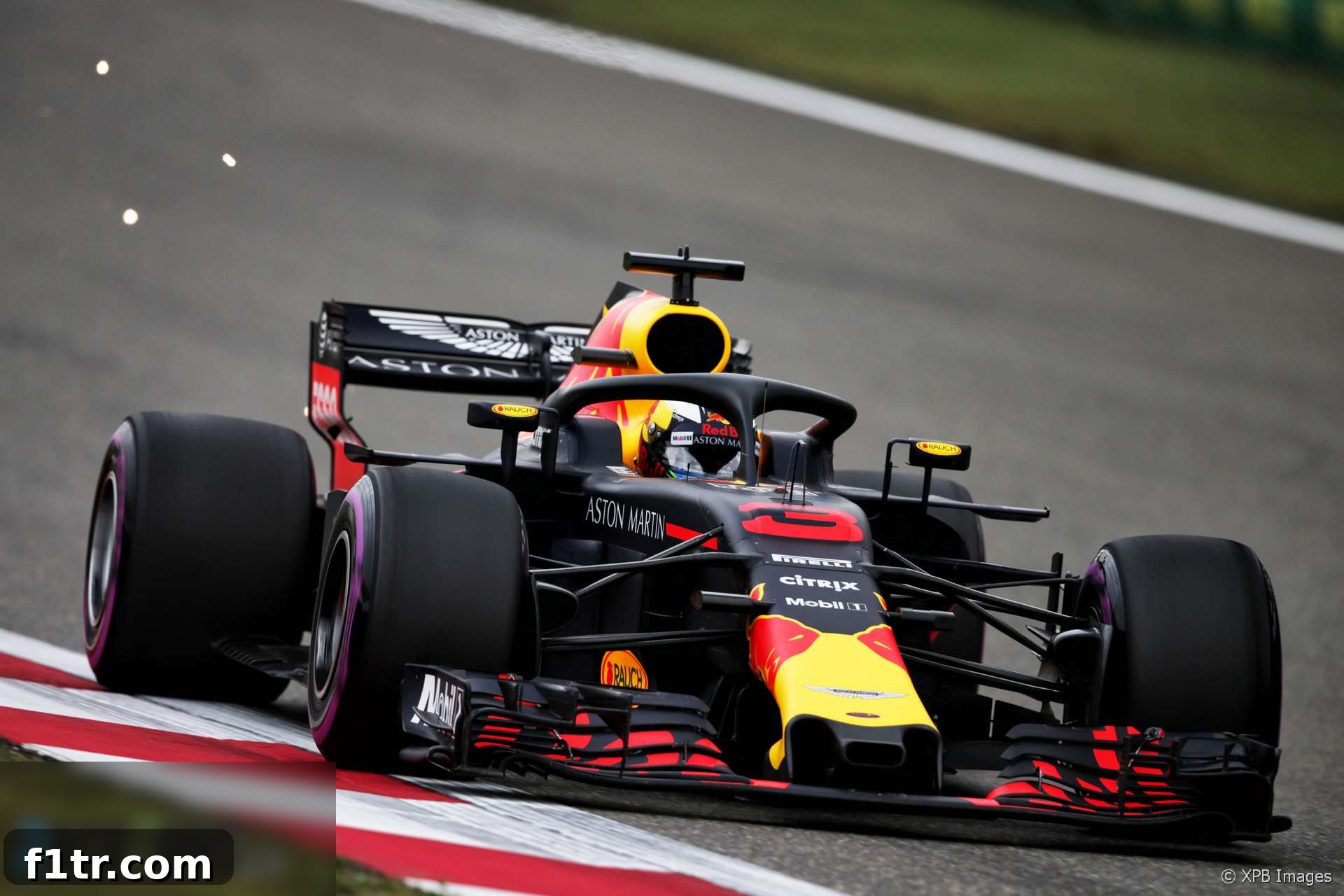
Daniel Ricciardo’s Early Season F1 Engine Woes: Navigating Renault’s 2018 Reliability Challenges and Looming Grid Penalties
The high-octane world of Formula 1 demands not only raw speed and driving prowess but also an unwavering level of mechanical reliability. For Daniel Ricciardo, the 2018 F1 season presented an early and unwelcome test of the latter, as an untimely power unit problem during final practice meant a crucial component change. While the Australian driver managed to avert an immediate grid penalty for that specific race weekend, the incident cast a long shadow, firmly placing him and his Red Bull Racing team on a precarious path towards inevitable penalties later in the championship. This early setback highlighted the persistent reliability concerns plaguing Renault’s power units, a factor that could significantly impact Ricciardo’s competitive aspirations.
Understanding F1 Power Unit Regulations: The Cost of Unreliability
To fully grasp the gravity of Ricciardo’s situation, it’s essential to understand the stringent power unit regulations in Formula 1. In the 2018 season, the FIA mandated a strict allowance for several key components of the hybrid power unit. Drivers were permitted to use only three Internal Combustion Engines (ICE), three Turbochargers (TC), and three Motor Generator Units-Heat (MGU-H) across the entire 21-race calendar. Furthermore, the allocation for Energy Stores (ES) and Control Electronics (CE) was even tighter, limited to just two units per season. Exceeding these allocations for any component results in an automatic grid penalty, with the severity escalating depending on how many additional components are used.
Ricciardo’s power unit failure in final practice necessitated the fitment of a new engine, turbocharger, and MGU-H. This moved him onto his second of the three permitted examples for each of these critical components. Crucially, he did not require a new energy store, which would have instantly pushed him beyond his allocation and triggered a grid penalty for that weekend. While this offered a temporary reprieve, the fact that he was already on his second set of components after just three races underscored the fragility of his situation. With 18 races still remaining, the likelihood of avoiding further replacements and thus grid penalties appeared slim, placing immense strategic pressure on both the driver and the team.
Advert | Become a Supporter & go ad-free
Ricciardo’s Season Start: A String of Unfortunate Events
The power unit issues weren’t a standalone incident for Ricciardo at the start of the 2018 season. Just two races prior, at the Bahrain Grand Prix, he had been forced to retire prematurely due to a power unit problem. This early succession of failures was particularly disheartening for the Red Bull driver, especially considering the promising signs from pre-season winter testing. Ricciardo, known for his infectious optimism and relentless pursuit of performance, openly expressed his frustration.
“Unfortunately, it’s a little bit familiar territory,” Ricciardo commented, reflecting on a history of reliability challenges. “We’ve had our ups and downs with this the last few years. It’s not new to me but after winter testing, we didn’t expect to be here in race three with already the issues in Bahrain and this morning. The winter testing looked a lot more positive from a reliability standpoint.” This sentiment resonated deeply within the Red Bull camp, as the team had entered the season with high hopes, aiming to close the gap to front-runners Mercedes and Ferrari. A robust, reliable power unit is the cornerstone of any championship challenge, and early component failures severely undermine such aspirations, forcing a reactive rather than proactive approach to race strategy.
The Inevitable Shadow of Grid Penalties
The most pressing concern for Ricciardo following the component change was the looming certainty of future grid penalties. With an entire season ahead and a limited pool of power unit elements, the mathematical probability of needing further replacements was alarmingly high. Ricciardo himself candidly acknowledged the inevitability of starting from the back of the grid at some point, humorously remarking, “I think it means at some point I’ll start in the last corner at one track.” While delivered with his characteristic wit, the statement underscored a serious reality for any F1 driver: grid penalties are disruptive, costly, and immensely frustrating.
For a driver of Ricciardo’s caliber, who consistently battles for podiums and race victories, being forced to start from the back due to component failures is a significant blow. It transforms a weekend focused on maximizing points into a damage limitation exercise, often requiring aggressive driving and strategic gambles just to score a handful of points. The mental toll can be substantial, as drivers must balance the desire to push the limits with the underlying fear of another mechanical failure. This creates a psychological hurdle, where, as Ricciardo articulated, “From a driving point of view you still go out and you just hope nothing goes bang. But I guess mentally, knowing we’re going to have penalties at some point…” This underlying anxiety can subtly impact performance, even for the most seasoned professionals.
Renault’s Reliability Conundrum: A Shrinking Window of Optimism
The root cause of Ricciardo’s predicament lay squarely with Renault, the engine supplier for Red Bull Racing at the time. The French manufacturer had faced criticism for its power unit’s reliability and outright performance compared to rivals Mercedes and Ferrari in the hybrid era. Ricciardo’s “window of optimism” regarding Renault’s ability to resolve their reliability problems was visibly shrinking. This growing concern was not just about his personal race results but also about the broader implications for Red Bull’s standing in the Constructors’ Championship.
The intense pressure on engine manufacturers in F1 is immense. They are constantly striving to extract maximum power while maintaining bulletproof reliability, a balance that is notoriously difficult to achieve. Each power unit component is a marvel of engineering, operating at extreme temperatures and pressures. When failures occur, it’s a complex process to diagnose, rectify, and implement solutions across all customer teams. For Renault, these early-season issues with Ricciardo were a stark reminder of the challenges they faced in competing with the established benchmarks. The shrinking optimism signaled a growing worry that the reliability deficits could become a persistent Achilles’ heel throughout the season, hindering not only Red Bull but also Renault’s own works team.
Championship Aspirations and the Cost of Unreliability
While Ricciardo acknowledged that Red Bull wasn’t yet consistently matching the pace of Ferrari and Mercedes, the specter of future penalties threatened to derail any potential championship charge before it could truly begin. “We’re not really there yet on Ferrari’s pace and I’m not thinking about the championship. But if we then put ourselves in that position then it would be hard to take the penalties that will be upcoming,” he stated. This perfectly encapsulated the Catch-22 situation: to challenge for the championship, Red Bull needed consistently strong performances, but reliability issues were directly undermining their ability to deliver them.
Every point scored in Formula 1 is precious, especially in a competitive season. Grid penalties don’t just affect one race; they can have a cascading effect on a team’s strategic planning, component rotation, and even their financial expenditure. For Ricciardo, a driver with clear aspirations for world championship contention, these early setbacks were a bitter pill to swallow. They highlighted the brutal reality that in modern Formula 1, the best driver in the fastest car can still be undone by an unreliable power unit, making the quest for consistency and dependability as crucial as outright speed.
2018 F1 season
- F1 feared “death knell” for Drive to Survive after Ferrari and Mercedes snub
- McLaren staff told us we were “totally crazy” to take Honda engines in 2018 – Tost
- ‘It doesn’t matter if we start last’: How Red Bull’s junior team aided Honda’s leap forward
- Honda’s jet division helped F1 engineers solve power unit problem
- McLaren Racing losses rise after Honda split
Browse all 2018 F1 season articles