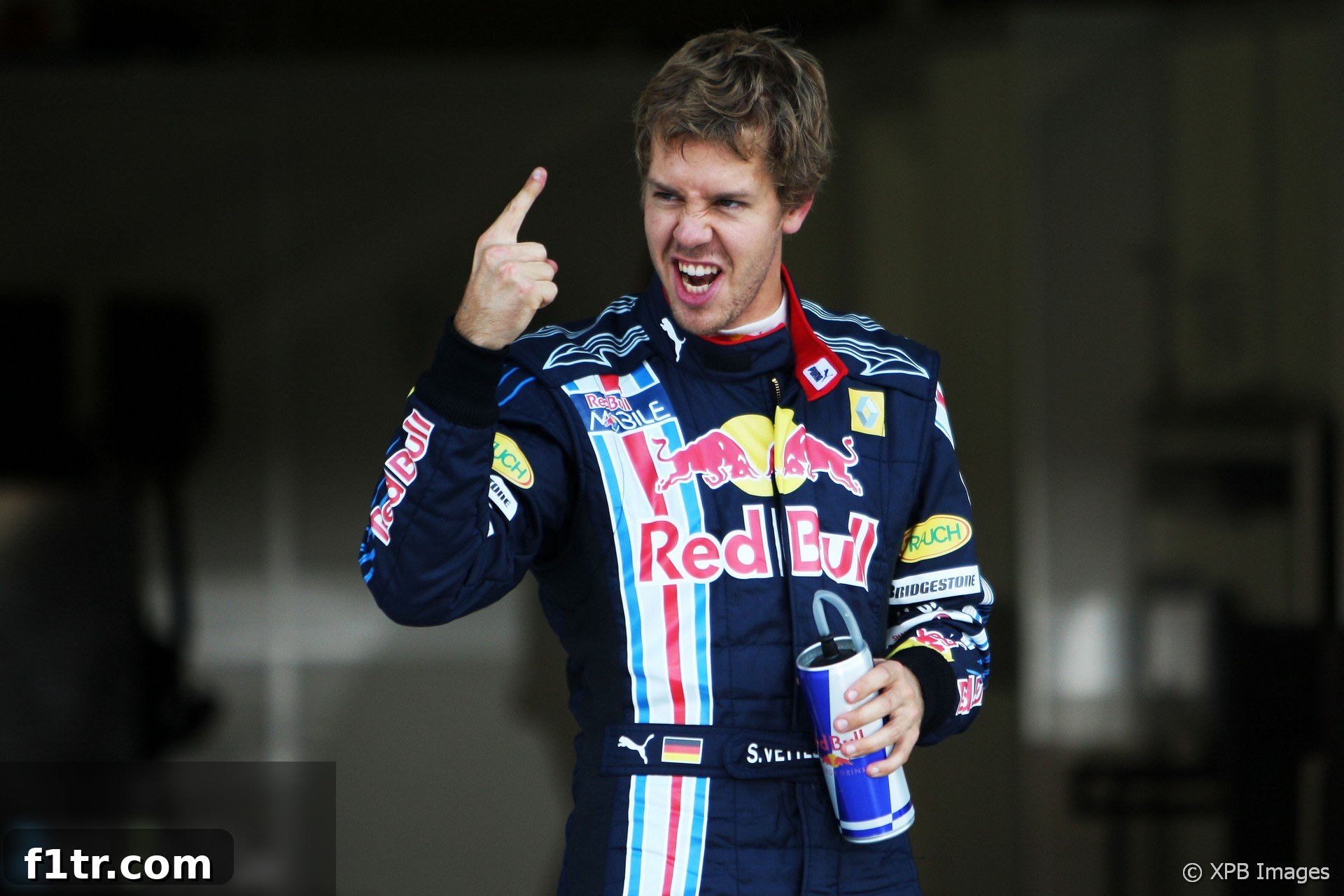
Sebastian Vettel’s Enduring Legacy: A Deep Dive into Formula 1 Records
After an illustrious and truly impactful career spanning nearly two decades, Sebastian Vettel drew the curtain on his Formula 1 journey at the recent Abu Dhabi Grand Prix. While his final seasons saw him competing further down the grid, the four-time world champion leaves behind an indelible mark on the sport, characterized by a staggering array of records that underscore his generational talent and the sheer dominance he once wielded. At 35 years old, Vettel departs as the outright holder of 11 significant records within the world championship. He shares one more notable achievement with another driver and, throughout his 299-race career, held an additional nine records before they were eventually surpassed. This article delves into the statistical tapestry of a true F1 legend, exploring the benchmarks he set, the ones he still defends, and even a unique, less-than-enviable record that remains tied to his name.
Sebastian Vettel’s journey from a prodigious young talent to a multi-world champion is a story of relentless speed, strategic brilliance, and an unwavering commitment to excellence. His career peaked with Red Bull Racing, where he achieved a period of unprecedented dominance that saw him rewrite the Formula 1 record books. Even after his departure from the sport, many of these achievements continue to stand as testament to his unique place in motorsport history.
Sebastian Vettel’s Enduring Formula 1 Records
Sebastian Vettel’s name is etched into the Formula 1 history books for an array of achievements that stand as testament to his extraordinary skill and the unparalleled periods of dominance he enjoyed, particularly with Red Bull Racing. These records, forged during eras of intense competition, highlight his consistent pace, strategic brilliance, and unwavering determination.
Most Wins in Consecutive Races
The 2013 Formula 1 season stands as a monumental chapter in Sebastian Vettel’s career, largely defined by an astonishing streak of victories that shattered long-standing records. During this season, Vettel demonstrated absolute mastery over the Red Bull RB9, winning an incredible nine races in a row. This unprecedented run began with the Belgian Grand Prix and continued through to the Brazilian Grand Prix, encompassing victories in Italy, Singapore, Korea, Japan, India, Abu Dhabi, and the United States. This magnificent achievement broke a record for consecutive wins that had stood for 60 years, eclipsing it by two victories.
While Alberto Ascari had indeed started and won nine races in succession across the 1952 and 1953 seasons, it’s crucial to note that these were not all consecutive rounds of the world championship. Ascari notably skipped the 1953 Indianapolis 500, which was part of the championship calendar at the time. Vettel’s streak, by contrast, comprised nine successive championship rounds, making it an uncontested benchmark for continuous, unparalleled success within a single season. This required not only a perfectly performing car but also faultless driving and strategic execution from race to race.
Most Pole Positions in a Season
Sebastian Vettel’s second title-winning campaign in 2011 was not just about race victories; it was also a display of raw qualifying pace that cemented his reputation as a formidable qualifier. That year, he claimed pole position in 15 out of 19 races, a staggering achievement that showcased his ability to extract the absolute maximum from his Red Bull RB7 from the very first flying lap. This remarkable tally remains unsurpassed, reflecting a season where Vettel was often untouchable on Saturdays, setting a benchmark for single-lap supremacy.
Furthermore, in that dominant 2011 season, Vettel matched another historical benchmark set by Nigel Mansell in 1992, winning nine of the races he started from pole position. This dual achievement highlights not only his incredible one-lap speed but also his capability to convert that advantage into race-day success, a hallmark of true champions who can perform under pressure.
Youngest to Take Pole Position, Win from Pole, and Achieve a Hat-Trick
Sebastian Vettel burst onto the Formula 1 scene not just with raw speed, but with an immediate record-breaking flair that stunned the paddock. At the unforgettable 2008 Italian Grand Prix, aged just 21 years and 72 days, he etched his name into history by becoming the youngest driver ever to claim pole position. This feat was made even more remarkable by the treacherous, rain-soaked conditions at Monza, where he expertly guided his underdog Toro Rosso to the top of the qualifying sheets, signaling the arrival of a future superstar with exceptional wet-weather driving skills.
The following day, Vettel converted his pole into a stunning victory, making him also the youngest driver to win a Formula 1 Grand Prix from pole position. This sensational performance remains one of the most iconic moments in Toro Rosso’s (now AlphaTauri’s) history and a seminal moment in Vettel’s burgeoning career, proving his ability to perform under the highest pressure.
The very next year, now driving for Red Bull Racing, Vettel continued his assault on the “youngest” records. At the 2009 British Grand Prix, aged 21 years and 353 days, he became the youngest driver to achieve a ‘hat-trick’ – securing pole position, winning the race, and setting the fastest lap. This trifecta of achievements solidified his reputation as a formidable talent, destined for greatness, showcasing his complete package as a driver.
Youngest World Champion (and Multi-Champion)
Perhaps Sebastian Vettel’s most iconic and enduring record is that of the youngest Formula 1 World Champion. He claimed his maiden title at the dramatic 2010 Abu Dhabi Grand Prix, where, against all odds and overcoming a significant points deficit to seasoned contenders, he emerged victorious at just 23 years and 134 days old. This incredible achievement not only marked his first championship but also initiated a period of unprecedented success, signaling a new era of dominance.
His subsequent three titles, secured in the immediate years that followed (2011, 2012, and 2013), meant he successively broke the record for the youngest driver to become a double, triple, and ultimately a four-time F1 champion. This remarkable string of championships, achieved at such an early age, firmly established him as one of the sport’s all-time greats and showcased a sustained level of performance and mental fortitude that few could match, making him a true prodigy.
Most Laps Led in a Season
The sheer domination Sebastian Vettel displayed during his 2011 championship season is perhaps best encapsulated by an astonishing statistic: he led a remarkable 739 laps out of a total of 1,133 throughout the season. This meant he was at the front for approximately 65% of all racing laps that year, a testament to the supreme performance of his Red Bull RB7 and his uncanny ability to command races from start to finish. On 11 occasions that year, he crossed the finish line as the winner, often having led significant portions of those Grand Prix, demonstrating unparalleled control.
To put this achievement into contemporary perspective, even Max Verstappen, during his own record-breaking and highly dominant 2022 season (which featured three more races than 2011), led 616 laps. Vettel’s 2011 tally, therefore, remains a staggering benchmark for single-season leadership and control, highlighting an era of absolute supremacy where he was rarely challenged once he took the lead.
Championship Leader for Most Races in a Season
Another record born out of his phenomenal 2011 season highlights Sebastian Vettel’s complete control over the championship battle. He led the 19-race season from start to finish, a rare “lights-to-flag” championship performance. This meant that from the moment he topped the standings after the opening race, he never relinquished his position, demonstrating unwavering consistency and a complete grip on the title race. This impressive feat of leading the championship for every single round of a season was only matched four years later by his rival, Lewis Hamilton, in his equally dominant 2015 campaign, underscoring how difficult such a sustained performance truly is.
Sebastian Vettel’s Records That Were Eventually Surpassed
While Sebastian Vettel holds many enduring records, the constantly evolving nature of Formula 1, with its new generations of talent, extended calendars, and advanced machinery, means that some of his impressive benchmarks have inevitably been eclipsed. These records, though no longer his alone, nonetheless represent incredible achievements that marked him as a dominant force in his time, setting the stage for future champions to challenge and eventually break them.
Most Wins in a Season
For many years, Sebastian Vettel’s 13 wins in the 2013 season, a tally matched only by Michael Schumacher in 2004, stood as the gold standard for single-season dominance. This record seemed almost untouchable, even during Mercedes’ hybrid era, where Lewis Hamilton and Nico Rosberg, despite winning multiple championships, often split victories between them, preventing either from reaching such a high individual count.
However, the 2022 season saw a new level of Red Bull Racing’s supremacy and Max Verstappen’s unrelenting form. Once Red Bull engineered a car capable of consistently beating Mercedes and the rest of the grid, Verstappen set his sights on this formidable record. He duly reached 14 wins at the Mexican Grand Prix and then further extended his own benchmark with a staggering 15th victory at the season-ending Abu Dhabi Grand Prix, firmly stamping his authority on the record books and setting a new, incredibly high standard for single-season victories.
Most Podiums in a Season
In his dominant 2011 campaign, Sebastian Vettel stood on the Grand Prix podium an impressive 17 times, showcasing his incredible consistency and top-tier performance. This tally equaled Michael Schumacher’s long-standing record from the 2002 season, a testament to Vettel’s consistent front-running pace. However, in another demonstration of modern F1’s evolving benchmarks, this record also fell to Max Verstappen, who scored an even more remarkable 18 Grand Prix podiums in the 2021 season. This feat further highlighted the intense demands and extended calendars of the contemporary era, where finishing in the top three is a weekly expectation for championship contenders.
Most Points in a Career
The record for the most career points in Formula 1 has seen a rapid escalation with changes to the points system over the years, making it a dynamic benchmark. Sebastian Vettel first put his name on this particular record at the 2015 Hungarian Grand Prix, albeit initially sharing the top spot with Fernando Alonso. It was only two races later, at the Italian Grand Prix, that he claimed it outright, a significant milestone in his career that reflected his longevity and consistent performance.
However, the nature of this record in the modern era, combined with Lewis Hamilton’s sustained excellence, meant its tenure with Vettel was relatively short-lived. Hamilton matched Vettel’s tally at the 2016 Canadian Grand Prix. While Vettel briefly reclaimed the record a week later at the European Grand Prix, Hamilton definitively took it back at the very next race and has remained F1’s leading points scorer ever since. Vettel concludes his distinguished F1 career still holding a commendable second place in the all-time points-scoring table with 3,098 points. Lewis Hamilton stands towering above with 4,405.5 points, while Fernando Alonso follows with 2,061, and Max Verstappen is closing rapidly with 2,011.5 points, illustrating the dynamic and competitive nature of this particular statistical battle in Formula 1.
Most Points in a Season and Consecutively Scored
Two more records that underscore Sebastian Vettel’s phenomenal performance in the early 2010s were earned during his championship-winning seasons. He scored an impressive 392 points in the 2011 season, then surpassed that with 397 points during his fourth title-winning season two years later, a reflection of his relentless pursuit of perfection and the strength of his Red Bull machinery. However, these benchmarks were eventually eclipsed by Lewis Hamilton in 2018, who, on his way to his fifth world title, scored an even more incredible 408 points, propelled by the dominant Mercedes W09, showcasing the increasing points available and Hamilton’s consistency.
Vettel also held the record for consecutively scored points, an ironman feat demonstrating remarkable consistency and reliability. From the 2010 Brazilian Grand Prix to the 2011 Indian Grand Prix, he amassed 424 points without a single interruption. Yet, once again, Lewis Hamilton proved to be the record-breaker, achieving an astounding 199 more points in a consecutive run that stretched from 2016 to 2018, showcasing his unwavering ability to finish in the points race after race during Mercedes’ golden era, a true testament to his resilience and the team’s engineering prowess.
Most Front Rows in a Season
In his utterly dominant 2011 season, Sebastian Vettel started from the front row of the grid in 18 of the races, a testament to his qualifying prowess and the inherent speed of his Red Bull machine. This was an incredible achievement, setting a high bar for consistent front-running performance on Saturdays. Lewis Hamilton later matched this record in his equally impressive 2015 championship season, displaying similar qualifying consistency. However, the record was truly shattered by Hamilton’s Mercedes team mate, Nico Rosberg, who, during his championship-winning 2016 season, achieved an unbelievable 20 front-row starts out of a possible 21 races, demonstrating an almost perfect qualifying record and the outright pace of the Mercedes W07 during a fiercely competitive season.
Youngest Winner, Podium Finisher, and Race Leader
Sebastian Vettel’s early career was defined by breaking “youngest” records, establishing himself as a prodigious talent who arrived in F1 ready to make an impact. However, the next generation of F1 stars eventually arrived to challenge these benchmarks. Max Verstappen’s sensational maiden F1 victory at the 2016 Spanish Grand Prix not only marked a new chapter in his career but also simultaneously broke three of Vettel’s long-standing “youngest” records in a single, memorable race.
The first of these records fell on lap 11 of the Barcelona race when Verstappen, at an incredibly tender age, became the youngest driver to lead a lap. This particular record had been set by Vettel at the 2007 Japanese Grand Prix when he was 20 years and 89 days old, showcasing his early leadership qualities. When Verstappen reached the chequered flag, securing his historic victory, the 18-year-old sensation further eclipsed Vettel’s records as F1’s youngest podium finisher and youngest race winner – both records that Vettel had achieved with his memorable debut win at the 2008 Italian Grand Prix. This momentous race in Spain truly heralded a generational shift in Formula 1, establishing Verstappen as a future force.
Youngest Points-Scorer
Sebastian Vettel made an instant impact in his very first Formula 1 race. At the 2007 United States Grand Prix, deputizing for an injured Robert Kubica at BMW Sauber, he finished in a respectable eighth place. In doing so, he not only scored points but became the first ever teenager to achieve a points finish in Formula 1, a clear sign of his immediate potential and maturity behind the wheel at such a young age. However, this record was later narrowly beaten by Daniil Kvyat, who, on his debut at the 2014 Australian Grand Prix, achieved a points finish 25 days younger than Vettel, underscoring the ever-decreasing age of F1 debutants and the incredible talent emerging from junior categories.
Youngest to Participate in and Top a Grand Prix Weekend Session
Sebastian Vettel’s journey into Formula 1 was marked by an early demonstration of blistering pace and innate talent. BMW Sauber famously gave him a run in two practice sessions at the 2006 Turkish Grand Prix when he was just 19 years and 53 days old. Remarkably, in the second practice session, he topped the timing sheets, out-pacing seasoned veterans by a stunning 0.073 seconds – a clear indicator of the exceptional talent that was about to take F1 by storm and a sign of things to come.
While this record was once entirely his, it too was eventually surpassed by Max Verstappen, highlighting the continuous lowering of age barriers in elite motorsport. Verstappen broke the first part of this record, becoming the youngest to participate in a Grand Prix weekend session, during his practice debut at the 2014 Japanese Grand Prix, just three days after his 17th birthday. He then went on to claim the second part by going fastest in a practice session for the first time at the 2015 Mexican Grand Prix, a month after turning 18, once again showcasing a new generation’s early entry and rapid ascent in the sport’s highest echelons.
The Unwanted Record: Vettel’s Quickest Penalty
While Sebastian Vettel’s career is overwhelmingly filled with accolades and positive statistics, there is one rather unique record that his rivals would undoubtedly prefer not to claim from him: he incurred his very first Formula 1 penalty quicker than any other driver in history. During that fateful Grand Prix weekend debut at Istanbul Park in 2006, where he impressed by topping a practice session, Vettel was caught speeding in the pit lane. This infraction occurred just a mere six seconds after he officially began his Formula 1 career by exiting the garage for his first official session, resulting in an immediate and rather amusing penalty. It’s a quirky footnote in an otherwise stellar career, a testament to his eagerness even if it came with a slight rules infringement, a moment of youthful exuberance in his very first official F1 outing.
Sebastian Vettel: A Legend’s Enduring Statistical Legacy
Sebastian Vettel’s retirement marks the departure of one of Formula 1’s most decorated and influential drivers. His career was a tapestry woven with incredible periods of dominance, record-breaking achievements, and a relentless pursuit of excellence. From his formative years as a young prodigy who shattered “youngest” records to his era-defining four consecutive championship wins with Red Bull, Vettel consistently pushed the boundaries of what was possible, accumulating a statistical legacy that few can rival. His transition to Ferrari, though ultimately not yielding further titles, only added to his extensive experience and popularity within the sport.
While the sport’s evolution, changes in regulations, and the emergence of new talents like Max Verstappen and Lewis Hamilton have seen some of his cherished records surpassed, the sheer volume and significance of the benchmarks he set—many of which he still holds—underscore his profound and lasting impact. His name will forever be synonymous with youth, speed, and championship glory, ensuring his place among the pantheon of Formula 1 legends, not just for the records he broke, but for the spirit, intelligence, and passion he brought to every race, on and off the track. His career serves as an inspiration and a testament to what sustained dedication and talent can achieve in the pinnacle of motorsport.