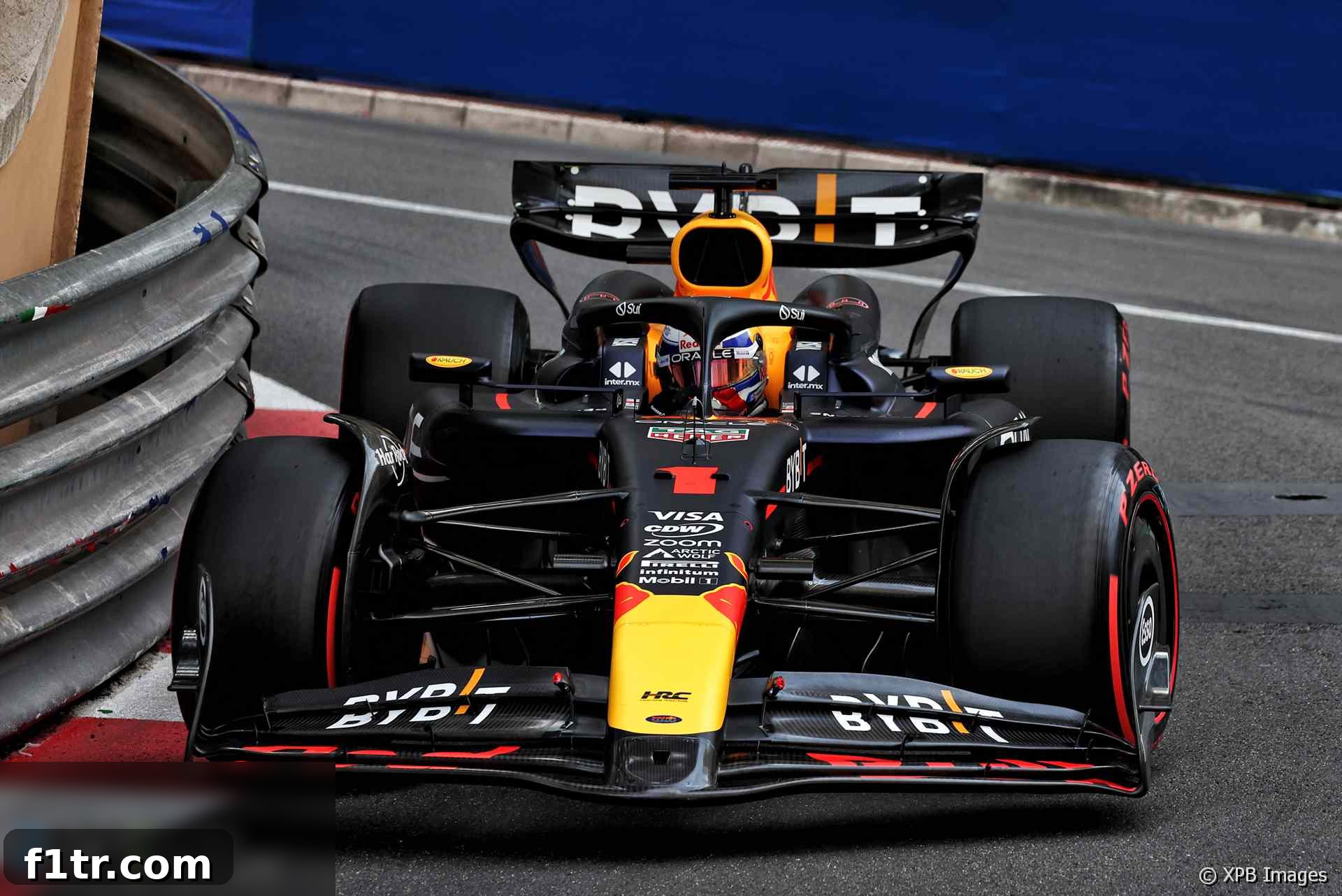
Reigning Formula 1 World Champion Max Verstappen has candidly expressed his concerns about Red Bull Racing’s prospects at the prestigious Monaco Grand Prix this weekend, admitting that the challenging street circuit exposes inherent weaknesses in their RB20 car. Following a demanding day of practice sessions, Verstappen tempered expectations, suggesting that fighting for victory in the principality might be an uphill battle against formidable rivals.
Verstappen concluded Friday’s practice sessions as the fourth-fastest driver, registering a lap time that was a significant half-second slower than the pace-setting Ferrari of Charles Leclerc. This deficit places Red Bull behind not just Ferrari but also other competitive teams who demonstrated superior performance around the unique confines of Monaco’s streets. The championship leader’s struggles were palpable throughout both sessions, as he grappled with an unpredictable balance from his car on a circuit known for its slow speeds and critical reliance on high downforce.
The Dutchman’s frustration was evident in his post-session comments. He conceded that he was at a loss to fully explain the precise nature of the handling issues plaguing his RB20. “I don’t think I even can describe what is actually going on,” Verstappen told the official F1 channel, highlighting the deep-seated problems rather than simple setup adjustments. This level of uncertainty from a driver of Verstappen’s caliber is rare and underscores the severity of Red Bull’s predicament.
He continued, elaborating on his initial expectations for the weekend. “It’s not something that I didn’t expect, but it’s definitely at the higher end of, let’s say, the worst possible outcome of the weekend so far. It’s just very difficult.” Verstappen’s pre-race apprehensions about Monaco were clearly justified, as the track’s specific characteristics have proven particularly problematic for the Red Bull challenger. The unique topography of the Monaco circuit, with its numerous bumps, unforgiving kerbs, and subtle camber changes, presents a specific challenge that the RB20 appears ill-equipped to handle efficiently.
Verstappen pinpointed these track elements as the primary culprits hindering their pace. “There are a lot of bumps and kerbs and camber changes as well in the track and, for us, that is basically impossible to take,” he explained. “Every time that we go over it, we lose a lot of lap time just because the car doesn’t ride it well.” This inability of the car to absorb and react compliantly to the circuit’s uneven surfaces means that Red Bull is losing precious time where competitors like Ferrari and McLaren appear to thrive. Such fundamental issues, stemming from the car’s design philosophy and suspension characteristics, are notoriously difficult to rectify over a single race weekend.
The core challenge for Red Bull stems from the very essence of the RB20’s design. While the car, crafted by the brilliant mind of Adrian Newey, often excels in high-speed corners and benefits from exceptional aerodynamic efficiency, it has occasionally shown a vulnerability on circuits demanding high mechanical grip and excellent low-speed compliance. Monaco, with its labyrinthine layout of tight turns, chicanes, and minimal run-off areas, is a pure test of a car’s ability to navigate bumps and ride kerbs smoothly without unsettling its balance. When the car struggles to “ride well,” it impacts everything from driver confidence to tire degradation and ultimately, raw lap time.
The championship leader found himself in a somewhat analogous position during the opening day of practice at the Emilia Romagna Grand Prix in Imola just weeks prior, where he also expressed dissatisfaction with his car’s balance. However, in Imola, Verstappen impressively recovered to secure pole position on Saturday before fending off Lando Norris to clinch a hard-fought victory by less than a second. This weekend in Monaco, a circuit known for its unforgiving nature and unique demands, Verstappen does not anticipate a similar turnaround in fortunes.
“Imola was completely different,” he stated, drawing a crucial distinction between the two circuits. “Also different issues that you can solve with set-up.” He elaborated that the problems encountered in Imola were largely rectifiable through conventional setup adjustments – fine-tuning aerodynamics, suspension, and brake balance to optimize performance on a more traditional race track. Monaco, however, presents a different beast entirely. Its challenges are often embedded in the car’s inherent characteristics, which are far beyond the scope of weekend setup changes.
“These kind of things, you cannot solve with set-up, because that’s how the car is made and designed and these kind of things you cannot change overnight. So we are stuck with that,” Verstappen lamented. This stark assessment underscores the deep-rooted nature of Red Bull’s struggle. When a car’s fundamental design clashes with the specific requirements of a circuit, immediate solutions are scarce. While the team will undoubtedly work tirelessly through the night, exploring every possible avenue, Verstappen’s outlook remains cautiously pessimistic. “We’ll try to make it a little bit better, but I don’t expect any miracles,” he admitted, setting a realistic tone for the remainder of the event.
The question of contending for pole position in Saturday’s crucial qualifying session, which is often considered more important than the race itself in Monaco due to the difficulty of overtaking, was met with similar reservations. Verstappen expressed genuine surprise if a radical solution to Red Bull’s handling concerns around the Monte Carlo circuit could be found by tomorrow. His focus has shifted from outright pace to fundamental driveability.
“I’m not even thinking about that for tomorrow,” he confessed, indicating a more immediate and practical objective. “I just want to try and solve the issues that we have, try to make it a little bit more driveable. And then we’ll see where we end up. But I don’t expect any miracles.” This pragmatic approach highlights the challenging situation Red Bull faces. For a driver who typically targets nothing less than victory, adjusting ambitions to merely making the car more manageable speaks volumes about the extent of their current difficulties.
The unique nature of the Monaco Grand Prix, where driver skill, car compliance, and strategic prowess converge, amplifies these challenges. A half-second deficit in practice translates to a significant grid position disadvantage, making the path to victory incredibly arduous. Rivals like Ferrari, with Leclerc showing exceptional pace and the car appearing well-balanced over the bumps, and McLaren, who have demonstrated strong form on varied circuits, are poised to capitalize on Red Bull’s struggles. This weekend could very well be an opportunity for other teams to break Red Bull’s dominant streak and inject fresh excitement into the championship battle.
While Max Verstappen currently enjoys a comfortable lead in the Drivers’ Championship, a challenging weekend in Monaco could offer his competitors a psychological boost and a chance to close the points gap, however slightly. The Red Bull garage will be working through the night, sifting through data, and making incremental changes. However, as Verstappen himself has pointed out, fundamental design characteristics cannot be overhauled overnight. Thus, the 2024 Monaco Grand Prix looks set to be a test of resilience for the reigning champions, potentially opening the door for an unexpected winner on the iconic streets of Monte Carlo.
2024 Monaco Grand Prix
- Formula 1 will fix red flag rule loophole which ruined Monaco GP – Domenicali
- Magnussen ‘could have backed off but didn’t’ in Monaco crash, says team boss
- Ocon defends his driving after ‘hurtful abuse’ over Monaco GP crash with Gasly
- How the midfield’s hottest team mate rivalry boiled over
- “He’s really dangerous”: Unheard driver radio from F1’s slow show in Monaco
Browse all 2024 Monaco Grand Prix articles