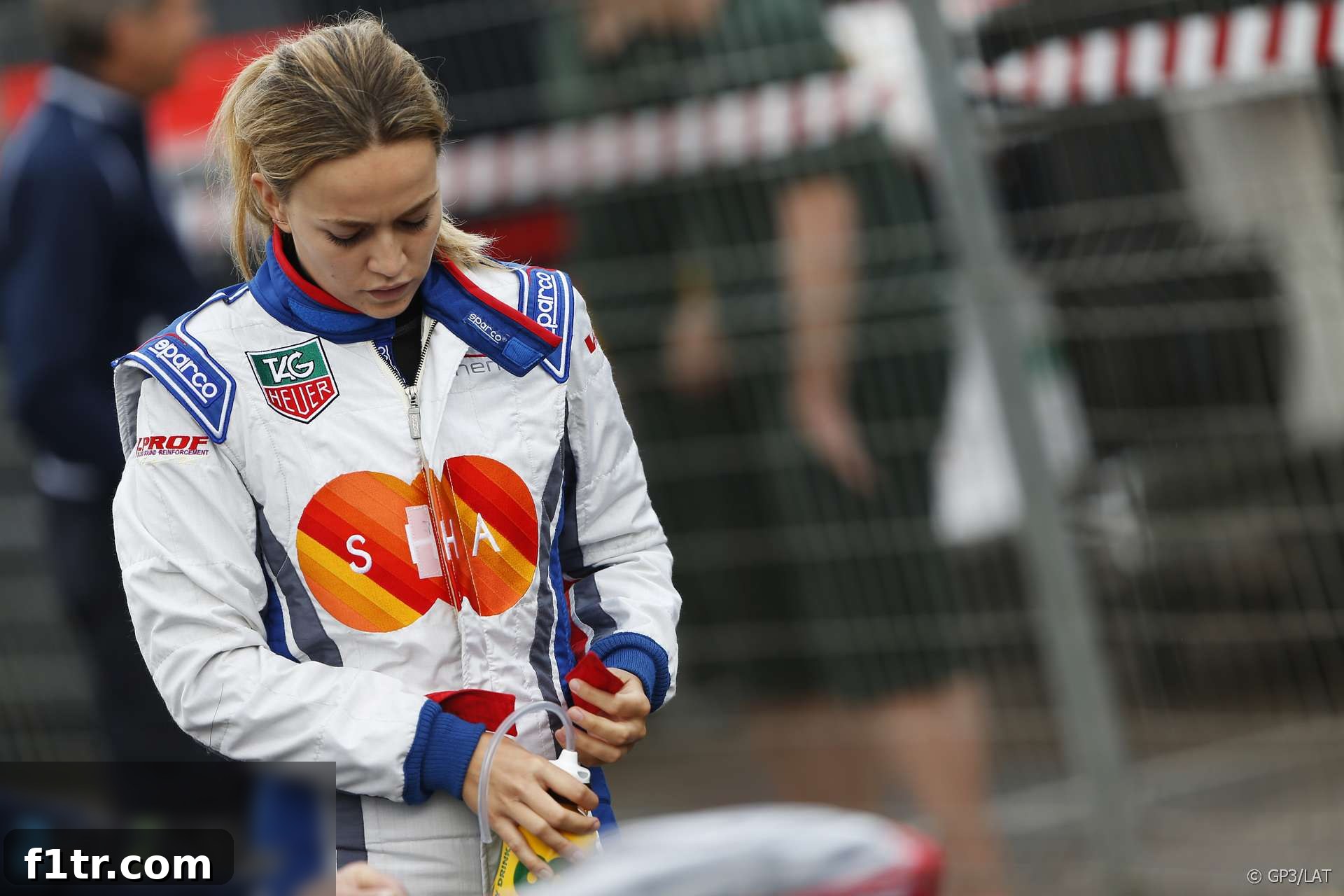
Jorda Apologizes for Controversial Women Racer Comments
The world of motorsport, particularly the pinnacle of Formula 1, has long been a domain perceived as physically demanding and predominantly male. Discussions surrounding the capabilities of women drivers often ignite passionate debates, and such was the case following comments made by former GP3 driver and FIA Women in Motorsport Commission member, Carmen Jorda. Her remarks, suggesting that Formula E might be more accessible for women due to its lower physical demands compared to Formula 1, sparked a significant backlash across the racing community.
Jorda’s initial comments, delivered after testing a Formula E car, posited that the reduced downforce in Formula E vehicles translated to a less strenuous physical challenge. This, she argued, could make it an easier route for women aspiring to professional racing careers than the intensely physical Formula 1. However, these remarks were met with swift and strong criticism from prominent female racers, including IndyCar race winner Danica Patrick, who vociferously rejected the notion that women are inherently at a physical disadvantage in motorsport. The ensuing discourse highlighted the ongoing complexities and sensitivities surrounding gender, physical prowess, and opportunity within elite racing series.
In response to the widespread criticism and the confusion her comments generated, Carmen Jorda issued a formal statement on March 7th, 2018. In her statement, she expressed regret if her words were misinterpreted as a definitive declaration for all women in motorsport, clarifying that her observations were “reflecting merely on my own personal experience.” This apology and clarification aimed to temper the controversy and reaffirm her commitment to promoting women in racing, a role she actively undertakes through her involvement with the FIA.
The Genesis of a Controversy: Carmen Jorda’s Initial Remarks
The controversy originated from an interview conducted after Carmen Jorda’s test drive of a Formula E car before the Mexico City E-Prix. When asked to compare the driving experience between a Formula E car and a Formula 1 car, and specifically if Formula E presented an easier pathway for women, Jorda offered her personal perspective. Drawing upon her experience in both disciplines – having served as a development driver for Lotus and Renault in Formula 1 after her GP3 career – she noted the reduced physical strain of Formula E vehicles due to their lower downforce levels. Her statement included a reference to “a physical issue” for women in Formula 1, which became the flashpoint for the subsequent debate.
The core of the backlash stemmed from the implication that women, as a collective, might not possess the physical aptitude required for Formula 1, or that Formula E was a ‘lesser’ alternative tailored to perceived female limitations. This perspective directly contradicted the long-held belief among many in motorsport that skill, talent, mental fortitude, and dedicated training outweigh any minor physiological differences between genders. Many female drivers and advocates argued that such statements perpetuate harmful stereotypes and could discourage young girls from pursuing their dreams in top-tier racing categories.
Why the numbers are stacked against more women reaching Formula One Exploring the systemic and cultural challenges that contribute to the underrepresentation of women in Formula 1, beyond just physical considerations.
Prominent figures like Danica Patrick, a trailblazer who has achieved significant success in traditionally male-dominated series like IndyCar and NASCAR, swiftly countered Jorda’s assertions. Patrick, known for her candidness, emphasized that physical strength is only one component of a race driver’s arsenal. She, along with others, highlighted the intense training regimens undertaken by all professional drivers, irrespective of gender, to meet the extreme demands of motorsport. The argument was made that focusing solely on perceived physical disadvantages overlooks the immense talent, dedication, and strategic thinking that truly define a champion racer.
Carmen Jorda’s Official Statement: Addressing the Firestorm
Recognizing the gravity of the situation and the negative impact her remarks had created, Carmen Jorda released a comprehensive statement on March 7th, 2018. This statement served as both an apology and a clarification, aiming to contextualize her original comments and reiterate her unwavering commitment to advancing women in motorsport. The full text of her statement offers crucial insights into her perspective and her subsequent efforts to mend fences within the racing community.
On Saturday, after testing a Formula E car before the Mexico City E-Prix, I spoke to several journalists about the experience.
During one interview I was asked to compare driving a Formula E car to a Formula 1 car, and then specifically, whether Formula E is easier for women to compete in than Formula 1.
Having some experience of both cars, I gave my personal opinion that driving a Formula E car presents less of a physical challenge than Formula 1, because of the lower downforce.
I also referred to there being ‘a physical issue’ for women in Formula 1, something which has created considerable debate over the last few days – including from many prominent women within our sport. I would like to thank fellow drivers for sharing their opinions, and respect their views greatly. I am sorry if my comments appeared to speak for all women and created all confusion – as I was reflecting merely on my own personal experience.
I never intended to discourage other women from competing at the pinnacle of our sport, or say that they physically cannot. My comments were purely a response to a direct question, asking “do you think Formula E would be easier for women?”.
Separate series for women? No: Girls want to race guys A deeper look into why the idea of a separate championship for women is often debated and why many female drivers prefer direct competition.
As a member of the FIA’s Women in Motorsport Commission I am committed to encouraging more women to become involved in our sport – both on and off the track – and celebrating those who are achieving great results.
As such, I would like to extend my congratulations to Tatiana Calderon – who was yesterday announced as a Formula 1 test driver at Sauber. I hope that she can become the first woman in 41 years to start a race on the Formula 1 grid and wish her the very best of luck for the coming season.
I wish all women in motorsport a happy lntemational Women’s Day for tomorrow.
Dissecting Jorda’s Apology and Clarification
Jorda’s statement meticulously addressed the key points of contention. Firstly, she provided the context of the interview, highlighting that her comments were a direct response to a specific question about Formula E’s suitability for women. This aimed to frame her remarks not as an unsolicited declaration, but as an opinion offered within a particular conversational flow.
Crucially, her apology (“I am sorry if my comments appeared to speak for all women and created all confusion”) acknowledged the negative impact of her words. By emphasizing that her views were “merely on my own personal experience,” she attempted to retract any unintended generalization, separating her individual perception from a universal truth. This nuance is vital, as personal experience can differ greatly from an objective, scientifically backed assessment of human physical capabilities across a diverse group.
She also explicitly stated her intent: “I never intended to discourage other women from competing at the pinnacle of our sport, or say that they physically cannot.” This directly countered the most damaging interpretation of her initial comments, reaffirming her supportive stance towards aspiring female racers. As a member of the FIA’s Women in Motorsport Commission, her role is precisely to encourage, not to deter. Her clarification sought to realign her public image with her official responsibilities within the sport.
The Broader Debate: Women in Formula 1 and Physical Demands
The controversy surrounding Carmen Jorda’s remarks inadvertently shone a spotlight on a long-standing debate within motorsport: are there genuine physical barriers preventing women from competing in Formula 1, or are the obstacles primarily systemic, cultural, and financial? While Formula 1 cars exert immense G-forces and require peak physical condition, modern training regimes and sports science have largely leveled the playing field for athletes of both genders in many sports. Female racing drivers consistently demonstrate the strength, endurance, and reaction times necessary for high-performance motorsport.
The “physical issue” Jorda referred to is often framed around neck strength (to withstand cornering G-forces) and overall upper body strength required for steering and braking. However, drivers like Susie Wolff, Jamie Chadwick, and many others have repeatedly showcased their ability to meet these demands through rigorous, specialized training. The consensus among many experts is that while slight physiological differences exist, they are negligible compared to the mental acuity, precision, and talent required to operate an F1 car at its limit. The greater challenge often lies in the lack of grassroots opportunities, funding, and the persistent unconscious biases that create a steeper climb for female aspirants.
Jorda’s statement also served as a platform to celebrate positive strides for women in motorsport. Her congratulations to Tatiana Calderon, who was announced as a Formula 1 test driver for Sauber around the same time, underscored the very progress she is committed to fostering. This timely mention of Calderon’s achievement provided a tangible example of women breaking barriers and reaching closer to the top tier of motorsport, offering a hopeful counterpoint to the contentious discussion.
Beyond the Controversy: A Call for Unity and Progress
Carmen Jorda concluded her statement with a forward-looking message, extending well wishes for International Women’s Day. This gesture aimed to redirect the conversation towards collective support and recognition for all women involved in motorsport, both on and off the track. The incident, while contentious, ultimately served as a powerful reminder of the ongoing need for thoughtful dialogue and respectful engagement regarding gender equality in sports.
The path for women in Formula 1 remains challenging, with only a handful having ever competed in a Grand Prix, and Lella Lombardi being the only woman to score points. However, organizations like the FIA Women in Motorsport Commission, and initiatives like the F1 Academy more recently, are actively working to dismantle barriers, foster talent, and create clear pathways for female drivers from karting to the elite levels. The goal is to ensure that talent, not gender, is the sole determinant of who reaches the pinnacle of motorsport.
The debate ignited by Jorda’s comments, despite its divisive nature, prompted a crucial re-evaluation of how perceptions and narratives can impact the ambitions of future generations of female racers. It underscored the responsibility of public figures within the sport to communicate with clarity and sensitivity, fostering an environment of encouragement and inclusivity. Ultimately, the future of women in motorsport hinges on creating a culture where every aspiring talent, regardless of gender, feels empowered and supported to chase their dreams to the highest echelons of racing.
2018 F1 season
The 2018 Formula 1 season was a year of intense competition, significant developments, and memorable races. It saw Lewis Hamilton secure his fifth world title, fending off a strong challenge from Sebastian Vettel. Beyond the championship battle, teams grappled with new aerodynamic regulations, engine performance nuances, and strategic decisions that often dictated race outcomes. The season also highlighted several key internal dynamics and technological advancements across the grid. Here are some related articles offering further insights into the events and storylines of that period:
F1 feared “death knell” for Drive to Survive after Ferrari and Mercedes snub
McLaren staff told us we were “totally crazy” to take Honda engines in 2018 – Tost
‘It doesn’t matter if we start last’: How Red Bull’s junior team aided Honda’s leap forward
Honda’s jet division helped F1 engineers solve power unit problem