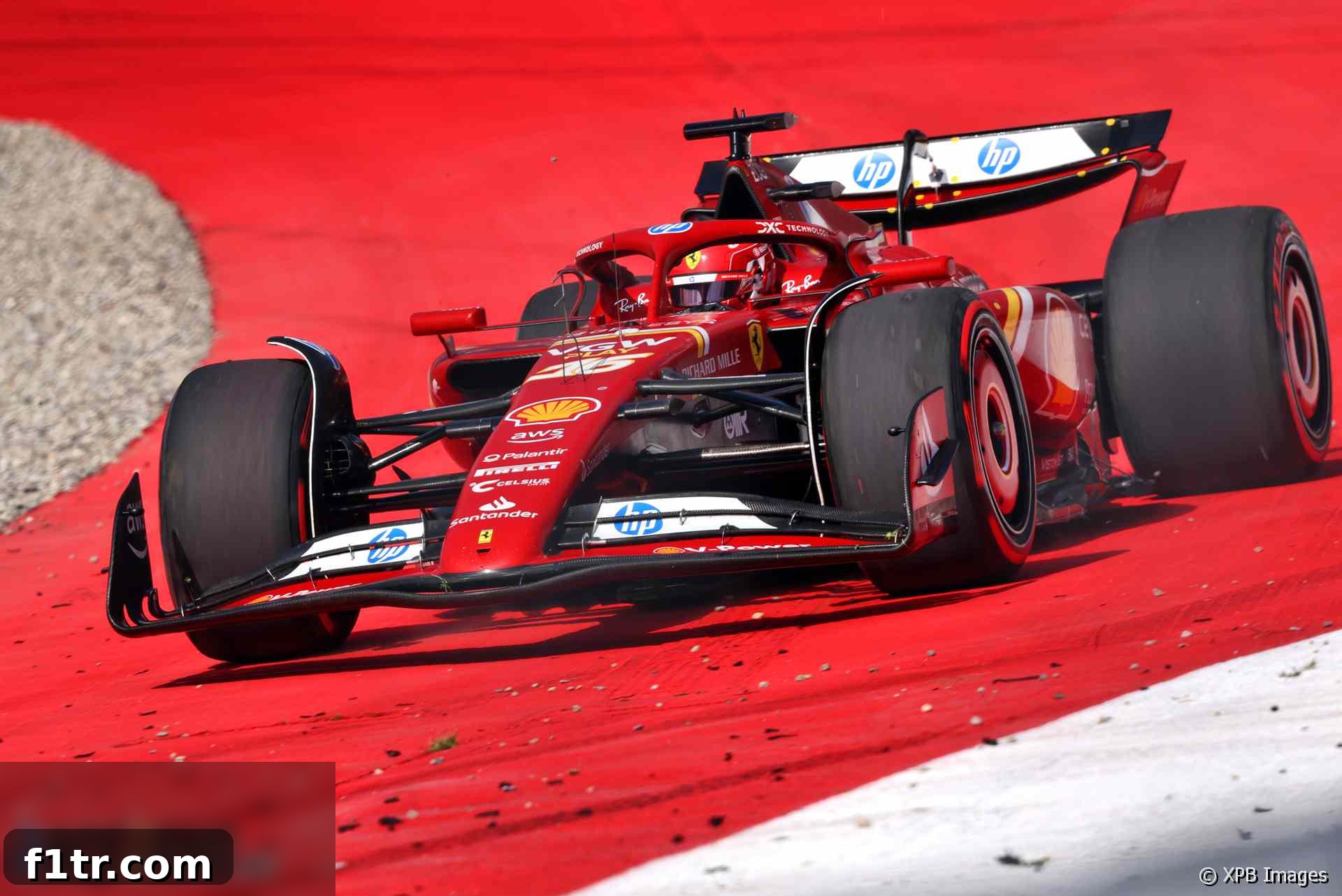
Charles Leclerc Reflects on Missed Austrian GP Qualifying Opportunity, Eyes Race Redemption
Ferrari star Charles Leclerc candidly admitted his frustration following a series of critical errors during his final qualifying lap for the Austrian Grand Prix. While acknowledging that starting from seventh place was “not a disaster,” the Monegasque driver lamented the missed opportunity to secure a much stronger grid position, believing a top-three start was within reach.
The high-stakes world of Formula 1 qualifying often hinges on fractions of a second and absolute precision. Leclerc’s final run on the Red Bull Ring’s challenging layout was a testament to this, as promising early sectors gave way to costly mistakes. His self-critical assessment highlighted the fine line between pushing the limits for pole position and overstepping them.
A Candid Self-Assessment: Errors Under Pressure at the Red Bull Ring
Leclerc openly took responsibility for three distinct errors that marred his final qualifying attempt. “It’s frustrating because whenever you know you have the potential to do well and you do a mistake yourself, it always hurts,” he told the official F1 channel. His initial pace suggested a formidable run, with the first and third turns completed “really, really good,” putting him two tenths faster than his previous best lap.
However, the momentum shifted dramatically at Turn 4. A slight misjudgment there initiated a chain reaction. In an attempt to recover the lost time, Leclerc pushed even harder in subsequent corners, leading to further missteps. “Then I did a mistake in turn four. I tried even more to catch back some time in turn six and lost it. I tried the same in turn nine and lost it. It’s life,” he explained, painting a clear picture of a driver grappling with the consequences of his own aggressive pursuit of perfection.
This aggressive approach, while often yielding spectacular results, carries inherent risks. Leclerc acknowledged this duality, stating, “I think it paid off more than it hurt this year, by pushing that way in qualifying. Today it bit me.” This philosophy underscores a racer’s instinct to extract every ounce of performance, even if it means occasionally overstepping the mark. The Red Bull Ring, with its undulating profile and high-speed corners, demands absolute precision, leaving little room for error when pushing the car to its absolute limits.
Navigating Setbacks: From Power Unit Glitches to Grid Penalties
The qualifying disappointment marked Leclerc’s second significant setback of the Austrian Grand Prix weekend. Just a day prior, he was unable to set a competitive time in the final round of qualifying for the sprint race due to an unfortunate problem with his power unit. This technical glitch forced him to start the sprint from further down the grid, adding to the growing pressure on both the driver and the Ferrari team.
While qualifying seventh for the main Grand Prix might not seem disastrous in isolation, it’s a stark reminder of the challenges Ferrari has faced in recent races. “Obviously I’m a bit disappointed, especially because with the team we had two or three races where we had a tough time and I feel like today was an opportunity to be back in the top three,” Leclerc commented. The combined effect of mechanical issues and personal errors highlights a period where Ferrari has struggled to consistently convert potential into optimal results. Such consecutive setbacks can inevitably test a team’s resolve and a driver’s mental fortitude, but Leclerc’s focus remains firmly on the main event.
Ferrari’s Strategic Shift: Optimism for Grand Prix Pace
Despite the grid position, there’s a tangible sense of optimism emanating from the Ferrari camp regarding their prospects for the Grand Prix. After climbing three places during the sprint race to finish seventh, Leclerc believes the team is in a better position for the longer race distance. This confidence stems from strategic setup changes made following the sprint, indicating a proactive approach to addressing previous weaknesses.
“It’s looking better than what it looked [like] this morning because we are in a different configuration that should help a little bit more the race pace tomorrow,” he revealed. While specific details of this “different configuration” were not disclosed, it typically refers to adjustments in aerodynamics, suspension, or engine mapping designed to optimize tyre degradation and fuel efficiency over extended stints. The sprint race provided invaluable data, allowing Ferrari engineers to fine-tune the F1-75 for the demands of the Grand Prix, where consistent pace and tyre management are paramount. The ability to learn and adapt quickly from the sprint format is a crucial skill in modern F1, and Ferrari seems to be banking on their ability to execute this.
The Frontrunners and the Challengers: A Battle for the Podium
While hopeful for an improved race performance, Leclerc remains realistic about the formidable challenge posed by the front row starters, Max Verstappen and Lando Norris. Both drivers showcased exceptional pace throughout the weekend, leaving little doubt about their dominance. “I think Lando and Max is not going to be possible tomorrow, they are too fast this weekend,” he conceded, acknowledging the superior performance of the Red Bull and McLaren machines at the Red Bull Ring.
Verstappen’s mastery of his home track combined with the Red Bull RB20’s inherent strengths makes him a clear favourite, while Norris’s stellar qualifying highlights McLaren’s impressive resurgence. For Leclerc, the immediate battle will likely involve holding off the likes of Oscar Piastri, who starts just behind him. “I think Oscar [Piastri] behind is going to be tricky. But he’s starting behind, so maybe we can keep that position,” Leclerc commented, anticipating a fierce fight with the promising Australian rookie.
Furthermore, Leclerc sees an opportunity to compete directly with the Mercedes cars, which have been “close all weekend.” This suggests that while Mercedes might not have the outright pace to challenge for the very front, they are within striking distance of Ferrari. “With the Mercedes we’ve been close all weekend, but I feel like we do everything perfect, we can beat them,” he asserted. This statement hints at a potential strategic battle with the silver arrows, where flawless execution and intelligent race management could be the deciding factors for securing vital championship points.
The Road Ahead: Leclerc’s Determination and Ferrari’s Resolve
Despite the disappointment of qualifying, Charles Leclerc’s focus is squarely on the Austrian Grand Prix itself. His self-critical analysis demonstrates a mature understanding of his performance, while his underlying optimism about Ferrari’s race pace provides a glimmer of hope for redemption. The Red Bull Ring is renowned for producing exciting and unpredictable races, and a lower starting position for a driver of Leclerc’s calibre often leads to thrilling charges through the field.
The challenge is clear: overcome the grid deficit, manage tyre degradation effectively, and execute a flawless strategy against some of the strongest competitors on the grid. For Ferrari, this race presents a crucial opportunity to demonstrate their adaptability and fighting spirit, especially after a period of mixed fortunes. All eyes will be on Leclerc as he aims to convert his improved race configuration into a significant points haul, proving that while qualifying had its frustrations, the Grand Prix is where true championship mettle is forged.
Key Takeaways from the 2024 Austrian Grand Prix Weekend
The Austrian Grand Prix weekend at the Red Bull Ring offered numerous storylines and crucial insights into the evolving pecking order of the 2024 Formula 1 season. From intense qualifying sessions to strategic battles in the sprint race, several themes emerged:
- **Competitive Dynamics at the Front:** The ongoing rivalry between Max Verstappen and Lando Norris continues to intensify, showcasing a thrilling battle for supremacy.
- **Ferrari’s Quest for Consistency:** Charles Leclerc’s performance highlighted Ferrari’s struggle to consistently deliver optimal results in both qualifying and race trim, despite glimpses of strong potential.
- **McLaren’s Continued Ascent:** McLaren’s robust performance solidified their position as a formidable force, consistently challenging the established front-runners.
- **Tyre Management and Strategy:** The unique characteristics of the Red Bull Ring placed a significant emphasis on tyre degradation and strategic pit-stop timing, influencing race outcomes.
- **Midfield Intensity:** The tight competition among teams like Mercedes, Aston Martin, and Alpine underscores the depth of talent and machinery across the grid, promising captivating battles.
These elements combine to set the stage for a compelling Grand Prix, where every decision and every lap could dramatically alter the final standings.