2019 Brazilian Grand Prix: A Thrilling Display of Strategy and Underdog Triumphs
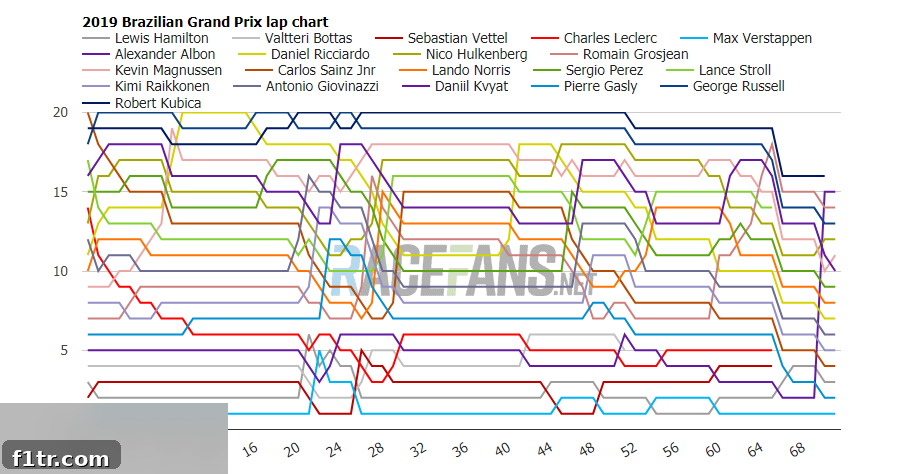
The 2019 Brazilian Grand Prix at Interlagos delivered an unforgettable spectacle of Formula 1 racing, marked by audacious strategies, dramatic overtakes, and unexpected heroes. Unlike many races where a dominant strategy emerges, the podium finishers in Brazil each adopted wildly different approaches to tire management and pit stops, underscoring the unpredictable nature of the sport and the tactical brilliance required to succeed. While Max Verstappen, the eventual winner, executed a three-stop strategy, the unlikeliest of podium sitters, Pierre Gasly and Carlos Sainz Jr., made two and a single pit stop respectively, each carving out their path to glory amidst the chaos.
Carlos Sainz Jr.’s Remarkable Comeback: From Last to Podium
Perhaps the most astonishing performance of the race came from McLaren’s Carlos Sainz Jr. Starting from the very back of the grid in 20th position due to an engine issue in qualifying, Sainz embarked on a monumental climb through the field. His tenacity and the team’s brave strategy saw him gain an incredible 17 places by the checkered flag, marking the second-biggest climb by any driver that year, trailing only Sebastian Vettel’s 18-place ascent at the German Grand Prix. This was not just a testament to his driving skill, but also to a high-risk, high-reward strategy that paid off handsomely.
As track temperatures rose on race day, there was considerable uncertainty regarding the feasibility of a one-stop strategy. While most drivers opted for multiple stops, Sainz, given his starting position, had a clear incentive to try something different to cut through traffic and maximize track position. He commenced his race on soft C3 tires, managing them for an impressive 29 laps before switching to the hard C2 compound for the remaining 42 laps. This single-stop gamble was fraught with peril, as several other competitors, including his teammate Lando Norris and Valtteri Bottas, struggled significantly to make the hard tires work effectively. However, Sainz’s exceptional tire management and consistent pace allowed him to not only survive but thrive on this challenging compound, carving his way through the pack with precision and determination.
The drama continued until the very end. Sainz initially crossed the finish line in a commendable fourth place. However, the post-race stewards’ decision to impose a five-second time penalty on Lewis Hamilton for colliding with Alexander Albon elevated Sainz to third, securing his maiden Formula 1 podium. This historic achievement for Sainz and McLaren marked a significant milestone, highlighting the team’s resurgence and the Spaniard’s undeniable talent.
Pierre Gasly’s Breakthrough: Capitalizing on Chaos
Sharing the podium with the established front-runners and Sainz’s incredible journey was another unexpected hero: Pierre Gasly. After a challenging season that saw him demoted from Red Bull Racing to Toro Rosso, Gasly delivered a stellar performance that firmly re-established his reputation as a top-tier talent. While Sainz battled from the rear, Gasly maintained a strong presence at the sharp end of the midfield throughout the race, expertly navigating the treacherous conditions and late-race incidents.
Gasly adopted a much more conventional two-stop strategy, starting on the soft C3 compound for 22 laps, transitioning to medium C2 tires for a 25-lap middle stint, and then switching back to soft C3s for the final 24 laps. This balanced approach allowed him to maintain strong pace and react to the unfolding events. The closing stages of the race were defined by a series of dramatic incidents, including a collision between the Ferrari drivers Sebastian Vettel and Charles Leclerc, and the aforementioned contact between Hamilton and Albon. Gasly, demonstrating exceptional composure and opportunistic driving, masterfully capitalized on this chaos unfolding in front of him.
The climax of Gasly’s race was a thrilling, side-by-side sprint to the finish line with Lewis Hamilton. In a nail-biting drag race, Gasly held his nerve to cross the line just six-hundredths of a second ahead of the reigning world champion. Although Hamilton’s subsequent penalty made this specific duel moot in terms of final positions, it underscored Gasly’s incredible raw speed and fighting spirit. His second-place finish was a monumental result for Toro Rosso and a personal triumph for Gasly, validating his efforts and resilience throughout a demanding year.
Max Verstappen’s Controlled Victory and Strategic Flexibility
At the forefront of the race, Max Verstappen clinched a dominant victory, showcasing Red Bull’s strategic prowess and his own exceptional driving. Verstappen’s race was characterized by a more aggressive three-stop strategy, beginning on C3 softs for 21 laps, then another set of C3 softs for 23 laps, followed by C2 hard tires for 10 laps, and finally a sprint to the finish on C3 softs for the last 17 laps. This allowed him to consistently run on fresh, faster tires, particularly after safety car periods that played into his hands, enabling him to maintain control of the race despite the fierce competition.
The strategic diversity across the podium finishers — Verstappen’s three stops, Gasly’s two stops, and Sainz’s single stop — perfectly encapsulated the dynamic nature of the 2019 Brazilian Grand Prix. Each strategy was a response to varying grid positions, car performance, and track conditions, proving that there’s often more than one way to win or achieve a podium in Formula 1.
Beyond the Podium: Fastest Laps and Position Changes
While the podium captured much of the attention, other notable performances and statistics added to the race’s narrative. Valtteri Bottas, despite retiring from the race, managed to set the fastest lap with a 1’10.698 on lap 43. However, since he did not finish in the top 10, he was ineligible for the bonus point associated with the fastest lap, a rule that often adds an interesting strategic dimension.
The race saw considerable movement throughout the field, a testament to the circuit’s overtaking opportunities and the challenging conditions. Analyzing the position changes reveals fascinating insights:
| Driver | Start position | Lap one position change | Race position change |
|---|---|---|---|
| Lewis Hamilton | 3 | 1 | -4 |
| Valtteri Bottas | 4 | 0 | |
| Sebastian Vettel | 2 | -1 | -15 |
| Charles Leclerc | 14 | 3 | -4 |
| Max Verstappen | 1 | 0 | 0 |
| Alexander Albon | 5 | 0 | -9 |
| Daniel Ricciardo | 11 | -2 | 5 |
| Nico Hulkenberg | 13 | -3 | -2 |
| Romain Grosjean | 7 | 0 | -6 |
| Kevin Magnussen | 9 | 0 | -2 |
| Carlos Sainz Jnr | 20 | 2 | 17 |
| Lando Norris | 10 | -2 | 2 |
| Sergio Perez | 15 | 0 | 6 |
| Lance Stroll | 17 | 3 | -2 |
| Kimi Raikkonen | 8 | 0 | 4 |
| Antonio Giovinazzi | 12 | 2 | 7 |
| Daniil Kvyat | 16 | -1 | 6 |
| Pierre Gasly | 6 | 0 | 4 |
| George Russell | 18 | -2 | 6 |
| Robert Kubica | 19 | 0 | 3 |
While Sainz’s 17-place gain was outstanding, drivers like Antonio Giovinazzi (+7), Sergio Perez (+6), Daniil Kvyat (+6), and George Russell (+6) also showed significant progress. Conversely, the Ferrari duo of Vettel (-15) and Leclerc (-4 after starting 14th) experienced significant setbacks, largely due to their late-race collision. Albon also suffered a 9-place drop from his starting position after the incident with Hamilton, highlighting how quickly fortunes can change in Formula 1.
Tyre Strategies and Pit Stop Efficiency
The diverse tire strategies employed by the teams were a critical factor in the outcome of the race. The interplay between the softer (C3), medium (C2), and harder (C1) compounds, coupled with rising track temperatures, forced teams to make split-second decisions:
| Stint 1 | Stint 2 | Stint 3 | Stint 4 | Stint 5 | |
|---|---|---|---|---|---|
| Max Verstappen | C3 (21) | C3 (23) | C2 (10) | C3 (17) | |
| Pierre Gasly | C3 (22) | C2 (25) | C3 (24) | ||
| Carlos Sainz Jnr | C3 (29) | C2 (42) | |||
| Kimi Raikkonen | C3 (21) | C2 (26) | C3 (24) | ||
| Antonio Giovinazzi | C3 (20) | C2 (26) | C3 (25) | ||
| Daniel Ricciardo | C2 (8) | C3 (32) | C3 (31) | ||
| Lewis Hamilton | C3 (20) | C3 (23) | C2 (23) | C3 (5) | |
| Lando Norris | C3 (27) | C1 (26) | C2 (18) | ||
| Sergio Perez | C3 (17) | C2 (28) | C3 (26) | ||
| Daniil Kvyat | C2 (23) | C3 (23) | C3 (25) | ||
| Kevin Magnussen | C3 (27) | C2 (26) | C3 (18) | ||
| George Russell | C2 (23) | C2 (31) | C3 (12) | C3 (5) | |
| Romain Grosjean | C3 (26) | C2 (39) | C3 (6) | ||
| Alexander Albon | C3 (24) | C2 (26) | C3 (21) | ||
| Nico Hulkenberg | C2 (27) | C1 (17) | C3 (9) | C3 (18) | |
| Robert Kubica | C2 (20) | C2 (16) | C1 (17) | C3 (13) | C3 (4) |
| Sebastian Vettel | C3 (25) | C2 (24) | C3 (16) | ||
| Charles Leclerc | C2 (29) | C1 (25) | C3 (11) | ||
| Lance Stroll | C3 (28) | C2 (25) | C3 (12) | ||
| Valtteri Bottas | C3 (26) | C1 (15) | C2 (10) |
The table reveals a wide array of strategies, with some drivers like Robert Kubica even attempting five stints. Pit stop times were equally crucial, as even fractions of a second could make a difference in such a competitive race. Red Bull and Mercedes consistently delivered quick pit stops, as evidenced by Verstappen’s rapid stops (e.g., 22.593s, 22.657s, 22.818s), which were vital for maintaining track position.
The 2019 Brazilian Grand Prix will long be remembered as a race that defied expectations, celebrated strategic gambles, and crowned unexpected heroes. It was a perfect blend of high-speed action, tactical brilliance, and dramatic twists, solidifying its place as one of the most exciting races of the 2019 Formula 1 season.
2019 Brazilian Grand Prix Fastest Laps
Each driver’s fastest lap underscores their raw pace at different points in the race:
| Rank | Driver | Car | Fastest lap | Gap | On lap |
|---|---|---|---|---|---|
| 1 | Valtteri Bottas | Mercedes | 1’10.698 | 43 | |
| 2 | Max Verstappen | Red Bull-Honda | 1’10.862 | 0.164 | 61 |
| 3 | Lewis Hamilton | Mercedes | 1’11.082 | 0.384 | 46 |
| 4 | Alexander Albon | Red Bull-Honda | 1’11.087 | 0.389 | 52 |
| 5 | Sebastian Vettel | Ferrari | 1’11.384 | 0.686 | 51 |
| 6 | Charles Leclerc | Ferrari | 1’11.423 | 0.725 | 63 | 7 | Lando Norris | McLaren-Renault | 1’12.328 | 1.630 | 63 |
| 8 | Daniil Kvyat | Toro Rosso-Honda | 1’12.385 | 1.687 | 49 |
| 9 | Pierre Gasly | Toro Rosso-Honda | 1’12.425 | 1.727 | 65 |
| 10 | Lance Stroll | Racing Point-Mercedes | 1’12.603 | 1.905 | 65 |
| 11 | Daniel Ricciardo | Renault | 1’12.733 | 2.035 | 44 |
| 12 | Sergio Perez | Racing Point-Mercedes | 1’12.840 | 2.142 | 64 |
| 13 | Nico Hulkenberg | Renault | 1’12.934 | 2.236 | 64 |
| 14 | Antonio Giovinazzi | Alfa Romeo-Ferrari | 1’13.020 | 2.322 | 49 |
| 15 | Kimi Raikkonen | Alfa Romeo-Ferrari | 1’13.135 | 2.437 | 65 |
| 16 | Carlos Sainz Jnr | McLaren-Renault | 1’13.158 | 2.460 | 63 |
| 17 | Kevin Magnussen | Haas-Ferrari | 1’13.262 | 2.564 | 65 |
| 18 | Romain Grosjean | Haas-Ferrari | 1’13.619 | 2.921 | 29 |
| 19 | George Russell | Williams-Mercedes | 1’13.752 | 3.054 | 57 |
| 20 | Robert Kubica | Williams-Mercedes | 1’14.553 | 3.855 | 63 |
2019 Brazilian Grand Prix Pit Stop Times
Efficiency in the pit lane is paramount. Here are the fastest pit stop times recorded during the race:
| Driver | Team | Pit stop time | Gap | On lap | |
| 1 | George Russell | Williams | 22.441 | 66 | |
| 2 | George Russell | Williams | 22.500 | 0.059 | 23 |
| 3 | Max Verstappen | Red Bull | 22.593 | 0.152 | 54 |
| 4 | Max Verstappen | Red Bull | 22.657 | 0.216 | 44 |
| 5 | Nico Hulkenberg | Renault | 22.747 | 0.306 | 53 |
| 6 | Daniil Kvyat | Toro Rosso | 22.759 | 0.318 | 23 |
| 7 | Carlos Sainz Jnr | McLaren | 22.770 | 0.329 | 29 |
| 8 | Max Verstappen | Red Bull | 22.818 | 0.377 | 21 |
| 9 | Lewis Hamilton | Mercedes | 22.882 | 0.441 | 20 |
| 10 | Pierre Gasly | Toro Rosso | 22.922 | 0.481 | 22 |
| 11 | Charles Leclerc | Ferrari | 22.966 | 0.525 | 29 |
| 12 | Sebastian Vettel | Ferrari | 23.039 | 0.598 | 25 |
| 13 | Charles Leclerc | Ferrari | 23.042 | 0.601 | 54 |
| 14 | Lewis Hamilton | Mercedes | 23.060 | 0.619 | 66 |
| 15 | Alexander Albon | Red Bull | 23.071 | 0.630 | 50 |
| 16 | Alexander Albon | Red Bull | 23.073 | 0.632 | 24 |
| 17 | Sergio Perez | Racing Point | 23.079 | 0.638 | 17 |
| 18 | Lewis Hamilton | Mercedes | 23.088 | 0.647 | 43 |
| 19 | Sebastian Vettel | Ferrari | 23.138 | 0.697 | 49 |
| 20 | Sergio Perez | Racing Point | 23.142 | 0.701 | 45 |
| 21 | Valtteri Bottas | Mercedes | 23.148 | 0.707 | 26 |
| 22 | Antonio Giovinazzi | Alfa Romeo | 23.155 | 0.714 | 20 |
| 23 | Robert Kubica | Williams | 23.158 | 0.717 | 66 |
| 24 | George Russell | Williams | 23.199 | 0.758 | 54 |
| 25 | Valtteri Bottas | Mercedes | 23.210 | 0.769 | 41 |
| 26 | Nico Hulkenberg | Renault | 23.344 | 0.903 | 27 |
| 27 | Lance Stroll | Racing Point | 23.346 | 0.905 | 28 |
| 28 | Lando Norris | McLaren | 23.355 | 0.914 | 53 |
| 29 | Daniil Kvyat | Toro Rosso | 23.378 | 0.937 | 46 |
| 30 | Lando Norris | McLaren | 23.381 | 0.940 | 27 |
| 31 | Kimi Raikkonen | Alfa Romeo | 23.463 | 1.022 | 21 |
| 32 | Romain Grosjean | Haas | 23.471 | 1.030 | 65 |
| 33 | Kevin Magnussen | Haas | 23.479 | 1.038 | 53 |
| 34 | Antonio Giovinazzi | Alfa Romeo | 23.524 | 1.083 | 46 |
| 35 | Pierre Gasly | Toro Rosso | 23.584 | 1.143 | 47 |
| 36 | Nico Hulkenberg | Renault | 23.596 | 1.155 | 44 |
| 37 | Romain Grosjean | Haas | 23.776 | 1.335 | 26 |
| 38 | Kimi Raikkonen | Alfa Romeo | 23.841 | 1.400 | 47 |
| 39 | Robert Kubica | Williams | 23.861 | 1.420 | 20 |
| 40 | Kevin Magnussen | Haas | 23.891 | 1.450 | 27 |
| 41 | Lance Stroll | Racing Point | 24.841 | 2.400 | 53 |
| 42 | Robert Kubica | Williams | 24.873 | 2.432 | 53 |
| 43 | Robert Kubica | Williams | 29.268 | 6.827 | 36 |
| 44 | Daniel Ricciardo | Renault | 29.491 | 7.050 | 40 |
| 45 | Daniel Ricciardo | Renault | 30.760 | 8.319 | 8 |
Related Articles and Analysis from the 2019 Brazilian Grand Prix
For more in-depth coverage and analysis of this memorable race, explore the following:
- Binotto held talks with Vettel and Leclerc over ‘unacceptable’ Brazil crash
- Bottas: Red Bull quicker than Mercedes on the straights now
- Russell will miss “funny, knowledgeable” Kubica
- 2019 Brazilian Grand Prix Star Performers
- Gasly thriving away from “pressure” of Red Bull – Horner
Browse all 2019 Brazilian Grand Prix articles