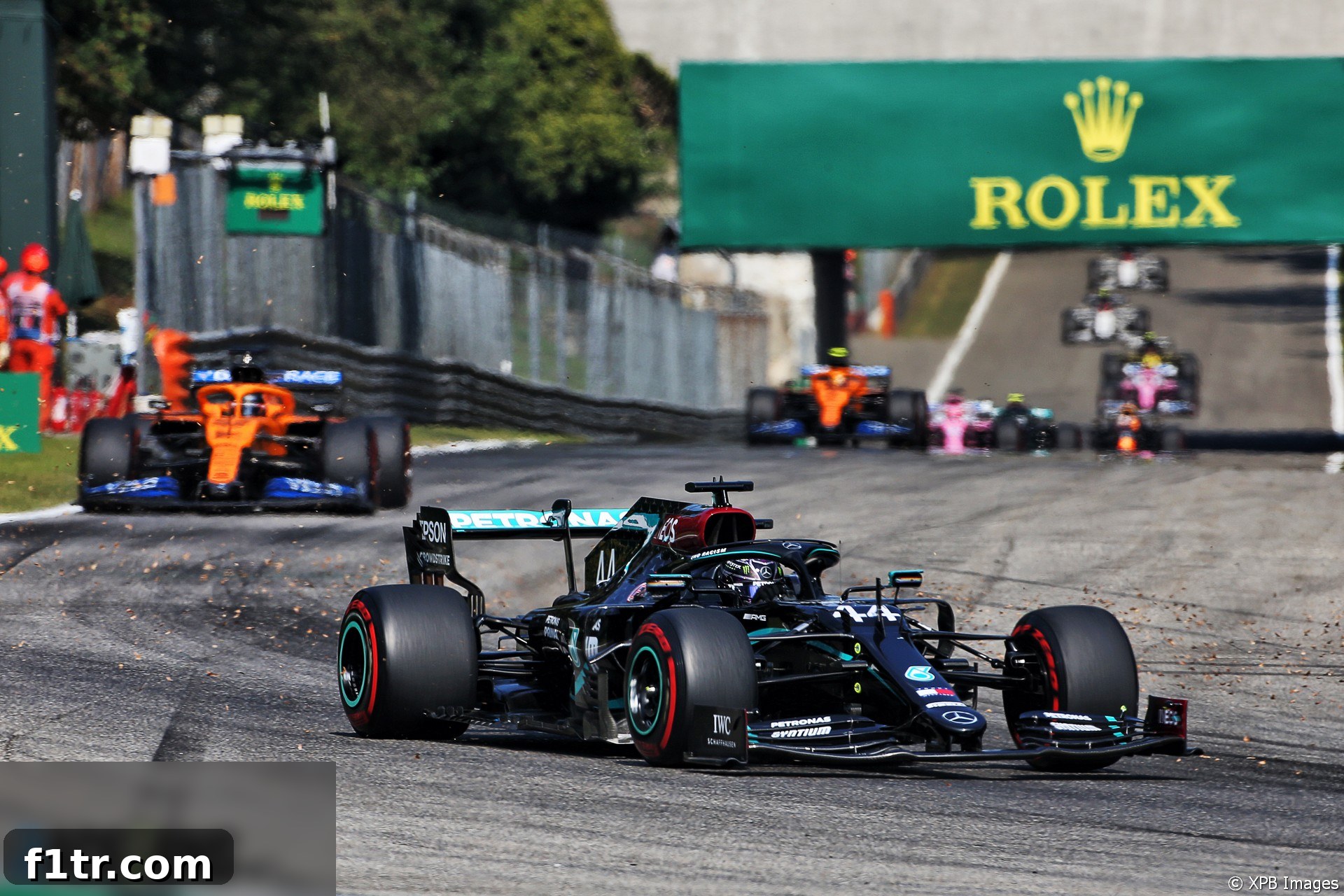
Lewis Hamilton, the dominant force in modern Formula 1, openly accepted full responsibility for the critical error that led to a significant 10-second stop-go penalty during the thrilling 2020 Italian Grand Prix. The incident, which saw the Mercedes driver enter the pit lane when it was officially closed under a Safety Car period, proved to be the defining moment of his race at Monza, turning a potential victory into a challenging fightback.
Monza Misstep: A Champion’s Rare Lapse
The 2020 Italian Grand Prix was already shaping up to be an unpredictable affair, but few could have anticipated the dramatic turn of events that impacted championship leader Lewis Hamilton. During a Safety Car deployment, triggered by Kevin Magnussen’s retirement from the race, race control activated the “pit lane closed” protocol. This crucial safety measure is a standard procedure designed to prevent teams from gaining an unfair advantage or creating hazardous situations when debris needs to be cleared or a car recovered from the track.
Unfortunately for Hamilton and the Mercedes-AMG Petronas F1 Team, he proceeded to enter the pit lane, unknowingly violating the regulation. Post-race, a remarkably candid Hamilton admitted his oversight, taking full accountability for the mistake. “Honestly I didn’t see those boards, so I take responsibility for that, so it’s something that we’ll learn from,” he stated. This direct acknowledgment highlights a rare human error from a driver renowned for his meticulous preparation, unparalleled situational awareness, and razor-sharp focus on track. The large, illuminated signs at the pit entry are typically unmissable, making Hamilton’s lapse an uncharacteristic and surprising incident for a driver of his caliber.
The Formula 1 sporting regulations are explicit regarding pit lane closures: any car entering when the pit lane is closed incurs a severe penalty, most commonly a 10-second stop-go. This means the driver must enter the pit lane, bring their car to a complete stop in their pit box for ten seconds, and then rejoin the race. It’s one of the harshest in-race penalties, designed to significantly deter violations, and it invariably leads to a substantial loss of track position and potential race points. For Hamilton, who was comfortably leading the race at the time, this error meant plummeting down the order and facing an immense uphill battle to salvage his race.
The Costly Penalty and a Champion’s Unyielding Resilience
The imposition of the 10-second stop-go penalty fundamentally reshaped Lewis Hamilton’s Italian Grand Prix. From a dominant lead, he rejoined the race in a distant 19th position, a staggering 26 seconds behind the last car on track. For almost any other driver, such a severe setback might have signaled the end of any meaningful points finish, let alone a shot at redemption. However, Hamilton, a multiple world champion, is defined by his unwavering determination, exceptional mental strength, and unparalleled ability to extract every ounce of performance from his machinery and himself.
What followed was a masterclass in recovery driving, a testament to why Hamilton is considered one of the greatest of all time. Despite the frustration of the earlier mistake, Hamilton channeled his focus into an incredible charge through the field. He meticulously carved his way past competitors, demonstrating a potent combination of superior pace, calculated overtakes, and strategic tire management. His relentless pursuit was a vivid display of his extraordinary skill and the raw speed of the Mercedes W11. Every lap saw him gain ground, steadily reeling in those ahead and making up for lost time with remarkable efficiency.
Ultimately, Hamilton managed to climb an impressive 12 positions, crossing the finish line in a commendable seventh place. Adding to his extraordinary recovery, he also secured the bonus point for setting the fastest lap of the race – a clear indicator of his blistering pace once freed from traffic and fully committed to his mission. This spectacular recovery drive not only salvaged crucial championship points but also sent a powerful message about his mental fortitude and championship mindset, proving that even a costly error couldn’t derail his spirit entirely.
Reflecting on his fightback, Hamilton expressed a mixture of surprise and profound satisfaction: “To get seventh and to get fastest lap and still get some good points, I definitely didn’t think that was possible from 26 seconds behind the last car so I’ll definitely take it.” His ability to turn a near-disastrous situation into a respectable points haul underscored his unparalleled talent and resilience, traits that have consistently defined his illustrious career.
Championship Landscape: Minimizing the Damage
While the Monza penalty was undoubtedly a blow and a rare blot on Lewis Hamilton’s impressive record, its overall impact on the Drivers’ Championship standings was significantly mitigated by external factors – a fortunate turn of events that Hamilton himself acknowledged. His closest rival within his own team, Valtteri Bottas, finished two places ahead of him in fifth, meaning he gained some points. However, more critically for the championship battle, Red Bull Racing’s Max Verstappen, widely considered the primary long-term threat to Hamilton’s title aspirations, retired from the race due to an engine issue.
Hamilton’s immediate post-race reaction highlighted this crucial silver lining: “And grateful obviously Max [Verstappen] didn’t score any points. So not a huge loss today.” This unexpected turn of events meant that despite his penalty and Bottas outscoring him, Hamilton’s substantial lead in the championship standings remained largely intact. The opportunity for his main rivals to significantly close the gap was lost, allowing Hamilton to absorb the penalty with minimal long-term damage to his championship campaign. It reinforced the old adage that in the cutthroat world of Formula 1, sometimes minimizing losses is as critically important as maximizing wins.
A Star is Born: Hamilton Congratulates Pierre Gasly
Beyond his own race drama and recovery, Lewis Hamilton demonstrated remarkable sportsmanship by taking a moment to warmly congratulate Pierre Gasly on his sensational and utterly unexpected maiden Formula 1 victory for AlphaTauri. Gasly’s triumph at Monza was more than just a win; it was a bona fide fairytale, marking the first time a non-Mercedes, Ferrari, or Red Bull driver had won a Grand Prix since 2012, and the first for the AlphaTauri (formerly Toro Rosso) team since Sebastian Vettel’s legendary victory at the very same circuit in 2008.
Hamilton, known for his respect for competitors, spoke highly of Gasly’s remarkable journey through the sport: “That’s a huge result for him. I’ve obviously seen what he’s been through from being dropped from the top team and now he’s beaten the top team. I think it’s just fantastic to see him recover and see him grow. I am genuinely really happy for him.” These words carried significant weight, coming from a champion who profoundly understands the immense pressures, challenges, and emotional highs and lows inherent in Formula 1.
Gasly’s career trajectory had been a significant rollercoaster. After a challenging and ultimately unsuccessful stint at Red Bull Racing in early 2019, which saw him demoted back to Toro Rosso (now AlphaTauri), many questioned his future at the pinnacle of motorsport. However, he diligently rebuilt his confidence and performance, consistently delivering strong results for the junior team. His victory at Monza was the ultimate vindication, a testament to his extraordinary resilience, unwavering hard work, and steadfast refusal to give up. It was a victory that resonated deeply within the F1 paddock and among fans worldwide, highlighting that with perseverance, determination, and a positive mindset, dreams can indeed come true, even in the highly competitive and often brutal world of Formula 1.
Lessons from Monza: Strength Through Adversity
The 2020 Italian Grand Prix will undoubtedly be remembered as one of the most unpredictable, captivating, and emotionally charged races of the season. For Lewis Hamilton, it was a day of stark contrasts – a rare and costly mistake followed by an extraordinary display of driving prowess and mental resilience. His philosophical outlook on the day’s events perfectly encapsulated his character and championship spirit: “My race wasn’t meant to be today. It was a bit unfortunate. But what doesn’t kill you only makes you stronger.”
This sentiment perfectly encapsulates the profound lessons learned at Monza. For Hamilton, it served as a powerful reminder that even the greatest can make errors, but true champions respond to adversity with unmatched resilience, unwavering commitment, and an unshakeable belief in their abilities. For Pierre Gasly, it was a profound illustration of how setbacks and demotions can be transformed into the greatest triumphs through sheer determination and an unwavering focus on self-improvement. The race as a whole served as a vibrant and compelling advertisement for Formula 1, showcasing its inherent capacity for high drama, unexpected outcomes, and the enduring human spirit of its remarkable competitors.
Ultimately, while the penalty was a bitter pill for Hamilton to swallow, his robust recovery drive and philosophical acceptance of the situation, coupled with the sheer joy of seeing a worthy underdog achieve a glorious victory, made the Italian Grand Prix a truly memorable chapter in the 2020 F1 season. It underscored that even on days where victory seems out of reach, a champion’s spirit can still shine brightly, turning adversity into a platform for demonstrating true strength and an indomitable will to succeed.
Related Articles from the 2020 Italian Grand Prix:
- Grosjean “obviously jealous” but pleased for Gasly after win
- 2020 Italian Grand Prix Star Performers
- Gasly: I’m ready for Red Bull return
- Ban on ‘quali mode’ reduced overtaking at Monza – Hamilton
- Gasly beats Sainz in closest F1 finish for 10 years
Browse all 2020 Italian Grand Prix articles