The Fiery Aftermath: Romain Grosjean’s Bahrain Crash and Formula 1’s Enduring Safety Lessons
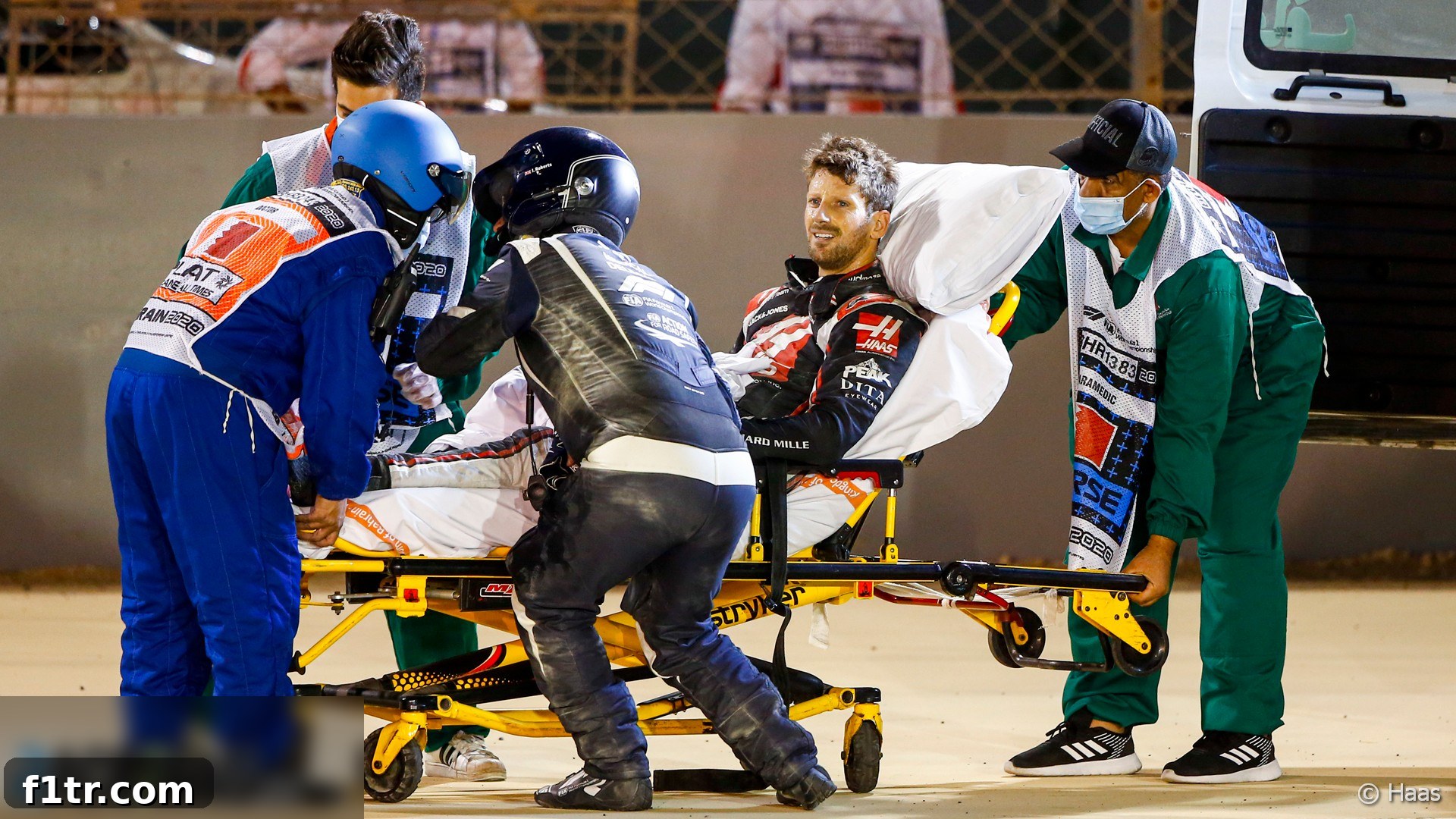
The 2020 Bahrain Grand Prix will forever be etched in the annals of Formula 1 history, not for a championship battle or a dramatic overtake, but for a terrifying incident that transcended the sport and gripped the world. On the opening lap, Haas driver Romain Grosjean’s car veered off track, collided with a guardrail, and erupted into a ferocious fireball. What followed was a harrowing 28-second struggle for survival against unimaginable odds, ending in a miraculous escape that left him with only burns, but profoundly shaken.
Almost immediately, the conversation shifted from the horror of the crash to the triumph of modern Formula 1 safety. Grosjean’s survival became a testament to decades of relentless safety innovation. Yet, as Grosjean himself has pointed out, there are still critical lessons to be learned from this extraordinary event, particularly regarding the complex dynamics of high-impact forces on the human body and the “grey areas” that continue to challenge engineers and safety experts.
The Brutality of the Impact: A Closer Look at the Bahrain Incident
The incident itself was a chilling spectacle. On the first lap, following contact with Daniil Kvyat’s AlphaTauri, Grosjean’s Haas veered sharply right, impacting a flimsy guardrail at an estimated speed of 220 km/h (137 mph). The force of the collision was staggering, registering over 53G – an impact severe enough to exert 53 times the force of gravity on the driver’s body. The car’s chassis was ripped in two, and crucially, the compromised guardrail allowed the car to punch through, lodging itself within the barrier. Instantly, a massive inferno erupted, engulfing the front half of the car and Grosjean within.
For anyone watching, live or on replay, the scene was apocalyptic. The sight of a car splitting and bursting into flames, with a driver seemingly trapped inside, evoked memories of a more dangerous era of motorsport. The immediate aftermath was filled with dread and fear for Grosjean’s life. His ability to free himself and emerge from the blaze, seemingly by sheer will and an incredible stroke of luck, transformed the narrative from potential tragedy to an unparalleled story of survival.
Grosjean’s Unwavering Consciousness: A Crucial Anomaly
One of the most profound takeaways from Grosjean’s experience, and a key point he has repeatedly emphasized, is his remarkable ability to remain conscious throughout the entire ordeal. In his own words, concerning the approximate 60G impact he endured, he believed that “You should lose consciousness, even for a few seconds.” The physiological response to such extreme deceleration forces typically involves temporary loss of consciousness, even if only for a brief period. Yet, Grosjean remained acutely aware, his mind processing the unfolding catastrophe and formulating an escape plan.
This sustained awareness proved to be absolutely crucial for his survival. Had he lost consciousness, even for a few precious seconds, his chances of self-extrication from the burning wreckage would have diminished significantly. His ability to unbuckle himself, locate an escape route, and push through the intense flames and debris was directly linked to his cognitive faculties remaining intact. This unique aspect of his survival raises critical questions for safety researchers. What specific factors contributed to him staying conscious? Was it the precise angle of impact, the way his head was braced, or perhaps an individual physiological resilience? Understanding this anomaly could unlock new avenues for designing safety systems that better protect drivers from impact-induced unconsciousness, ensuring they retain the capacity to react in emergencies.
The Halo Device: From Controversy to Lifesaver
No discussion of Grosjean’s Bahrain crash is complete without acknowledging the undisputed hero of the day: the Halo device. Introduced into Formula 1 in 2018, the Halo was met with considerable skepticism and even outright opposition from many, including Grosjean himself, who famously declared he was “completely against the Halo when it came into Formula 1.” Critics questioned its aesthetic appeal, its potential impact on visibility, and whether it truly belonged in the open-cockpit ethos of F1.
However, on that fateful day in Bahrain, the Halo proved its worth unequivocally. As Grosjean’s car penetrated the guardrail, the sturdy titanium structure of the Halo acted as a deflector, pushing the metal barrier away from his head. Without it, the upper section of the guardrail would have almost certainly impacted his helmet, leading to catastrophic head and neck injuries, or even decapitation. The Halo created a vital survival cell around Grosjean’s head and upper body, shielding him from the direct impact of the barrier and preventing the car from being completely bisected around his cockpit. Post-crash, Grosjean was swift to acknowledge its role, declaring it “the greatest thing we’ve brought to F1.” The Bahrain incident silenced all remaining critics and cemented the Halo’s legacy as one of the most significant and life-saving safety innovations in motorsport history.
Beyond the Halo: The Multi-Layered Approach to Driver Protection
While the Halo rightly earned its accolades, Grosjean’s survival was not solely due to one component. It was the synergistic effect of a multi-layered safety approach, continuously refined over decades, that collectively saved his life.
Fire-Resistant Overalls: An Unsung Hero
Formula 1 driver overalls are not merely clothing; they are highly advanced pieces of fire-resistant technology. Regulations mandate that these suits must withstand direct flame for a minimum of 20 seconds, a standard often exceeded in practice. In Grosjean’s case, he endured 28 seconds trapped within a raging inferno. The fact that he escaped with only burns to his hands – a “minor burn on my right hand and a bit more severe – but nothing too bad – on my left hand” – is a testament to the exceptional fire-retardant properties of his race suit, gloves, and balaclava. These layers of Nomex and other advanced materials provided crucial insulation, buying him precious time to extricate himself from the wreckage and minimizing the severity of his injuries. The continuous research and development into these protective garments have literally meant the difference between life and death in extreme fire scenarios.
The Unyielding Monocoque Chassis
The monocoque, the single-piece carbon fiber safety cell that forms the core of an F1 car, is engineered to be incredibly strong yet lightweight. Its primary function is to protect the driver’s survival space in the event of a crash. Despite the colossal impact that tore the car in half, Grosjean’s monocoque remained largely intact, safeguarding his lower body. As he explained, “The strength of the chassis is coming up every year and it stayed in one piece and the monocoque protected me. I was still able to escape and to get out of the flames. If the chassis would have been broken, legs would have been gone, broken, whatever, I wouldn’t have been able to stand up and walk out.” This integrity ensured that he sustained no significant lower body injuries, allowing him to stand, walk, and ultimately escape the blaze. The relentless pursuit of stronger, safer chassis designs by the FIA and teams proved invaluable.
Rapid Medical Response and Trackside Safety
No account of the crash would be complete without acknowledging the heroic and incredibly swift response of the FIA medical car crew, led by Dr. Ian Roberts and driver Alan van der Merwe. Their immediate arrival on the scene, mere seconds after the impact, and their decisive actions – notably Dr. Roberts’ courage in rushing towards the flames to assist Grosjean – were instrumental. The track marshals also played a vital role in initiating fire suppression. The well-drilled emergency procedures, coupled with the strategic placement of medical and safety teams around the track, ensured that help was at hand precisely when it was most needed, preventing a horrifying situation from escalating into an even greater catastrophe.
Unveiling the “Grey Areas”: A Mandate for Future Innovation
Even with the undeniable success of existing safety measures, Grosjean’s crash has illuminated several “grey areas” that demand further investigation and innovation. The pursuit of safety in Formula 1 is a continuous, iterative process, where every incident, no matter how rare, provides invaluable data for improvement.
Enhancing Head and Neck Protection and Driver Consciousness
Grosjean’s unique experience of remaining conscious despite a severe impact has spurred renewed interest in understanding and potentially enhancing this aspect of driver safety. He proposed incorporating “sensors on the brain when there’s an incident” to better understand the forces at play and their effect on consciousness. This could lead to advancements in helmet design, headrest technology, and seat configurations aimed at optimizing energy absorption and minimizing rotational forces that can cause concussions or unconsciousness. The goal is to ensure that, even in the most violent crashes, drivers remain as aware and responsive as possible.
Re-evaluating Barrier Integrity
A critical flaw exposed by the crash was the failure of the Armco guardrail. Its design allowed the car to punch through, lodging it within the barrier and contributing to the catastrophic fire. This incident will undoubtedly lead to a thorough review of barrier types, their placement, and their ability to contain and absorb impact energy without creating additional hazards. The FIA continuously studies alternative barrier technologies, such as TECPRO barriers, which are designed to deform and absorb energy more effectively. The insights gained from Grosjean’s crash will be pivotal in shaping future track safety standards for barriers.
Fuel System Evolution
The intense fire underscored the ongoing importance of fuel cell integrity and fuel system design. While modern F1 cars have robust, deformable fuel cells that are highly resistant to rupture, the car’s splitting and the subsequent fire indicate areas for potential refinement. Continuous research into more resilient fuel cell materials, secure routing of fuel lines, and advanced fire suppression systems within the car itself remains paramount to mitigate fire risks in extreme impact scenarios.
The FIA’s Ongoing Investigation: A Commitment to Unceasing Safety
Following any major incident, the FIA (Fédération Internationale de l’Automobile), as the governing body of motorsport, undertakes a rigorous and comprehensive investigation. Grosjean’s Bahrain crash is no exception. This process involves meticulous data analysis from the car’s black box (Accident Data Recorder), onboard cameras, trackside CCTV, and detailed physical examination of the wreckage. Crucially, it also incorporates direct feedback from the driver, engineers, and medical personnel involved.
The objective of this exhaustive investigation is not to assign blame but to understand every contributing factor to the incident. The findings are then used to inform and implement new safety regulations, design standards, and operational procedures across all levels of motorsport. This unwavering commitment to learning from every incident, no matter how severe, is a hallmark of Formula 1’s safety record and why the sport has become progressively safer despite ever-increasing speeds.
A Legacy of Courage and the Future of F1 Safety
Romain Grosjean’s fiery crash in Bahrain stands as a stark reminder of the inherent dangers of motorsport, but more significantly, as a powerful testament to the incredible strides made in Formula 1 safety. His survival was not merely a stroke of luck, but a direct consequence of decades of tireless effort, innovation, and an uncompromising commitment to protecting drivers.
Grosjean, as a survivor and an active voice, has contributed profoundly to this ongoing dialogue. His detailed recollections and his call for further understanding of specific safety “grey areas” will undoubtedly shape future advancements. His legacy will not just be that of a courageous driver who cheated death, but also of an individual whose experience further propelled Formula 1’s relentless pursuit of perfection in driver protection. The sport will continue to evolve, learning from every challenge, ensuring that while the spectacle remains thrilling, the safety of its heroes remains paramount for generations to come.