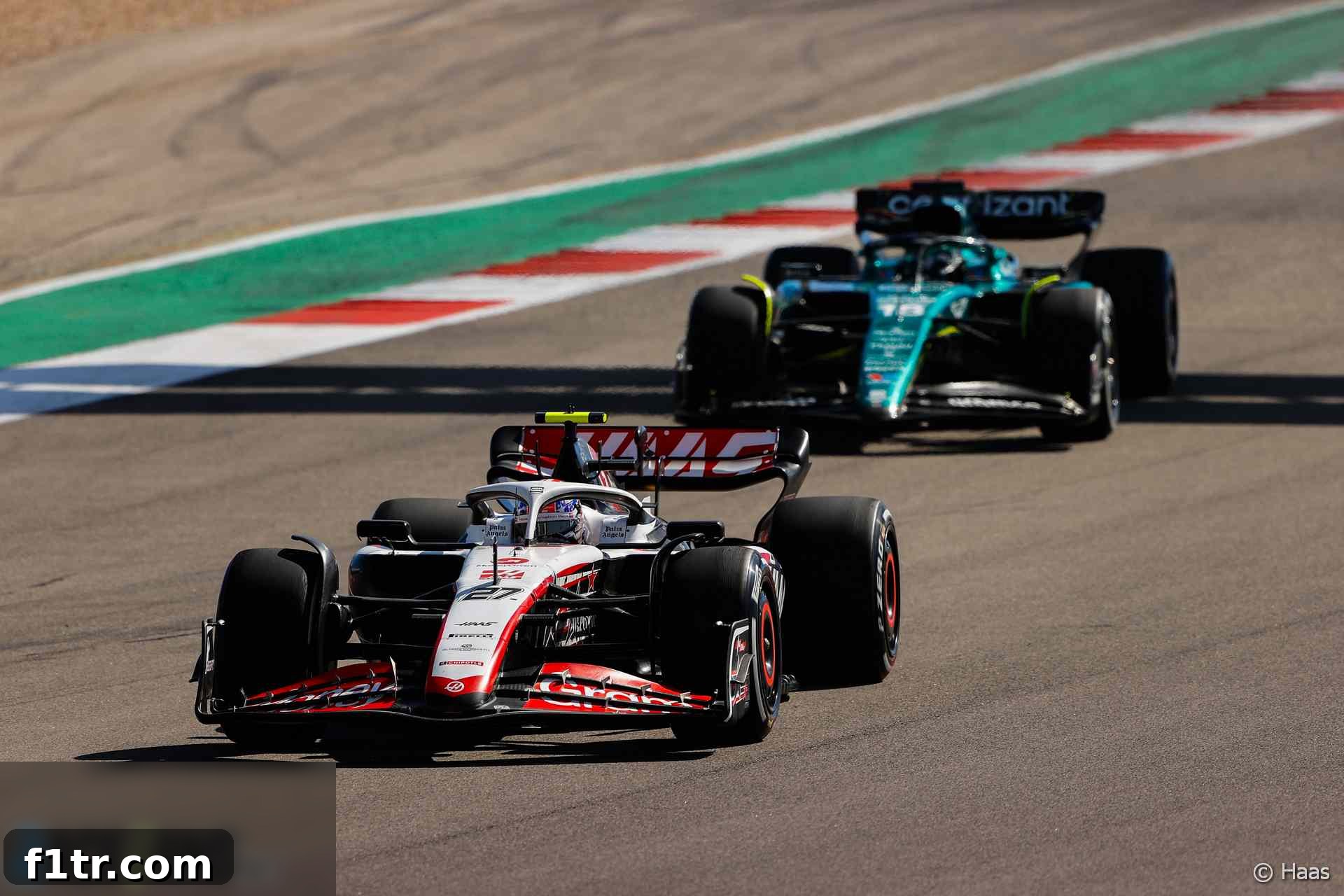
The highly anticipated FIA hearing regarding a potential review of the 2023 United States Grand Prix results concluded its initial session without an immediate decision, leaving the Formula 1 community in suspense. The proceedings, convened via videoconference, were adjourned until tomorrow, with the stewards indicating that a definitive communication would follow. This ongoing deliberation stems from a formal petition submitted by the MoneyGram Haas F1 Team, which seeks a re-examination of events pertaining to track limits enforcement during last month’s race at the Circuit of the Americas (COTA).
Advert | Become a Supporter & go ad-free
A statement issued by the race stewards clarified the next steps. They confirmed, “The hearing addressing the petition for review submitted by MoneyGram Haas F1 Team concerning documents 59 and 66 issued during the United States Grand Prix has been adjourned in order for the Stewards to independently consider the submissions made. It will be reconvened on Thursday November 9th, 2023 at 15:00 hrs CET involving all parties that attended the first part of the hearing.” This structured approach underscores the seriousness with which such petitions are treated within the sport’s governing body, ensuring thorough consideration before any pronouncement.
The statement further detailed the specific focus of tomorrow’s reconvened session: “Once the hearing has been reconvened, the decision on whether a significant and relevant new element was discovered that was unavailable to the party seeking the review at the time of the decision(s) petitioned to be reviewed will be announced. The continuation of the hearing concerning the merits of the case is dependent on the outcome of this deliberation.” This highlights the critical first hurdle Haas must overcome: demonstrating the existence of genuinely new and impactful evidence that was not accessible to them during the original decision-making process. Without meeting this stringent criterion, the merits of their case regarding the track limits violations will not even be considered, effectively ending their petition for review.
Haas’s petition to Formula 1’s governing body represents a significant challenge to the finality of race results. At its core, the request revolves around the inconsistent enforcement, or perceived lack thereof, of track limits regulations during the 2023 United States Grand Prix. The team’s argument is rooted in the fact that a staggering 35 lap times were invalidated during the race due to drivers exceeding track limits at no fewer than eight different corners across the circuit. However, immediately following the race, the stewards themselves acknowledged that they were unable to examine all potential infringements due to a reported lack of conclusive evidence. This admission forms the bedrock of Haas’s contention that a comprehensive and fair assessment of all infractions was not achieved, potentially skewing the final race order and disadvantaging some competitors.
The Circuit of the Americas, known for its challenging layout and high-speed sections, has historically presented difficulties with track limits, particularly at corners like Turn 19 where drivers can gain a tangible advantage by running wide. The sheer volume of deleted lap times in Austin underscored the pervasive nature of the issue during that specific race weekend. For Haas, a mid-field team battling for every point, the ramifications of potential changes to the race classification are profound. While Nico Hulkenberg and Kevin Magnussen finished 11th and 14th respectively, just outside the points-scoring positions, even a marginal improvement in their standings could yield crucial championship points, which carry significant financial and competitive weight in Formula 1’s fiercely contested Constructors’ Championship.
The FIA’s International Sporting Code, specifically Article 14.1.1, governs the right to review a decision. It explicitly states that “if, in the sole judgement of the stewards, a significant and relevant new element is discovered which was unavailable to the parties seeking the review at the time of the decision concerned,” a review may be opened. This clause sets a high bar, ensuring that frivolous challenges do not undermine the integrity of race results. Haas’s legal team would have meticulously prepared their submission, aiming to demonstrate precisely how the acknowledged incompleteness of the stewards’ original review constitutes such a “new element.” They must convince the stewards that the unexamined infringements, had they been identified and penalized, would have materially altered the race outcome in a way that affects their drivers.
Beyond Haas, the gravity of this hearing is underscored by the involvement of other prominent teams. Representatives from Red Bull Racing, Aston Martin, and Williams were also summoned to attend today’s hearing. This indicates that any potential alteration to the 2023 United States Grand Prix results could have a ripple effect across the grid, impacting the final standings of drivers and constructors from these teams. For instance, if penalties are retrospectively applied to drivers who finished ahead of Hulkenberg or Magnussen, it could promote the Haas drivers into points-paying positions and simultaneously demote others. Such a scenario would inevitably shift championship points, affecting team budgets, prestige, and potentially even grid slot allocations for the following season. The interconnectedness of F1 results means that a challenge from one team can quickly involve many others, highlighting the comprehensive nature of these regulatory reviews.
Understanding Track Limits: A Recurring F1 Debate
The controversy surrounding track limits is a perennial topic in Formula 1. Designed to ensure fair play and maintain the integrity of racing lines, these regulations dictate that drivers must keep at least part of their car within the white lines defining the track edge. While seemingly straightforward, enforcement proves challenging in real-time, particularly at circuits like COTA where tarmac run-off areas can tempt drivers to exceed limits to carry more speed through corners. The FIA employs various technologies, including loop sensors embedded in the track and sophisticated camera systems, to monitor infringements. However, the sheer volume of data across 20 cars completing dozens of laps, often in close proximity, can overwhelm even the most advanced systems, leading to the kinds of ambiguities that fuel petitions like Haas’s.
The stewards, a panel of experienced officials, bear the immense responsibility of interpreting these rules and applying penalties. Their role is to ensure consistency and fairness, a task made incredibly difficult by the dynamic nature of motorsport. The admission that not all cases could be examined due to a lack of evidence places the stewards in a challenging position, as it suggests a potential failing in the initial enforcement process. This is precisely the “new element” Haas hopes to capitalize on – the idea that the stewards’ original decisions were made without the full picture. The outcome of this review will not only affect the 2023 US Grand Prix but could also influence how track limits are monitored and enforced in future races, potentially pushing for more robust technological solutions or clearer guidelines for drivers and officials alike.
Advert | Become a RaceFans supporter andgo ad-free
The Broader Implications for Formula 1 Integrity
A decision to open a full review of the 2023 United States Grand Prix would set a significant precedent. While petitions for review are not unheard of in Formula 1, successfully demonstrating a “significant and relevant new element” is a rare occurrence. Should Haas succeed in this initial phase, it could embolden other teams to scrutinize past race decisions more closely, potentially leading to an increase in post-race challenges. This could, in turn, impact the perception of finality and certainty in F1 results, something the sport generally strives to avoid to maintain public confidence and clear championship narratives.
Conversely, if the FIA stewards dismiss Haas’s petition at this stage, it would reinforce the high bar for overturning race results and reaffirm the robustness of the existing review process. Such an outcome would likely lead to renewed calls for improved, more consistent, and technologically advanced real-time track limits enforcement during races, minimizing the scope for post-race controversies. The underlying issue of how to fairly and consistently police track limits, without unduly disrupting the flow of racing or creating an excessive burden on officials, remains a critical challenge for the sport as it evolves.
The entire Formula 1 world will be keenly watching tomorrow’s announcement. Whether the stewards decide that Haas has indeed presented new and significant evidence, or if they uphold the original decisions, the outcome will undoubtedly spark further debate and discussion. It underscores the intricate balance between sporting regulations, technological capabilities, and human judgment that underpins every Formula 1 Grand Prix. For Haas, a favorable decision could represent a crucial turning point in their fight for constructors’ points, while for the wider sport, it will be another chapter in the ongoing quest for perfect regulatory enforcement and unquestionable sporting fairness.
2023 F1 season
- FIA president cleared of alleged interference in two 2023 races
- First week viewing figures for new Drive to Survive season fall again
- Max who? Drive to Survive season six prefers its favourite faces
- RaceFans’ complete 2023 season review
- The F1 drivers who pulled off the 10 biggest charges through the field in 2023
Browse all 2023 F1 season articles