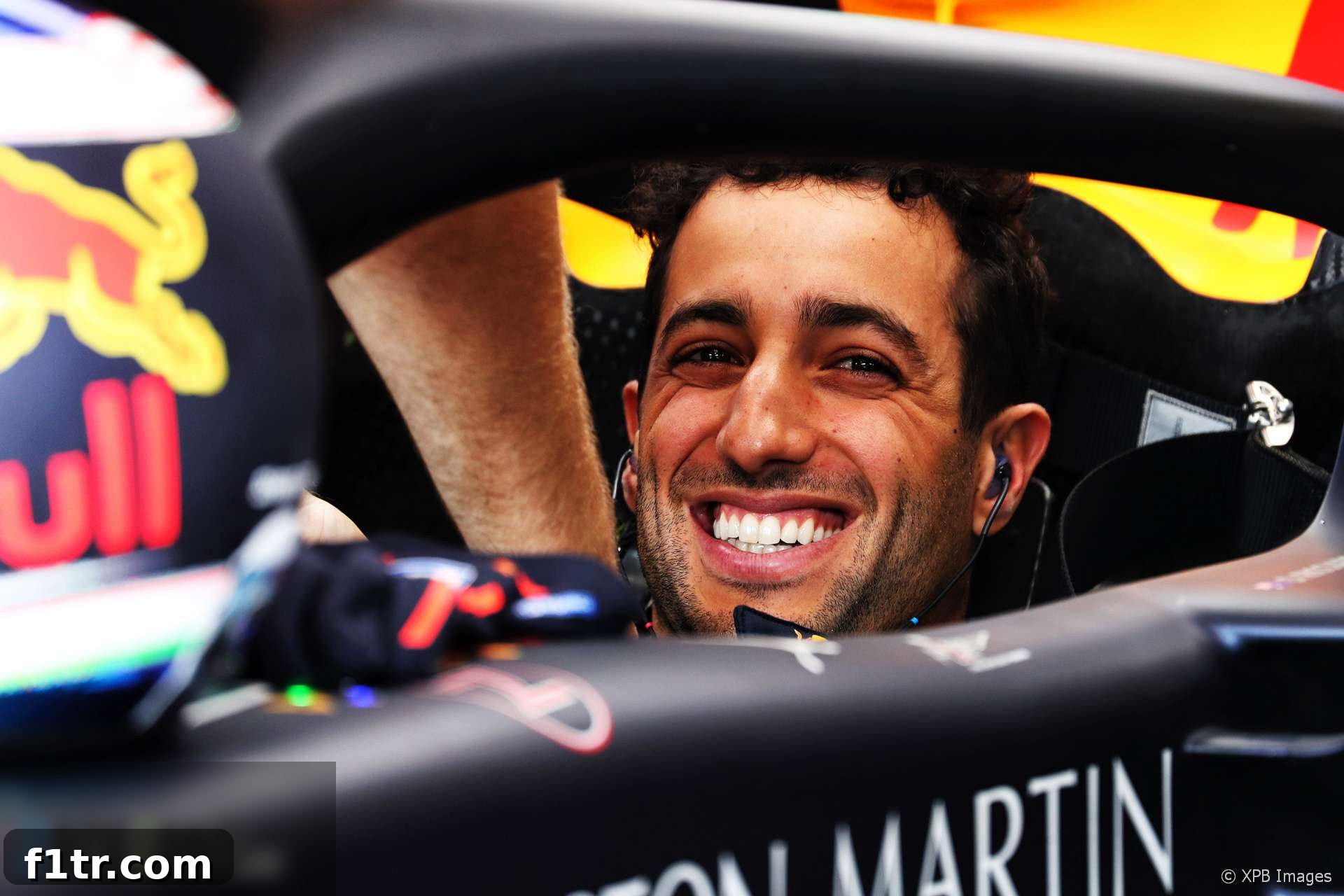
Daniel Ricciardo Confirms Shock Move from Red Bull to Renault for 2019 F1 Season
In a bombshell announcement that has sent shockwaves through the Formula 1 paddock, Daniel Ricciardo has confirmed he will depart Red Bull Racing after five successful years with the team, signing a contract to join the Renault F1 factory outfit for the 2019 F1 season and beyond. This unexpected transfer marks one of the most significant driver market shifts in recent memory, altering the landscape for multiple teams and drivers as the sport heads into a new era.
The 29-year-old Australian, a celebrated figure known for his infectious smile and audacious overtaking maneuvers, had been widely expected to extend his tenure at Red Bull. However, behind-the-scenes negotiations and strategic considerations ultimately led to his decision to seek a new challenge, opting for a factory team aiming to climb back to the top of Formula 1. This move represents a bold gamble for Ricciardo, as he leaves a proven race-winning environment for a team still in the rebuilding phase.
A Legacy Forged: Ricciardo’s Journey and Success at Red Bull
Daniel Ricciardo’s journey to the pinnacle of Formula 1 began within the esteemed Red Bull junior driver programme, a pathway that has nurtured some of the sport’s brightest talents. He first entered the F1 arena in 2011, gaining invaluable experience with HRT before graduating to Red Bull’s junior team, Toro Rosso. His impressive performances there earned him a highly coveted promotion to the senior Red Bull Racing squad in 2014, where he swiftly established himself as a formidable competitor.
During his five years with Red Bull, Ricciardo secured seven remarkable Grand Prix victories. Each of these triumphs, from his maiden win in Canada to his commanding performance at the prestigious Monaco Grand Prix earlier in the 2018 season, was achieved using Renault power units. His tenure was marked by thrilling overtakes, strategic brilliance, and a consistent ability to challenge for podiums and wins against the sport’s elite. He famously outperformed four-time world champion teammate Sebastian Vettel in his debut year at Red Bull, solidifying his status as a top-tier driver. Later, alongside the equally aggressive Max Verstappen, Ricciardo formed one of the most exciting and competitive driver pairings on the grid, often engaging in fierce but fair battles that captivated fans worldwide.
Ricciardo’s time at Red Bull cemented his reputation not just as a fast driver, but also as a charismatic personality who brought an exciting dimension to the sport. His ability to extract maximum performance from the car, coupled with his strategic acumen and an unwavering positive attitude, made him an invaluable asset to the Milton Keynes-based team. His departure leaves a significant void, not only in terms of raw talent but also in the team’s dynamics and public persona.
The Engine Saga: A Catalyst for Change
A significant factor influencing Ricciardo’s decision was Red Bull’s ongoing power unit situation. The team had endured a long and often contentious relationship with engine supplier Renault, frequently expressing frustration over performance deficits and reliability issues compared to rivals Mercedes and Ferrari. This strained partnership led Red Bull to openly explore alternatives for the 2019 season.
Ricciardo himself had postponed signing a new contract with Red Bull while the team deliberated its future engine supplier. The uncertainty surrounding which power unit Red Bull would use next year played a crucial role in his considerations. After months of speculation and intense discussions, Red Bull finally announced in June that it would sever its long-standing ties with Renault and embark on a new chapter by agreeing a deal to use Honda power units from 2019 onwards. This decision marked a significant strategic shift for Red Bull, aligning themselves with a manufacturer demonstrating rapid improvements, but also one without a proven track record of recent F1 success at the very top.
While the switch to Honda offered potential for Red Bull’s future, it also introduced an element of risk and an unknown quantity that may have factored into Ricciardo’s calculations. For a driver in his prime, with championship aspirations, the prospect of navigating a new engine partnership, particularly one still under development, might have presented a greater hurdle than the perceived stability and direct factory support offered by Renault. The Honda deal, while embraced by Red Bull as a necessary step for their competitiveness, appears to have been a contributing factor in Ricciardo’s assessment of his long-term prospects with the team.
Why Renault? Ambition, Opportunity, and a New Challenge
Ricciardo’s decision to join Renault represents a significant vote of confidence in the French manufacturer’s long-term vision and commitment to Formula 1. Renault returned to the sport as a full factory team in 2016, with the stated ambition of eventually challenging for world championships. While they are still some way from that goal, their investment in infrastructure, personnel, and development has been substantial, demonstrating a clear trajectory of improvement.
For Ricciardo, the move offers the compelling prospect of leading a factory team, being the undisputed number one driver around whom the team can be built. This contrasts with his situation at Red Bull, where he increasingly shared the spotlight with Max Verstappen, who had his contract renewed earlier and was seen by many as the team’s future cornerstone. At Renault, Ricciardo will likely enjoy a leadership role, steering the team’s development and driving their push towards the front of the grid. He brings a wealth of experience, a proven winning mentality, and crucial insights from a top-tier constructor, all of which will be invaluable to Renault as they continue their ascent.
While the immediate prospect of challenging for race wins or championships at Renault might be distant, Ricciardo’s decision suggests a willingness to embrace a longer-term project. It signifies a belief in Renault’s potential and an eagerness to play a pivotal role in their resurgence. This bold career move showcases Ricciardo’s ambition to not just win races, but to potentially build a championship-contending team around himself, akin to how other great drivers have shaped their respective teams throughout F1 history. It’s a calculated risk, but one that could yield immense personal and professional satisfaction if successful.
The Domino Effect: Implications for Carlos Sainz and Red Bull’s Future
Ricciardo’s departure immediately triggers a significant reshuffle in the Formula 1 driver market, with its most prominent impact being on Carlos Sainz Jnr. Sainz, currently on loan to Renault from Red Bull, found himself in a precarious position even before this news broke. While a strong performer, his pathway to a full-time Red Bull Racing seat had appeared blocked by the presence of Ricciardo and Verstappen.
Now, with an open seat at Red Bull, Sainz is the most obvious candidate for the promotion. He has extensive experience within the Red Bull family, having also graduated through their junior program and raced successfully for Toro Rosso. A move to Red Bull would be a natural progression, pairing him with former Toro Rosso teammate Max Verstappen and providing Red Bull with a strong, known quantity to fill Ricciardo’s shoes. However, reports suggest that Sainz was also considering a lucrative offer to join McLaren, a team with its own ambitious plans for recovery. The decision for Sainz will be critical: join a race-winning team with Honda power, or become a key component in McLaren’s rebuilding project with Mercedes engines from 2021.
Beyond Sainz, Red Bull will carefully assess its options. Their junior driver pool, particularly at Toro Rosso, always provides potential candidates. Drivers like Pierre Gasly and Brendon Hartley, who have shown flashes of brilliance, will undoubtedly be under consideration. The choice will be crucial for Red Bull as they embark on a new engine partnership with Honda and aim to maintain their status as a front-running team. Whoever partners Max Verstappen will face immense pressure and the challenge of filling the large shoes left by Daniel Ricciardo.
Looking Ahead: The 2019 Season and Beyond
The 2019 Formula 1 season is now set to be even more intriguing with this seismic shift in the driver market. Daniel Ricciardo’s move to Renault will be one of the most closely watched stories, as fans and pundits eagerly anticipate how he adapts to his new environment and how quickly he can elevate the French squad’s performance. His decision to leave a top team for a mid-field contender demonstrates his unwavering self-belief and a readiness to tackle new challenges head-on. It underscores a strategic long-term vision that extends beyond immediate gratification, aiming instead for a lasting impact and perhaps a championship built from the ground up.
For Red Bull, the transition to Honda power will be pivotal. With Max Verstappen firmly established as their lead driver, the focus will be on maximizing the potential of the new engine partnership and ensuring their challenger remains competitive at the sharp end of the grid. The departure of Ricciardo, while a loss, could also serve as an opportunity for the team to regroup and fully commit to their new technical direction and driver pairing.
Renault, on the other hand, gains a proven race-winner and a charismatic ambassador. Ricciardo’s presence will undoubtedly accelerate their development, attract top talent, and boost morale within the team. His feedback will be instrumental in shaping the future direction of their car and power unit. While 2019 might still be a transitional year, the long-term prospects for Renault with Ricciardo at the helm appear brighter than ever, fueling optimism for their journey back to championship contention.
Conclusion: A Bold New Chapter for Daniel Ricciardo
Daniel Ricciardo’s decision to leave Red Bull for Renault is more than just a driver transfer; it’s a statement of ambition and a testament to his desire for a fresh challenge. It reshapes the driver landscape and injects new excitement into the sport, promising an enthralling 2019 season. As he embarks on this bold new chapter, the world of Formula 1 will be watching to see if the “Honey Badger” can lead Renault to glory, proving that sometimes, taking the road less traveled can lead to the most rewarding destinations.
View the current list of 2019 F1 drivers and teams