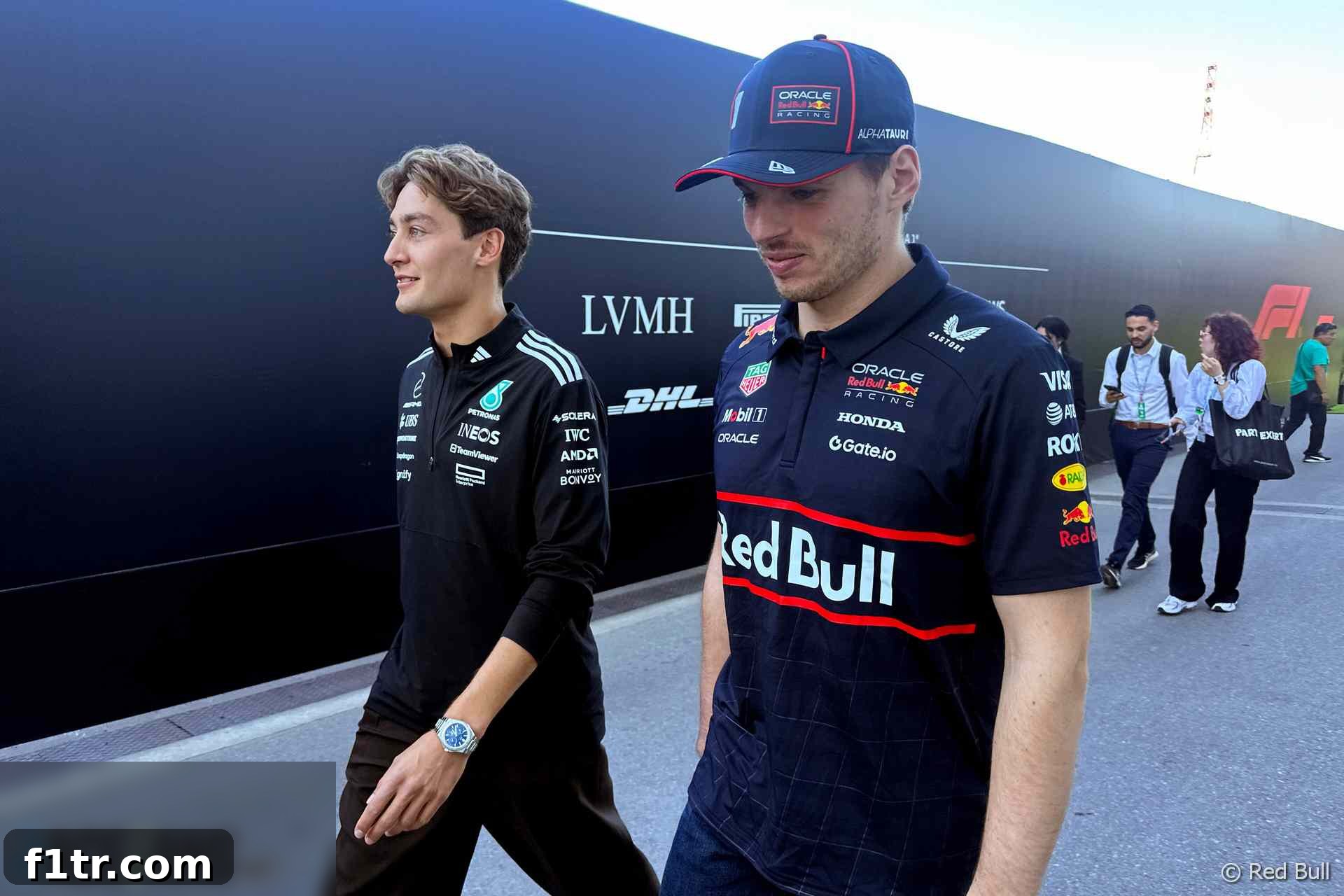
Wolff Slams Red Bull’s “Petty” Russell Protest, Confident Verstappen Disapproves
Mercedes Team Principal Toto Wolff has expressed his unequivocal certainty that Max Verstappen did not endorse Red Bull Racing’s recent attempts to challenge George Russell’s hard-fought victory at the Canadian Grand Prix. The controversial aftermath of the race saw Red Bull file multiple protests against the Mercedes driver, actions which Wolff vehemently described as “petty,” “small,” and “embarrassing.”
The 2025 Canadian Grand Prix concluded under Safety Car conditions, with George Russell crossing the finish line ahead of Verstappen to secure a thrilling win. However, the closing laps were marred by accusations from both drivers regarding perceived breaches of regulations while the race was neutralised. Verstappen voiced concerns over Russell’s conduct behind the Safety Car, setting the stage for the contentious protests that followed.
Red Bull’s Unfounded Protests and Steward’s Dismissal
Following the race, Red Bull Racing lodged formal objections to Russell’s victory, focusing on alleged infringements during the Safety Car period. However, the race stewards swiftly upheld Russell’s triumph, dismissing Red Bull’s complaints as “unfounded.” This wasn’t the first time Red Bull had pursued such avenues; a month prior, they also brought an unsuccessful protest against the Mercedes driver at the Miami Grand Prix, which was also rejected.
Wolff elaborated on the nature of Red Bull’s protests in Canada, revealing that the team initially presented multiple challenges. One particular protest, which was ultimately rejected by the stewards, bizarrely accused Russell of “unsportsmanlike” driving. Another protest, which Red Bull later withdrew, centered on Verstappen’s repeated assertions that Russell had fallen too far behind the Safety Car, exceeding the stipulated ten car-length gap. The withdrawal of this protest suggests a lack of robust evidence or confidence in its merit, reinforcing Wolff’s view of the entire ordeal.
“They’ve done it in Miami, now they launched two protests, they took one back because it was ridiculous,” Wolff candidly told Sky Sports. He further critiqued Red Bull’s approach, stating, “They come up with some weird ISC [International Sporting Code] clauses, sporting code clauses. I guess that everybody needs to look at that because it’s so far-fetched.” The Mercedes boss underscored the principle that racing results should be determined on the track, not through legalistic challenges off it. “That was rejected. You race, you win, and you lose on track. That was a fair victory for us, like so many they had in the past, and it’s just embarrassing.”
Wolff’s Unwavering Confidence in Verstappen’s Stance
A key aspect of Wolff’s commentary was his firm belief that Max Verstappen himself was not complicit in, nor supportive of, Red Bull’s official protests. Wolff drew a clear distinction between a driver’s immediate race frustrations and a team’s strategic decision to file formal complaints. “They actually pulled [one] protest, they didn’t even follow it through because it was nonsense,” he stated, highlighting the perceived weakness of Red Bull’s arguments.
The second protest, concerning “unsportsmanlike behaviour,” reportedly consumed five hours of the stewards’ time before being dismissed. Wolff questioned the very premise of such a claim: “What is it all about? Why do you know that? Who decides it? Because I’m 100% sure it’s not Max. He’s a racer. He would never go for a protest on such a trivial thing.” This statement speaks volumes about Wolff’s perception of Verstappen’s character as a pure racer who prefers to settle matters on track rather than through administrative appeals. It also implicitly suggests a disconnect between the driver’s on-track competitive spirit and the team’s off-track procedural tactics, or at least Wolff’s interpretation of it.
Wolff’s assertion paints Verstappen as a driver focused squarely on performance and direct competition, rather than engaging in the intricate legalistic battles that sometimes surface in Formula 1. This perspective underscores a widely held view among racing purists who advocate for results to be decided by skill and strategy during the race itself, free from post-race interventions unless absolutely necessary for clear rule violations.
Verstappen’s In-Race Radio Messages: The Spark for the Protests?
While Wolff is convinced Verstappen would not personally initiate a formal protest, the radio communications from Verstappen during the final laps of the Canadian Grand Prix clearly indicate his concerns regarding Russell’s driving under Safety Car conditions. These real-time observations from the cockpit likely formed the basis for Red Bull Racing’s subsequent protest submissions, even if Verstappen himself didn’t directly advocate for the formal procedural challenge.
| Lap: 68/70 VER: 2’05.276 | |||||||||||||||||||||||||||||||||||||||||||||||||||
| Verstappen | After turn 10 The Safety Car is driving really slow, what is he doing? |
||||||||||||||||||||||||||||||||||||||||||||||||||
| Verstappen | Russell slows and Verstappen briefly passes him before dropping behind again George suddenly just aggressively braked. |
||||||||||||||||||||||||||||||||||||||||||||||||||
| Lambiase | Understood, thank you. We will check for any erratic driving. | ||||||||||||||||||||||||||||||||||||||||||||||||||
| Lap: 69/70 VER: 2’03.745 | |||||||||||||||||||||||||||||||||||||||||||||||||||
| Lambiase | We can see that on our data stream as well, Max. Thank you for the info. | ||||||||||||||||||||||||||||||||||||||||||||||||||
| Verstappen | Russell drops back from the Safety Car, then accelerates That’s more than 10 car lengths also, there. |
||||||||||||||||||||||||||||||||||||||||||||||||||
| Lambiase | Okay, we will check that as well, thank you. | ||||||||||||||||||||||||||||||||||||||||||||||||||
| Lambiase | Yeah, that incident with Russell now being shown on the feeds Max. So, pretty blatant. Just don’t fall for the gamesmanship, okay? Thank you. | ||||||||||||||||||||||||||||||||||||||||||||||||||
| Lambiase | Safety Car through the pit lane, Max. | ||||||||||||||||||||||||||||||||||||||||||||||||||
| Lap: 70/70 VER: 2’06.683 | |||||||||||||||||||||||||||||||||||||||||||||||||||
| Verstappen | Russell drops back from the Safety Car, then accelerates Again, more than 10 car lengths, what is he doing? |
||||||||||||||||||||||||||||||||||||||||||||||||||
| Lambiase | Thank you. | ||||||||||||||||||||||||||||||||||||||||||||||||||
| Verstappen | Way more than 10, look at this! | ||||||||||||||||||||||||||||||||||||||||||||||||||
| Lambiase | Yes, thank you Max. We’ll have a look. Cheers mate. | ||||||||||||||||||||||||||||||||||||||||||||||||||
These communications highlight Verstappen’s frustration and perceived unfair tactics from Russell. While he clearly articulated his grievances in the heat of the moment, Wolff’s assessment implies that converting these on-track complaints into a drawn-out, formal protest might be a bridge too far for Verstappen’s personal racing ethos. It underscores the dynamic between a driver’s immediate race feedback and the team’s strategic use of such information to influence post-race outcomes.
The Broader Implications for Formula 1
The repeated protests from Red Bull against George Russell, particularly the unsuccessful one in Miami and the subsequently dismissed and withdrawn ones in Canada, raise important questions about the spirit of competition in Formula 1. While teams are within their rights to seek clarity and uphold regulations, the perception of “petty” or “far-fetched” protests can detract from the sport’s image. Wolff’s strong remarks reflect a desire to maintain the integrity of on-track results and prevent the championship from being decided in the stewards’ room.
Such incidents can fuel rivalries not just between drivers, but between entire teams and their leadership. The verbal sparring between team principals like Toto Wolff and their counterparts adds another layer of intrigue to the already intense competition. For fans, these controversies can be polarizing, with some appreciating the meticulous adherence to rules and others lamenting the bureaucratic interference in racing purity.
The stewards’ consistent decisions to reject Red Bull’s protests also serve to affirm the validity of the racing outcomes and the proper application of the International Sporting Code. It reinforces the idea that for a protest to be successful, it must be based on clear, demonstrable violations, not subjective interpretations or tactical maneuvering. The clarity of Safety Car rules, in particular, often comes under scrutiny during such events, emphasizing the need for robust and unambiguous regulations.
Conclusion: A Win Upheld, a Rivalry Intensified
George Russell’s victory at the Canadian Grand Prix stands firm, untouched by Red Bull’s challenges. Toto Wolff’s impassioned defense of his driver and his sharp criticism of Red Bull’s protest strategy have added another chapter to the fierce rivalry between Mercedes and Red Bull Racing. His firm conviction that Max Verstappen, a “racer” at heart, would not support such “trivial” protests highlights the differing philosophies at play within the top echelons of Formula 1. As the season progresses, such controversies are likely to further ignite the competitive fire, both on and off the track, reminding everyone that Formula 1 is as much about the human drama and strategic battles as it is about pure speed.
2025 Canadian Grand Prix: Related Articles
- Canada was my most obvious missed opportunity to score more points – Norris
- Norris names China and Canada as biggest missed opportunities this year
- Don’t boo Piastri, Norris tells British Grand Prix fans
- Fine teams for “long shot” protests like Red Bull’s in Canada, says Wolff
- Verstappen refuses to say whether he supported Red Bull’s latest Russell protests
Browse all 2025 Canadian Grand Prix articles