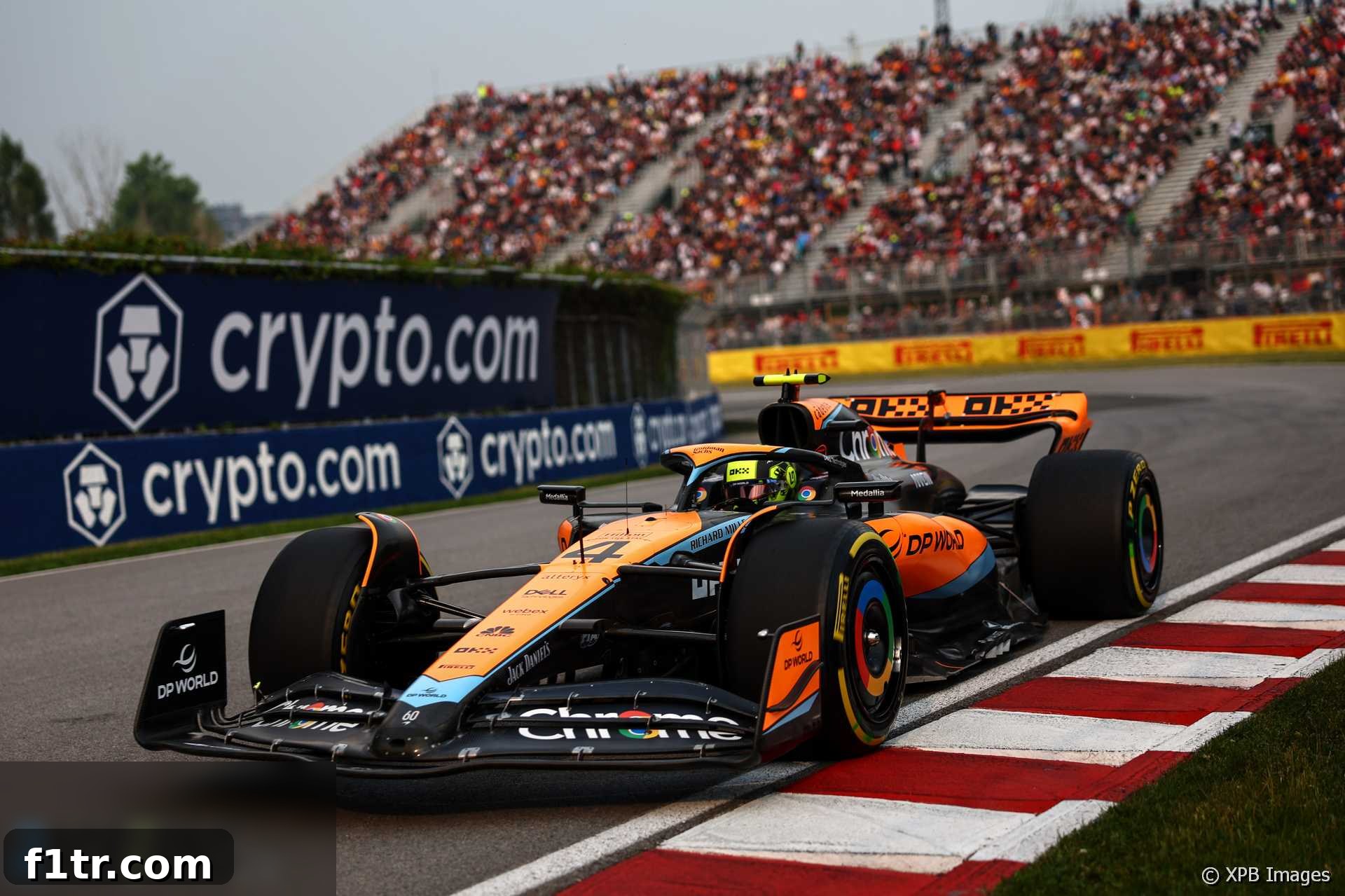
McLaren Commits to Radical Overhaul of MCL60 Across Three Key Races
In a bold move to reverse their fortunes in the 2023 Formula 1 season, McLaren has announced a comprehensive and fundamental redesign of its MCL60 challenger. This ambitious engineering effort will see a series of extensive upgrades introduced sequentially over the next three Grand Prix events, signaling the team’s unwavering commitment to clawing its way back up the competitive grid.
The Woking-based outfit has endured a challenging start to the current campaign, accumulating a mere 17 points thus far. This tally stands in stark contrast to the 59 points secured at the same stage in the previous year, highlighting the urgent need for significant intervention. The pressure has been mounting on the team, prompting decisive action from Team Principal Andrea Stella, who assumed leadership during the winter break. Stella has spearheaded a critical restructuring of the team’s engineering division, a strategic move that followed the departure of technical director James Key and underscores a renewed focus on technical innovation and performance delivery.
Andrea Stella’s Vision: Engineering a Resurgence
Speaking recently, Andrea Stella outlined the full scope of the planned upgrades, describing them as nothing short of a “major overhaul of the car.” This extensive package is designed to address the fundamental performance deficiencies observed in the MCL60 since the season began. Stella’s candid assessment reflects the deep understanding within the team that incremental changes would not suffice to bridge the performance gap to their rivals.
“Relatively soon after the start of the season we realised that the car needed a fundamental redesign,” Stella explained. This realization wasn’t a snap decision but the outcome of thorough analysis and diagnostic work. The inherent characteristics of the MCL60, particularly its struggles with straight-line speed and a lack of consistent cornering performance across various turn types, pointed towards deep-seated issues that demanded a holistic solution rather than superficial fixes.
The scope of this redesign is truly significant, impacting virtually every aspect of the car’s aerodynamic profile. “This redesign is actually [involving] I would say pretty much every single aerodynamic part,” Stella confirmed. Such an undertaking goes beyond typical mid-season developments, venturing into the realm of a mid-season concept shift. This includes not only visible external components but also intricate elements concealed beneath the car’s bodywork, which are crucial for generating ground effect and overall downforce.
The complexity of engineering such profound changes, particularly those affecting the crucial under-body aerodynamics, has naturally required a substantial investment of time and resources. Stella elaborated, “That’s why the upgrades will be spread over the course of a few races. It will be decently noticeable. We had to redesign even some parts under the bodywork, that’s also why it took some time to be in condition to deliver these upgrades. So I would say pretty much the entire car.” This statement underscores the depth of the engineering challenge and the comprehensive nature of the upcoming revisions.
The Phased Rollout: A Strategic Approach to Implementation
The introduction of these vital upgrades will unfold over three consecutive Grand Prix weekends, a phased strategy designed to allow the team to meticulously evaluate each batch of new components and integrate them effectively. This approach also manages the logistical challenges of producing and delivering such a large volume of new parts.
Austria’s Red Bull Ring: The Sprint Challenge
The first significant batch of redesigned parts is slated for introduction at the upcoming Austrian Grand Prix, held at the challenging Red Bull Ring. This event presents a unique set of circumstances as it is the second sprint weekend of the year. The condensed format drastically limits track time, affording teams only a single hour of practice before competitive sessions commence with qualifying for the Grand Prix. This tight schedule will put immense pressure on McLaren to quickly understand and optimize the new components, making the correlation between simulator data and real-world track performance absolutely critical.
Silverstone and Hungaroring: Crucial European Rounds
Following Austria, further significant upgrades are earmarked for the British Grand Prix at Silverstone, McLaren’s home race. The iconic British circuit, known for its high-speed corners, will provide an excellent test bed for the new aerodynamic philosophy. The opportunity to introduce major revisions at their home event will undoubtedly be a boost for team morale and offer a chance to showcase their progress in front of a supportive crowd.
The final phase of this initial major upgrade package will be rolled out at the Hungarian Grand Prix at the Hungaroring. This twisty, technical circuit, often described as ‘Monaco without the walls,’ will test the MCL60’s low-speed cornering and traction capabilities, providing another crucial data point for the team as they continue to refine their car’s performance across diverse track layouts. The strategic timing across these three distinct circuits will allow McLaren to gather a comprehensive understanding of the upgrade’s effectiveness under varied conditions.
Anticipated Impact and Confidence in Correlation
Despite the current struggles, Andrea Stella remains optimistic about the potential gains from these forthcoming changes. While the new parts had not yet been fully simulated at the time of his comments, the team’s confidence stems from its development processes. “We haven’t tested them in the simulator yet but they just pretty much deliver more downforce with similar characteristics,” he stated. This suggests that the core goal is an increase in overall downforce without negatively impacting the car’s balance or handling traits that drivers Lando Norris and Oscar Piastri find manageable.
The key, as always in Formula 1 development, lies in the “correlation trackside” – how closely the performance predicted in simulations matches reality. Stella expressed positive sentiments on this front: “I think correlation so far has been good. I think with this generation of cars in general, correlation with development tools is good.” This strong belief in their computational fluid dynamics (CFD) and simulator tools provides a solid foundation for expecting tangible improvements once the parts hit the track. The team anticipates “a few tenths of a second of lap time improvement,” a significant gain in the fiercely competitive world of F1, where margins are often measured in milliseconds.
Navigating Immediate Challenges: The Canadian Grand Prix
While the focus is firmly on future upgrades, McLaren also addressed their immediate prospects at the Canadian Grand Prix, held at the Circuit Gilles Villeneuve. For this weekend, the team introduced a lower-drag rear wing, a standard adjustment for tracks like Montreal that feature long straights and heavy braking zones, prioritizing top speed. However, Stella acknowledged that the characteristics of the Circuit Gilles Villeneuve might not inherently suit the current MCL60 as well as the previous venue, Barcelona.
“Here we only have a rear wing which is the version that is most suitable for the level of drag that you adopt at this track,” said Stella. He elaborated on the potential difficulties: “In terms of Canada, we definitely prefer the characteristics of Barcelona because the car is strong in high speed corners. Here we have no high-speed corners, quite a lot of low-speed traction so it could be a bit of a struggle.” This assessment highlights the car’s current weakness in low-speed performance and traction, an area the upcoming major upgrades aim to rectify. Given these challenges, the team openly welcomed the prospect of wet weather: “We would certainly welcome some [rain],” a common sentiment among teams looking to create a tactical advantage or mitigate inherent car weaknesses in unpredictable conditions.
McLaren’s Road Ahead: A Return to Form?
These ambitious upgrades represent a critical juncture for McLaren. The team, steeped in a rich history of Formula 1 success, has been striving to return to consistent competitiveness after several challenging seasons. The investment in a “pretty much entire car” redesign signals a serious intent to not only improve their current standing but also to lay a stronger foundation for future development, including the 2024 season and beyond.
The performance of these upgrades will be paramount for both drivers, Lando Norris and rookie Oscar Piastri. Norris, a highly-rated talent, has demonstrated his capability but has been hindered by the car’s limitations. Piastri, on the other hand, is still finding his feet in F1, and a more competitive car would undoubtedly accelerate his development and allow him to showcase his full potential. A successful upgrade package could significantly boost team morale, attract top talent, and reignite the passion of McLaren’s global fanbase. The coming races will be a true test of McLaren’s engineering prowess and their resolve to reclaim a top-tier position in Formula 1.
Support Independent F1 Journalism
This content is brought to you by passionate F1 enthusiasts. We strive to deliver insightful, independent journalism directly from the heart of Formula 1, connecting you with the key players and providing unparalleled analysis.
Our ability to produce original, in-depth coverage relies significantly on the generous backing of our readers. By becoming a supporter, you play a vital role in sustaining this independent platform. Your contribution helps cover the essential costs associated with creating high-quality content: including travel to events, dedicated writing, content creation, website hosting, and continuous development.
For over a decade, we have proudly been supported by our dedicated readership. If you value our commitment to unbiased and comprehensive F1 news, please consider joining our community of supporters today. As a token of our appreciation, all supporters also enjoy an ad-free browsing experience across our site.
- Become a RaceFans Supporter Today
- Learn More: RaceFans Supporter FAQ
Further Reading: 2023 Canadian Grand Prix Insights
- Norris ‘even more’ sure Canada penalty was wrong after review request fails
- McLaren seeking more than just downforce gains from major upgrade
- Winning more races won’t necessarily lead to F1 seat – Palou
- Red Bull’s testing restriction will “massively affect” 2024 car development
- Schumacher’s set-up input gives Mercedes a “super advantage” – Wolff
Browse all 2023 Canadian Grand Prix articles