F1 Stewards’ Decisions: Dissecting Hamilton-Rosberg vs. Verstappen-Leclerc Incidents at Red Bull Ring
Formula 1 is a sport where fractions of a second and inches of track separate victory from defeat. The intensity of wheel-to-wheel racing often pushes drivers to their absolute limits, occasionally resulting in controversial incidents that fall under the rigorous scrutiny of the FIA stewards. These officials bear the heavy responsibility of determining whether a maneuver constitutes fair, hard racing or crosses the line into an infringement. Two prominent examples, both occurring at the challenging Red Bull Ring, highlight the complex and often nuanced nature of this process: the infamous clash between Lewis Hamilton and Nico Rosberg in 2016, and a more recent, equally thrilling encounter involving Max Verstappen and Charles Leclerc in 2019. Despite superficial similarities in their respective Turn 3 incidents, the stewards reached strikingly different conclusions, sparking widespread debate and offering invaluable insight into the evolving interpretation of racing rules.
Advert | Become a Supporter & go ad-free
The High Stakes of 2016: Hamilton vs. Rosberg at the Red Bull Ring
The 2016 Austrian Grand Prix provided one of the most iconic and contentious moments in the modern era of Formula 1, capturing the fierce rivalry between Mercedes teammates Lewis Hamilton and Nico Rosberg. Battling for the World Championship, their on-track encounters were always charged with an extra layer of tension. On the final lap of the race, as they fought relentlessly for the lead, both drivers headed into Turn 3. Hamilton, attempting an overtake on the outside, found himself squeezed by Rosberg, leading to an unavoidable collision. The incident saw Hamilton forced wide onto the run-off area while Rosberg’s car sustained significant front wing damage, impacting his ability to finish the race effectively.
Following an extensive post-race investigation, the FIA stewards unequivocally laid the blame on Rosberg. His actions were deemed to have forced Hamilton off the track, an infringement of the sporting regulations concerning leaving sufficient room for a competitor. Consequently, Rosberg was issued a 10-second time penalty, a decision that underscored the stewards’ stance on deliberate obstruction. This ruling became a significant precedent, emphasizing that while aggressive defensive driving is part of F1, intentionally pushing a rival off the racing surface without a legitimate claim to the line is unacceptable. The context of a championship battle, coupled with Rosberg’s specific maneuver, played a crucial role in shaping the stewards’ verdict.
The 2019 Austrian Grand Prix: Verstappen-Leclerc – A Different Narrative
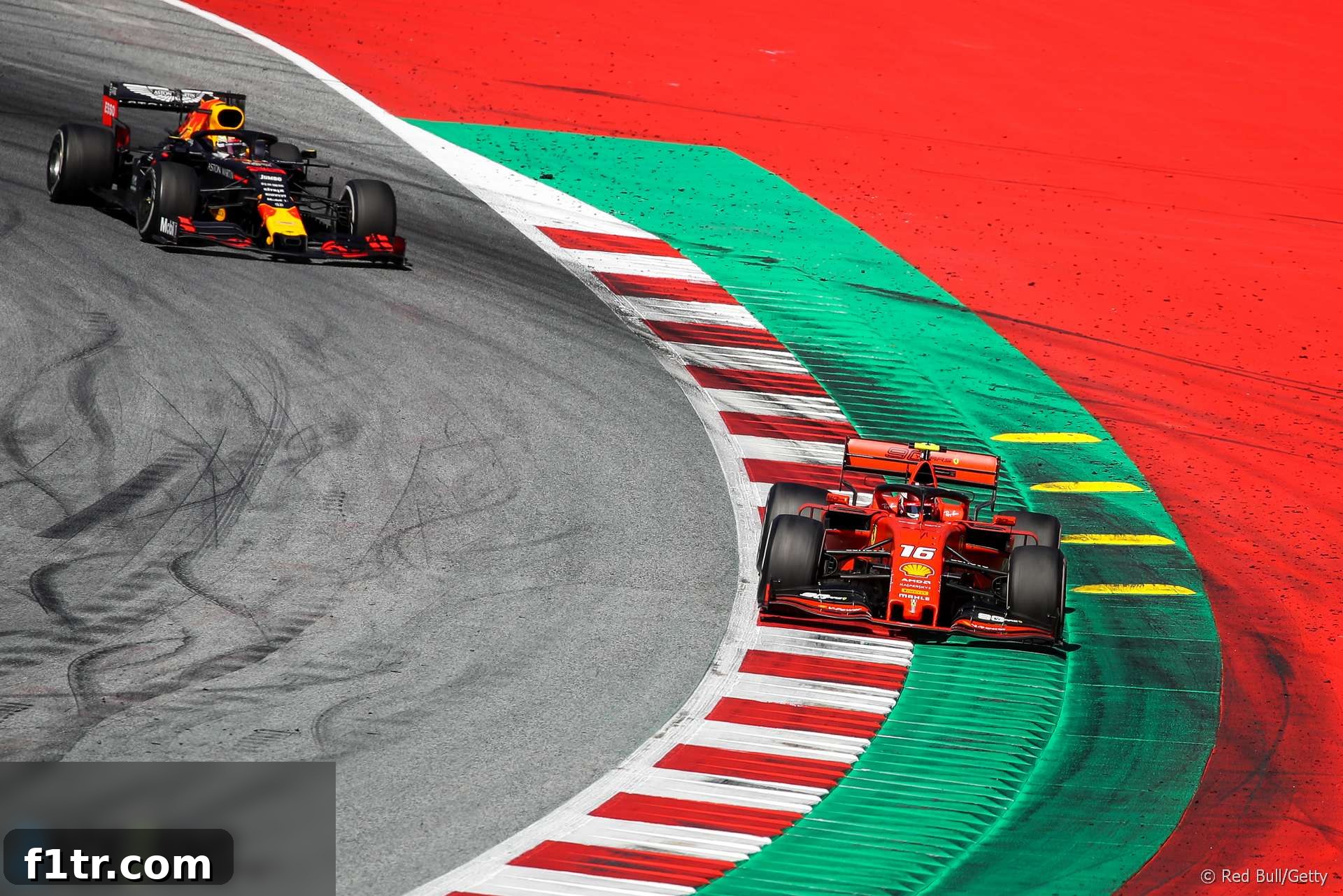
Just three years later, the Red Bull Ring once again witnessed a dramatic Turn 3 incident, this time involving two of the sport’s most exciting young talents: Max Verstappen and Charles Leclerc during the 2019 Austrian Grand Prix. Locked in a fierce battle for the race win, Verstappen launched an aggressive overtake on Leclerc. Their cars made contact, resulting in Leclerc being forced wide and losing track position. The similarities to the 2016 Hamilton-Rosberg incident were immediately apparent to many fans and commentators. However, in a stark contrast that ignited considerable debate, the stewards investigated the incident and ultimately cleared Verstappen of any wrongdoing, imposing no penalty.
This seemingly contradictory outcome prompted many to question the consistency of F1 stewarding. To clarify the stewards’ reasoning, FIA Race Director Michael Masi, who observes but does not participate in penalty deliberations, offered valuable insights. His explanation highlighted the intricate analysis of driver intent, race craft, and the dynamic nature of on-track battles. Masi revealed that a key aspect of the stewards’ review involved meticulously comparing Verstappen’s approach to Turn 3 on the incident lap with his driving on the immediately preceding lap, where he had attempted a similar, albeit unsuccessful, move on Leclerc.
Unpacking Driver Intent: The Learning Curve and Focus
Masi articulated that the stewards perceived a critical evolution in Verstappen’s driving strategy between the two laps. “Having had a good read of the decision itself I think from their end it was looking back at the lap earlier [when] Max had, from what I can see their view was, learned from what had happened the lap earlier,” Masi explained. This suggests that Verstappen had adapted his technique, refining his approach to the corner based on his prior attempt. This ‘learning’ element proved crucial in distinguishing his maneuver from a purely reckless or opportunistic lunge.
Delving into the specifics of Verstappen’s refined execution, Masi elaborated: “He went into the corner, braked later, Charles obviously saw him coming and stayed out wide. And Max was effectively in braking a lot later, effectively late-apexed and at all times was pretty much full lock and tried to power out.” This description paints a vivid picture of Verstappen pushing the absolute limits of his car and his own skill. His later braking point, combined with a committed late-apex strategy and maintaining full steering lock, indicated a driver entirely focused on executing the corner as efficiently and quickly as possible, aiming to maximize his exit speed and complete the overtake.
Crucially, Masi highlighted the stark difference in perceived driver intent when comparing the two incidents. “Probably the big difference from what I’ve seen from the footage that I’ve seen of the two was that Nico looked across on that occasion whereas Max is very much focusing on the corner and getting out of it as quickly as possible,” he stated. This distinction is pivotal. When a driver “looks across” at a rival, it can be interpreted as a deliberate act to intimidate or force them off track, suggesting an intent beyond simply making a clean pass. Conversely, Verstappen’s unwavering focus on the apex, his braking, and his car’s trajectory, even amidst contact, was seen as a pure expression of racing intent—an aggressive, yet legitimate, attempt to gain position rather than a malicious effort to hinder or eliminate Leclerc. The fact that Leclerc “obviously saw him coming and stayed out wide” also suggests a degree of anticipation and adaptation from the defending driver, further validating Verstappen’s committed line.
The Evolving Landscape of F1 Stewarding and Precedent
The contrasting outcomes of these two Turn 3 incidents at the Red Bull Ring vividly underscore the intricate and often subjective nature of Formula 1 stewarding. While precedents like Rosberg’s penalty are certainly considered during deliberations, each incident is ultimately judged on its own unique merits. A myriad of factors come into play, including car positioning, relative speeds, braking points, throttle application, track conditions, and most critically, the perceived intent and execution of the drivers involved. The FIA stewards, typically a panel comprising experienced officials and often a former racing driver, meticulously weigh these elements to discern whether a driver was merely racing hard within acceptable limits or if they transgressed the boundaries of fair competition.
Moreover, the continuous evolution of F1 car design, enhanced safety features, and the increasingly sophisticated skill sets of modern drivers all subtly influence these decisions. Stewards are tasked with striking a delicate balance: fostering thrilling, aggressive racing that captivates audiences, while simultaneously upholding stringent safety standards and maintaining fairness across the grid. The concept of “learning from the previous lap,” as applied in Verstappen’s case, signifies a progressive approach, acknowledging that drivers are expected to adapt, strategize, and refine their approaches dynamically during a race. This adaptation, even when it manifests as highly aggressive driving, can be interpreted as a legitimate and commendable aspect of top-tier motorsport.
Advert | Become a RaceFans supporter andgo ad-free
Conclusion: The Enduring Debate on Racing Incidents
Ultimately, the intense discussions and varied interpretations surrounding incidents like these are what make Formula 1 such a compelling and engaging spectacle. Fans, analysts, and even drivers themselves often hold strong opinions, reflecting the inherent complexity in applying a rulebook to the dynamic chaos of high-speed racing. The Hamilton-Rosberg and Verstappen-Leclerc clashes at the Red Bull Ring serve as invaluable case studies for comprehending how the FIA’s stewarding panel navigates these often ambiguous grey areas. They demonstrate that while the visible outcome of an on-track battle—contact and a car forced wide—might appear similar, the underlying circumstances, particularly the perceived intent and precise execution of the drivers, are subjected to meticulous analysis to arrive at a definitive verdict. This rigorous, analytical process, which strives for impartiality while actively promoting exciting, competitive racing, is absolutely fundamental to the sport’s enduring appeal and its continuous, fascinating evolution.
These nuanced decisions not only determine individual race results and championship points but also contribute significantly to the broader understanding and definition of acceptable racing behavior within Formula 1, subtly influencing future driving standards and strategic considerations for every competitor on the grid.
2019 F1 Season Insights
Dive deeper into the memorable moments, pivotal races, and compelling storylines that defined the 2019 Formula 1 season. Explore additional articles to gain further context and perspective on one of the sport’s most exciting years:
- Crying in the Melbourne car park at 2019 grand prix was my career low – Ocon
- McLaren Racing reports reduced £71 million loss in 2019
- Kvyat: Hockenheim podium last year was “my biggest achievement” so far
- How the FIA’s new encrypted fuel flow meter targets Ferrari’s suspected ‘aliasing’ trick
- “He smashed my office door”: 23 must-see moments from ‘Drive to Survive’ season two
Browse all 2019 F1 season articles