Australian Government Targets Tobacco Advertising in Motorsports: A Deep Dive into Current Regulations and Future Implications
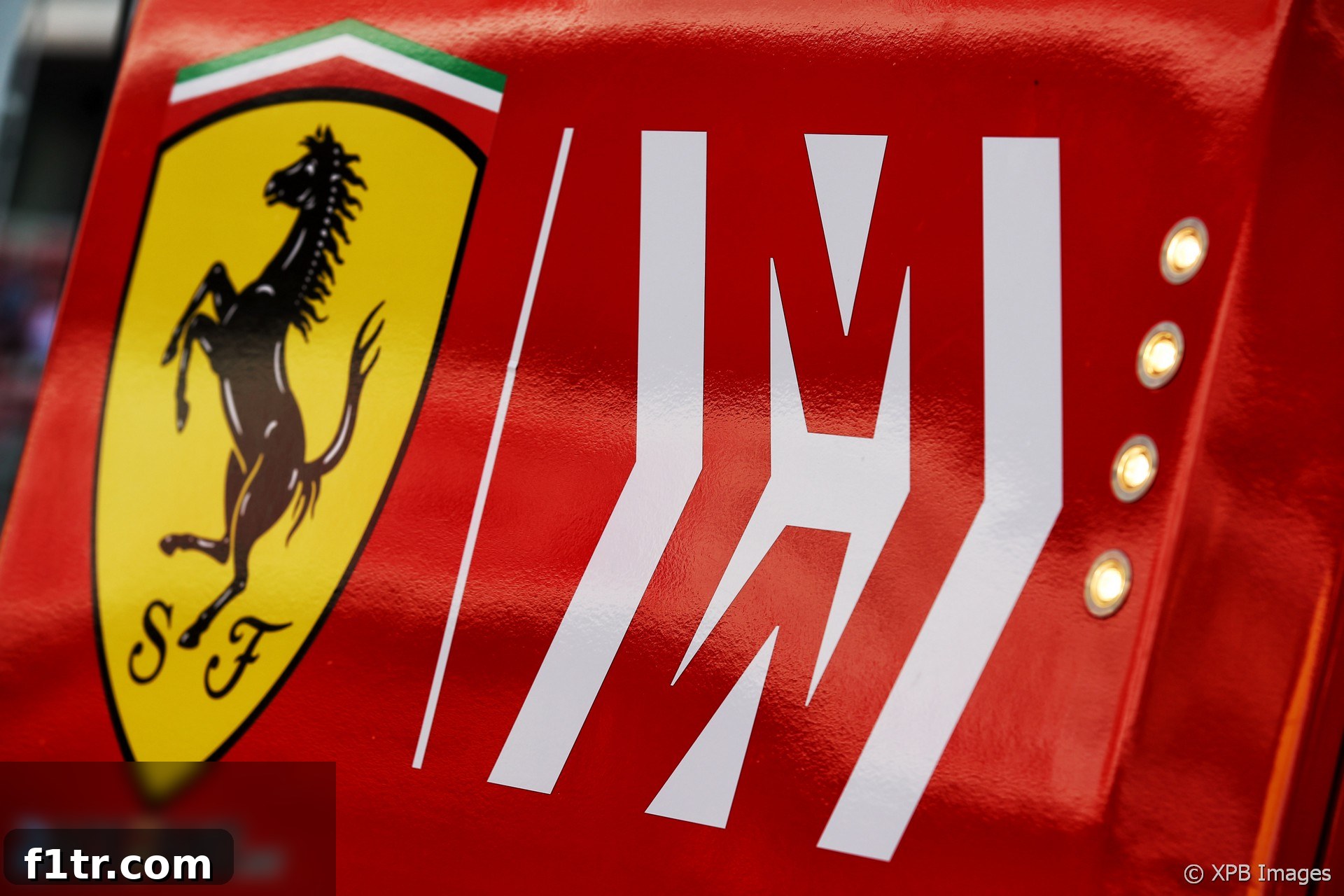
In a significant move impacting the global motorsports landscape, the Australian government is poised to introduce stringent new legislation. This initiative aims to decisively ban the controversial promotional tactics frequently employed by tobacco industry giants, specifically targeting strategies seen from Philip Morris, a long-standing partner of Ferrari, and British American Tobacco (BAT), which has prominent associations with McLaren. This legislative push underscores a growing international consensus against tobacco promotion in sports, highlighting the ongoing battle between commercial interests and public health concerns.
Motorsports Updates: Key Headlines and Developments
Stay abreast of the latest happenings in the fast-paced world of motor racing with our curated roundup of essential news and insightful reports:
Advertisement | Support Independent Motorsports Journalism & Go Ad-Free
New Laws Set to Eradicate Covert Tobacco Advertising (The Sydney Morning Herald)
Australia is taking a firm stand against indirect tobacco promotion, particularly within sports. The proposed legislation seeks to completely ban tobacco company branding and logos from events such as the Melbourne Grand Prix. This move is specifically designed to close a perceived “loophole” that has allowed cigarette giants like Philip Morris to maintain a presence through proxy branding, famously exemplified by their association with Ferrari. The government’s intent is clear: to prevent subtle advertising from influencing new generations and ensure that major sporting events are free from any form of tobacco promotion, thereby aligning with global public health directives.
Haas F1 Team Prepares for Belgian Grand Prix with Upgraded Car
Haas F1 Team Principal Guenther Steiner shared insights into the team’s preparations for the challenging Belgian Grand Prix. Following their initial run at Hockenheim, both Haas cars will feature the upgraded specification for Spa-Francorchamps. Steiner expressed cautious optimism, stating, “For Spa we will go with the upgraded car, which we ran at Hockenheim. We’ve learned quite a bit out of it and tried to improve the car by changing some of the components. Both cars will be the same spec, and hopefully we can still learn more about it.” This strategy underscores Haas’s commitment to understanding their car’s performance envelope and extracting maximum potential as they navigate a competitive midfield battle. The unique demands of Spa’s high-speed sectors and technical corners will be a crucial test for the new components and the team’s ongoing development efforts.
Marino Sato Set for FIA Formula 2 Debut with Campos Racing
Exciting news from the feeder series as Marino Sato prepares to make his highly anticipated FIA Formula 2 debut at Spa-Francorchamps. The 20-year-old Japanese driver will take the wheel for Campos Racing, partnering with Jack Aitken for the remainder of the 2019 campaign. Sato steps into the seat previously occupied by Arjun Maini, marking a significant step in his burgeoning career. His entry into F2 provides a vital opportunity for Sato to showcase his talent on one of motorsport’s biggest stages, competing against some of the brightest young talents vying for a future in Formula 1. Campos Racing will be looking to leverage his fresh perspective and pace as they push for stronger results in the latter half of the season.
Racing Point’s Mixed Feelings Ahead of Belgian Grand Prix
As teams gear up for the Belgian Grand Prix, one Racing Point driver offered an intriguing perspective on the iconic Spa-Francorchamps circuit, known for its challenging Eau Rouge and Pouhon corners. The driver candidly admitted, “Spa has never been my absolute favourite circuit – which is quite unusual because I know most drivers love racing there.” This sentiment highlights the diverse preferences even among elite drivers for specific tracks. While Spa is often revered for its sweeping corners and elevation changes, offering a true test of bravery and car performance, it clearly presents a unique challenge that not every driver immediately connects with. Racing Point will nonetheless be focused on optimizing their package for the demanding track layout, aiming for a strong points finish in the competitive midfield.
Conor Daly’s Persistence Pays Off in IndyCar
Conor Daly’s journey in IndyCar has been a testament to resilience and making the most of every opportunity. After what he describes as a “career-long audition,” the question now looms: could Daly finally secure a full-time ride for good? His response offers a glimpse into the high-stakes world of top-tier single-seater racing: “I don’t know, man,” Daly confessed. “I want to be here; I want to compete for wins and compete for championships. We’ll take it one step at a time.” Daly’s consistent performance whenever given a chance has earned him respect in the paddock, but securing a permanent seat in IndyCar remains fiercely competitive. His pragmatic approach underscores the necessity of continuous effort and seizing every moment to prove one’s worth in the pursuit of a championship-contending career.
Calderón and Correa Impress in Paul Ricard F1 Test with Sauber
Development drivers Tatiana Calderón and Juan Manuel Correa demonstrated strong performances during a test session at Paul Ricard with Sauber (now Alfa Romeo Racing). These tests are invaluable opportunities for young drivers to experience Formula 1 machinery and for teams to evaluate talent and gather data. Juan Manuel Correa, reflecting on the experience, enthusiastically noted the significant difference from his usual F2 car: “The car was incredible: the top speed was not a massive difference compared to what I am used to in F2, but the braking power and the corner speeds are something to behold.” His comments highlight the immense capabilities of F1 cars, particularly their aerodynamic grip and braking efficiency, which distinguish them from junior formulas. Such tests are crucial for bridging the gap between F2 and F1 and nurturing the next generation of potential Grand Prix drivers.
Felipe Massa Praises FIA’s Adaptability in Formula E Governance
Former Formula 1 star and current Formula E driver Felipe Massa offered an insightful comparison between the governance structures of the two premier racing series. Massa emphasized the beneficial adaptability of FIA rules in Formula E, attributing it to a power dynamic distinctly different from F1. “With Formula 1, the FIA cannot change on the right time because the teams have a lot of power in Formula 1 and a lot less power in Formula E and I think really that’s the good thing,” Massa explained. This perspective suggests that Formula E’s more centralized decision-making process allows for quicker rule adjustments, which can be crucial for an evolving championship focused on electric vehicle technology. In contrast, F1’s highly influential teams often lead to protracted negotiations and slower implementation of regulatory changes, shaping the distinct characteristics of each series.
Obituary: Remembering Ferdinand Piëch, 1937-2019 (Motorsport Magazine)
The motorsports and automotive world mourned the passing of an industry titan, Ferdinand Piëch, who left an indelible mark on brands like Porsche and Volkswagen. His obituary in Motorsport Magazine fittingly encapsulated his multifaceted character: “The Quattro and Veyron, like the Porsche 917 before them, encapsulate what Piëch was all about. First and foremost he was an engineer, but he was also a shrewd politician with a dictatorial bent who liked to — and invariably did — get his way.” Piëch was renowned for his engineering prowess, driving innovations that defined eras, from the legendary all-wheel-drive Audi Quattro to the monumental Bugatti Veyron. Beyond his technical genius, his strategic vision and assertive leadership played a pivotal role in shaping the Volkswagen Group into a global powerhouse. His legacy continues to influence automotive design, engineering, and corporate strategy.
Advertisement | Become a RaceFans supporter andgo ad-free
We are committed to crediting all original sources and value community contributions. If you have a tip for a link or a story to feature in our next RaceFans roundup, please send it in via our contact form.
Team Talk: Andreas Seidl on McLaren’s Driver Line-up and Future Vision
McLaren Team Principal Andreas Seidl recently addressed questions regarding Red Bull’s decision to let Carlos Sainz Jr. depart the Red Bull family, particularly in light of Sainz’s impressive performances at McLaren. Seidl offered a measured response, focusing squarely on McLaren’s internal strength and future strategy:
“I can’t judge what happened there in the past. We are happy that we have these two drivers in our side. And that’s the reason also why we announced that, early on, was how we move forward into next year. We’re very impressed by the performance of these two guys that they’re having.”
Seidl continued to elaborate on the crucial role of driver synergy within the team, emphasizing its impact on morale and progress: “By the way they work together with the engineers, with me, with you guys. It’s an important element of the positive spirit and atmosphere and the morale we’re having right now inside the team. Which for me is key in order to also make the next steps as a team.”
Looking ahead, Seidl expressed strong confidence in the long-term potential of his driver pairing (Carlos Sainz Jr. and Lando Norris): “So I think that can have a great future with us. It’s down to us, to me, to make sure the team we deliver also in the future a machine for them to fight higher up on the road in terms of positions.”
Seidl’s comments highlight McLaren’s renewed sense of purpose and stability, particularly through their driver choices. The team’s decision to secure both Sainz and Norris early for future seasons speaks volumes about their confidence in the pair’s talent, collaborative spirit, and their integral role in McLaren’s ongoing resurgence. This focus on internal harmony and a clear vision for development signals McLaren’s ambition to climb further up the F1 grid, providing their drivers with the machinery capable of challenging for higher positions and ultimately, race wins.
Quotes: Dieter Rencken
Advertisement | Become a RaceFans supporter andgo ad-free
Social Media Buzz: Trending Topics in Motorsports
Catch up on the latest and most engaging posts from Twitter, Instagram, and other social media platforms that are currently igniting discussions in the racing community:
#F1 cars could race underneath a rollercoaster: Qiddiya, the potential home of a future Saudi Arabia Grand Prix, will also have a rollercoaster which passes over the track at several points as this video shows.
(Thanks to Gordon for the tip!) pic.twitter.com/NLanOMhuob
— RaceFans (@racefansdotnet) August 27, 2019
The prospect of a future Saudi Arabia Grand Prix continues to generate excitement, particularly with details emerging about the ambitious Qiddiya project. This proposed venue is set to feature a groundbreaking track design where Formula 1 cars could race *underneath* a rollercoaster at several points. This innovative concept aims to create a truly unique spectacle, blending high-octane racing with thrilling entertainment, potentially reshaping the fan experience for Grand Prix events. The architectural audacity of Qiddiya underscores the growing trend of integrating motorsports with broader leisure and entertainment complexes.
Explore more behind-the-scenes content and race day moments by visiting our partners’ official Instagram accounts, like this one: Instagram Post Example
Interesting that Silverstone MotoGP Pole lap was 33 seconds slower than F1 Pole. Good reminder great racing’s not necessarily lap time related, latest F1 cars are stunningly fast + bike racers are brave enough to rely on just lid +leather for protection. Drivers/riders all heroes
— Martin Brundle (@MBrundleF1) August 25, 2019
Motorsports pundit and former F1 driver Martin Brundle sparked an interesting discussion comparing the raw speed of F1 cars to MotoGP bikes. He noted the significant 33-second difference between the pole laps at Silverstone for both categories, serving as a powerful reminder that “great racing’s not necessarily lap time related.” Brundle highlighted the stunning speed of modern F1 cars and contrasted it with the sheer bravery of MotoGP riders, who rely on minimal protection compared to their four-wheeled counterparts. His tweet resonated with fans, emphasizing that while F1 pushes technological boundaries, MotoGP showcases the ultimate human limits, with both disciplines producing “drivers/riders all heroes.”
Hulkenberg keeping an eye on the silly season.#F1 pic.twitter.com/WqKL9GeZ47
— Keith Collantine (@keithcollantine) August 27, 2019
The perennial “silly season” in Formula 1 – the period of intense speculation and negotiation over driver contracts – was humorously captured by Keith Collantine, featuring Nico Hülkenberg. At the time, Hülkenberg’s future in F1 was a hot topic, making him a central figure in the driver market rumors. This type of social media content not only entertains but also reflects the anxieties and excitement surrounding driver movements, which are an intrinsic part of the F1 narrative and a major talking point among fans globally.
- For more official F1 accounts to follow and to stay connected with your favorite teams and drivers, consult our comprehensive F1 Twitter Directory.
Debate of the Day: The Triple Crown – Montoya vs. Alonso
The motorsport world is always ripe for debate, and Simon Pagenaud recently ignited a passionate discussion by suggesting that Juan Pablo Montoya is more likely to achieve the coveted ‘Triple Crown’ than Fernando Alonso. This bold claim has sparked considerable discussion among fans. The Triple Crown, comprising victories at the Monaco Grand Prix, the Indy 500, and the 24 Hours of Le Mans, represents the ultimate versatility and success in motor racing.
One insightful perspective came from reader @Mmertens, who commented: “I agree with him too. To win the Indy 500, a lot of variables will define the result, in this kind of race sometimes is a bit of a lottery really, too many unpredictability. Not that Le Mans isn’t unpredictable, but usually if you have a works team behind in LPM1, it’s nowadays much simpler to win due to the lack of opposition, whilst in Indy 500 that’s not the case. So it’s just needed an invitation from Toyota to Montoya and 70% the work will be done to achieve the triple crown. For Alonso the chances would be much slimmer due to the nature of Indy 500. Even with the best package, the outcome is unpredictable.”
@Mmertens‘ argument underscores the unique challenges of the Indy 500, often referred to as a “lottery” due to its unpredictable nature, high attrition rate, and close competition. While Le Mans, particularly in the LMP1 era, sometimes offered a clearer path to victory with factory backing, the Indy 500 demands a perfect storm of car, strategy, and a touch of luck. Montoya, having already won Monaco and the Indy 500, would only need Le Mans, which, with the right team (like Toyota, as suggested), might present a more straightforward objective. Alonso, despite his two Le Mans wins and two Monaco GP victories, has struggled repeatedly at Indy, highlighting the monumental task of conquering the brickyard. This debate continues to fuel conversations about what truly defines a motorsport legend.
Birthday Shout-Outs!
We extend our warmest wishes and a special happy birthday to Malibu_Gp! We hope you have a fantastic day filled with celebration.
If you’d like a birthday shout-out in our future roundups, please let us know when yours is by contacting us via the contact form or by adding your name to our growing list here. We love celebrating with our community!
On This Day in F1 History
- 25 Years Ago: Drama at the 1994 Belgian Grand Prix
On this day, two and a half decades ago, the 1994 Belgian Grand Prix delivered a memorable and controversial result. Damon Hill was awarded the victory after Michael Schumacher, who had initially crossed the finish line first, was dramatically disqualified. This post-race decision stemmed from a technical infringement regarding the wear on Schumacher’s car’s plank, a key component for regulating ride height. The event remains a notable moment in Formula 1 history, showcasing the tight margins and strict technical regulations that often define the sport’s outcomes. You can delve deeper into the details of this historic race with our flashback: Read More about the 1994 Belgian Grand Prix.