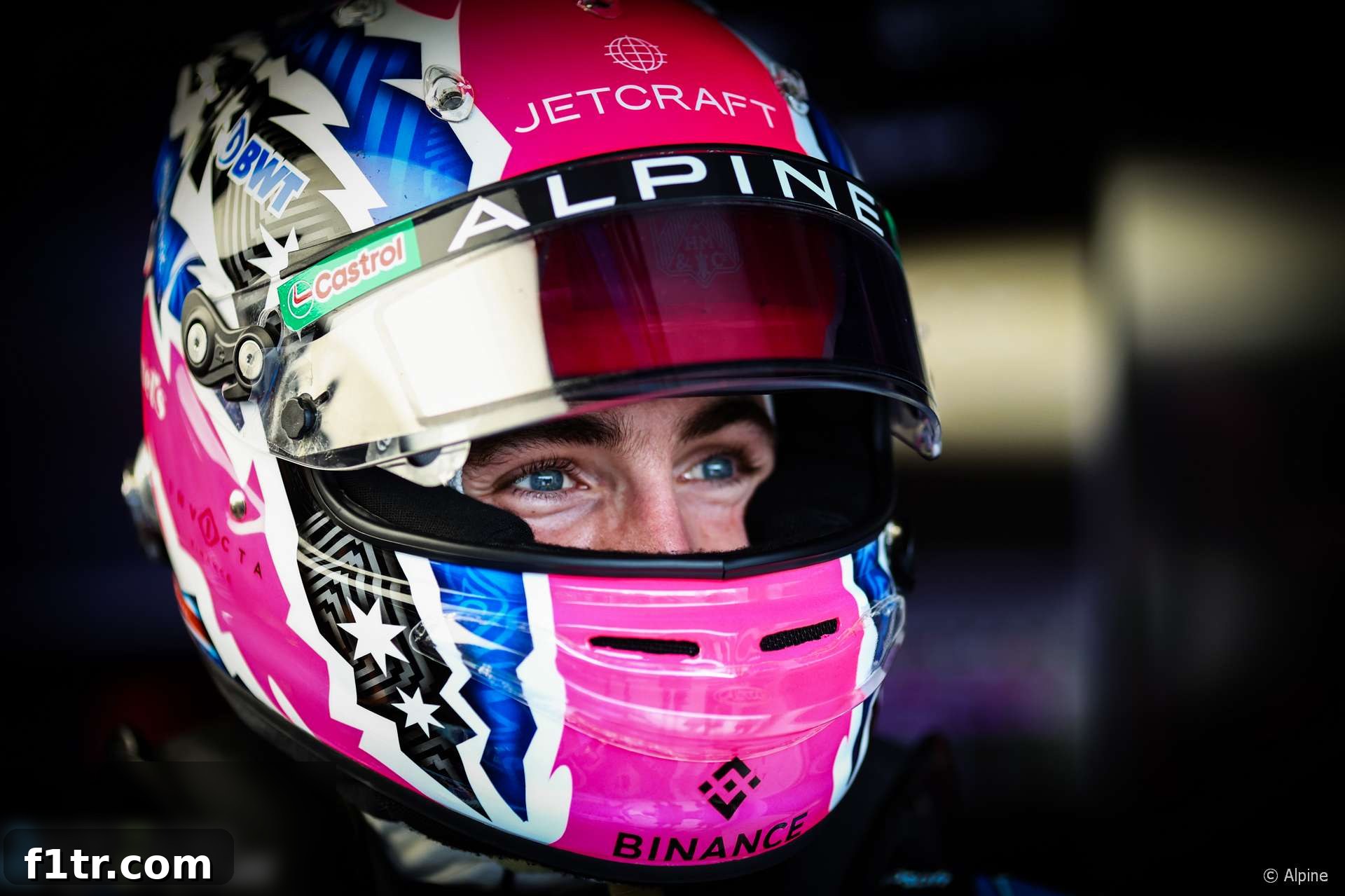
Jack Doohan’s Brief F1 Stint: An Alpine Conundrum of Potential and Pressure
The ruthless world of Formula 1 offers little quarter for emerging talents, and Jack Doohan’s swift departure from Alpine’s ranks serves as a stark reminder of this brutal reality. His initial placement low in the season standings might suggest Alpine made the correct call in releasing him so early. However, a closer examination reveals a more nuanced picture, raising pertinent questions about whether a mere half-dozen appearances truly constituted a sufficient opportunity for the young Australian to demonstrate his full capabilities. This brevity is particularly striking given that the signs of his impending exit seemed to be etched on the wall even before his final race with the team in Miami, prompting many to wonder about the underlying dynamics of his short-lived Formula 1 dream.
Advert | Become a Supporter & go ad-free
The Scrutiny Begins: A Challenging Debut for a Rookie
While Doohan struggled to truly distinguish himself across the initial six rounds of the Formula 1 season, a comprehensive analysis of his circumstances reveals several factors that arguably stacked the odds against him. For a rookie driver, every moment on track is invaluable, a chance to acclimatise, understand the car’s intricate dynamics, and build confidence. Yet, half of his six appearances were sprint race weekends, a format notoriously challenging for newcomers. In these compressed schedules, drivers are afforded just a single practice session before diving straight into qualifying. This drastically limits track time, making it exceptionally difficult to fine-tune car setups, experiment with different tyre compounds, and gain crucial experience on unfamiliar circuits. Unlike full Grand Prix weekends which offer multiple practice sessions, sprint events demand immediate performance under immense pressure, a tall order for anyone making their F1 debut.
Compounding these inherent challenges, Doohan also faced technical misfortunes that directly impeded his development. A prime example occurred in China, where a technical problem during his solitary practice session prevented him from even completing a crucial soft tyre run before the first qualifying session. For a rookie, understanding how the car behaves on the softest, fastest compound is paramount for a strong qualifying performance. Missing this crucial data point forced him into an unideal situation, undoubtedly affecting his confidence and ability to extract maximum pace. Such setbacks, while seemingly minor in isolation, accumulate to create a significant disadvantage, particularly when every millisecond and every lap counts towards proving one’s worth in the sport’s highest echelon.
Questionable Team Support and Development Strategy
Beyond the inherent difficulties of being a rookie in F1, questions also arise regarding Alpine’s approach to nurturing their young talent. A particularly glaring instance of questionable team priority occurred at Suzuka, a circuit renowned for its high-speed corners and demanding technical layout – certainly not an ideal track for a rookie to learn without ample preparation. Here, Alpine inexplicably allocated Doohan’s car to Ryo Hirakawa for the first practice session. Hirakawa, while a competent driver, was not part of Alpine’s immediate F1 development pipeline in the same way Doohan was. This decision, seemingly made without a clear strategic benefit for Doohan’s progression, meant that the Australian lost critical track time on one of the calendar’s most challenging circuits. Losing a session, especially for a newcomer, can have profound repercussions on their ability to get up to speed and build familiarity with the track’s unique characteristics.
The immediate consequence of this decision was stark: Doohan went on to crash in the second practice session at Suzuka. While attributing the crash solely to the lost practice time might be an oversimplification, the link between insufficient preparation and driver error, especially for an inexperienced driver pushing the limits, is undeniable. This incident not only further dented Doohan’s confidence but also raised eyebrows about Alpine’s commitment to providing their own junior driver with the best possible conditions for success. It sent a confusing message about the team’s development philosophy and begged the question of whether Doohan was truly being set up for success or merely undergoing a trial by fire with limited resources and inconsistent backing.
Navigating Early Setbacks and Costly Errors
Doohan’s initial Grand Prix weekend in Australia was off to a challenging start, highlighting the delicate balance a rookie must strike between aggression and caution. His qualifying was significantly compromised when Lewis Hamilton’s spin directly prevented him from completing his crucial final run in Q2. Such incidents, beyond a driver’s control, can shatter momentum and affect grid position. However, his difficulties weren’t solely attributable to external factors. The race itself in Australia presented treacherous wet conditions, and Doohan ultimately crashed out soon after the start, caught out by the tricky circumstances. While wet conditions are notoriously challenging even for seasoned veterans, for a rookie, mastering the unpredictable grip levels requires a specific kind of experience that can only be gained through track time and race mileage. This early exit was a significant setback, denying him valuable race experience and adding to the pressure.
Further demonstrating the steep learning curve, Doohan was involved in incidents in both races in Shanghai, in addition to spinning out during Q1. These repeated errors, whether due to over-aggression, misjudgment, or sheer inexperience, undoubtedly put him under the microscope of team management. His learning process continued to be punctuated by costly mistakes, impacting his standings and potentially the team’s race results. In Bahrain, he accumulated more penalty points for track limits breaches – a common pitfall for drivers pushing the absolute limits of the circuit. More critically, in this very Grand Prix, had he managed his tyres more effectively and avoided these infringements, he could have realistically brought his car home in the points-paying positions. Missing out on points is a huge blow for any team, but especially for a rookie trying to prove his worth and secure his future in the sport. It underscored a crucial area where Doohan needed to refine his race craft and discipline.
Jack Doohan
| Best | Worst | |
|---|---|---|
| GP start | 11 | 19 |
| GP finish | 13 | 17 |
| Points | 0 | |
Glimmers of Promise Amidst the Struggle: The Brutal Realities of F1
Despite the accumulating challenges and setbacks, Jack Doohan was not without moments that hinted at his underlying talent and fighting spirit. His last-lap pass on Gabriel Bortoleto, as they charged towards the finishing line at the end of another gruelling weekend, was a testament to his tenacity and raw racing instinct. This particular move showcased his ability to seize an opportunity, demonstrating the aggressive yet controlled driving that is often required to succeed in Formula 1. It was a flash of brilliance, a moment where his potential truly shone through, proving he wasn’t simply folding under pressure but actively fighting for every inch on track.
However, such glimpses of promise were unfortunately too infrequent to outweigh the consistent struggles. The high-stakes environment of Formula 1 means that even exceptional talent needs to be paired with consistent performance and minimal errors. After that fifth round of the season, whispers began to circulate, quickly solidifying into concrete rumors when one of Franco Colapinto’s sponsors inadvertently let slip that their man would soon be making his F1 debut. This revelation undoubtedly added another layer of immense pressure onto Doohan, who was already battling to prove himself. The looming threat of being replaced, often a silent but potent force in the paddock, can significantly impact a driver’s focus and confidence, creating a self-fulfilling prophecy of underperformance.
The Inevitable Farewell: Miami and Beyond
The intensifying speculation about his future culminated in a messy and ultimately decisive weekend for Doohan in Miami. The pressure of potentially losing his seat, coupled with the unforgiving nature of a street circuit, led to a chaotic Grand Prix. A first-lap collision with Liam Lawson proved to be a pivotal moment, further marring his record and raising serious questions about his race craft under pressure. This incident, coming on the heels of repeated struggles, likely sealed his fate. In the ruthless meritocracy of Formula 1, such mistakes are often unforgivable, especially for a driver whose position is already precarious.
Shortly thereafter, Alpine confirmed the long-expected news: Jack Doohan was out. His Formula 1 debut, incredibly short-lived, concluded with a palpable sense of unfulfillment and frustration, leading many observers to question the entire premise of his call-up in the first place. Why bring a promising talent from their junior program into such a high-pressure environment for such a limited number of races, only to discard him before he had a genuine chance to adapt and demonstrate his abilities? This decision sparked debate about Alpine’s long-term driver development strategy and their commitment to nurturing their own talent. Was it a genuine assessment, or was Doohan simply a stop-gap measure in a team under pressure to perform?
Advert | Become a RaceFans supporter andgo ad-free
Lessons Learned and Future Prospects for Jack Doohan
Jack Doohan’s brief and challenging tenure in Formula 1 serves as a poignant case study in the complexities and cutthroat nature of motorsport’s elite tier. For Doohan himself, the experience, though short, will undoubtedly be a crucible of learning. He tasted the highest level of racing, understood the immense pressure, and identified areas for improvement in his race craft, consistency, and tyre management. While the F1 door has closed for now, it doesn’t necessarily mean his dreams are extinguished. Many talented drivers have found alternative paths back to F1 or forged successful careers in other top-tier categories such as WEC, IndyCar, or Super Formula. His tenacity, as demonstrated in moments like the Bortoleto pass, suggests he possesses the mental fortitude to rebound and continue his racing journey, perhaps with a more seasoned approach and a clearer understanding of what it takes to thrive.
For Alpine, Doohan’s swift exit raises broader questions about their driver development pipeline and team strategy. The decision to remove him so quickly, particularly after providing what many perceived as insufficient opportunity and at times questionable support, could be seen as detrimental to their reputation as a team committed to nurturing young talent. The F1 paddock is a small world, and how teams manage their junior drivers often influences future prospects and recruitment. Moving forward, Alpine might need to reassess how they integrate, support, and evaluate their academy graduates to ensure they are providing a genuinely conducive environment for success, rather than a mere revolving door for promising but ultimately unsupported talents. The story of Jack Doohan’s F1 debut is a compelling reminder that in Formula 1, talent alone is often not enough; a harmonious blend of opportunity, consistent performance, robust team support, and a sprinkle of good fortune are all critical ingredients for carving out a lasting career at the pinnacle of motorsport.
Formula 1
- Controversies, Norris, Newey and more: Five new motorsport books reviewed
- One of F1’s greatest races happened 15 years ago today. Or did it?
- “Overtaking is overtaking”: Domenicali denies F1’s yo-yo racing is “artificial”
- The crashes F1 is trying to prevent may be rare – but the danger is obvious
- F1 returning to India soon after 2027 sounds like wishful thinking
Browse all Formula 1 articles