The high-stakes world of Formula 1, where innovation and performance are paramount, is currently grappling with a critical debate surrounding its financial regulations. Specifically, the sport’s stringent cost cap has become the focal point of a discussion ignited by recent rumors suggesting Red Bull Racing might introduce a lighter chassis mid-season. These whispers have sparked significant concern among rival teams, notably Ferrari and Mercedes, who question the feasibility and fairness of such a move under the current budget constraints.
Following Red Bull’s dominant performance at the Belgian Grand Prix, which saw Max Verstappen secure a resounding victory, speculation began circulating about the potential for further upgrades. Among these, the idea of a new, lighter chassis quickly gained traction, prompting immediate reactions from competitor camps. A lighter chassis is a coveted advantage in Formula 1, offering improvements in lap times through enhanced agility and reduced tire degradation. However, developing and integrating such a significant component mid-season presents immense financial and logistical challenges, especially with the sport’s strict spending limits in place.
Red Bull team principal Christian Horner was quick to address the rumors head-on. In a direct and emphatic denial, Horner dismissed any suggestions that his team had either produced or was on the verge of introducing a lightweight chassis. “No, we didn’t bring it, and no, we don’t have one,” Horner stated unequivocally. “So no, it wasn’t a factor in the performance.” His comments aimed to quash the mounting speculation and refocus the narrative on Red Bull’s intrinsic performance capabilities rather than unconfirmed hardware upgrades.
Advert | Become a Supporter & go ad-free
Horner further elaborated on Red Bull’s impressive showing at Spa-Francorchamps, explaining that their strong pace confounded expectations, particularly in light of a new technical directive (TD039) designed to curb porpoising. This directive, introduced by the FIA for safety reasons, mandated stricter controls on car floor flexibility and ride height, which many predicted could negatively impact teams that had been pushing the boundaries of aerodynamic design. “A lot was made and a lot of expectation was placed on that technical directive,” Horner acknowledged. “But arguably, perhaps it’s hurt others more than it hurt ourselves.” This assertion suggested that Red Bull’s design philosophy and car setup might have been less adversely affected by the new regulations, or perhaps they adapted more effectively, thereby amplifying their performance advantage over rivals who struggled to comply or optimize their cars under the new parameters.
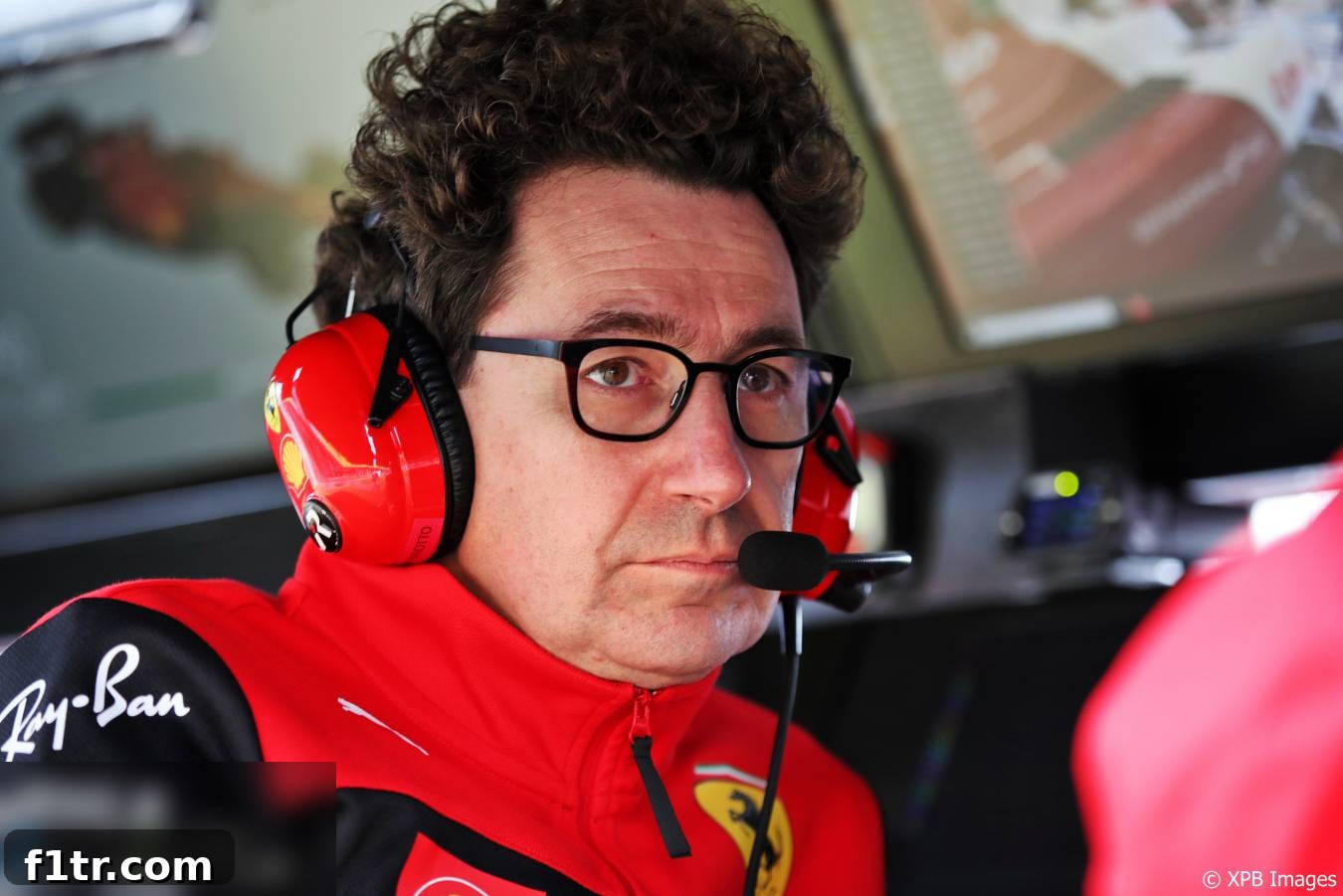
The sentiments from Red Bull’s adversaries, however, painted a picture of deep skepticism. Mattia Binotto, Ferrari’s team principal, voiced significant concerns regarding the implications of the cost cap. Binotto underscored the complexity of Formula 1’s modern regulatory framework, which encompasses not only technical and sporting rules but also financial regulations. He stressed the importance of robust oversight from the FIA to ensure these rules are consistently and fairly applied across all teams. “I think we already mentioned it through the season because now we’ve got a technical, sporting but as well financial regulations which can make differences between teams in the way that they are integrating, optimizing and executing it,” Binotto explained.
Binotto’s primary apprehension revolved around the integrity and enforcement of the cost cap. He made it clear that from Ferrari’s perspective, introducing a completely new chassis during a single season would be financially impossible under the current budget limits. “As Ferrari, we will never be capable of introducing a lightweight chassis or a different chassis through a season simply for budget cap,” he asserted. The sheer cost of designing, manufacturing, and testing a new chassis, coupled with the allocated development budget for other car parts, would make such an endeavor unsustainable for a team operating strictly within the stipulated financial ceiling. This statement effectively challenged the notion that any team, regardless of its size or resources, could undertake such a major upgrade without breaching the regulations.
The Ferrari boss then extended his skepticism to other teams, implying that if Red Bull or any other competitor were indeed capable of such an upgrade, it would raise serious questions about the fairness and policing of the financial regulations. “I would be very surprised of other teams being capable of doing it,” Binotto continued. “And if they are, again it’s back to the regulation itself, is it fair enough? Is it equitable enough? Is the policing sufficient? It’s big question marks.” These “big question marks” highlight a fundamental concern within the paddock: the need for transparent, rigorous, and consistent enforcement by the FIA to maintain a level playing field and uphold the spirit of the cost cap. The integrity of the championship, Binotto suggested, hinges on the FIA’s ability to monitor and audit team expenditures effectively.
Echoing Binotto’s concerns, Mercedes team principal Toto Wolff also emphasized the restrictive nature of the cost cap on significant in-season developments. Wolff confirmed that Mercedes, like Ferrari, would be unable to introduce a new chassis at this stage of the season due to financial limitations. “We wouldn’t be able to introduce a chassis at that stage of the season,” Wolff stated, adding that while such a feat might have been possible in the pre-cost cap era, it is now an insurmountable challenge. This collective sentiment from two of F1’s biggest spenders prior to the cost cap underscores the transformative impact of the financial regulations on team operations and development strategies.
Wolff further detailed Mercedes’ own struggles, revealing that their car was “massively overweight.” Addressing this issue, which significantly impacts performance, requires substantial investment in redesign and manufacturing lighter components. However, the cost cap severely restricts their ability to do so. “We are massively overweight, which we haven’t been really able to dial out because we are trying parts on the car in order to solve our various issues. So, can’t afford that, full stop,” Wolff explained. This situation perfectly illustrates the intended effect of the cost cap: preventing teams from simply “throwing money at” problems to gain an advantage. It forces teams to make difficult choices about where to allocate their limited budgets, prioritizing some developments over others.
The introduction of the F1 cost cap in 2021 marked a significant paradigm shift for the sport. Designed to create a more financially sustainable and competitive environment, it set a spending limit for teams, reducing the vast disparities in budgets that historically allowed wealthier teams to dominate. The cap, initially set at $145 million, aimed to bring teams closer together, foster more exciting racing, and secure the long-term future of smaller outfits. By limiting spending on areas such as car development, manufacturing, and operational costs, the FIA sought to level the playing field. However, enforcing such a complex regulation across ten highly competitive teams, each with intricate supply chains and diverse accounting practices, is an immense challenge. The “policing” aspect, as Binotto highlighted, becomes paramount, requiring meticulous auditing and clear guidelines to prevent ambiguities or loopholes.
The debate surrounding a potential lightweight chassis and the cost cap also intertwines with the impact of Technical Directive 039 (TD039). This directive, issued by the FIA to address safety concerns related to porpoising – the phenomenon of a car bouncing violently at high speeds – came into effect at the Belgian Grand Prix. It aimed to standardize how teams measure floor stiffness and limit vertical oscillations, which in turn affects aerodynamic performance. While intended for safety, any technical directive can inadvertently shift the competitive landscape. Horner’s suggestion that TD039 “hurt others more than it hurt ourselves” points to how teams interpret and adapt to new regulations. Red Bull’s ability to maintain or even improve performance post-TD039, coupled with the chassis rumors, intensified the scrutiny on their financial compliance.
The implications of this ongoing dialogue extend beyond the immediate season. The credibility of Formula 1’s financial regulations, and by extension, the fairness of the championship, rests heavily on the FIA’s ability to demonstrate robust and transparent enforcement. If teams perceive that the cost cap is not being policed effectively, it could erode confidence, potentially leading to further controversies and an uneven playing field. The “big question marks” raised by Ferrari are not just about Red Bull, but about the future of a sport striving for both innovation and equitable competition. Maintaining this delicate balance will be crucial for Formula 1 as it continues to evolve under its new financial framework, ensuring that the spectacle on track truly reflects ingenuity and driving talent, rather than unchecked spending.
Advert | Become a RaceFans supporter andgo ad-free
2022 Belgian Grand Prix
- How many victory chances did Hamilton have in his first winless F1 season?
- Sainz doesn’t believe Red Bull’s huge Spa advantage is here to stay
- Alonso: Hamilton’s nationality explains “huge” media reaction to radio comment
- “Big question marks” remain over policing of Formula 1’s budget cap – Ferrari
- Williams: Points-scoring Belgian GP pace not just due to straight line speed
Browse all 2022 Belgian Grand Prix articles