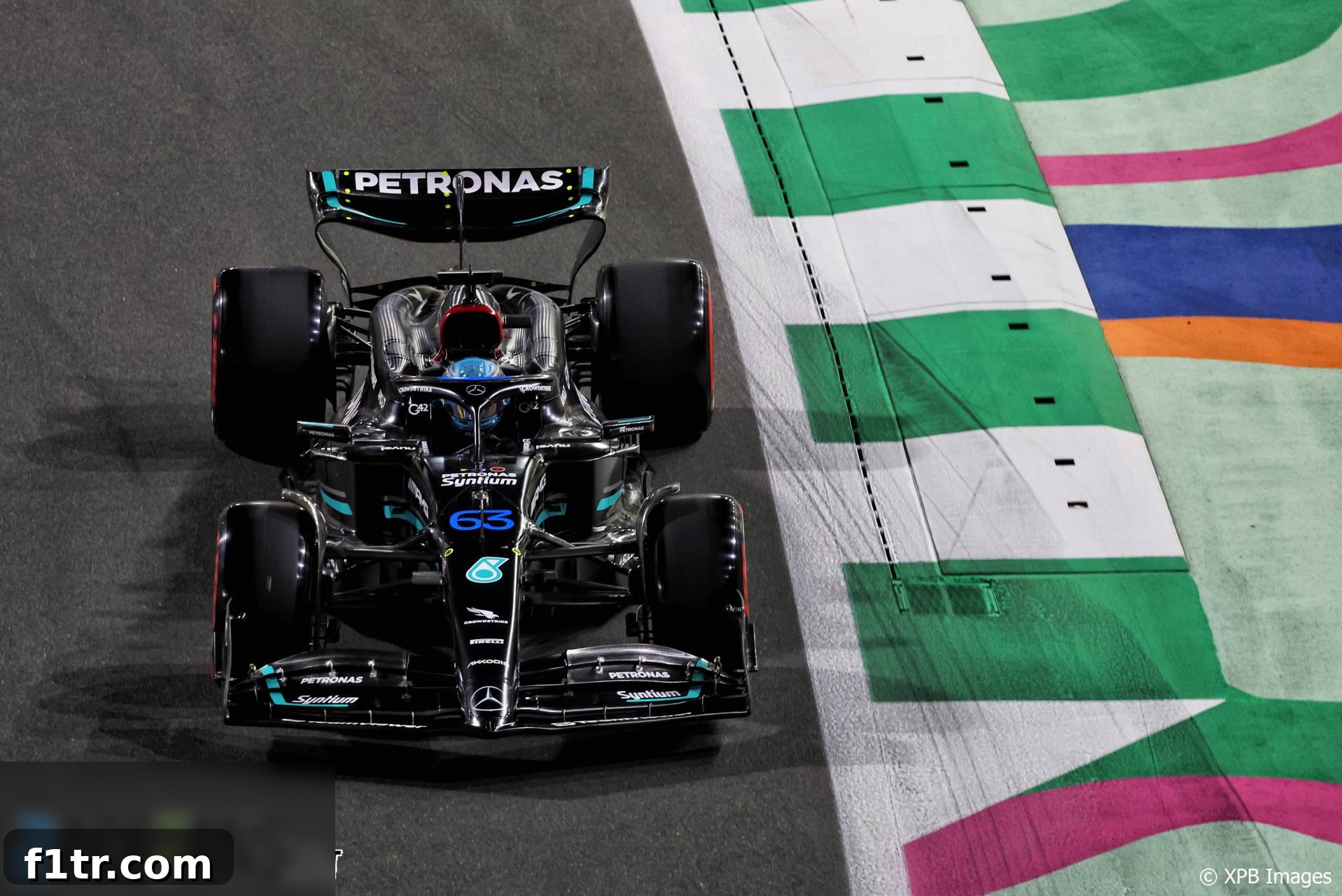
Mercedes F1’s Strategic Overhaul: Toto Wolff Details W14 Concept Shift for 2023 Season
Mercedes-AMG Petronas Formula One Team is actively pursuing a significant conceptual overhaul for its 2023 challenger, the W14, a strategic pivot confirmed by team principal Toto Wolff. This decisive change comes in response to the car’s uncompetitive start to the current Formula 1 season, which necessitated a fundamental re-evaluation of its design philosophy. The team, having accepted the critical need for a new direction, is now making rapid progress in developing the revised concept, signaling a renewed commitment to battling at the front of the grid.
The imperative to alter their development course became abundantly clear following the season-opening Bahrain Grand Prix. The W14, which initially represented an evolution of the previous year’s challenging W13, failed to deliver the expected performance levels, leaving both drivers, George Russell and Lewis Hamilton, struggling to match the pace of their main rivals, particularly Red Bull Racing. This stark reality check prompted immediate and intensive introspection within the Brackley factory, leading to the collective agreement that a radical shift, rather than incremental improvements, was essential for long-term success.
The Evolution of a Concept: From Persistence to Pivoting
Throughout the entirety of the 2022 season and extending into the initial phases of 2023, Mercedes had steadfastly adhered to its unique interpretation of Formula 1’s latest technical regulations. This approach, widely recognized for its distinctive “zero-pod” sidepod design, was an ambitious attempt to maximize aerodynamic efficiency in an unconventional manner. Despite substantial investment in research, development, and numerous upgrades, this design philosophy ultimately fell short of expectations, failing to unlock consistent, high-performance potential and often resulting in a challenging car for the drivers to manage.
However, the team has now decisively moved past this phase of persistence. Wolff candidly states that Mercedes is “storming full steam ahead now and changing things” with the W14. This declaration reflects a proactive and aggressive stance towards overcoming their current performance deficit. The changes are not merely superficial; they delve into the core architectural elements and aerodynamic principles of the car, signifying a deep commitment to rebuilding their competitive foundation.
Even a slightly improved performance at the subsequent Saudi Arabian Grand Prix in Jeddah, where George Russell demonstrated a glimmer of pace by qualifying within six-tenths of a second of pole-sitter Sergio Perez, has not swayed the team from its decision to revise its design philosophy. Wolff emphasized that such minor upturns do not distract from the overarching goal of fundamental transformation. The focus remains firmly on addressing the deep-seated issues that have held the W14 back, rather than being content with marginal gains.
Benchmarking Against the Best: Red Bull’s Dominance and Mercedes’ Perspective
Toto Wolff offered a frank and uncompromising assessment of the competitive landscape, making it clear that the benchmark for Mercedes remains firmly set by the dominant Red Bull Racing team. “That doesn’t make it a millimeter better,” he commented, referring to their Jeddah performance. “I think that we are always looking at the benchmark performance and that is [Max] Verstappen and Perez, and it’s just too far away. So that hasn’t changed the gap.” This direct acknowledgment of Red Bull’s superiority highlights the significant challenge Mercedes faces.
Wolff further elaborated, suggesting that had Max Verstappen completed his qualifying session in Jeddah without incident, the performance gap might have appeared even larger. This perspective was reinforced by observations from long-run simulations during the race weekend, which consistently showed Red Bull’s formidable pace advantage. For Mercedes, achieving third place in qualifying, while a step up from Bahrain, does not alter the fundamental reality of their current competitive standing against the leaders.
Wolff stressed that the team’s resolve will not be deflected by isolated moments of perceived success in “single sessions, single qualifying or even a single race.” The strategy is a long-term commitment to a new development path, designed to deliver sustainable performance. “My state of mind hasn’t changed a millimeter just because we are P3 in qualifying. The difference is that the trajectory is set now,” Wolff asserted, underscoring the unwavering focus and strategic clarity guiding the team’s current efforts. This steadfast determination is crucial for navigating the demanding world of Formula 1 development.
Unlocking Latent Potential: Breakthroughs in R&D and Aerodynamics
The new development path is already showing promising signs within Mercedes’ state-of-the-art research and development (R&D) and aerodynamics departments. Wolff confidently reported that the chosen direction is already delivering “big steps in relative performance to where we are even now.” This internal momentum is a crucial indicator of the team’s ability to diagnose and address the W14’s fundamental issues, fostering optimism for future on-track improvements.
The nature of these gains is particularly significant, going beyond mere incremental improvements. “The kind of gains that are coming in our [research and development] and in aero are much bigger than we’ve had over a long time,” Wolff explained. This suggests a genuine breakthrough in understanding or a fundamental shift in approach that has unlocked previously untapped potential. The team has managed to capitalize on new insights because, as Wolff puts it, “we simply look at things from a different angle now.”
These transformative learnings have been directly informed by the critical data and insights gathered during the Bahrain test and the subsequent race weekend. “We have a different perspective because of our learnings of the Bahrain test and Bahrain race. So there was no step back, on the contrary there was immediately two steps forward,” Wolff elaborated. This rapid and effective response to initial setbacks demonstrates the team’s agility and engineering prowess, turning adversity into a powerful catalyst for significant internal progress. The ability to swiftly adapt and innovate is a hallmark of successful Formula 1 teams.
The Road Ahead: Cautious Optimism and Long-Term Championship Ambitions
Despite the encouraging internal developments, Toto Wolff maintains a pragmatic outlook regarding the immediate future and refrains from making audacious predictions about the team’s competitiveness later in the year. The process of translating fundamental conceptual changes into tangible on-track performance in Formula 1 is a complex and time-consuming endeavor. It involves extensive design work, manufacturing of new components, rigorous testing both in simulators and on the track, and meticulous validation, all of which require significant lead times.
“Is it realistic with today’s performance to even talk about the world championship? No, it’s not. You’re a fool if you think that way,” Wolff stated unequivocally. This realistic assessment underscores the formidable challenge of catching up to the likes of Red Bull, who currently possess a substantial performance advantage. To prematurely declare championship aspirations would be to disregard the current competitive reality and the sheer scale of the engineering effort still required to close the gap. It emphasizes that while optimism exists, it is grounded in a deep understanding of the sport’s demanding nature.
However, this realism is expertly balanced with an unwavering commitment to the core spirit of motorsport: “But equally, it’s motor racing and you must never give up.” This sentiment reflects the relentless pursuit of excellence and the profound fighting spirit that defines both Mercedes and Formula 1 itself. The journey to the pinnacle of the sport is often fraught with immense obstacles, and perseverance coupled with strategic execution is an indispensable attribute for ultimate success. The team, under Wolff’s experienced leadership, is resolutely determined to navigate this challenging period with strategic focus and unwavering resilience.
Wolff expressed confidence that if Mercedes can sustain the momentum generated by the “big steps that we’ve already done in the last 10 days,” they will eventually reach a stage where they can genuinely contend for race victories. This indicates a strong belief in their refined development methodology and the significant potential for a steep performance curve as the new concept of the W14 matures and its various components are fully integrated and optimized. The expectation is that through diligent effort and precise execution, the W14 will evolve into a car capable of challenging the dominant forces on the Formula 1 grid, potentially paving the way for a more competitive future for both George Russell and Lewis Hamilton.
The Intricacies of F1 Car Development and the Competitive Landscape
Developing a Formula 1 car is an incredibly intricate process, a delicate balance between maximizing aerodynamic efficiency, optimizing mechanical grip, integrating a high-performance power unit, and receiving crucial feedback from elite drivers. A “concept change” in this context is far from a minor adjustment; it often necessitates a complete re-evaluation of fundamental elements such as the chassis architecture, floor design, sidepod profiles, and even the kinematics of the suspension system. This is not a simple overnight fix, but a monumental engineering undertaking that demands extensive time, substantial resources, and groundbreaking innovation. The inherent lag between identifying a performance deficiency, designing an innovative solution, manufacturing the sophisticated parts, and then rigorously testing and validating them on the track can span several weeks, or even extend to many months, highlighting the immense complexity involved.
Mercedes’ historical success, exemplified by their remarkable streak of eight consecutive Constructors’ Championships, was built upon a bedrock of continuous innovation, an exceptional understanding of technical regulations, and meticulous operational excellence. Their subsequent struggles in the new ground-effect era, which commenced in 2022, powerfully demonstrated how swiftly the competitive order within Formula 1 can shift when fundamental design philosophies are challenged and rival teams unearth superior solutions. The “zero-pod” concept, while an audacious attempt at innovative design, ultimately proved to be a limiting factor, creating a performance ceiling and making the car inherently unpredictable and difficult to drive at the limit.
The current formidable dominance of Red Bull Racing, particularly evident with Max Verstappen at the helm, establishes an exceptionally high benchmark for all competitors. Their RB19 chassis, a highly refined evolution of the immensely successful RB18, showcases unparalleled aerodynamic efficiency, exceptional mechanical balance, and a remarkably stable platform. To realistically bridge this significant performance gap, Mercedes must not only uncover substantial raw performance but also ensure that their entirely new concept provides a stable, predictable, and confidence-inspiring platform for both George Russell and the seven-time World Champion, Lewis Hamilton. Driver confidence is an absolutely paramount factor in Formula 1; a car that is inherently difficult to drive at its absolute limit will invariably struggle to extract its full potential, regardless of its theoretical peak performance figures.
Implications for the 2023 Season and Mercedes’ Future Trajectory
The profound decision to commit to such a significant concept change carries far-reaching implications for the remainder of the 2023 Formula 1 season. While it undeniably signifies a renewed sense of hope and a clear, forward-looking path, it also implicitly means that Mercedes might, to some extent, be sacrificing immediate short-term gains in pursuit of more substantial long-term potential. The early season results may not instantaneously reflect the comprehensive internal progress being made, as the team’s immediate focus will be intently directed towards gathering crucial data, meticulously validating the new components, and thoroughly understanding the nuances of the revised package. Consequently, the team’s ardent fanbase and the broader F1 community may need to exercise a degree of patience as the W14 undergoes its transformative evolution throughout the season.
For the highly skilled drivers, Lewis Hamilton and George Russell, this period presents a unique blend of formidable challenge and immense opportunity. They must continue to expertly extract every ounce of performance from the current car specification, demonstrating their exceptional talent and adaptability, while simultaneously providing invaluable, precise feedback for the development of the new concept. Their extensive experience, nuanced insights, and detailed sensory input will be absolutely critical in guiding the engineering team, ensuring that the new design aligns perfectly with real-world track demands. The ultimate, overarching goal extends beyond merely improving the W14; it is fundamentally about meticulously laying a robust and adaptable foundation for the highly anticipated 2024 season, ensuring that Mercedes can emphatically reclaim its rightful position as a consistent front-runner and a formidable, unwavering championship contender in the fiercely competitive world of Formula 1.
Mercedes’ ongoing journey through the 2023 season is undeniably shaping up to be one of the most compelling and closely watched narratives of adaptation, resilience, and strategic evolution in recent Formula 1 history. The resolute commitment to a radical concept change, directly driven by the candid and pragmatic assessment of team principal Toto Wolff, powerfully highlights the relentless pursuit of engineering excellence and competitive superiority that has always defined the Mercedes-AMG Petronas Formula One Team. While the path ahead remains undeniably challenging and fraught with intense competition, the newfound clarity, renewed focus, and significant internal strides within the team offer a potent beacon of hope for a storied organization determined to reclaim its preeminent position at the absolute pinnacle of global motorsport.
Further Reading: Insights from the 2023 Saudi Arabian Grand Prix
- “Total transparency” needed over Ben Sulayem allegations – Russell
- FIA president Ben Sulayem under investigation for interfering in F1 race – report
- Two races, no points: How 2023 compares to McLaren’s worst starts to a season
- Don’t complain about Red Bull dominating F1, they deserve it – Sainz
- Alfa Romeo identify “massive debris” which ruined Bottas’ race
Browse all 2023 Saudi Arabian Grand Prix articles