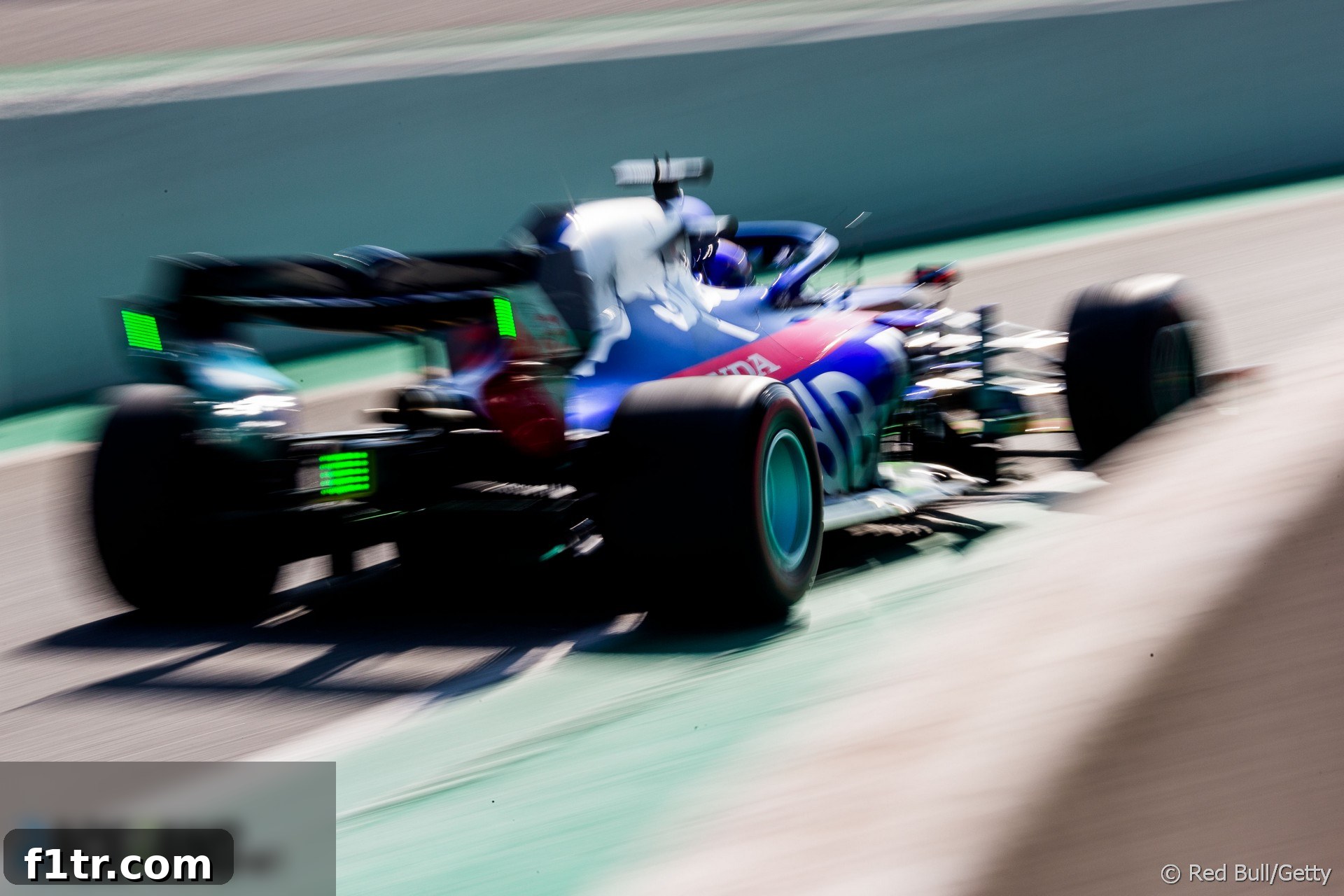
In the high-stakes world of Formula 1, where every kilowatt and every tenth of a second can dictate victory or defeat, the evolution of a power unit is a relentless pursuit. For Toro Rosso, the collaboration with Honda has been a journey of significant progress and renewed optimism, a sentiment eloquently articulated by the team’s technical director, Jody Egginton.
Egginton recently lauded the remarkable strides Honda has made with its Formula 1 power unit, marking a stark contrast to the challenges faced in its earlier F1 chapters. This partnership, which began at the dawn of the previous racing season, has blossomed into a formidable force, steadily unearthing newfound performance and reliability.
The technical director’s assessment sheds light on a comprehensive and continuous improvement cycle. “In-season Honda was strong on development last year,” Egginton stated, reflecting on the impressive gains witnessed throughout the previous campaign. “They found a lot of kilowatts. We moved forward very rapidly and we’ve ended this season in that situation. That was already a big step from the start to the season.” This assertion underscores not just a sporadic boost but a sustained trajectory of enhancement that significantly elevated Toro Rosso’s competitive standing.
The intensity of Formula 1 development does not wane with the checkered flag of the final race. The winter break, far from being a period of rest, is an incubator for radical innovations and meticulous refinement. Honda, like all premier power unit manufacturers, dedicated itself to this crucial off-season period. Egginton elaborated on this intense period of development: “Like any PU manufacturer, Honda has been super-busy over the winter, working on the next steps, and we’re carefully validating what they’ve learned over the winter. And we’re introducing step-by-step these developments and pushing forward.”
This “step-by-step” validation process is critical in Formula 1, ensuring that new components and calibrations are not only faster but also robust and seamlessly integrated into the car’s intricate ecosystem. Teams cautiously unveil new developments during pre-season testing and early races, gradually pushing the boundaries as their understanding of the new package matures. It’s a testament to the complexity of modern F1 power units that their full potential isn’t immediately unlocked, but rather discovered through methodical testing and real-world application.
“I think every team at the moment is nowhere near the edge of the operating envelope on the PU,” Egginton added, providing a fascinating insight into the philosophy of power unit optimization. This statement suggests that even with substantial progress, there remains significant untapped performance within the Honda power unit. The “operating envelope” refers to the range of conditions under which the engine can perform optimally and reliably. Gradually expanding and exploring this envelope involves fine-tuning engine maps, energy recovery strategies, and the delicate balance between maximum power output and fuel efficiency, all while ensuring mechanical integrity. This incremental approach allows teams to mitigate risks while steadily extracting more performance, promising further gains throughout the upcoming season.
Comparing the current state to the past, Egginton’s optimism is palpable. “But compared to this time last year, the engine has taken a fantastic step forward. I think that was clear towards the end of last year, to be honest, that they’d made that step, but they’re just carrying on, so we’re very happy in that respect.” This “fantastic step forward” is a crucial indicator of Honda’s resurgence. It implies not just an increase in raw horsepower but also improvements in critical areas such as energy recovery efficiency, transient response, and overall reliability – factors that are just as vital for competitive racing as outright speed.
The narrative of Honda’s F1 journey has been one of perseverance and significant engineering commitment. After a challenging return to the sport, the partnership with Toro Rosso provided a vital proving ground, allowing Honda to refine its technology away from the intense spotlight of a top-tier team initially. This environment fostered a culture of open communication and rapid iteration, which proved instrumental in identifying weaknesses and accelerating development cycles. The “kilowatts” Egginton refers to are the tangible results of countless hours on the dyno, advanced simulation work, and meticulous attention to detail from the engineers in Sakura and Milton Keynes.
A notable aspect of Honda’s expanded presence in Formula 1 has been its commitment to supplying power units to both Toro Rosso and Red Bull Racing. This expansion naturally raised questions about how resources would be managed and whether Toro Rosso might see a dilution of focus. However, Egginton firmly dispelled such concerns, emphasizing the unwavering dedication from Honda. “Honda are working along in the background doing their thing, it’s fantastic, they’re causing there’s no compromise or anything, it’s been great. The PU situation’s been fantastic.” This assurance highlights Honda’s growing capacity and organizational strength, capable of simultaneously supporting two teams without detriment to either. Indeed, the synergy between the two teams, albeit distinct entities, can lead to a broader range of data and feedback, ultimately benefiting Honda’s overall development program.
The continuity and familiarity built over the course of their collaboration have also been a significant advantage. “We’ve sort of picked up where we left off towards the end of last year, plus we’re familiar with the way the guys work there now, and it’s quite seamless for us with the majority of the guys in the garage being the same,” Egginton explained. This stability in personnel and established working relationships minimizes communication barriers and maximizes efficiency. When engineers from different organizations understand each other’s processes, philosophies, and even individual quirks, it fosters a more cohesive and productive environment. This seamless integration allows both parties to concentrate on performance rather than overcoming logistical or interpersonal hurdles.
Ultimately, Egginton’s comments paint a picture of a confident and self-sufficient Honda operation. “So from the Honda side, they’re just getting on with it and we’re leaving them to run their program really.” This signifies a high degree of trust and autonomy, where Toro Rosso has full confidence in Honda’s technical expertise and development roadmap. It’s a partnership built on mutual respect and shared objectives, aimed at pushing the boundaries of Formula 1 performance. The implications of this strong technical foundation are profound, not just for Toro Rosso but for Honda’s overall trajectory in the sport, potentially paving the way for future successes with both its customer teams.
The gains in power and reliability translate directly into enhanced performance on track. A more potent and dependable power unit allows drivers to push harder, explore more aggressive race strategies, and contend for stronger results. For a team like Toro Rosso, which often nurtures future talent for Red Bull Racing, consistent performance is crucial. It provides invaluable experience for young drivers and demonstrates the team’s capability to operate at the pinnacle of motorsport.
Looking ahead, the sustained progress from Honda, as praised by Egginton, places them in an increasingly competitive position against established powerhouses like Mercedes and Ferrari. The “operating envelope” still to be explored suggests that the story of Honda’s F1 comeback is far from over, with further performance increments likely throughout the season and beyond. This commitment to continuous improvement, combined with strong partnerships, positions Honda as a key player in the ongoing technological arms race of Formula 1, fueling aspirations for podiums, wins, and ultimately, championships.
The journey from a challenging start to a formidable contender underscores the resilience and ingenuity inherent in Formula 1 engineering. Jody Egginton’s appreciative remarks serve as a powerful testament to Honda’s successful transformation, marking a pivotal chapter in the brand’s storied racing legacy and providing a solid foundation for future triumphs in the pinnacle of motorsport.
2019 F1 season
- Crying in the Melbourne car park at 2019 grand prix was my career low – Ocon
- McLaren Racing reports reduced £71 million loss in 2019
- Kvyat: Hockenheim podium last year was “my biggest achievement” so far
- How the FIA’s new encrypted fuel flow meter targets Ferrari’s suspected ‘aliasing’ trick
- “He smashed my office door”: 23 must-see moments from ‘Drive to Survive’ season two
Browse all 2019 F1 season articles